
BREAKING NEWS
Advertise with us >

Optus Faces New Emergency Call Outage in Australia

Optus Faces New Emergency Call Outage in Australia

Australian telecommunications provider Optus, the country’s second-largest telco, experienced a fresh outage affecting emergency calls on Sunday, September 28. The disruption impacted approximately 4,500 people in Dapto, south of Sydney.

The incident follows a major emergency call outage on September 18, which was linked to delayed emergency responses and reportedly contributed to four fatalities. The latest disruption was caused by a faulty mobile tower, temporarily affecting emergency services between 3:00 a.m. and 12:20 p.m. Optus has since restored the service and confirmed that all attempted emergency calls were successfully accounted for.

The Australian government has condemned the outage as an “absolutely shocking failure” and is seeking answers from Optus’ parent company, Singapore Telecommunications (Singtel). Singtel Group CEO Yuen Kuan Moon and Optus executives are scheduled to meet with Australia’s Communications Minister Anika Wells to address the ongoing concerns.

This recurring issue has intensified scrutiny over Optus’ infrastructure and its ability to reliably manage emergency services. An independent review of the September 18 outage is underway, with findings expected by the end of 2025.

Reference: Reuters
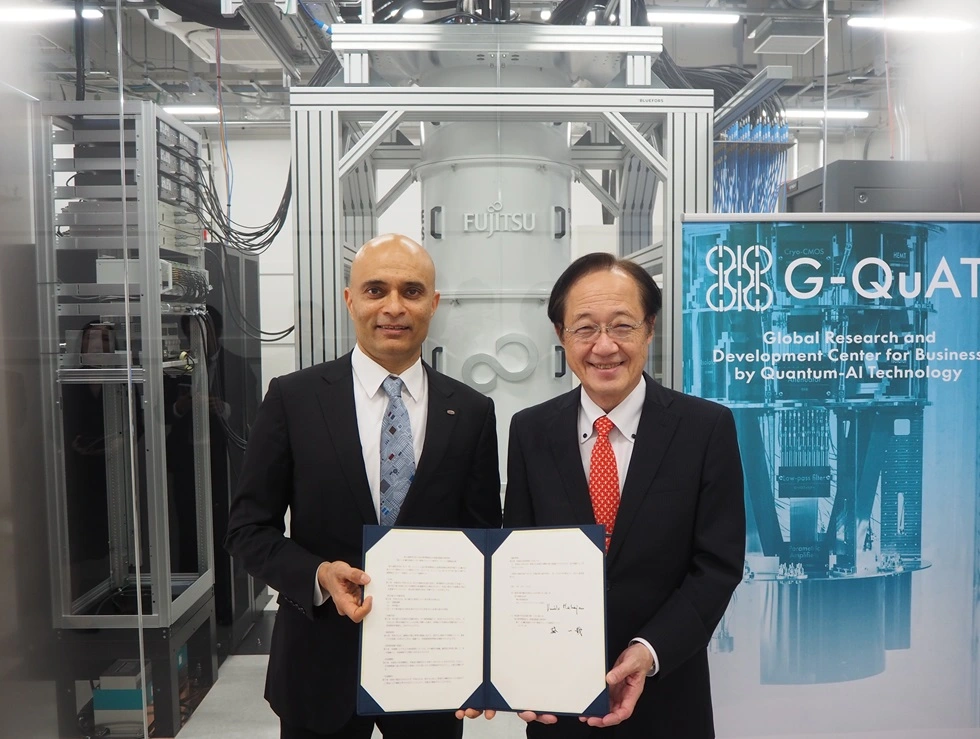
Fujitsu Launches Groundbreaking Quantum-Inspired Computing Platform

Fujitsu Quantum-Inspired Computing Platform launch 2025

Fujitsu has unveiled its latest innovation, the Fujitsu Quantum-Inspired Computing Platform, designed to accelerate scientific discovery and optimize complex systems across industries. This platform combines advanced quantum-inspired algorithms with high-performance computing, tackling problems that traditional computing methods struggle to solve.

The new platform has far-reaching applications in sectors such as pharmaceuticals, logistics, finance, and energy, enabling companies to handle intricate simulations, optimization, and data analysis with unprecedented efficiency.

Strategic partnerships with top research institutions and industry leaders have strengthened the platform’s real-world applicability, ensuring it addresses pressing challenges across multiple domains. Fujitsu positions this initiative as a bridge toward broader quantum computing adoption, signaling a significant step forward in next-generation computational technology.

“By harnessing the power of quantum-inspired computing, we aim to provide solutions that drive innovation and tackle global challenges effectively,” said a Fujitsu spokesperson.

The platform reinforces Fujitsu’s commitment to technological advancement, helping industries worldwide solve complex problems faster and more efficiently.

Read more: Fujitsu Quantum-Inspired Computing Platform

OpenAI Unveils “Operator”: A More Autonomous Personal AI Coming in 2025

OpenAI’s Operator AI agent performing tasks independently on a digital workspace.

OpenAI has announced a groundbreaking step in personal AI with the introduction of “Operator”, an autonomous AI agent designed to handle complex tasks independently across multiple digital platforms. This development promises to redefine how AI assistants interact with users and manage daily workflows.

Unlike traditional AI assistants that require constant user input, Operator can proactively perform tasks such as coding, scheduling, and workflow management without ongoing supervision. This move represents a significant step toward creating AI systems that are more integrated, efficient, and capable of autonomous decision-making.

The new AI agent is expected to be available as a research preview in January 2025, with API access for developers looking to integrate its functionalities into their applications. By making AI assistants more proactive, OpenAI aims to expand the scope of tasks that AI can handle, making them increasingly useful in professional and personal environments.

This launch reflects OpenAI’s broader strategy to enhance AI utility and autonomy, marking a shift from reactive assistants to AI agents that can anticipate user needs and act independently. Analysts suggest that this development could have major implications for sectors like software development, project management, and digital productivity.

As AI continues to evolve, Operator may pave the way for the next generation of personal assistants, combining intelligence, efficiency, and autonomy in a single platform.