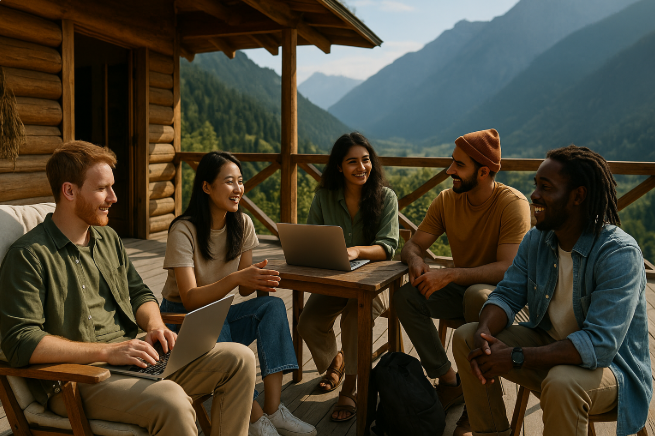
From Tokyo to Toronto, professionals are no longer chained to offices — 2025 marks the rise of hybrid freedom, digital nomads, and a borderless talent economy.
Goodbye Office, Hello Anywhere
Once a temporary pandemic adjustment, remote work has now become a permanent lifestyle choice. In 2025, nearly 60% of global companies offer hybrid or fully remote options, according to McKinsey Global Workforce Study.
This shift isn’t just about flexibility — it’s about freedom. Professionals are choosing where, when, and how they work. A designer in Karachi collaborates with a startup in Berlin; an engineer in Manila logs in from a beach in Bali.
“Work is no longer a place you go — it’s something you do,” says Claire Jensen, HR director at a European tech firm.
Productivity Through Flexibility
Contrary to old fears, remote work has not lowered output — it’s boosted it. A 2025 Harvard Business Review study shows companies with flexible policies saw a 20% increase in employee performance and a 35% drop in turnover.
Tools like Slack, Notion, Trello, and Google Workspace have redefined teamwork, while AI-powered assistants automate tasks from scheduling to brainstorming.
Pakistan’s tech industry, too, is riding the wave. Companies like Systems Limited, 10Pearls, and Contour Software are offering hybrid models to attract global clients and retain top talent
Digital Nomads: The New Global Workforce
The number of digital nomads — people who work while traveling — has doubled since 2020. According to Forbes Nomad Index 2025, more than 45 million professionals worldwide identify as remote freelancers or nomads.
Countries like Portugal, Thailand, and the UAE now offer “digital nomad visas” to attract skilled remote workers. Pakistan, too, is slowly entering this market — with scenic regions like Hunza and Skardu emerging as digital retreats with co-working cafés and mountain Wi-Fi.
“It’s freedom with discipline,” says Hassan Raza, a Pakistani content strategist living in Georgia. “You can work anywhere — but your results travel with you.”
🧘 Work-Life Redefined
The hybrid era has blurred the boundaries between home and office — forcing professionals to create new routines for balance. Global wellness apps like Headspace, Noisli, and CalmMind are becoming essential to manage focus and mental health.
Employers are recognizing this too. Many now encourage “focus blocks,” micro-breaks, and even “meeting-free Fridays.” The future of work is human — built around trust, not time-tracking.
For Pakistani professionals, remote work has opened access to global income without migration — fueling what experts call the “stay-local, earn-global” trend.
🚀 The Future of Work Is Borderless
In 2025, location is no longer a career limitation — it’s a lifestyle decision. As AI, automation, and digital infrastructure expand, the traditional office is evolving into a digital ecosystem powered by collaboration, culture, and compassion.
The next generation of workers won’t ask, “Where do you work?” but rather, “How do you live?”
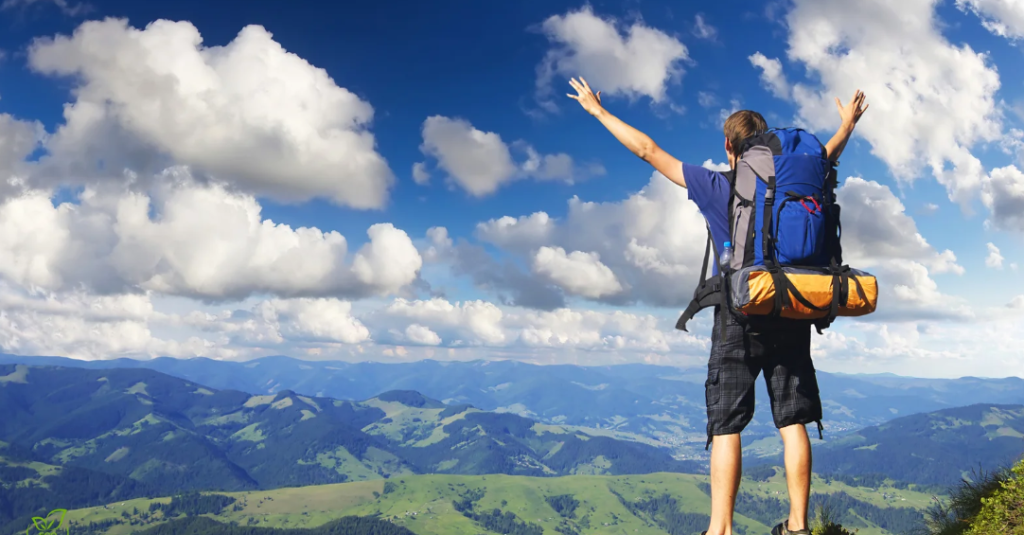
From Lisbon to Lahore, a new generation of travelers is moving away from luxury tourism and embracing slow, mindful, and meaningful journeys.
The End of the “Check-in and Leave” Era
Travel is changing — not just how people move, but why. For decades, tourism was about ticking destinations off a bucket list. But in 2025, a global shift is underway: travelers are seeking connection over collection.
Enter conscious travel — a movement built around sustainability, local culture, and self-discovery. It’s led by digital nomads, young explorers, and eco-conscious adventurers who want to leave a positive impact wherever they go.
According to the World Travel Index 2025, 68% of travelers under 35 prefer “experience-based travel” over sightseeing tours. The rise of remote work and location independence has turned travel from a vacation into a lifestyle.
What Is Conscious Travel?
Conscious travel isn’t about giving up luxury — it’s about traveling with awareness. It means asking:
How does my trip affect the environment?
Who benefits from my spending?
Am I learning something meaningful?
For many global nomads, this mindset has redefined freedom. They’re staying longer in fewer places, volunteering with local communities, and choosing eco-friendly accommodations.
In Pakistan, eco-lodges in Hunza and Skardu now attract global travelers who want to combine work with adventure — often staying for weeks, not days.
Digital Nomads: Living Everywhere, Belonging Nowhere
The global nomad community is growing faster than ever. According to Forbes 2025, there are now over 40 million digital nomads worldwide, working remotely from destinations in Southeast Asia, Europe, Africa — and increasingly, South Asia.
Cities like Lisbon, Bali, Tbilisi, and Chiang Mai have become hubs for creatives, freelancers, and entrepreneurs seeking cultural immersion and slower living. But now, lesser-known destinations — like Lahore, Kathmandu, Colombo, and Tashkent — are joining the global map.
“Conscious travel means being part of a place, not just passing through,” says Fatima Khan, a Pakistani filmmaker working remotely in Georgia. “I spend on local businesses, avoid chain hotels, and learn basic phrases of the local language — it changes everything.”
The Sustainability Mindset
The climate crisis has made travelers rethink their footprint. Carbon-neutral flights, solar-powered stays, and “plastic-free itineraries” are the new benchmarks for responsible travel.
In 2025, airlines are offering eco-offset options, and booking platforms like Airbnb Green highlight sustainable homes. Tour operators now collaborate with conservation NGOs to ensure tourism supports rather than harms local ecosystems.
Pakistan’s northern regions, for instance, have launched the “Clean Travel Pakistan Initiative,” which encourages waste-free tourism and reforestation programs supported by visiting travelers.
Slow Living, Local Impact
One of the biggest shifts in global travel is the return to slow living. Instead of rushing through 10 cities in 10 days, people now choose one location to stay for a month — cooking local food, working remotely, and connecting with communities.
From coffee farms in Colombia to villages in Hunza, travelers are helping locals develop homestays, market crafts, and promote cultural exchange. This kind of tourism builds empathy, reduces stress, and creates sustainable economic cycles.
“It’s about realizing that travel isn’t an escape — it’s an education,” says Emily Zhao, a Singaporean travel blogger based in Portugal.
The Role of Technology
Ironically, technology — once blamed for detachment — is enabling connection. Apps like WorkFrom, NomadList, and Remote Year now help global citizens find workspaces, meetups, and eco-stays that match conscious values.
Even Pakistani startups are entering the scene. StayCation.pk and Nomadistan promote flexible travel options for freelancers seeking remote-friendly destinations in Asia.
With Wi-Fi now available in mountain towns and coastal villages, “living anywhere” has become a real possibility — and living meaningfully everywhere is the next evolution.
Pakistan’s Role in the New Travel Map
With its dramatic landscapes, affordable living, and emerging coworking culture, Pakistan has the potential to become South Asia’s next conscious travel hub. The new generation of travelers isn’t afraid to go off the beaten path — and they value authenticity more than comfort.
Eco-friendly lodges in Gilgit, Hunza, and Swat are already attracting international guests who want to volunteer, teach, or document their journey. With better connectivity and safety reforms, Pakistan could become a top pick for global nomads within the next five years.
The Future of Travel Is Purpose
Conscious travel isn’t just about seeing the world — it’s about changing it, one trip at a time. The future of tourism belongs to those who travel lightly, thoughtfully, and responsibly.
As the world redefines freedom after years of digital burnout and consumer fatigue, this generation of travelers is proving that real wealth lies not in what you own, but in what you experience.