
BREAKING NEWS
Advertise with us >

Pakistan’s auto sector enters new era of investment and innovation

Pakistan’s auto sector

ISLAMABAD: Pakistan’s automobile sector is witnessing a new phase of investment, innovation and industrial expansion driven by policy facilitation and structural reforms, according to industry and official statements.

Since the establishment of the Special Investment Facilitation Council, targeted measures have been introduced to promote investment in the auto industry, streamline policy support, and encourage industrial development across the sector.

Officials said that the Electric Vehicle (EV) policy introduced with the facilitation of SIFC has emerged as a key milestone, driving innovation and modernization in Pakistan’s automotive landscape over the past three years.

The improved business environment has helped restore investor confidence, positioning Pakistan as an increasingly attractive market for global automobile manufacturers and technology providers.

Several international automotive brands, including BYD, GAC, Changan, Denza, Omoda and Jaecoo, are expanding their presence in Pakistan and introducing new-generation vehicles and electric mobility technologies in the local market.

Industry observers also point to strategic partnerships, such as between Lucky Motor Corporation and Guangzhou Automobile Group, as evidence of growing international confidence in Pakistan’s auto sector.

With an estimated production capacity of around 500,000 units annually, Pakistan’s auto industry is seen as capable of meeting both domestic demand and supporting export potential.

Under ongoing reforms supported by SIFC, efforts are also underway to integrate Pakistan into the global automotive value chain through new auto policies and a refurbishment export model.

Officials said the sector is gradually transitioning from traditional manufacturing to advanced, environmentally friendly mobility solutions, with increasing focus on electric vehicles, local production and technological advancement.c
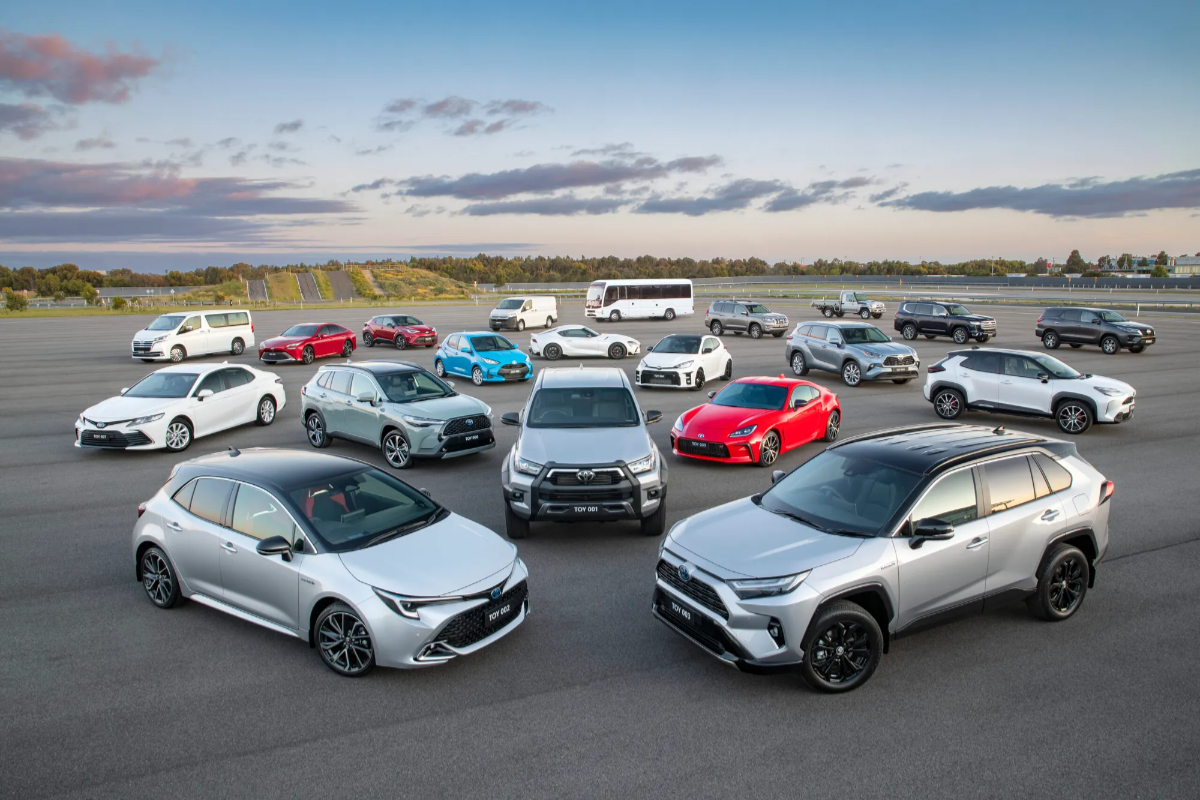
Toyota announces $300 Million investment plan in auto sector

Toyota announces

KARACHI: In a major development for Pakistan’s auto industry, Toyota has announced plans to invest $300 million in the country over the next five years. The announcement was made by Ali Asghar Jamali, Chief Executive Officer of Indus Motor Company.

According to Jamali, Toyota has already invested $736 million in Pakistan over the past 35 years, reflecting its long-term commitment to the local market.

However, he highlighted that heavy taxation remains a key challenge, noting that large vehicles in Pakistan are subject to taxes of up to 60 percent.

He emphasized that automobile manufacturers operate globally and place immense importance on maintaining their brand reputation, adding that no company compromises on quality standards.

Comparing market dynamics, Jamali pointed out that around 90 million vehicles were sold worldwide last year, whereas Pakistan’s total sales stood at just 200,000 units, indicating significant growth potential in the local market.

He urged the government to introduce a long-term auto policy spanning at least 10 years, stating that consistent and stable policies would boost manufacturing and attract greater foreign investment into the sector.

Jamali further revealed that approximately 60 percent of vehicle parts used by Indus Motor Company are now locally manufactured, contributing to industrial development and localization.

Discussing future trends, he said electric vehicles (EVs) represent the global future of mobility, but Pakistan currently lacks the necessary EV charging infrastructure to support large-scale adoption.

On performance, he noted that the company achieved a 1 percent increase in market share last year, while a decline in interest rates has led to a rise in auto financing over the past three years.

He added that the company will align its future strategy in accordance with government policy directions. Furthermore, Indus Motor Company has paid $6.3 billion in taxes to date and has helped save $6.5 billion in foreign exchange through local production.