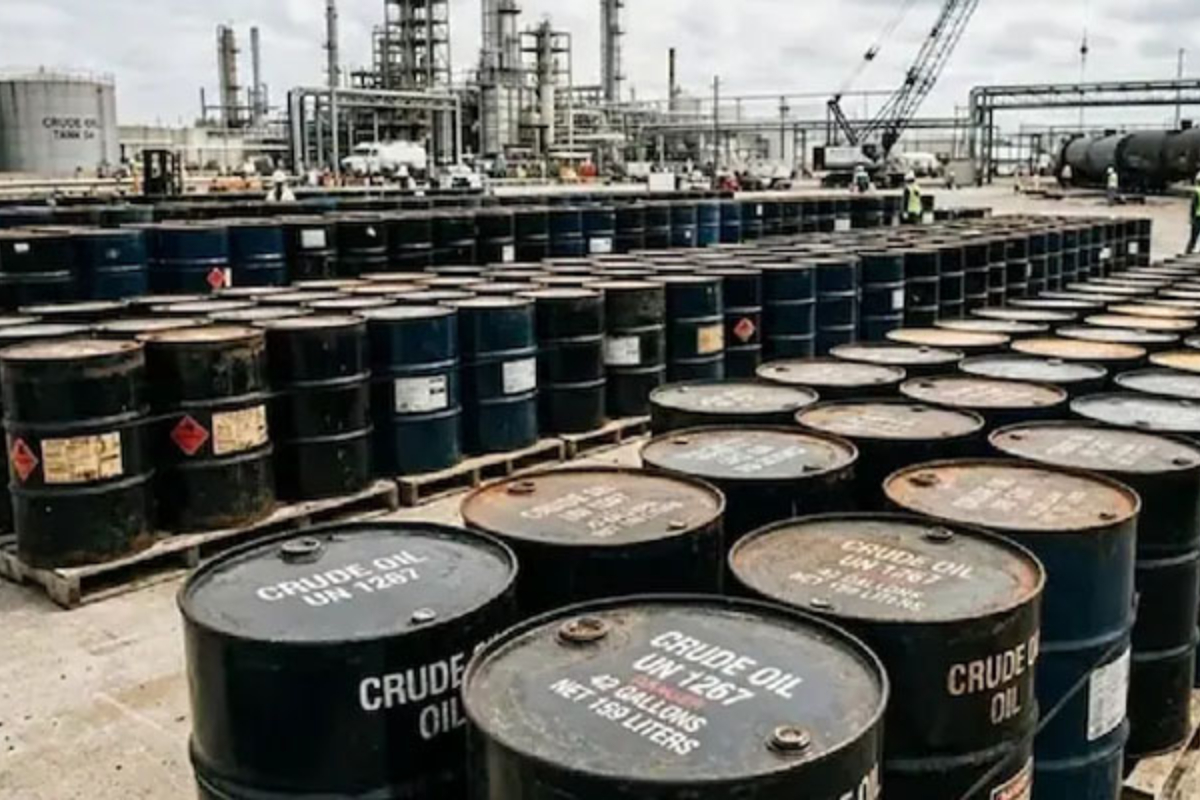
LONDON: Brent crude oil prices climbed above $100 a barrel on Wednesday as escalating tensions in the Middle East raised concerns over disruptions to oil supplies from the region.
According to Reuters, Brent crude futures rose $2.15, or 2.2%, to $100.07 a barrel, while U.S. West Texas Intermediate crude reached $94.73 a barrel.
Brent prices crossed the $100 threshold for the first time since July 24, reflecting growing concerns in global markets about the security of oil shipments from the Middle East.
Brent crude has gained about 25% since the beginning of last month, according to the report. The prolonged dispute between the United States and Iran has added to uncertainty in energy markets, with prospects for a lasting resolution appearing limited.
Analysts warned that oil prices could rise further if the conflict expands or major disruptions occur to oil transportation from the region.
The potential supply disruptions have increased pressure on global energy markets, raising concerns about higher fuel costs for consumers and businesses worldwide.
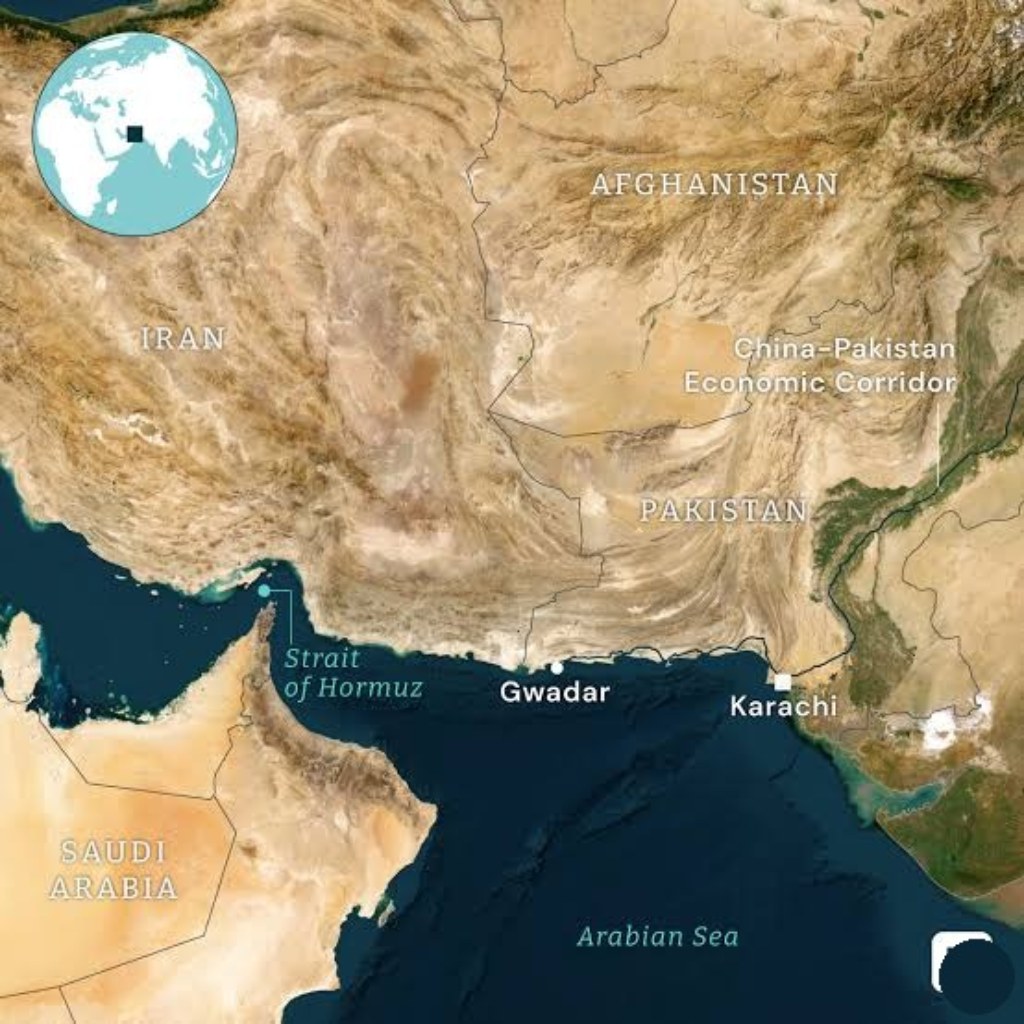
The Strait of Hormuz — the 21-mile-wide channel that normally carries one-fifth of the world’s oil — is effectively closed to commercial traffic. Between 4 and 6 August 2026, just 8 to 15 vessels crossed daily, against roughly 130 transits before the conflict began.
Pakistan imports most of its crude and refined fuel, and a large share of it moves through or near that chokepoint. This article traces the chain from a closed waterway to the price on the pump — and explains why the connection is less direct than it first appears.
Where things stand
Brent crude for October delivery was trading around $84.11 a barrel on 10 August 2026, up about 0.7% on the day and roughly 16% higher than before the US–Israel war on Iran began in late February 2026.
Iran has attached conditions to reopening the strait. Foreign Minister Abbas Araghchi has said Tehran requires the easing of US sanctions and the payment of war reparations, adding that Iran and Oman were close to an understanding but that these conditions must be met first.
The human cost of the disruption is documented: the International Maritime Organization has recorded 64 violent incidents and 17 deaths involving commercial vessels since the war began.
Markets are pricing uncertainty rather than a resolution. As KCM Trade chief analyst Tim Waterer put it, the absence of concrete movement and unresolved questions about how any deal would work in practice keeps “a risk premium in the price.”
Why $84 oil is lower than you might expect
This deserves attention, because it runs against intuition. A fifth of global oil supply losing its main route would, in most historical scenarios, have sent prices well past $120. Brent at $84 reflects several offsetting factors:
Alternative routes exist. Saudi Arabia’s East–West pipeline and the UAE’s Fujairah pipeline can move some volumes to Red Sea and Gulf of Oman terminals, bypassing Hormuz — though at reduced capacity.
Strategic reserves. Consumer countries have released stocks to cushion the shortfall.
Non-OPEC supply. US, Brazilian and Guyanese production has grown substantially over the past decade, diluting the Gulf’s share of marginal supply.
Demand destruction. High prices and slower global growth have themselves reduced consumption.
The implication for Pakistan is double-edged. The buffers have worked so far, but they are finite. Reserves deplete and bypass pipelines are already near capacity. If the closure extends, the cushion thins.
How this reaches the Pakistani pump
Pakistan now uses a more frequent fuel-pricing mechanism tied to international movements. Recent OGRA-notified rates, effective 13 August 2026:
Fuel
Price (PKR/litre)
Change
Petrol
324.98
−0.94
High-speed diesel
382.79
+0.54
Kerosene
291.45
—
Light diesel oil
248.72
—
Notice the direction: petrol fell slightly while diesel rose, on a day when Brent was climbing. Four things sit between the crude price and your receipt:
Refined product prices, not crude. Pakistan imports finished petrol and diesel. Refining margins move independently of crude, which is why petrol and diesel can diverge on the same day.
The exchange rate. Oil is priced in dollars and sold in rupees. Currency movement can amplify or offset the crude move entirely.
Taxes and levies. Petroleum levy and sales tax are a large share of the retail price, and they are policy variables — the government can absorb or pass on international moves.
Margins. Dealer and oil marketing company margins are regulated and adjusted periodically. The ECC recently approved a Rs1.34 increase in dealers’ margin, which raises the pump price independently of anything happening in the Gulf.
The knock-on effects that matter more than petrol
For most Pakistani households, the fuel price itself is not the largest channel. Three indirect effects hit harder.
Freight and food prices
High-speed diesel powers trucking and agricultural machinery, so diesel increases propagate into food prices across the country. Diesel rising while petrol falls is therefore worse for inflation than the headline suggests. Transport costs have already triggered friction — Pakistani goods transporters began an indefinite strike over fuel prices and taxes.
Energy is Pakistan’s largest import category. A sustained rise widens the import bill, pressures the current account and the rupee, and constrains the State Bank’s room to cut rates — the transmission channel set out in our inflation outlook.
There is one meaningful offset. Gulf employment has held up through the conflict, and remittances — over $4.2 billion in May 2026 alone — help fund the higher import bill.
What to watch next
Daily Hormuz transit counts. A move back toward 130 vessels a day would deflate the risk premium faster than any announcement.
The Oman-mediated track. Araghchi has pointed to it as the live channel.
Tanker insurance rates. War-risk premiums are a real-time market read on whether traders expect escalation.
Not legally closed, but effectively so for commercial shipping. Traffic fell to 8–15 vessels a day in early August 2026 from about 130 before the conflict. A small number of transits continue under elevated risk.
Will petrol prices in Pakistan rise sharply?
That depends on refined product prices, the rupee and government tax decisions — not on crude alone. Recent notifications have shown small moves in both directions. Anyone claiming to know the next figure in advance is guessing.
Does Pakistan get its oil through Hormuz?
A significant share of Pakistan’s crude and refined imports originates from Gulf suppliers whose exports transit or depend on the strait. Pakistan has been broadening its oil import framework, partly to diversify sourcing.
Why did diesel go up while petrol went down?
They are separate products with separate international benchmarks and refining margins. Diesel demand is driven by freight and industry, petrol by private vehicles, and the two markets frequently move apart.
Oil prices, transit data and official statements sourced from Al Jazeera, CNBC, the International Maritime Organization and OGRA notifications as reported. Fuel prices are those effective 13 August 2026 and change under Pakistan’s revised pricing mechanism — check current OGRA notifications before relying on them. Last updated 15 August 2026.
LONDON: Global oil prices climbed above $100 a barrel for the first time since May as escalating tensions in the Middle East fueled concerns over potential disruptions to global energy supplies.
Brent crude, the international benchmark, rose more than 6% in Thursday trading, surpassing the psychologically significant $100-a-barrel mark.
Investors increased buying amid fears that a wider regional conflict could threaten the flow of oil through key shipping routes.
The price rally comes as attacks on commercial shipping in the Red Sea continue, with Yemen’s Houthi movement reportedly targeting Saudi oil tankers and other commercial vessels.
The Red Sea and the Bab el-Mandeb Strait are among the world’s busiest maritime corridors for oil and cargo shipments linking Asia, Europe and the Middle East.
US President Donald Trump blamed both the Houthis and Iran for the attacks, saying Washington holds Tehran responsible for supporting the group. He warned that the United States could respond with significant military action if attacks on international shipping continue.
Energy analysts say sustained oil prices above $100 a barrel could drive up global fuel, electricity and transportation costs, adding to inflationary pressures and slowing economic growth.
LONDON: Global oil prices continued to decline in the latest trading session, extending a downward trend driven by easing supply concerns and weaker demand expectations.
Brent crude, the international benchmark, fell to $72.91 per barrel, while U.S. West Texas Intermediate (WTI) crude dropped to $69.63 per barrel. Abu Dhabi’s Murban crude also declined, trading at $66.35 per barrel.
Natural gas prices fell to $3.31 per million British thermal units (MMBtu), reflecting broader weakness across energy markets.
Economic analysts said Brent crude has now reached its lowest level since tensions between the United States and Iran escalated earlier this year.
Market observers attributed the decline to improving global supply conditions and concerns over slowing demand growth in major economies. Increased production levels and easing geopolitical fears have also helped reduce pressure on energy markets.
The latest price movements are being closely monitored by investors and policymakers as energy costs remain a key factor influencing inflation and global economic growth.
ISLAMABAD: International crude oil prices have fallen to their lowest levels since late February, raising expectations of further cuts in petroleum prices in Pakistan.
Oil prices came under pressure following developments involving the United States and Iran, leading to a sharp decline in global benchmarks.
Brent crude dropped to $74 a barrel, its lowest level since Feb. 27. U.S. West Texas Intermediate crude fell to $70 a barrel, while Murban crude declined to $67 a barrel.
The decline in international prices is already being felt in Pakistan, where the government recently announced significant reductions in gasoline and high-speed diesel prices.
Energy analysts said the continued slide in crude prices in recent days has shifted attention to the next fuel price review, with expectations growing that authorities could consider additional cuts if the downward trend persists.
Market observers said sustained weakness in global oil prices could provide further relief to consumers and ease inflationary pressures in the country.
Global crude oil prices fell to their lowest level in three months, extending losses in international markets following the Iran-U.S. agreement.
Brent crude, the international benchmark, dropped by $3.20 per barrel to $79 per barrel.
U.S. West Texas Intermediate (WTI) crude also declined, falling $2.86 to $77 per barrel. Meanwhile, UAE Murban crude was trading at $72 per barrel.
The decline continues a downward trend seen in recent trading sessions, with oil prices also posting losses a day earlier amid expectations of improved supply flows and reduced geopolitical tensions.
Global oil markets witnessed a dramatic surge on Monday as escalating war tensions involving Iran pushed crude prices to their highest levels since 2022, raising concerns about energy supply disruptions.
In international trading, Brent Crude climbed to $119.50 per barrel at one stage, marking a multi-year high. Similarly, West Texas Intermediate (WTI) also surged to $119.48 per barrel during the session.
According to the latest figures, Brent crude is currently trading at around $101.46 per barrel, while WTI crude has reached approximately $98.82 per barrel, reflecting a sharp increase within a single trading day.
Market Anxiety After Iran Attacks
Energy market analysts say the surge followed military strikes carried out by the United States and Israel on Iran on February 28, which triggered widespread uncertainty in global energy markets.
Since the escalation, Brent crude prices have jumped nearly 66%, while WTI has risen about 77%, highlighting the severe volatility in oil markets.
Supply Concerns Push Prices Higher
Experts warn that if the conflict spreads further across the Middle East, global oil supplies could face serious disruptions, potentially pushing prices even higher.
Market data also shows that immediate Brent delivery contracts are trading about $36 higher than contracts for delivery in six months, indicating strong fears of a near-term supply shortage.
Possibility of Approaching Historic Oil Price Record
For reference, the highest oil price in history was recorded in 2008, when crude surged to nearly $147 per barrel during the global financial crisis. Analysts caution that if the conflict persists for an extended period, prices could move closer to that historic level once again.