
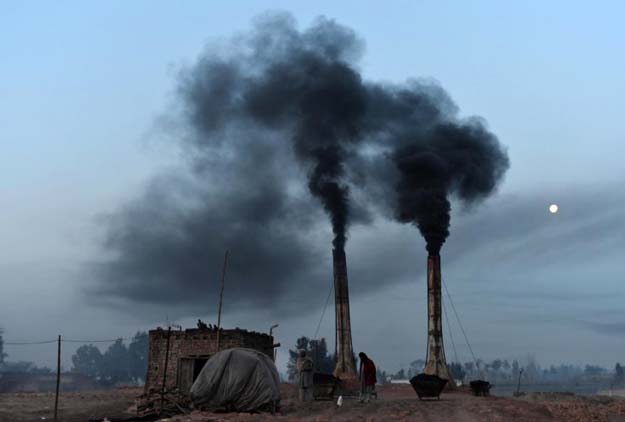
Pakistan ranks among the top 10 most climate-vulnerable countries in the world. From melting glaciers to declining crop yields, climate change has begun to reshape every sector of the country’s economy and ecology.
Impact on Agriculture
Agriculture employs around 40% of Pakistan’s workforce, but rising temperatures and unpredictable rainfall are devastating crops.
According to The Agri Economist (2023), Sindh’s mango production dropped from 1.8 million metric tons to 1.44 million metric tons — a 20% decline due to heat stress and untimely rains.
Similarly, a CIMMYT report projects that wheat yields in Pakistan could fall by 16% by 2050 if current climate trends continue.
Glacier Melt and Water Challenges
Pakistan hosts more than 13,000 glaciers, covering around 13,547 sq km, according to Al Jazeera (Aug 28, 2025). These glaciers are melting 65% faster than they did between 2001 and 2010, severely affecting river flows.
The Express Tribune reported in May 2024 that extreme inflows in the Indus and Jhelum rivers — caused by glacier melt and erratic monsoons — led to widespread flooding.
Per capita water availability has now dropped below 900 cubic meters, compared to 5,600 in 1947, making Pakistan officially a water-scarce country (Pakistan Council of Research in Water Resources, 2024).
Urban Life at Risk
Cities like Karachi and Lahore face record heatwaves and flooding. In 2024, Karachi recorded temperatures above 45°C, resulting in heat-related hospitalizations. Meanwhile, smog levels in Punjab reached historic highs.
Conclusion
As per the Pakistan Meteorological Department, without immediate adaptation — from sustainable farming to urban greening — Pakistan’s social and economic stability will remain under threat.