BREAKING NEWS
Advertise with us >

Sindh’s Fuel Cess Likely to Raise Prices Nationwide

Sindh fuel cess, Pakistan oil prices, infrastructure tax Sindh, inflation in Pakistan, fuel import levy, petroleum news Pakistan


Sindh’s new 1.8% infrastructure cess on oil imports may push fuel prices higher by Rs 3 per litre, sparking economic concerns nationwide.


The Sindh government’s decision to impose a 1.8% infrastructure cess on oil imports has raised alarm among economists and transport associations, who warn of potential fuel price hikes of up to Rs 3 per litre across Pakistan.

The cess, announced earlier this week, aims to generate funds for infrastructure maintenance and development within Sindh. However, oil marketing companies say the added cost will likely be passed on to consumers, worsening inflation at a time when the rupee remains under pressure.

According to industry sources, Pakistan’s current account deficit has widened again, and any additional tax burden could further slow industrial output. Transport unions have already threatened protests if the increase is not withdrawn or adjusted.

The Petroleum Division is in talks with provincial authorities to reconsider the levy or develop a shared revenue mechanism that would not burden end-users. Sindh officials, however, argue that the cess is “necessary to maintain critical logistics infrastructure used by the oil industry.”

Economists suggest that such regional levies could complicate federal-provincial fiscal coordination. With global oil prices fluctuating, even minor tax changes can have cascading effects on transportation, manufacturing, and household budgets.

The federal government has yet to issue an official statement on whether it will intervene or offer a subsidy to offset the increase.

Economy Under Watch: Forex Pressures Continue

Pakistani rupee faces forex pressure as economy struggles with trade deficit and inflation

Pakistani rupee faces forex pressure as economy struggles with trade deficit and inflation

Karachi – Pakistan’s economy remains under tight watch as the Pakistani rupee faces volatility in the foreign exchange market. Importers and exporters alike are struggling to cope with the ongoing instability, while analysts caution that without immediate corrective measures, the economic crisis in Pakistan could worsen.

In recent weeks, the rupee has traded in a fluctuating band, reflecting pressure on Pakistan’s forex reserves and uncertainty in international trade. Importers are voicing concerns over rising import costs of raw materials and finished goods, driven largely by rupee depreciation and higher international oil prices. At the same time, exporters are highlighting inconsistent trade policies in Pakistan, which are making it difficult to maintain competitiveness in global markets.

Experts believe that Pakistan’s persistent trade deficit continues to fuel the crisis. The country’s imports remain significantly higher than its exports, increasing pressure on the current account. Unless the government introduces effective reforms in the export sector and reduces dependency on costly imports, the rupee is likely to remain under stress.

Meanwhile, inflation in Pakistan continues to bite households and businesses. Prices of essential commodities such as wheat, sugar, and cooking oil remain high, eroding the purchasing power of ordinary citizens. Small and medium enterprises (SMEs) are also reporting higher operational costs, raising fears of reduced productivity and potential layoffs.

Financial analysts suggest that the government should focus on stabilizing the rupee through tighter fiscal discipline, ensuring consistency in trade and tax policies, and encouraging foreign direct investment (FDI) in Pakistan to boost reserves. The State Bank of Pakistan (SBP) has already hinted at possible interventions, but market watchers say monetary measures alone may not be sufficient without broader economic reforms.

Despite challenges, some economists see opportunities. They argue that if Pakistan invests in value-added exports such as textiles, information technology (IT), and agriculture-based industries, it could improve foreign exchange earnings and reduce pressure on the currency.

For now, uncertainty dominates the financial landscape. With global economic headwinds, fluctuating oil prices, and domestic political challenges, the road to economic stability in Pakistan remains bumpy. All eyes are on Islamabad to see whether upcoming policy decisions will bring much-needed relief—or add further strain to an already fragile situation.

Protests Erupt in Kashmir as Citizens Demand Economic Rights and Political Reforms

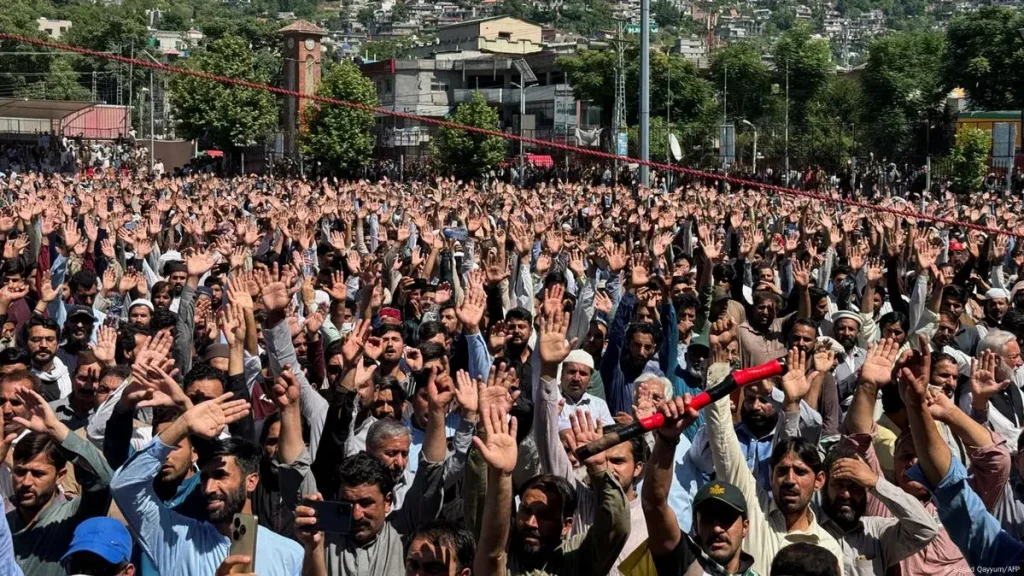
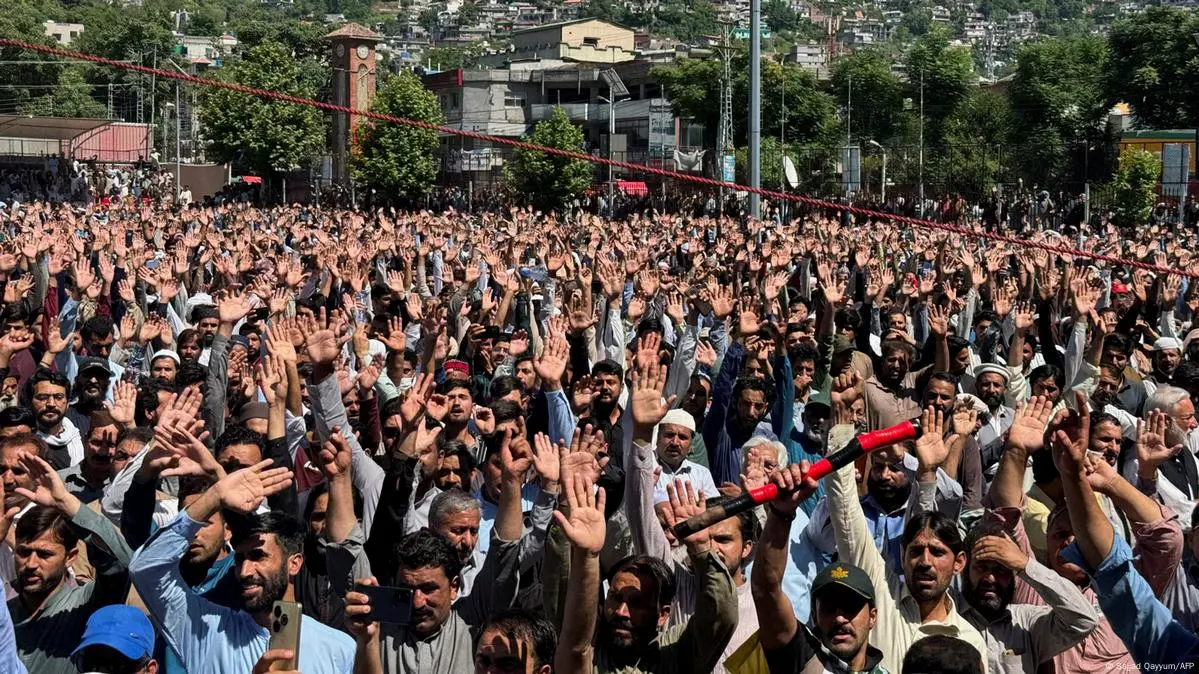
Protesters in Kashmir demanding economic rights and reforms

Awami Action Committee Leads Protests in Kashmir Over Rising Prices and Joblessness

According to reports, the AAC – a coalition of local political and social groups – mobilized large crowds calling for an end to special refugee-reserved seats in the legislative assembly, improved economic opportunities, and urgent governance reforms. Protesters accused the federal government, led by Prime Minister Shehbaz Sharif, of turning a blind eye to the worsening situation on the ground.

Kashmir Residents Rally for Economic Rights, Jobs, and Political Reforms

Chanting slogans for justice, demonstrators blocked roads and staged sit-ins, voicing their anger against skyrocketing prices of essential commodities, joblessness, and stalled infrastructure projects. “Our youth have no jobs, our families cannot afford daily necessities, and our voices are not heard in the system,” one protester told local reporters.

Political analysts warn that these demonstrations reflect a deeper frustration that has been brewing for years. “The grievances are not new – economic disparity, lack of employment, and governance gaps have long fueled dissatisfaction. Unless concrete steps are taken, the protests could escalate further,” commented a senior analyst.

The federal government has yet to release an official statement, but insiders suggest that top officials are monitoring the situation closely. Observers believe Islamabad will need to initiate dialogue with local leaders and offer visible relief measures to restore calm.

Over the past few years, Kashmir has seen repeated waves of unrest over electricity shortages, taxation issues, and poor service delivery. However, today’s demonstrations stand out for their scale, signaling mounting frustration that could pressure the central government to take urgent corrective action.

For now, the region remains tense, with residents waiting to see whether the authorities will respond through dialogue and reforms – or opt for stricter enforcement measures.