
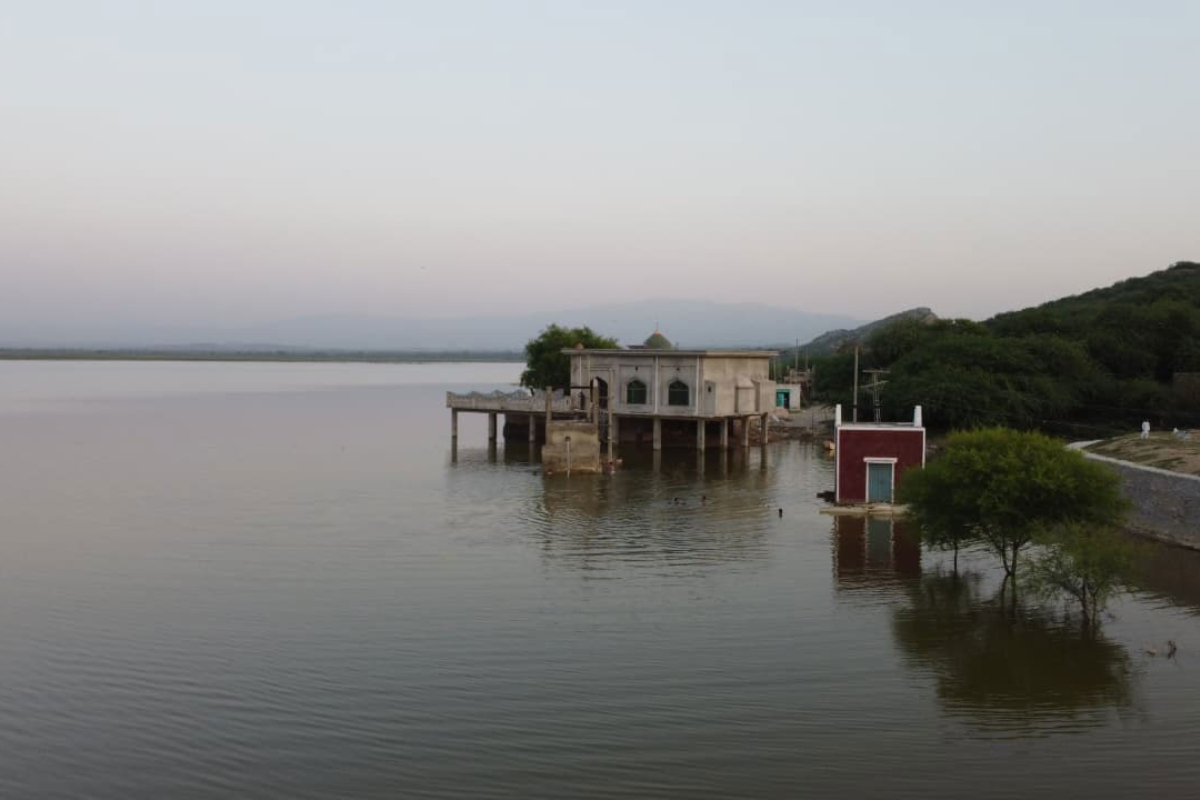
MIANWALI: Once known for its blue waters and rich birdlife, Namal Lake in Pakistan’s Punjab province is increasingly turning into a barren expanse of dust and scrubland, raising fears of a deepening environmental and humanitarian crisis.
Located at the foothills of the Salt Range near Mianwali, the lake, created after the construction of Namal Dam in 1913, spans about 5.5 square kilometers. Although recent rains brought some water back to the reservoir after a prolonged dry spell, environmental experts say the lake remains far from recovery.
Residents who grew up along the lake’s shores recall a very different landscape.
“When I was young, boats used to sail here and the sound of waves reached our home,” said 70-year-old Muhammad Arifeen, whose family has lived near the lake for generations. “Today, there is only dust and cracked earth. Our memories are buried in this soil.”
Experts say restoring the lake will require more than seasonal rainfall. Measures including clearing accumulated silt, restoring natural water channels and protecting catchment areas are needed to revive the ecosystem.
Local residents say the lake’s decline has hurt agriculture, reduced the number of migratory birds and contributed to shortages of drinking water in nearby communities.
Students at Namal University, established near the lake, also remember the reservoir as one of the area’s defining features. Muhammad Ahsan, a final-year business student, said the lake once provided a picturesque backdrop to campus life and recreational boat trips.
Farmers have also felt the impact. Saeed Ahmad, a resident of Musa Khel, said irrigation water from the lake had once sustained crops and livestock. Now, he said, farmers are increasingly dependent on rainfall and costly tube wells as groundwater levels continue to decline.
While climate change and shifting rainfall patterns have been cited as major causes of the lake’s deterioration, environmental expert and senior journalist Amar Guriro said human intervention has played a significant role.
According to Guriro, small dams and other structures built along natural waterways feeding the lake have restricted water flow and accelerated its decline.
He called for an emergency plan that includes restoring natural channels, removing silt from the lakebed and carrying out large-scale tree plantation in the catchment area.
Guriro warned that Namal Lake is not the only water body under threat, pointing to Manchar Lake, Pakistan’s largest freshwater lake, which has also suffered from pollution and human activity.
The Punjab government launched a restoration plan for Namal Lake covering the period from 2022 to 2027, promising to restore natural water flows. However, repeated attempts to obtain comments from the deputy commissioner of Mianwali and irrigation department officials were unsuccessful before publication.
Saghir Ahmad, a Mianwali native now living in Sweden who has campaigned for the lake’s preservation, said authorities have shown little interest in the issue.
“Nobody took interest. Government is silent,” he said.
For many residents, the shrinking lake raises an unsettling question: whether future generations will know Namal Lake only through photographs and memories, or whether meaningful action will revive one of the region’s most cherished natural landmarks.