
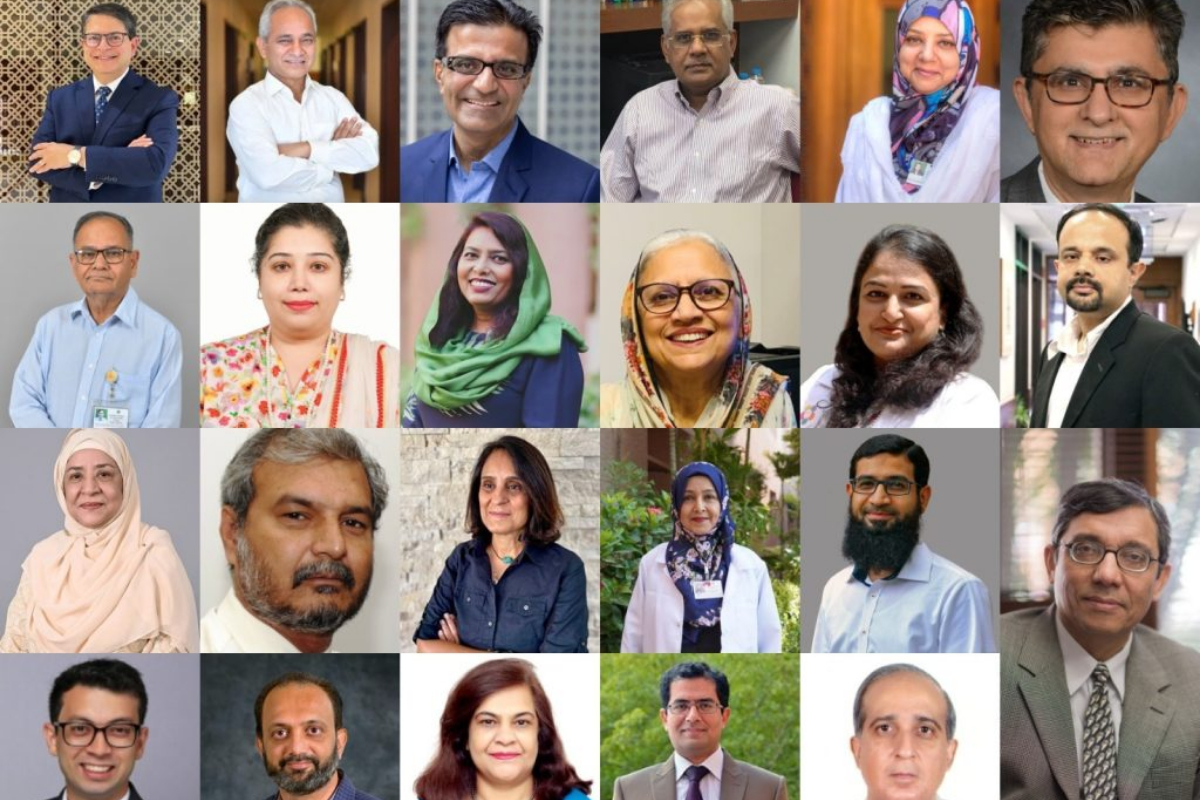
ISLAMABAD: Pakistan has achieved a significant milestone on the global scientific stage as 58 Pakistani scientists have been included among the world’s top two percent most influential researchers, according to the latest Global Citation Impact Rankings.
The ranking reflects Pakistan’s growing international presence in research and scientific influence, particularly in the fields of health and medical sciences, where Pakistani researchers continue to make notable contributions.
Prominent names on the list include Professor Dr. Zulfiqar Ahmed Bhutta, Professor Javed Akram, and Professor Abdul Basit, whose work has had a strong global impact in public health, clinical medicine, nutrition, diabetes care, and biomedical sciences.
The rankings have once again highlighted the leading role of Aga Khan University (AKU), which secured the largest representation from any Pakistani institution, with nearly 20 scientists included in the global list. AKU researchers have been especially recognized for decades of work in public health, pediatrics, nutrition, infectious diseases, epidemiology, and clinical medicine, supported by strong international research collaborations.
Dr. Zulfiqar Ahmed Bhutta is globally acknowledged for his research in maternal and child health and nutrition, Professor Javed Akram for his contributions to academic medicine and health system reforms, while Professor Abdul Basit is internationally regarded as a leading expert in diabetes and metabolic disorders.
Other distinguished Pakistani scientists featured in the list include J. Kumar Das, Sajid Bashir Soofi, Zafar Ahmed Fatmi, Imran Rashid Ahmed, Faiza Jahan, Waris Qidwai, Romina Iqbal, Farah Naz Qamar, Muhammad Imran Nisar, Samin Siddiqui, Qurratulain Qidwai, Tazeen Saeed Ali, and Saleema R. Walani, reflecting the depth and diversity of Pakistan’s medical research community.
In addition to AKU, researchers from several public and private universities were also recognized. These include Ijaz Ahmed Khan and Babar Tasneem Sheikh (Health Services Academy, Islamabad), Farooq Azam Rathore and Liaquat Ali (National University of Medical Sciences), Syed Aamir Gilani and Ashfaq Ahmed (University of Lahore), and Irfanullah, Umar Bacha, and Sonia Mukhtar (University of Management and Technology, Lahore), contributing across fields such as rehabilitation sciences, public health, pharmacy, and psychology.
Further representation includes scholars from Quaid-i-Azam University, University of Agriculture Faisalabad, Bahauddin Zakariya University, National Institute of Health, University of Veterinary and Animal Sciences, Jinnah Postgraduate Medical Centre, and several other institutions across the country.
Experts note that a large proportion of Pakistani scientists on the list belong to the health sector, including public health, clinical medicine, nutrition, endocrinology, psychiatry, infectious diseases, microbiology, and health policy, while a smaller number represent agriculture, veterinary sciences, pharmacology, rehabilitation, and behavioral sciences.
The top two percent global scientists list is compiled annually by researchers at Stanford University, based on data from Scopus-indexed publications. The evaluation uses a comprehensive methodology that considers total citations, h-index, authorship position, and field-specific impact.
While experts acknowledge that citation-based rankings do not fully capture aspects such as teaching quality or local policy impact, they emphasize that the inclusion of 58 Pakistani scientists is an encouraging sign for a research ecosystem operating under limited funding and resources. Analysts believe that with greater investment in research, improved governance, and clear national scientific priorities, Pakistan’s presence in global research rankings could strengthen further in the coming years.