
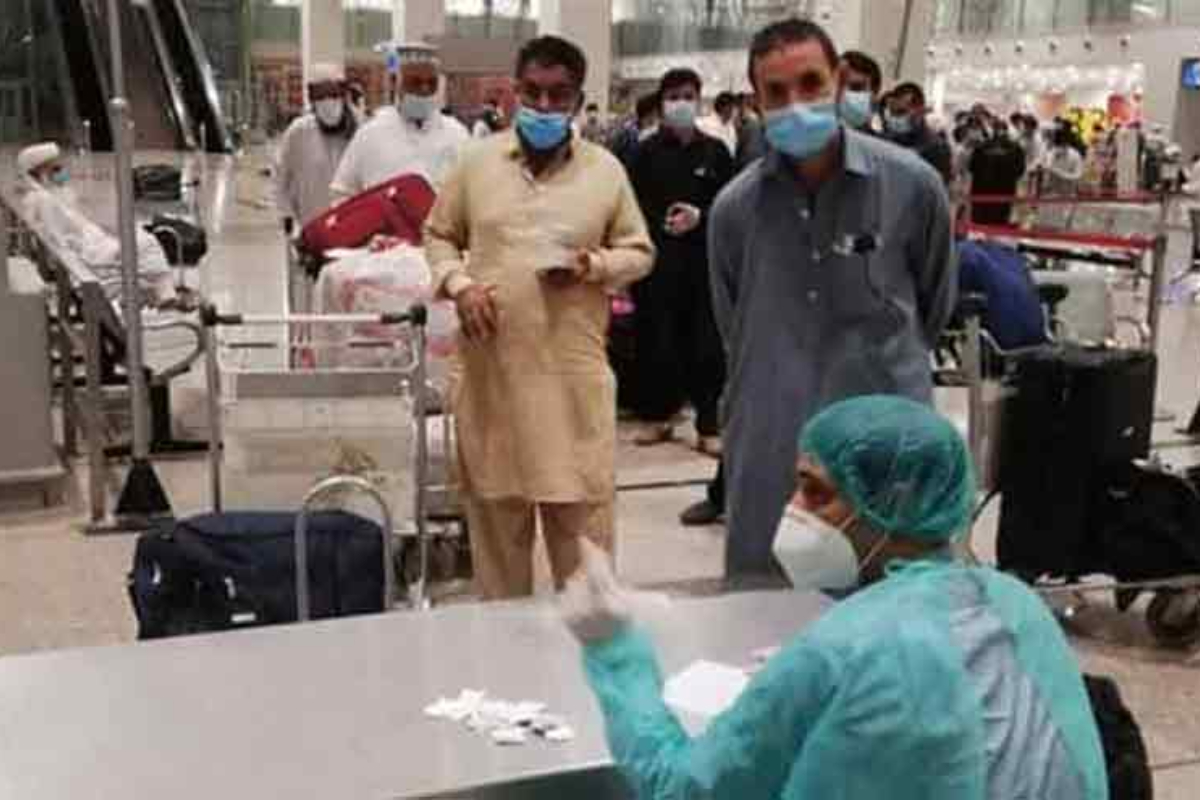
KARACHI: The Sindh Health Department has intensified preventive measures against Ebola at Jinnah International Airport amid growing global concerns over the deadly virus.
A high-level emergency meeting was held under the chairmanship of Special Health Secretary Fawad Ghaffar Soomro to review preparedness and response mechanisms at the airport.
Officials reviewed emergency arrangements to deal with potential Ebola cases, including stricter passenger monitoring, rapid response protocols and improvements to isolation ward facilities.
Representatives from the Airport Security Force, Federal Investigation Agency, Pakistan Civil Aviation Authority and Border Health Services also attended the meeting.
Among those present were Director General Health Dr. Waqar Memon, Director PDSRU Dr. Asif Syed and Dr. Zafar Mehdi.
Following the meeting, training sessions were conducted for personnel from different departments to strengthen preparedness against Ebola.
Officials decided to ensure 24-hour ambulance availability and establish a separate storage facility for emergency medical supplies.
Authorities also directed officials to further strengthen the passenger surveillance system at the airport and ensure protective measures and facilities for frontline workers.
During the briefing, Dr. Zafar Mehdi highlighted operational challenges and urgent requirements at the airport, saying airports remain highly sensitive points for the transmission of deadly infectious diseases.
He stressed that rapid response capabilities and effective preparedness are essential to contain Ebola threats.
Dr. Waqar Ahmed Memon emphasized the importance of training sessions and mock exercises to improve emergency response capacity.
An Ebola awareness and training session for health professionals was also held at Jinnah International Airport, focusing on virus transmission, surveillance, infection prevention and control measures, and safe handling of suspected patients and contact tracing.
The Sindh Health Department reaffirmed its commitment to remaining on full alert to protect public health.