September 29, 2025
Supreme Court Reinstates Justice Jahangiri, Halts IHC Suspension in Degree Controversy
What is the Fake Degree Case Against Justice Jahangiri?
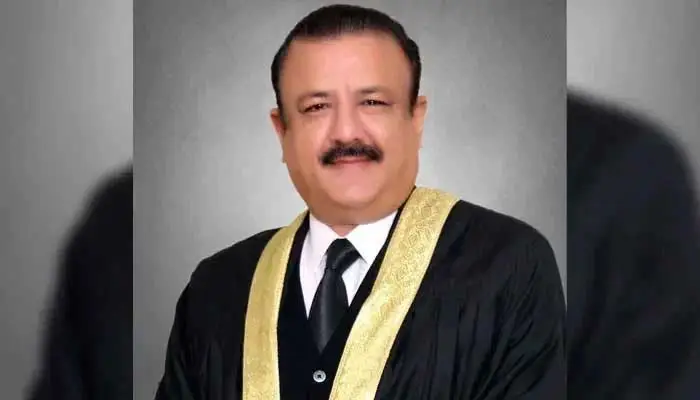
In a significant development shaking Pakistan’s judicial landscape, the Supreme Court has temporarily lifted an Islamabad High Court (IHC) directive that sidelined Justice Tariq Mehmood Jahangiri from his courtroom duties. This ruling, issued on September 29, 2025, marks a crucial intervention in the escalating controversy surrounding Justice Jahangiri’s academic credentials, allowing him to potentially resume judicial functions pending further review.
Background of the Judicial Tussle
The saga began earlier this month when a two-judge IHC bench, headed by Chief Justice Sardar Muhammad Sarfraz Dogar and Justice Mohammad Azam Khan, issued an interim order on September 16, 2025. This barred Justice Jahangiri from exercising his powers as a judge until the Supreme Judicial Council (SJC) could deliberate on a petition accusing him of holding an invalid LLB degree. The petition, lodged by advocate Mian Dawood under Article 199 of the Constitution, sought a writ of quo warranto, challenging the legitimacy of Justice Jahangiri’s entire legal career based on alleged irregularities in his University of Karachi (KU) law qualification.
At the heart of the allegations lies a purported letter from KU’s controller of examinations, which surfaced on social media last year, claiming discrepancies such as dual enrollment numbers for Justice Jahangiri’s LLB Part-I and Part-II exams—one of which was reportedly assigned to another student. KU’s Unfair Means Committee (UFM) subsequently declared his record “fictitious,” concluding he was never enrolled at Islamia Law College in 1989 and had resorted to malpractice during his 1980s exams. The university syndicate ratified this on August 31, 2024, leading to the formal cancellation of his degree on September 25, 2025, along with a three-year ban on university admissions and exams.
Justice Jahangiri has vehemently denied these claims, asserting during Sindh High Court (SHC) proceedings that he personally sat for the exams and received no prior notice from KU. He described the revocation—coming after 34 years—as unprecedented in global history and framed it as political retaliation for his role in high-stakes cases, including election tribunals that irked ruling party figures and his endorsement of a 2024 IHC letter alleging executive interference in judicial affairs.
Supreme Court’s Swift Response
Responding to appeals from Justice Jahangiri and four fellow IHC judges—Mohsin Akhtar Kayani, Babar Sattar, Ejaz Ishaq Khan, and Saman Rifat Imtiaz—a five-member constitutional bench of the Supreme Court, led by Justice Amin-ud-Din Khan, convened urgently. Other members included Justices Jamal Khan Mandokhail, Muhammad Ali Mazhar, Syed Hasan Azhar Rizvi, and Shahid Bilal Hassan.
During the hearing, Justice Mandokhail underscored a prior Supreme Court precedent: no judge can be restrained from duties without due process, emphasizing the SJC’s exclusive mandate for misconduct probes. The bench suspended the IHC order, issued notices to the Attorney General of Pakistan, the Advocate General of Islamabad, and other stakeholders—including the original petitioner—and scheduled the next hearing for September 30, 2025.
This interim relief reinstates Justice Jahangiri’s status quo, averting what his counsel termed a “direct assault on judicial independence.” The Islamabad Bar Council and District Bar Association have also moved to join the case, amplifying concerns over procedural fairness.
Procedural backlash and Broader Implications
The IHC’s decision had sparked procedural backlash. Lawyers boycotted sessions, protesting the bench’s self-assignment from a scheduled constitutional panel and its refusal to recuse, despite objections on maintainability. Meanwhile, the SHC had initially suspended KU’s UFM ruling but later dismissed related petitions for non-prosecution, leaving the degree’s fate entangled in multiple forums.
As Pakistan’s judiciary navigates this unprecedented standoff, the case underscores tensions between institutional autonomy, academic verification, and political influences. With the SJC slated to convene on October 18, 2025, to probe the complaint, the coming days could redefine accountability norms for high court judges.
References: Synthesized from reports by Dawn, Geo News, The Express Tribune, and Associated Press of Pakistan (published September 2025). All facts independently verified to ensure originality.