
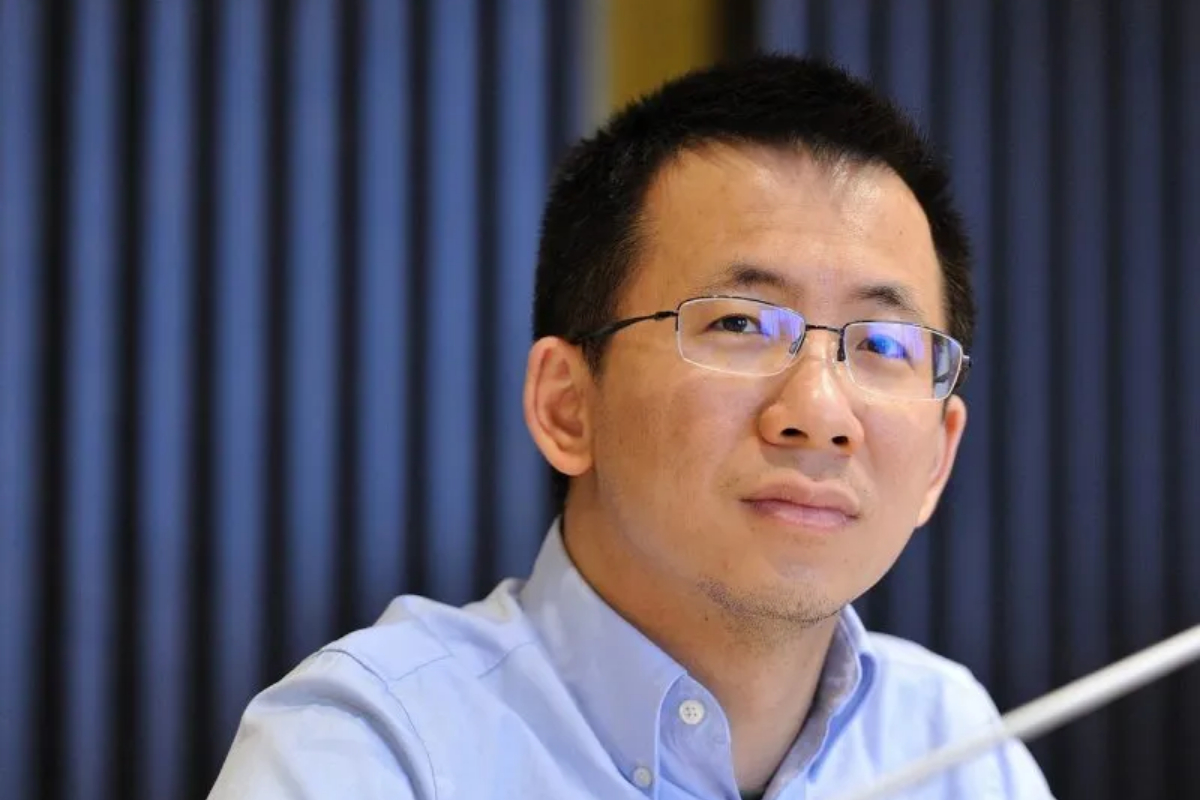
BEIJING: Zhang Yiming, founder of TikTok parent company ByteDance, has overtaken Indian businessman Gautam Adani to become Asia’s richest person, according to Bloomberg.
Zhang’s net worth has reached $105 billion, placing him 18th on Bloomberg’s list of the world’s richest people. Adani also has a fortune of about $105 billion but ranks 20th globally, according to the report.
Zhang’s wealth has increased by $40.3 billion this year, while Adani’s fortune has risen by $20.4 billion. Indian businessman Mukesh Ambani ranks third in Asia with a net worth of $81.3 billion.
Zhang’s fortune has increased eightfold since March 2019, with more than $12 billion added during September 2026 alone, according to Bloomberg.
Who is Zhang Yiming?
Despite being one of China’s and Asia’s wealthiest people, Zhang is known for maintaining a relatively private life, with limited information publicly available about his personal affairs.
Born in 1983 in China’s Fujian province, Zhang is the son of civil servants. His name is reportedly based on a Chinese proverb associated with surprising people on the first attempt.
Zhang graduated from Nankai University in 2005 with a degree in software engineering. He met his future wife at university, and the two later married.
After graduating, Zhang joined Kuxun, an internet company, in 2005 as one of its early employees and initially worked as an ordinary engineer. Within two years, he was managing a team of about 40 to 50 people.
Zhang has said his responsibilities expanded beyond technology when he became involved in product planning and other areas of the business. He has credited those early experiences with helping him develop the skills needed to build and manage companies.
He also recalled accompanying a sales director to meet a customer in 2007, saying the experience helped him understand what effective sales looked like. He later said those lessons proved useful when he founded his own company and recruited employees.
Before establishing ByteDance, Zhang also worked at Microsoft but eventually left to pursue his own business.
In 2012, he founded ByteDance, which later became globally known through TikTok and its Chinese counterpart, Douyin.
Interestingly, Zhang has said he initially did not regularly use TikTok. He described himself as an occasional viewer who rarely posted videos because he believed the platform was mainly aimed at young people.
He later made it a requirement for ByteDance employees to create TikTok videos and receive a specified number of likes, describing the move as a significant step for himself.