
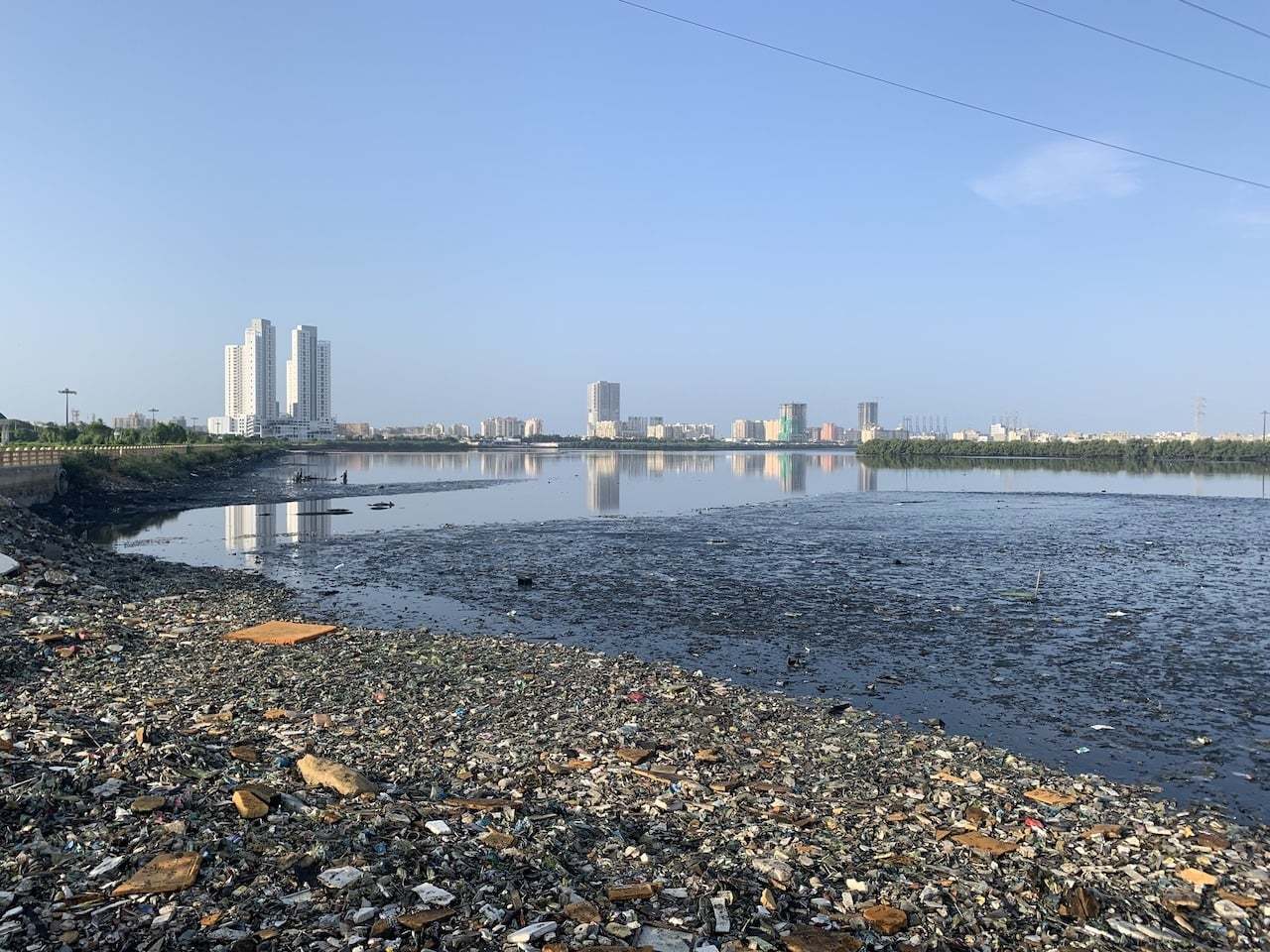
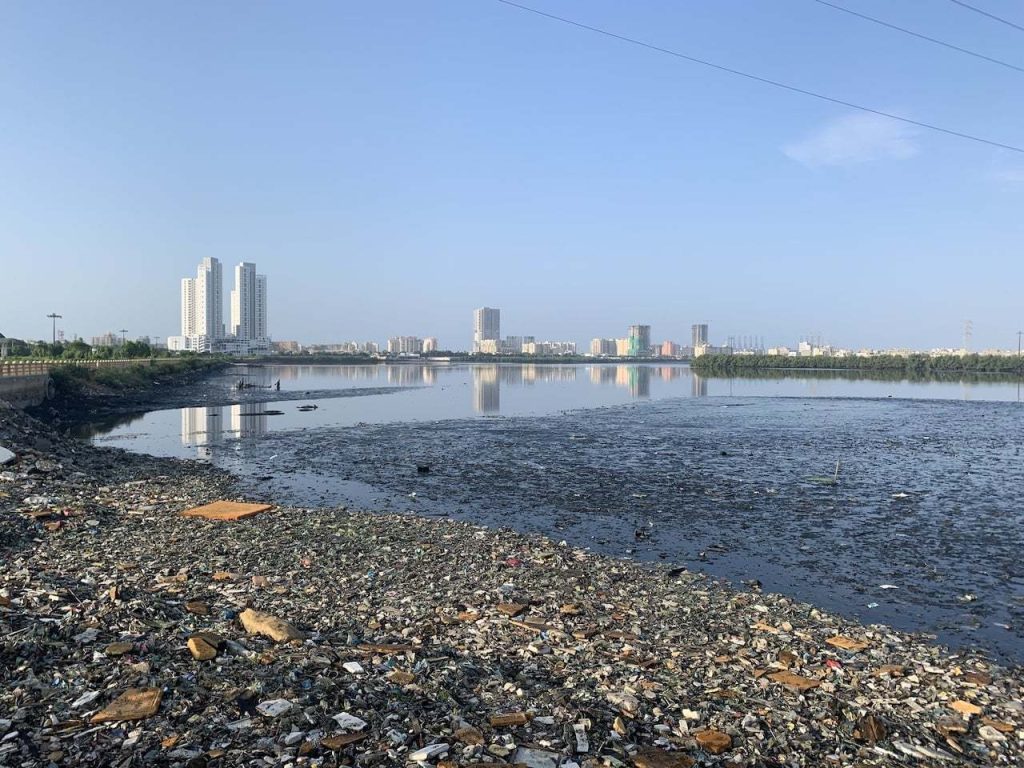
Karachi’s 70 km coastline faces a growing threat from rising sea levels.
A MDPI study (2023) recorded Karachi’s relative sea level rising 1.9 millimeters per year since 1916.
The Institute for Strategic Studies Pakistan (ISSP) (June 16, 2025) confirmed further acceleration linked to global warming.
Coastal Erosion and Flooding
According to Dawn News (May 2020), over 3.1 million acres of agricultural land in Badin, Thatta, and Sujawal have already been submerged or rendered infertile by seawater intrusion.
The World Wildlife Fund (WWF Pakistan) reports that Sindh has lost more than 50% of its mangroves over the past 50 years — removing the natural buffer that once protected Karachi from tidal surges.
Communities in Crisis
Fishing villages like Ibrahim Hyderi and Keti Bunder are being forced to relocate as saline water destroys homes and farmland. Sea intrusion has advanced 67 km inland, forcing mass migration (Dawn News, 2020).
Economic Risks
Karachi Port and nearby industries are at serious risk of flooding, threatening billions in infrastructure and trade. Coastal erosion also endangers DHA’s waterfront zones and Clifton areas.
Solutions
- Replant mangroves along the Sindh coastline.
- Ban sand mining and control development in high-risk zones.
- Build sea walls and climate-resilient infrastructure.
- Integrate coastal climate risk into city planning.
Conclusion
As ISSP warned (2025), Karachi’s rising sea levels are a long-term economic and humanitarian risk. Without urgent restoration of natural defenses and smarter coastal policy, Pakistan’s largest city could face irreversible damage.