
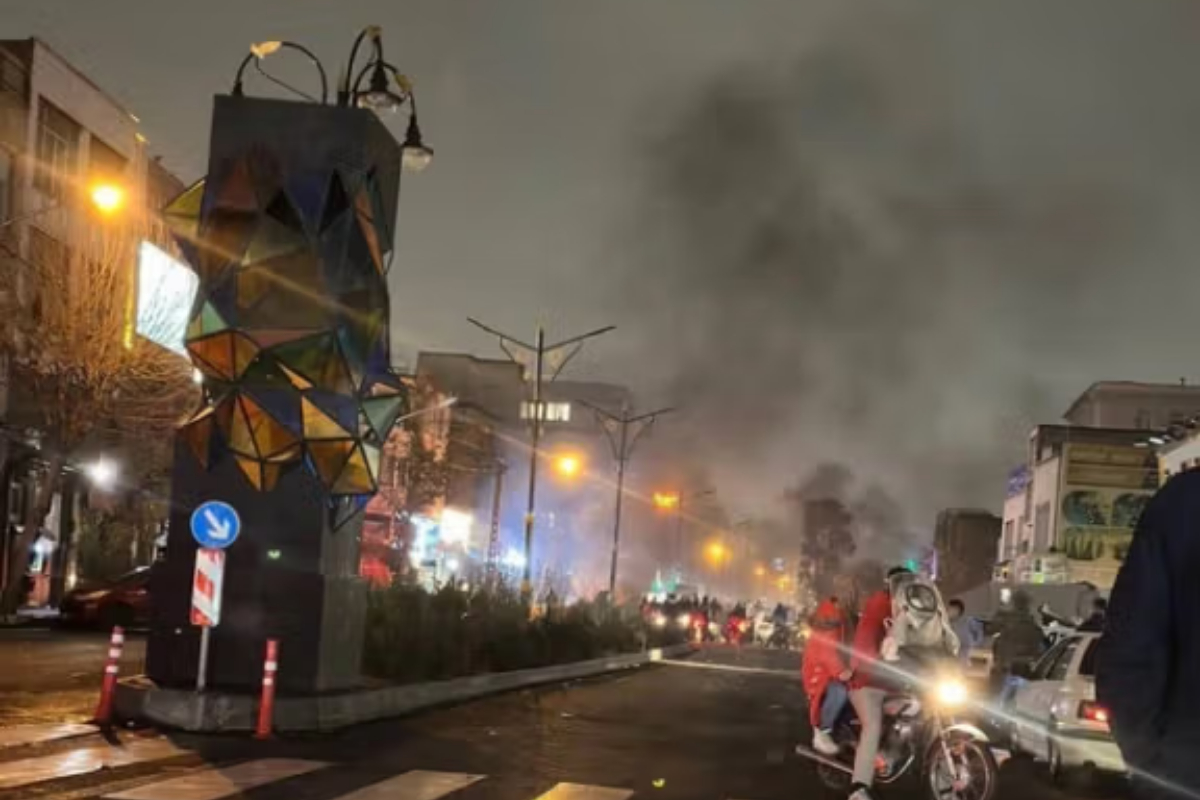
TEHRAN: Anti-government protests over rising inflation in Iran have intensified, turning increasingly violent, with clashes between demonstrators and security forces across multiple cities.
According to Time magazine, heavy casualties were reported during the unrest, although Iranian authorities have not officially confirmed the toll.
The protests have resulted in widespread property damage. Reports indicate that 26 banks, 25 mosques, 2 hospitals, and 48 fire trucks were damaged, while government buildings and police stations also came under attack. Several security personnel were injured, and ambulances, buses, and private vehicles were reportedly set on fire.
Authorities have arrested approximately 2,500 people, and internet services remain shut down amid the ongoing unrest.
A doctor in Tehran, speaking to Time on condition of anonymity, confirmed fatalities in six hospitals alone, noting that most deaths were caused by gunfire. Meanwhile, Washington-based human rights activists reported at least 63 confirmed deaths, including 49 civilians.
Supreme Leader Khamenei blames foreign interference
Iranian Supreme Leader Ayatollah Ali Khamenei accused the United States of being complicit in the bloodshed and claimed that some “rioters” were deliberately damaging public property to please US President Donald Trump. He emphasized that Iran will not tolerate mercenary forces and called for national unity.
Iran Calls on UN to respect sovereignty
The Iranian Foreign Ministry urged the United Nations to respect the country’s sovereignty and refrain from intervention, condemning U.S. statements on the protests as interference and deception.
Iran’s ambassador to Pakistan highlights foreign elements’ role
Iran’s ambassador to Pakistan, Reza Ameri Moghaddam, stated that foreign-backed elements were attempting to turn protests violent.
He asserted that the Iranian people largely support the government and security forces and that Iran has historically overcome foreign conspiracies while maintaining its sovereignty and national unity.
The situation remains volatile, with reports of ongoing clashes and heightened security across major Iranian cities.