BREAKING NEWS
Advertise with us >

Must-Visit Places in Northern Pakistan in 2025

Travel Pakistan 2025, Hunza, Skardu, Swat, Chitral, Eco-Tourism, Future Soch Lifestyle


With breathtaking valleys, improved road links, and booming eco-tourism, Northern Pakistan has become the country’s top travel destination for 2025. Here’s where to go — and why.


✨ Introduction: The New Era of Northern Tourism

Northern Pakistan has always been a dream destination for travelers, but in 2025, the region’s allure has grown even stronger. With improved highways, new boutique hotels, and a rising interest in eco-tourism, the northern valleys of Gilgit-Baltistan and Khyber Pakhtunkhwa are now drawing not just domestic explorers but also global tourists.

This year’s travel trends emphasize sustainability, cultural immersion, and accessibility. From digital nomads setting up workstations in Hunza cafés to families discovering the serenity of Swat and Naran, the north offers something for every traveler.


🏞️ 1. Hunza Valley – The Crown Jewel of the North

If Northern Pakistan had a capital of calm and creativity, it would be Hunza Valley. Nestled between the Karakoram ranges, Hunza’s charm lies in its peaceful landscapes and resilient people.

In 2025, Hunza has transformed into an eco-tourism hub. Solar-powered lodges, organic food cafés, and digital coworking spaces now cater to both adventure travelers and remote professionals. Baltit and Altit Forts continue to stand as timeless landmarks, offering panoramic views of snow-covered peaks and apricot-laden orchards.

The valley’s Wi-Fi-equipped cafés — like Cafe de Hunza and Hidden Paradise — attract vloggers, freelancers, and backpackers seeking tranquility with connectivity.

Must-do:

  • Visit Eagle’s Nest for sunrise views.
  • Try local apricot oil products.
  • Take the scenic drive to Attabad Lake and Passu Cones.

🌄 2. Skardu – Pakistan’s Next Global Destination

Skardu has become Pakistan’s international tourism gateway, now boasting direct flights, new resorts, and a UNESCO-recognized heritage site nomination in progress.

In 2025, Skardu International Airport operates regular flights from Karachi, Lahore, and Dubai, making it more accessible than ever. The turquoise Shangrila Lake, Katpana Desert, and Shigar Fort remain crowd favorites, but the spotlight is now on eco-friendly adventure.

Trekking routes to Kachura Lake and Satpara Lake are being redesigned to minimize environmental impact. Locals have launched initiatives promoting “zero-plastic travel,” making Skardu one of the greenest tourist destinations in the country.

Must-do:

  • Camp under the stars near Katpana Desert.
  • Enjoy a heritage stay at Shigar Fort Residence.
  • Visit Upper Kachura Lake for boating and photography.

🏕️ 3. Swat Valley – The Rebirth of the “Switzerland of the East”

After years of rebuilding, Swat Valley has fully regained its title as “the Switzerland of the East.” In 2025, new highways and tourism facilities have made the valley’s emerald rivers and lush meadows more accessible than ever.

Malam Jabba, once a quiet hill station, now features a thriving ski resort, zip lines, and luxury chalets. Meanwhile, Kalam and Mahodand Lake continue to attract those seeking serenity and cool mountain air.

Swat’s tourism board has focused on family-friendly experiences and cultural restoration. Ancient Buddhist heritage sites like Butkara Stupa and Udegram are being promoted alongside natural wonders — offering a blend of history and beauty rarely found elsewhere.

Must-do:

  • Ski at Malam Jabba during winter.
  • Take a riverside walk in Bahrain.
  • Explore Swat Museum’s Gandhara relics.

🌿 4. Naran & Kaghan – The Classic Escape

The twin valleys of Naran and Kaghan remain among Pakistan’s most beloved tourist routes — and for good reason. In 2025, improved road connectivity and better hotel infrastructure have revived the area’s tourism boom.

Lake Saif-ul-Malook, often described as a fairy-tale lake, is still the crown jewel. Visitors can now access it via eco-friendly shuttles introduced by local authorities to protect the environment. Kaghan’s pine forests, glacier streams, and cozy roadside teahouses continue to offer timeless charm.

Tourism planners have also encouraged local entrepreneurs to open homestays, allowing travelers to experience authentic mountain hospitality.

Must-do:

  • Boat ride at Saif-ul-Malook.
  • Visit Lulusar Lake and Babusar Top.
  • Try trout fish from the Kunhar River.
Travel Pakistan 2025, Hunza, Skardu, Swat, Chitral, Eco-Tourism, Future Soch Lifestyle

🌅 5. Fairy Meadows – Nature’s Hidden Paradise

For adventure lovers, Fairy Meadows remains one of the most enchanting spots in the world. Overlooking the majestic Nanga Parbat, this alpine meadow offers breathtaking camping and hiking experiences.

In 2025, responsible tourism initiatives are helping preserve this fragile ecosystem. Wooden cabins, solar energy setups, and waste-management systems have been installed to ensure minimal environmental footprint.

The journey to Fairy Meadows — a jeep track followed by a short trek — remains part of the adventure. But once there, visitors are rewarded with one of the most mesmerizing sights in Pakistan.

Must-do:

  • Sunrise trek to Nanga Parbat viewpoint.
  • Overnight camping at Raikot Sarai.
  • Meet the local guides who’ve lived in these mountains for generations.

🌤️ 6. Galiyat Region – Quick Getaway Near Islamabad

For short weekend travelers, the Galiyat Region — encompassing Nathiagali, Ayubia, and Donga Gali — remains a top pick.

The newly revamped Ayubia National Park Trail is now open for hikers, offering panoramic views of pine forests and misty hills. Boutique hotels and glamping sites have also appeared, catering to eco-conscious travelers seeking a mix of comfort and adventure.

Must-do:

  • Hike the famous Pipeline Track.
  • Visit Nathiagali Church and enjoy local walnut cake.
  • Try paragliding in Ayubia.

🌏 7. Chitral and Kalash Valleys – Culture Meets Wilderness

Tucked away in Khyber Pakhtunkhwa’s northwestern corner, Chitral remains an untouched gem. Its colorful Kalash Valleys — Bumburet, Rumbur, and Birir — continue to fascinate visitors with their ancient traditions, vibrant festivals, and mountain serenity.

In 2025, the local government and NGOs have focused on preserving Kalash culture through community tourism. Visitors can now stay in locally managed guesthouses, participate in cultural events, and enjoy authentic Kalash cuisine.

Must-do:

  • Attend the Chilam Joshi Festival in May.
  • Visit the Kalasha Dur Museum.
  • Explore Garam Chashma’s hot springs.

🌿 The Rise of Sustainable Tourism in 2025

The most encouraging trend in 2025 is Pakistan’s growing focus on eco-friendly travel. Tour operators, influencers, and hotels are promoting responsible tourism — minimizing plastic use, encouraging community-based initiatives, and protecting natural habitats.

Government projects under the “Green Pakistan Tourism Framework” are pushing for solar energy in remote lodges, improved waste disposal systems, and eco-certification for hotels in Gilgit-Baltistan.

These small yet impactful steps ensure that Pakistan’s northern beauty remains preserved for generations.


🌄 Conclusion: Rediscovering the Soul of Pakistan

From Hunza’s serenity to Swat’s rebirth, Northern Pakistan’s 2025 travel season offers not just scenic landscapes but renewed hope in sustainable adventure. Whether you’re a photographer, a trekker, a remote worker, or simply a dreamer — the mountains are calling.

In the heart of the Karakorams and Himalayas, you don’t just find beautiful views — you find yourself.


Jubilee General and AKUH Launch Exclusive Discount Card

Jubilee General Insurance, Aga Khan University Hospital, healthcare discount card, Pakistan insurance, outpatient services, MoU partnership, affordable medical care, customer benefits

Karachi, October 28, 2025 – Jubilee General Insurance has partnered with Aga Khan University Hospital (AKUH) to introduce the Jubilee General Discount Card, offering policyholders enhanced access to affordable healthcare services.

The collaboration was formalized today via a Memorandum of Understanding (MoU) signing in Karachi. Signatories included Azfar Arshad, Managing Director and CEO of Jubilee General Insurance, and Dr. Farhat Abbas, CEO of AKUH Pakistan. Attendees also featured Shagufta Hassan, Global VP of Finance and CFO at Aga Khan University, and Nadeem Irshad, Chief Sales Officer at Jubilee General Insurance.

Eligible customers gain a 12% discount on select outpatient services at AKUH sites, covering lab tests, radiology, and medicines. This move extends Jubilee General’s value proposition beyond core insurance, prioritizing customer wellness.

“This tie-up embodies our ethos of delivering care that transforms lives,” stated Mr. Arshad. “Pairing our protection expertise with AKUH’s excellence makes top-tier healthcare more attainable.”

Dr. Abbas added: “We’re thrilled to team with Jubilee General for this accessible care initiative. It furthers our goal of nationwide health equity through trusted services.”

The card aligns with Jubilee General’s strategy for exclusive perks via brand partnerships. Register at: https://jubileegeneral.com.pk/getinsurance/aku-discounts.

As Pakistan’s leading non-life insurer, Jubilee General drives innovation in digital and customer-centric solutions. AKUH, part of the Aga Khan Development Network, upholds global standards in medical care.

Amid escalating healthcare expenses, this alliance bolsters financial and health security for families.

Melting Heights: Glacier Retreat Threatens Northern Pakistan

Glacier melt Pakistan, GLOFs, IPCC Pakistan, UNDP GLOF-II, climate change Gilgit Baltistan


Rising temperatures in the Hindu Kush–Karakoram–Himalaya (HKH) region are melting Pakistan’s glaciers faster than ever before, triggering Glacial Lake Outburst Floods (GLOFs) that threaten thousands of mountain communities. According to the Intergovernmental Panel on Climate Change (IPCC) Sixth Assessment Report, the region could lose up to one-third of its glacier mass by 2100 if emissions remain high.

“Pakistan’s northern glaciers are the water towers of South Asia. Their accelerated melt has serious downstream consequences,” said Dr. Saleemul Huq, IPCC Lead Author.

The NDMA recorded over 50 GLOF events in Gilgit-Baltistan and Khyber Pakhtunkhwa in the last decade. The UNDP GLOF-II Project, funded by the Green Climate Fund (GCF), is installing early warning systems in 24 high-risk valleys, but experts warn the coverage remains limited.

A 2024 Pakistan Meteorological Department (PMD) study found mean annual temperatures in Gilgit have increased by 1.3°C since 1980, leading to the formation of 3,000 glacial lakes — 33 of which are considered dangerous.

“We’re living with a permanent sense of fear,” said Sadia Karim, a resident of Hunza, recalling the 2022 GLOF that destroyed her family’s fields.

The World Bank has urged investments in mountain infrastructure and glacial monitoring using satellite data to prevent catastrophic losses.

ClimateCrisis #GlacierMelt #NDMA #UNDP #IPCC

Karachi’s Air Pollution: The City That Can’t Breathe

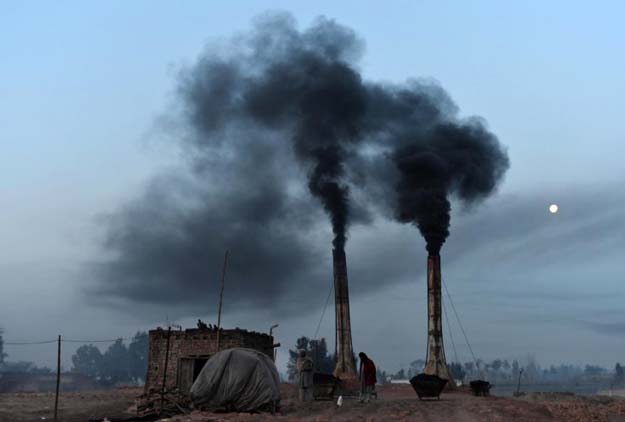
Smog and traffic pollution covering Karachi’s skyline.

Pakistan’s largest city and economic hub — has become one of the most polluted cities globally.
According to The Nation (Mar 4, 2025), Karachi’s Air Quality Index (AQI) reached 179, categorized as “unhealthy.” At times in 2023, the AQI exceeded 200, ranking the city 9th most polluted in the world.

Main Causes

  • Vehicular emissions: Over 4 million vehicles on Karachi’s roads run on low-quality fuel.
  • Industrial smoke: Factories release toxic gases without emission control systems.
  • Garbage burning: According to The News (Dec 2023), open burning contributes over 30% of airborne particulate matter.
  • Construction dust: Continuous urban expansion adds high levels of PM2.5 pollutants.

Health Impacts

The News International (Feb 2024) found that Karachi’s PM2.5 levels are 25.8 times higher than WHO’s safe limit, increasing cases of asthma, lung infections, and heart disease.

Policy Gaps

Despite these dangers, environmental laws are weakly enforced. As The Nation (Mar 2024) noted, Karachi ranks among the top 10 most polluted cities worldwide, yet lacks a comprehensive clean air policy.

Way Forward

  • Promote electric buses and hybrid vehicles.
  • Enforce industrial emission standards.
  • Expand urban green belts and forests.
  • Launch public awareness campaigns on clean air.

Conclusion

Karachi’s air pollution crisis endangers millions. Without strict regulation and long-term strategy, the city’s environment — and public health — will continue to deteriorate.

How Climate Change Is Reshaping Life in Pakistan

Melting glaciers in northern Pakistan due to rising temperatures.

Pakistan ranks among the top 10 most climate-vulnerable countries in the world. From melting glaciers to declining crop yields, climate change has begun to reshape every sector of the country’s economy and ecology.

Impact on Agriculture

Agriculture employs around 40% of Pakistan’s workforce, but rising temperatures and unpredictable rainfall are devastating crops.
According to The Agri Economist (2023), Sindh’s mango production dropped from 1.8 million metric tons to 1.44 million metric tons — a 20% decline due to heat stress and untimely rains.
Similarly, a CIMMYT report projects that wheat yields in Pakistan could fall by 16% by 2050 if current climate trends continue.

Glacier Melt and Water Challenges

Pakistan hosts more than 13,000 glaciers, covering around 13,547 sq km, according to Al Jazeera (Aug 28, 2025). These glaciers are melting 65% faster than they did between 2001 and 2010, severely affecting river flows.
The Express Tribune reported in May 2024 that extreme inflows in the Indus and Jhelum rivers — caused by glacier melt and erratic monsoons — led to widespread flooding.

Per capita water availability has now dropped below 900 cubic meters, compared to 5,600 in 1947, making Pakistan officially a water-scarce country (Pakistan Council of Research in Water Resources, 2024).

Urban Life at Risk

Cities like Karachi and Lahore face record heatwaves and flooding. In 2024, Karachi recorded temperatures above 45°C, resulting in heat-related hospitalizations. Meanwhile, smog levels in Punjab reached historic highs.

Conclusion

As per the Pakistan Meteorological Department, without immediate adaptation — from sustainable farming to urban greening — Pakistan’s social and economic stability will remain under threat.

How to Reduce Expenses for Kids Aged 13 and Above

Teenager reading second-hand books in library to save money

Raising teenagers can be exciting, but it often comes with rising costs. From school supplies to clothing, gadgets, and entertainment, parents usually feel the financial pressure. The good news is that with some smart strategies, you can reduce teen expenses without compromising on your child’s happiness and growth. Here are some practical family money hacks and parenting tips for teenagers that work.

1. Smart Education & Learning Choices

One of the biggest costs for kids is education. Instead of buying brand-new textbooks, explore second-hand books or digital versions. Encourage your children to use online learning platforms like Khan Academy and YouTube for free courses. Visiting libraries is another budget-friendly way to promote reading and learning. These steps help in budgeting for kids while still giving them quality education.


2. Affordable Clothing & Fashion

Teenagers love fashion, but it doesn’t have to drain your wallet. Shop during off-season sales where prices are heavily discounted. Encourage clothing swaps with friends or cousins, and invest in durable basics instead of constantly buying trendy outfits. Teaching kids about smart spending for teens helps them understand the value of money.


3. Food & Snacks on a Budget

Eating out and buying daily snacks from school canteen adds up quickly. Packing homemade lunches and snacks saves money and is healthier. Buying items like biscuits, chips, and juices in bulk and dividing them into portions is another simple way to save money with teens. Replacing junk food with fruits or homemade options also reduces costs in the long run.


4. Managing Gadgets & Entertainment

Gadgets and subscriptions are another expense category for teens. Avoid upgrading phones every year and instead use devices until they truly need replacing. Opt for family Netflix or Spotify plans instead of individual ones. Encourage hobbies such as reading, drawing, or sports that are free and fun. These small steps can greatly reduce teen expenses.

5. Transport & Social Life

If possible, encourage walking or cycling to school or nearby places. Carpooling with neighbors or using school transport also helps. For social gatherings, suggest simple hangouts at home instead of expensive restaurants. Setting a monthly pocket money budget teaches children responsibility while keeping costs under control.


6. Building Money Habits in Teens

Perhaps the most valuable step is involving teenagers in family budgeting discussions. This helps them understand real-life finances and encourages them to make wise spending choices. If possible, motivate them to explore part-time work or freelancing to earn extra income. Teaching them to save before spending builds habits that last a lifetime.


Final Thoughts

Raising kids doesn’t have to mean draining your bank account. By applying these parenting budget hacks, you can easily reduce expenses for kids aged 13 and above while still ensuring they enjoy their teenage years. Remember, teaching financial responsibility today means building independent and money-smart adults tomorrow.