BREAKING NEWS
Advertise with us >

PM Shehbaz urges regional countries to benefit from CPEC

PM Shehbaz

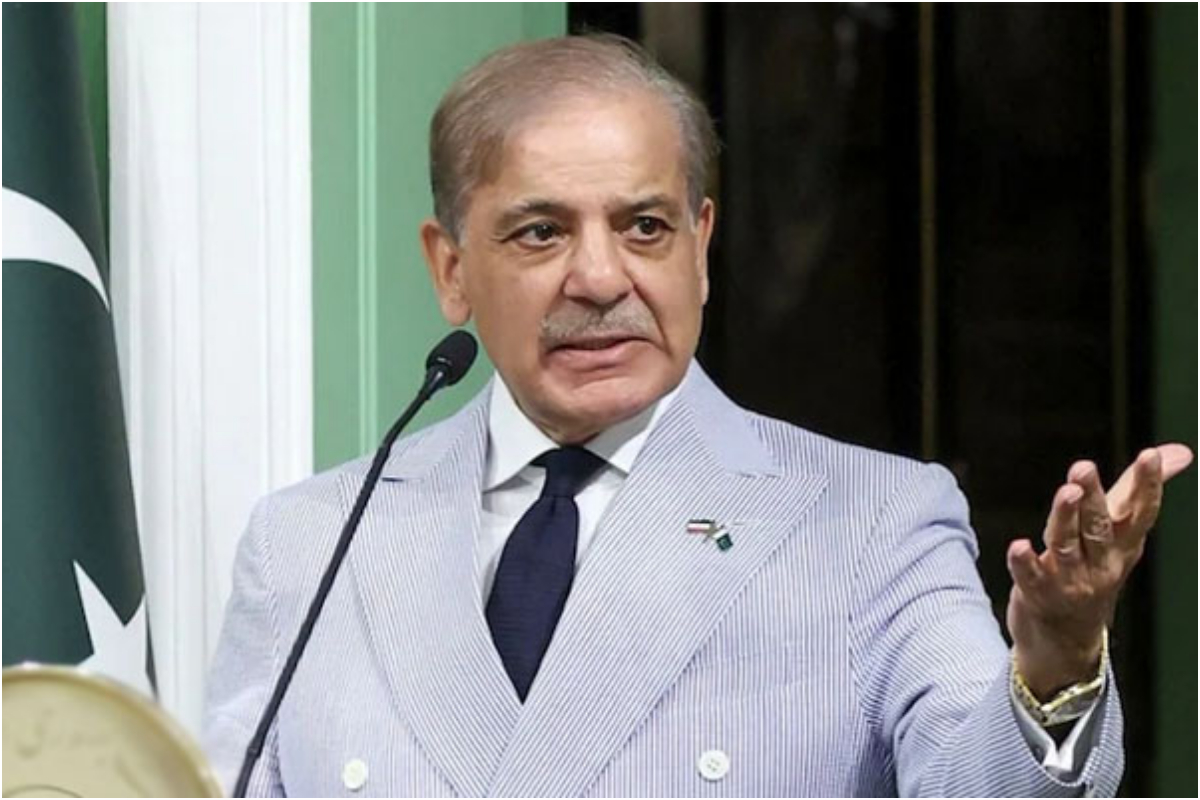
ISLAMABAD: Prime Minister Muhammad Shehbaz Sharif has emphasized the need to strengthen economic and trade linkages across the region to promote peace and development, urging neighboring countries to take advantage of opportunities under the China–Pakistan Economic Corridor (CPEC).

Addressing the concluding session of the Regional Transport Ministers’ Conference, the prime minister said CPEC is proving to be a transformative initiative for the entire region.

He noted that connecting Gwadar with China’s Xinjiang province is opening new avenues of cooperation in development and the energy sectors. “This collaboration will not only benefit all stakeholders but also reinforce collective efforts for peace and progress,” he remarked.

Prime Minister Shehbaz further stressed that enhanced regional connectivity will revolutionize economic and trade activities. “In today’s era, connectivity is not limited to roads, rail, or air routes — investment in digital infrastructure is equally vital,” he said, adding that Pakistan is investing in this domain to fully harness the benefits of the Fourth Industrial Revolution.

Pakistan, Türkiye consider launching ferry service

Pakistan

ISLAMABAD: Pakistan and Türkiye are exploring the possibility of launching a ferry service to enhance maritime connectivity between the two countries.

The development came during a meeting between Pakistan’s Minister for Maritime Affairs, Junaid Anwar Chaudhry, and Türkiye’s Minister of Transport. Both sides agreed to strengthen cooperation in shipbuilding, maritime operations, and ship-breaking industries.

During the meeting, Minister Junaid Anwar Chaudhry invited Turkish investors to invest in Gwadar’s maritime and port sectors.

In response, the Turkish side informed him that a delegation of investors would soon visit Pakistan to explore potential opportunities.

Earlier, the federal government has approved the first ferry service licence.

Applications by ferry operators have been pending since 2017 -18. Taking a fast-track route, the Ministry of Maritime Affairs on Monday approved the first ferry service licence to an international ferry operator.

The UK-based company — ‘Sea Keeper’— will operate ferry routes connecting Pakistan with Iran and the Gulf Cooperation Council (GCC) countries.

The government is under serious pressure from around one million pilgrims who attend Arbaeen (Chehlum of Imam Hussain) in Karbala, as land travel to Iran has been stopped without any notice recently.

Federal Minister for Maritime Affairs Muhammad Junaid Anwar Chaudhry has led the move by fast-track approval to ferry service operators who had filed applications in 2017 and 2018.

The minister emphasised that ferry service will not only provide the pilgrims going to Iraq and Iran a safe and secure travel but it also provides an opportunity for boosting regional connectivity as well as economic activity via sea routes.

Pakistan, Afghan Taliban to resume key negotiations in Türkiye

Pakistan

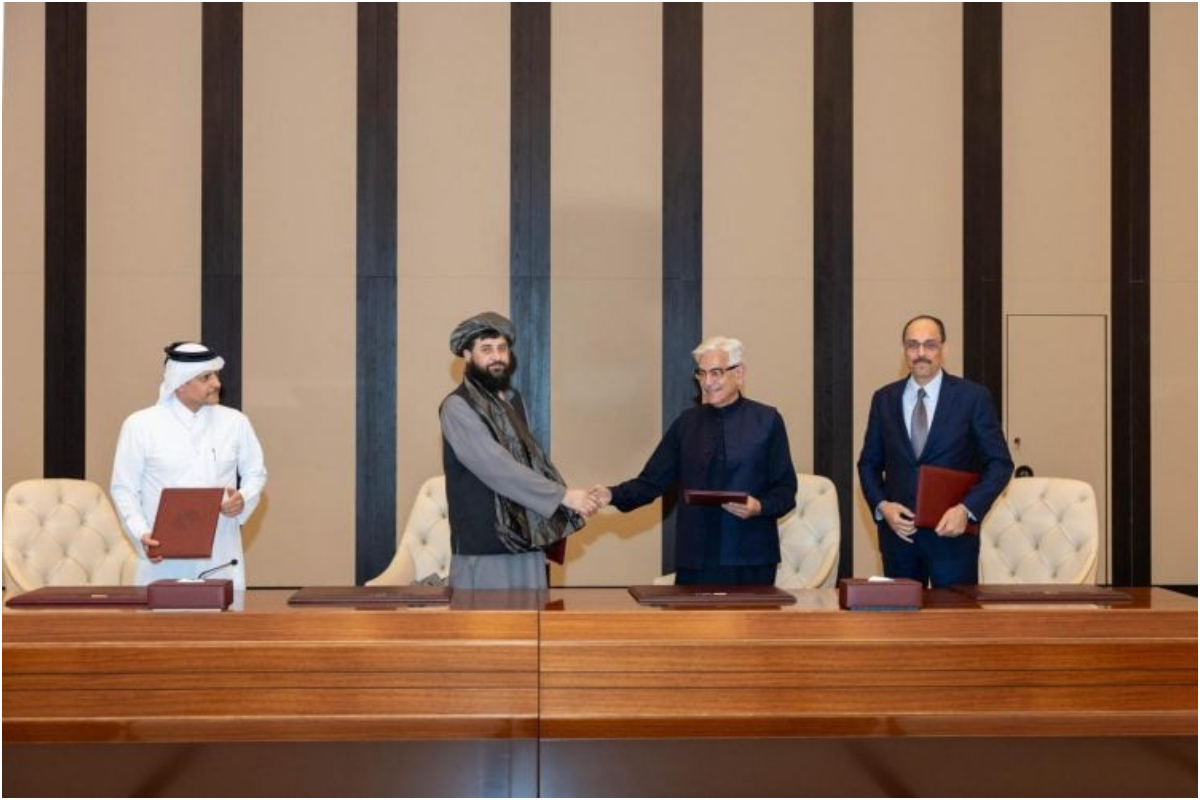
ISTANBUL: The second round of high-level talks between Pakistan and the Afghan Taliban is set to begin in Türkiye on Saturday, focusing on counterterrorism cooperation and border security mechanisms.

The talks aim to establish a robust and verifiable monitoring mechanism to address the growing threat of terrorism.

Foreign Office Spokesperson Tahir Andrabi and Taliban government spokesperson Zabihullah Mujahid have confirmed that the meeting will be held in Istanbul.

The meeting will focus on establishing a clear, verifiable, and effective monitoring mechanism to counter the threat of terrorism. “Pakistan supports the creation of a robust and credible framework to combat terrorism,” the spokesperson said.

On the other hand, Taliban spokesperson Zabihullah Mujahid stated that an Afghan delegation, led by Deputy Interior Minister Haji Najib, has departed for Türkiye to participate in the talks.

It is worth noting that the first round of negotiations—mediated by Qatar and Türkiye—was held in Doha, resulting in a temporary ceasefire between Pakistan and Afghanistan.

Pakistan, Qatar pledge stronger partnership across key economic sectors

Pakistan

ISLAMABAD: In a significant step toward deepening bilateral ties, Pakistan and Qatar have agreed to expand collaboration across multiple sectors, notably energy, agriculture, information technology, tourism, trade, and investment.

The understanding came during a meeting between Prime Minister Shehbaz Sharif and Qatar’s Minister of Commerce and Industry Sheikh Faisal bin Thani Al Thani, who is in Pakistan to co-chair the session of the Pakistan-Qatar Joint Ministerial Commission.

Prime Minister Shehbaz Sharif expressed satisfaction over the positive trajectory of Pakistan-Qatar relations and lauded Qatar’s role as an important partner and influential regional mediator.

During the meeting, the Prime Minister highlighted Pakistan’s investor-friendly policies and emphasized the significance of expanding bilateral cooperation in areas such as energy, agriculture, food security, information technology, tourism, and infrastructure development.

Shahbaz Sharif invited Qatari investors to explore new avenues of cooperation under the SIFC framework.

Sheikh Faisal bin Thani Al Thani expressed good wishes on behalf of the Qatari leadership and the Qatari Minister of Commerce reiterated Qatar’s determination to further strengthen economic ties with Pakistan.

The Prime Minister expressed Pakistan’s appreciation for Qatar’s continuous support on regional and global issues and reiterated Pakistan’s desire to strengthen cooperation at regional and multilateral forums.

The two leaders agreed to maintain close ties to translate common understandings into concrete results.

Teenager from Bahawalpur dies after alleged police torture in Karachi

Teenager

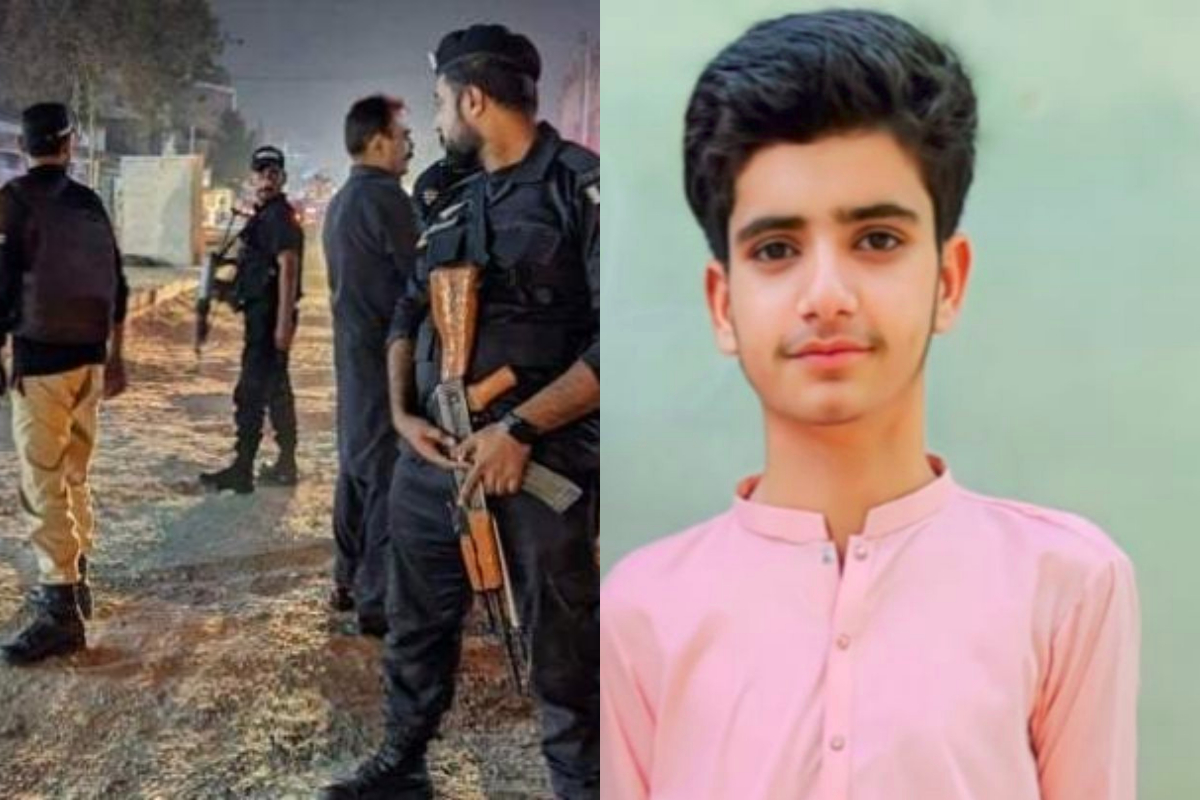
KARACHI: A tragic incident has emerged from Karachi, where a 16-year-old boy, Muhammad Irfan from Bahawalpur, allegedly lost his life after being subjected to torture while in the custody of CIA Saddar police. Irfan had reportedly traveled to Karachi with three friends for a leisure visit when the group was detained by police under suspicious circumstances.

According to sources, the boys were picked up by police from the Ayesha Manzil area after being deemed “suspicious.” The family claims that the officers subjected the boys to severe torture throughout the night.

“Irfan could not bear the torture and lost his life inside the CIA police station,” the family alleged. They further stated that police personnel left Irfan’s body at Jinnah Hospital and fled the scene.

Two of the surviving boys are currently under treatment at Jinnah Hospital. The incident has triggered widespread outrage, with the family demanding justice and an impartial investigation into the alleged custodial killing.

The case of a young man’s death allegedly due to torture by the Special Investigation Unit (SIU) police has taken a grim turn as the victim’s companions came forward with harrowing statements.

The detainees claimed they were kept blindfolded for two days and taken to different locations, continuously facing abuse. “When Irfan died from the torture, they finally removed our blindfolds,” another survivor said.

The deceased, identified as Irfan, was the eldest of five brothers. The incident has sparked outrage and calls for a thorough investigation into alleged custodial abuse by SIU personnel.

In a shocking revelation, a friend of the youth who allegedly died in SIU police custody claimed that they were filming a TikTok video when police officers detained them without explanation.

According to the survivor, “We were making a TikTok video when 2 to 3 police bikes arrived. The officers forced us into their vehicle and took us away. When we asked why, they said we were terrorists, pickpockets, and wanted criminals.”

The victims allege they were blindfolded and brutally beaten for two days while being moved between different locations. One of them, Irfan, succumbed to the alleged torture before the others were released.

In the wake of the alleged custodial death of teenager Muhammad Irfan, the Senior Superintendent of Police (SSP) has suspended seven officials of the Special Investigation Unit (SIU), including three Assistant Sub-Inspectors (ASIs), and ordered a thorough investigation into the incident.

The move follows mounting public outrage after reports surfaced that the 16-year-old from Bahawalpur died as a result of police torture at the CIA Saddar police station. The SSP has assured that strict departmental action will be taken once the inquiry determines responsibility.

Multan Sultans’ owner Ali Tareen tears up PCB’s legal notice

Multan Sultans

MULTAN: Multan Sultans owner Ali Tareen has torn up a legal notice sent to him by the Pakistan Cricket Board (PCB), declaring that he refuses to be intimidated.

In a video message posted on social media, Tareen revealed that the Pakistan Super League (PSL) management had issued him a legal notice demanding that he withdraw his critical remarks and issue an apology. The notice also warned of the termination of his franchise agreement and the possibility of being blacklisted.

Tareen stated firmly that he would not remain silent in the face of such threats. “If you think I will be silenced by intimidation, you are mistaken,” he said.

Expressing his deep affection for the PSL, Tareen said, “I love this league — it belongs to the entire nation.” He added that he was willing to sit down and resolve the issues but lamented that the PCB had not made any attempt to contact him. “No one has made a single call or sent an email to understand my concerns,” he remarked.

In his latest video message, Tareen offered what appeared to be a tongue-in-cheek apology, saying, “I apologize for demanding that competent people be included in the PSL management. I also apologize for criticizing the draft process, training facilities, and the opening ceremony.”

The PCB had earlier issued a legal notice to the Multan Sultans franchise, accusing it of violating contractual clauses and running a campaign that damaged the reputation of the Pakistan Super League (PSL).

According to sources, the notice was served for breaches of the 10-year franchise agreement. If the franchise fails to provide a satisfactory response, the PCB may terminate the contract and blacklist the franchise owners.

Water at Risk: Indus Basin and Pakistan’s Looming Water Emergency

Pakistan water crisis, Indus Basin, UNDP Climate Promise, sea-level rise Pakistan, salinity intrusion Sindh


Pakistan’s Indus Basin, the lifeline for 80% of its population, is nearing a tipping point due to glacier melt, erratic monsoons, and severe water mismanagement. A World Bank report titled Pakistan: Getting More from Water (2023) warns that per capita water availability has fallen by over 80% since 1950, placing the country among the world’s most water-stressed nations.

“Pakistan’s water crisis is as much a governance issue as a climate one,” said Najy Benhassine, World Bank Country Director for Pakistan.

The UNDP Climate Promise (2024) reports that sea-level rise and declining river flows have accelerated salinity intrusion in Sindh’s Indus Delta, affecting agriculture and fisheries. Coastal districts like Thatta and Badin have seen over 1.2 million acres of farmland rendered unusable due to saltwater.

The Ministry of Climate Change warns that if upstream water regulation and mangrove restoration are not prioritized, the Indus Delta could face “irreversible ecological collapse within two decades.”

“We are witnessing both floods and droughts within the same year — the new climate normal,” said Sherry Rehman, former Federal Minister for Climate Change.

Pakistan’s National Water Policy (2018) is being revised to align with the Paris Agreement, focusing on climate-smart irrigation, groundwater regulation, and transboundary water cooperation with India and Afghanistan.

Poor Captaincy: South Africa defeat Pakistan by 8 wickets

Poor Captaincy

RAWALPINDI: Pakistan’s fragile batting lineup faltered on the fourth day of the Rawalpindi Test, setting South Africa a modest target of just 68 runs — which the visitors comfortably chased down with eight wickets to spare.

Resuming their second innings with a deficit of 71 runs, Pakistan struggled from the outset as wickets fell rapidly in the morning session. Babar Azam top-scored with 50 before being dismissed, while Mohammad Rizwan managed 18 runs.

Salman Ali Agha contributed 28, and Sajid Khan added 13, but the rest of the batting order failed to offer resistance. Nauman Ali and Shaheen Afridi were dismissed without scoring, while Asif Afridi remained unbeaten on zero.

For South Africa, Simon Harmer delivered a stellar performance, taking six wickets, while Keshav Maharaj claimed two and Kagiso Rabada picked up one.

Chasing 68 for victory, South Africa reached the target at the loss of just two wickets. Aiden Markram scored a solid 42, Tristan Stubbs was dismissed for a duck, and Ryan Rickelton remained unbeaten on 25.

Earlier, Pakistan had posted 333 runs in their first innings, while South Africa responded with 404, gaining a crucial first-innings lead that ultimately proved decisive.

Pakistan captain Shan Masood came under scrutiny following Pakistan’s defeat in the second Test against South Africa, as tactical errors and questionable decisions contributed to the team’s disappointing performance.

Cricket analysts and former players criticized Masood’s field placements, bowling changes, and lack of proactive strategy during crucial moments of the match. Despite having a balanced bowling attack, Pakistan failed to maintain pressure on the South African batters, allowing them to take control of the game.

Masood’s captaincy was also questioned for his inability to inspire the batting lineup, which collapsed twice under pressure. His decision to persist with defensive tactics, even when South Africa appeared vulnerable, drew particular criticism from experts.

The defeat has raised serious concerns about Pakistan’s leadership direction in the longer format, especially as the team continues to struggle with consistency and temperament in home conditions.

After the Deluge: Pakistan’s 2022 Floods Expose the Cost of Climate Neglect

Pakistan 2022 floods, World Bank PDNA report, UNDP Pakistan, climate resilience, NDMA, flood recovery


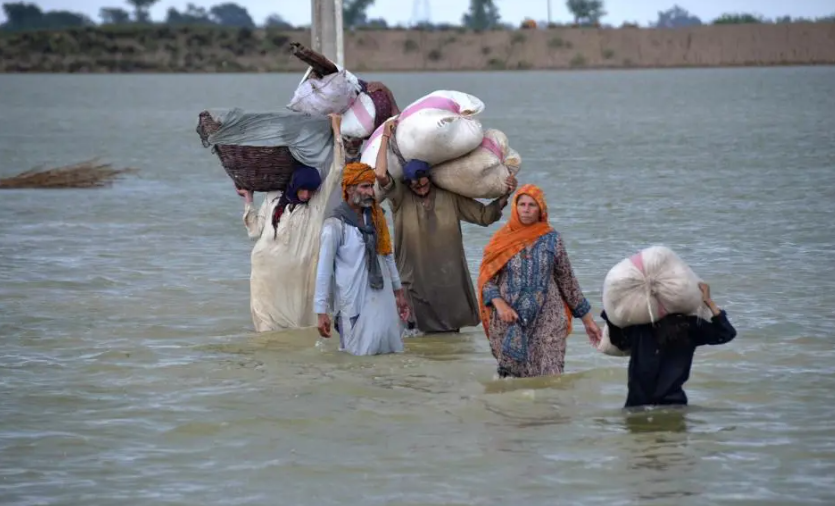
Three years after the devastating 2022 floods, Pakistan continues to grapple with the economic and social aftershocks of one of the most destructive climate disasters in its history. According to the Post-Disaster Needs Assessment (PDNA) prepared jointly by the Government of Pakistan, World Bank, Asian Development Bank, and UNDP, the floods caused over $30 billion in total losses — including $14.9 billion in damages and $15.2 billion in economic losses.

“The scale of the disaster was unprecedented. Over 33 million people were affected and millions displaced. Recovery will take years, not months,” said Henny Kromhout, Senior Disaster Risk Specialist at the World Bank.

The PDNA report warned that unless Pakistan invests heavily in climate-resilient infrastructure, similar events could occur every decade. The UNDP added that the floods were “a stark reminder that Pakistan contributes less than 1% of global greenhouse gas emissions but remains among the top 10 most climate-vulnerable nations.”

The National Disaster Management Authority (NDMA) confirmed that more than 2.3 million homes were damaged, 1.2 million livestock lost, and 4 million acres of farmland destroyed. The floods submerged one-third of the country, affecting major provinces including Sindh, Balochistan, and southern Punjab.

A World Bank Pakistan Climate Report (2023) noted:

“Climate extremes will intensify in South Asia. Building back better is not optional — it is essential for Pakistan’s survival.”

Experts recommend prioritizing early warning systems, climate-proof housing, and sustainable urban drainage systems. Pakistan’s Ministry of Climate Change has since launched the Living Indus Initiative, a $12 billion plan to restore the Indus ecosystem.

IT Secretary confirms internet services not fully restored in Pakistan

IT Secretary

ISLAMABAD: Pakistan’s undersea internet cable fault has not yet been fully repaired, the Secretary of Information Technology informed a parliamentary committee, adding that restoration work by the international consortium is still in progress.

Briefing the National Assembly Standing Committee on Information Technology and Telecommunications, the IT Secretary said that efforts by the international consortium responsible for maintenance are continuing. In the meantime, Pakistan’s internet traffic has been shifted to alternate routes to minimize disruption.

Later in the session, the committee expressed concern over poor mobile network coverage across the country and decided to summon Pakistan Telecommunication Authority (PTA) officials in the next meeting for an explanation.

The National Assembly Standing Committee on Information Technology and Telecommunications was given a detailed briefing on the Islamabad IT Park project, where officials revealed that 80 percent of the construction work has been completed.

During the meeting, Project Director informed the committee that the project is being executed in collaboration with a South Korean company. However, Federal Minister for IT Shaza Fatima Khawaja stated that the Prime Minister has ordered an inquiry into delays in the project’s completion.

Highlighting broader challenges in the telecom sector, the minister said that network issues persist due to spectrum shortage and legal disputes.

She added that Pakistan currently operates on 274 MHz of spectrum, which is insufficient to meet national demand. The government, she noted, is planning to hold a spectrum auction by December or January to enhance connectivity and service quality.