
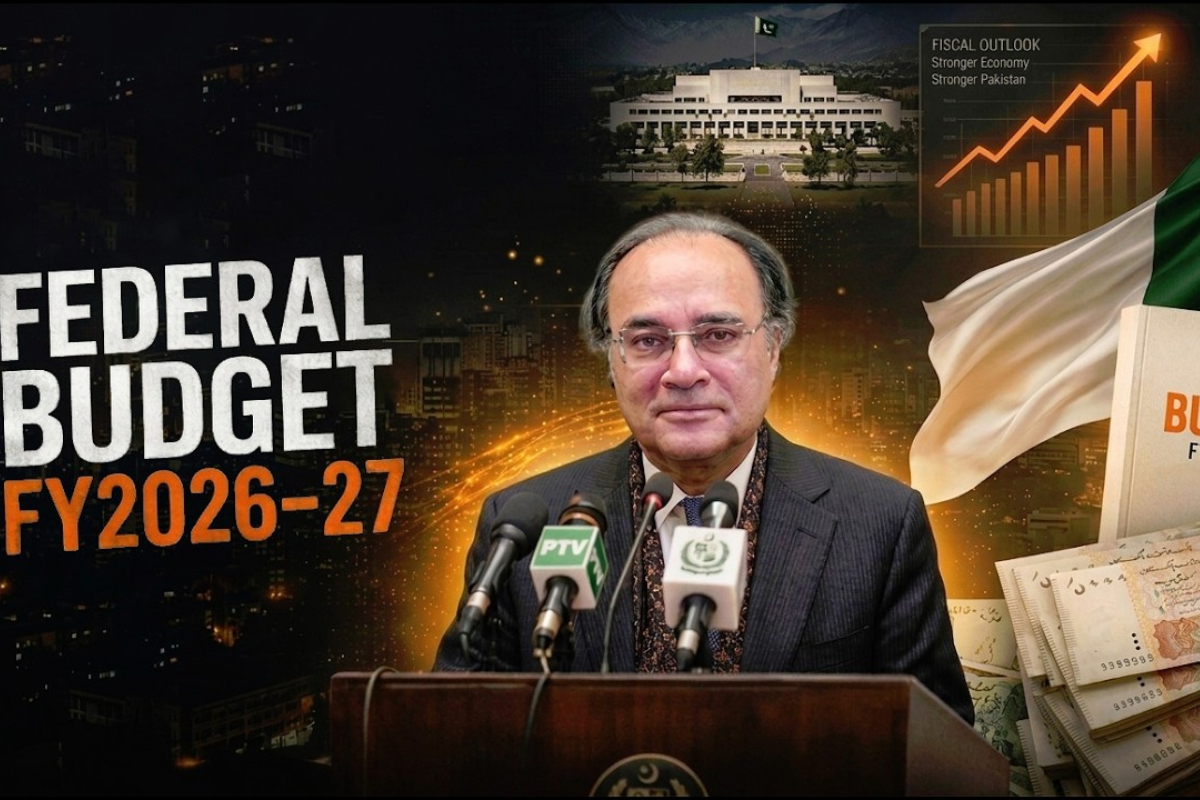
ISLAMABAD: Pakistan on Friday unveiled a Rs18.771 trillion federal budget for the fiscal year 2026–27, focusing on fiscal consolidation, tax reforms, defense spending, development projects, and targeted relief measures, Finance Minister Muhammad Aurangzeb announced in the National Assembly.
Presenting his third budget, the finance minister thanked coalition partners and said the government remained committed to stabilizing the economy and sustaining growth momentum.
Aurangzeb said Pakistan’s economy had reached $452 billion, while per capita income increased from $1,751 to $1,901. He added that GDP growth stood at 3.7% in the outgoing fiscal year, despite economic challenges including floods and regional geopolitical tensions.
He said large-scale manufacturing grew by 6.1%, while the services sector posted 4.1% growth. Foreign exchange reserves have risen from $4 billion three years ago to over $17 billion, enough to cover three months of imports, he said.
Remittances reached $38 billion in the first 11 months of the current fiscal year and are expected to exceed $41 billion by year-end, the minister added.
Budget Deficit and Revenue Targets
The government projected GDP growth of 4% for the next fiscal year, with inflation estimated at 8.2%. The budget deficit is expected at 3.6% of GDP, while the primary surplus is projected at 2%.
Federal Board of Revenue (FBR) tax collection has been set at Rs15.264 trillion, while total federal expenditures are estimated at Rs18.771 trillion. Interest payments alone account for Rs8.054 trillion.
Defense, Salaries and Welfare Spending
Defense expenditure has been allocated Rs3 trillion. Pension costs are estimated at Rs1.169 trillion, including Rs822 billion for military pensions.
Civil administration spending is set at Rs1.071 trillion, while subsidies amount to Rs1.091 trillion.
The government announced a 7% increase in salaries and pensions for federal employees and a 10% increase in the minimum wage.
The Benazir Income Support Programme (BISP) has been allocated Rs838 billion, a 17% increase from the previous year.
Tax Reforms and Relief Measures
The budget proposes relief for salaried individuals across multiple income slabs and the abolition of a 9% surcharge on salaried income.
It also proposes the elimination of super tax for income between Rs15 crore and Rs50 crore, while reducing the rate for higher incomes from 10% to 8%. However, the levy will remain on banks, oil and gas exploration companies, and fertilizer firms.
A fixed tax regime is being introduced for small shopkeepers with annual sales below Rs20 crore, allowing them to pay 1% tax on turnover.
Taxes on property transactions, exports, and foreign card usage have also been reduced, while capital value tax on foreign assets has been abolished.
Energy, Development and Infrastructure
The Public Sector Development Programme (PSDP) has been set at Rs1 trillion, while the overall development budget stands at Rs3.675 trillion, including provincial shares.
Major allocations include Rs100 billion for the N-25 highway upgrade, Rs30 billion for the Sukkur-Hyderabad motorway, and Rs25 billion for initial work on ML-1.
The government also allocated funds for water projects, including Rs14 billion for Diamer-Bhasha Dam, Rs22 billion for Mohmand Dam, and Rs10 billion for the K-IV water project in Karachi.
Vehicle and Energy Taxes
The budget introduces new Federal Excise Duty proposals on imported SUVs and luxury vehicles, including higher rates for vehicles above 3,000cc and taxes on electric vehicles priced above Rs20 million. Incentives for electric motorcycles, rickshaws, and buses will continue, while a 1% sales tax facility is proposed for imported electric trucks.
Social and Sectoral Spending
Health development projects have been allocated Rs25.1 billion, while higher education receives Rs46 billion. Women’s health products and contraceptives will be tax-free under the new proposals.
The IT sector export income tax incentive of 0.25% has been extended for three years.
Officials said the budget aims to balance growth, revenue generation, and targeted social support while maintaining macroeconomic stability.