BREAKING NEWS
Advertise with us >

PM Shehbaz says budget brings relief as economic stability achieved

PM Shehbaz

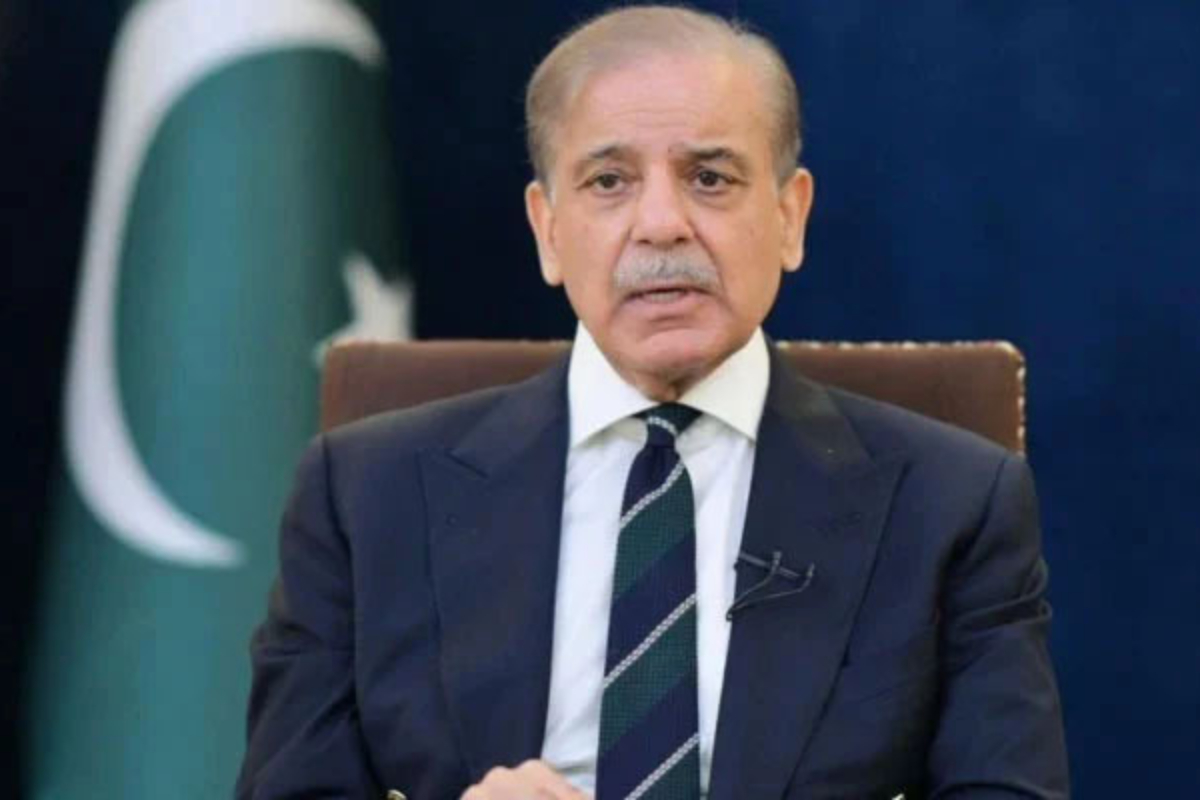
ISLAMABAD: Prime Minister Shehbaz Sharif on Friday said Pakistan has achieved economic stability with the grace of Allah and the prayers of the nation, adding that this stability has enabled the government to provide relief to the public in the federal budget.

In a statement after the budget session, the prime minister thanked citizens for their patience and resilience during challenging economic conditions, saying they played a key role in supporting national recovery.

He said the government had promised that once economic stability was achieved, its benefits would be passed on directly to the people. “Alhamdulillah, the era of prosperity has now begun,” he said.

Shehbaz Sharif described the budget as one of relief and public welfare, adding that it reduces the burden on the salaried class and promotes exports, agriculture, industrial growth, investment, and overall economic development.

He said the main objective of the budget was to ensure that the benefits of economic stability reach ordinary citizens directly.

Pakistan unveils Rs18.77 Trillion federal budget for FY 2026–27

Pakistan unveils

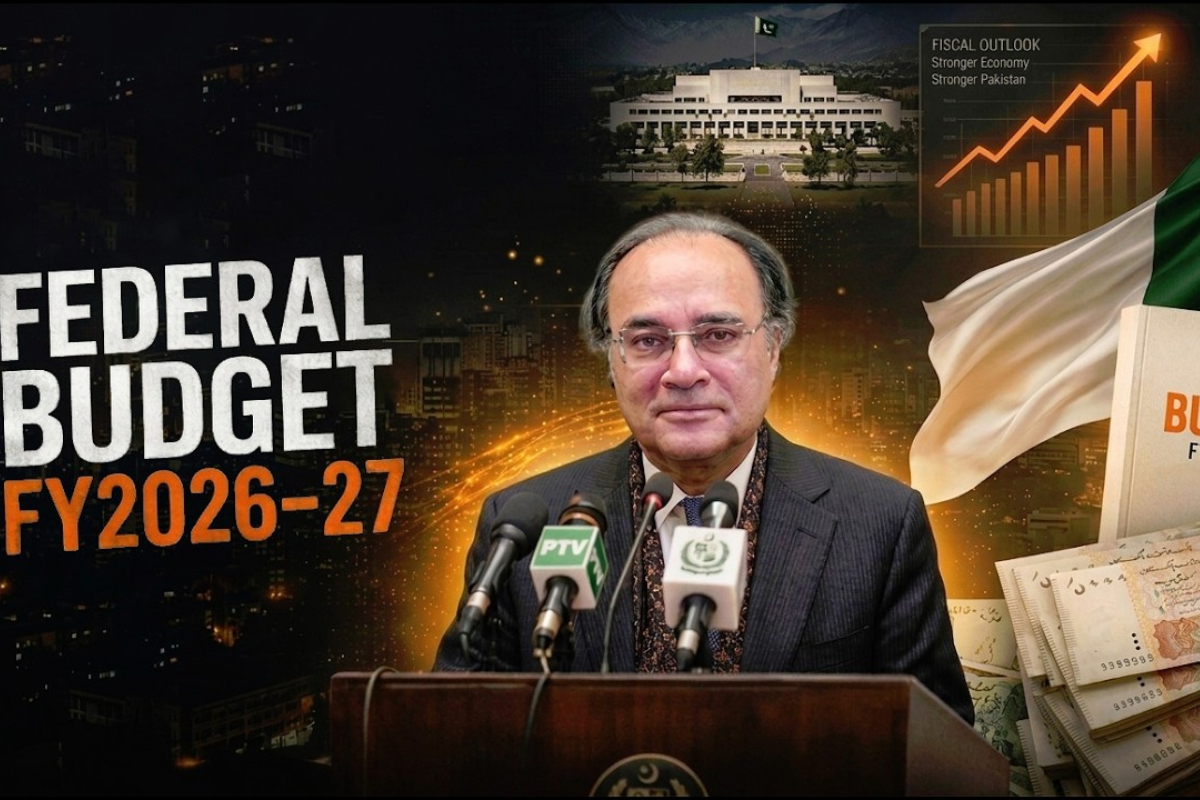
ISLAMABAD:  Pakistan on Friday unveiled a Rs18.771 trillion federal budget for the fiscal year 2026–27, focusing on fiscal consolidation, tax reforms, defense spending, development projects, and targeted relief measures, Finance Minister Muhammad Aurangzeb announced in the National Assembly.

Presenting his third budget, the finance minister thanked coalition partners and said the government remained committed to stabilizing the economy and sustaining growth momentum.

Aurangzeb said Pakistan’s economy had reached $452 billion, while per capita income increased from $1,751 to $1,901. He added that GDP growth stood at 3.7% in the outgoing fiscal year, despite economic challenges including floods and regional geopolitical tensions.

He said large-scale manufacturing grew by 6.1%, while the services sector posted 4.1% growth. Foreign exchange reserves have risen from $4 billion three years ago to over $17 billion, enough to cover three months of imports, he said.

Remittances reached $38 billion in the first 11 months of the current fiscal year and are expected to exceed $41 billion by year-end, the minister added.

Budget Deficit and Revenue Targets

The government projected GDP growth of 4% for the next fiscal year, with inflation estimated at 8.2%. The budget deficit is expected at 3.6% of GDP, while the primary surplus is projected at 2%.

Federal Board of Revenue (FBR) tax collection has been set at Rs15.264 trillion, while total federal expenditures are estimated at Rs18.771 trillion. Interest payments alone account for Rs8.054 trillion.

Defense, Salaries and Welfare Spending

Defense expenditure has been allocated Rs3 trillion. Pension costs are estimated at Rs1.169 trillion, including Rs822 billion for military pensions.

Civil administration spending is set at Rs1.071 trillion, while subsidies amount to Rs1.091 trillion.

The government announced a 7% increase in salaries and pensions for federal employees and a 10% increase in the minimum wage.

The Benazir Income Support Programme (BISP) has been allocated Rs838 billion, a 17% increase from the previous year.

Tax Reforms and Relief Measures

The budget proposes relief for salaried individuals across multiple income slabs and the abolition of a 9% surcharge on salaried income.

It also proposes the elimination of super tax for income between Rs15 crore and Rs50 crore, while reducing the rate for higher incomes from 10% to 8%. However, the levy will remain on banks, oil and gas exploration companies, and fertilizer firms.

A fixed tax regime is being introduced for small shopkeepers with annual sales below Rs20 crore, allowing them to pay 1% tax on turnover.

Taxes on property transactions, exports, and foreign card usage have also been reduced, while capital value tax on foreign assets has been abolished.

Energy, Development and Infrastructure

The Public Sector Development Programme (PSDP) has been set at Rs1 trillion, while the overall development budget stands at Rs3.675 trillion, including provincial shares.

Major allocations include Rs100 billion for the N-25 highway upgrade, Rs30 billion for the Sukkur-Hyderabad motorway, and Rs25 billion for initial work on ML-1.

The government also allocated funds for water projects, including Rs14 billion for Diamer-Bhasha Dam, Rs22 billion for Mohmand Dam, and Rs10 billion for the K-IV water project in Karachi.

Vehicle and Energy Taxes

The budget introduces new Federal Excise Duty proposals on imported SUVs and luxury vehicles, including higher rates for vehicles above 3,000cc and taxes on electric vehicles priced above Rs20 million. Incentives for electric motorcycles, rickshaws, and buses will continue, while a 1% sales tax facility is proposed for imported electric trucks.

Social and Sectoral Spending

Health development projects have been allocated Rs25.1 billion, while higher education receives Rs46 billion. Women’s health products and contraceptives will be tax-free under the new proposals.

The IT sector export income tax incentive of 0.25% has been extended for three years.

Officials said the budget aims to balance growth, revenue generation, and targeted social support while maintaining macroeconomic stability.

Pakistan to present Rs17.5 Trillion federal budget for 2026-27

Pakistan

ISLAMABAD: Federal government is set to present a federal budget exceeding 17.5 trillion rupees for the fiscal year 2026-27 on Friday, with proposals under consideration for salary and pension increases for government employees and tax relief measures worth up to 50 billion rupees.

According to official reports, Prime Minister Shehbaz Sharif will chair a special federal cabinet meeting to approve the budget draft and related fiscal proposals before it is presented in parliament by Finance Minister Muhammad Aurangzeb.

The budget aims to set tax revenue targets at around 15.267 trillion rupees, while also offering potential relief for salaried individuals through revisions in income tax slabs.

Officials said no major changes are expected in taxes on solar panels, stationery items, or the stock market. A previously proposed increase in sales tax on solar panels from 10% to 18% has been withdrawn.

However, the government is considering raising sales tax on imported electric vehicles up to 25%, while maintaining existing tax rates on hybrid vehicles. Incentives for locally manufactured electric vehicles are also under review, including reduced duties on motors, batteries, and other components.

A petroleum levy target of 1.727 trillion rupees has been proposed for the upcoming fiscal year. Debt servicing is expected to require 7.824 trillion rupees, while defence spending is projected at around 3 trillion rupees.

Economic projections suggest exports of $32.8 billion against imports of $70 billion, leaving a projected trade deficit of more than $37 billion.

Growth targets include 3.8% for agriculture, 4% for industry, 4.5% for large-scale manufacturing, and 4.2% for the services sector. The government also aims to create 2 million new jobs across agriculture, industry, and services.

Officials said the National Economic Council has already approved a national development plan worth 3.669 trillion rupees, including a federal Public Sector Development Programme of 1 trillion rupees.

The budget also includes proposals for new taxation measures, including bringing cryptocurrency transactions into the tax net and imposing capital gains tax on crypto trading profits. Officials are also considering removing tax exemptions for former tribal areas and expanding sales tax coverage on several food and consumer goods.

Authorities said up to 220 billion rupees in new taxes may be introduced, with overall revenue enhancement measures expected to generate up to 1 trillion rupees in additional income.

Federal budget 2026-27 likely to be presented on June 12

Federal budget

ISLAMABAD: Federal government is considering a change in the announced date for the 2026–27 budget, with consultations underway to present it on June 12 instead of June 10, according to sources.

Officials said a final decision on the revised budget date is expected within a day or two.

Federal Minister Ahsan Iqbal confirmed in informal talks with journalists in Parliament that several budget matters are still under discussion and have not yet been finalized.

He said discussions were ongoing due to limited time and the upcoming month of Muharram, adding that adjustments in scheduling may be required.

Iqbal said talks between the government and coalition partner Pakistan Peoples Party over the Public Sector Development Programme (PSDP) had been completed, and an understanding had been reached on development funding matters.

He added that under the proposed allocations, the federal government will prioritize development spending in smaller provinces.

According to him, Balochistan would receive the highest share of development funds, followed by Sindh, then Khyber Pakhtunkhwa, while Punjab would receive the lowest allocation.

He said billions of rupees have been allocated for key projects, including motorways and water infrastructure initiatives, with further details to be announced in the upcoming budget.

Federal budget delay linked to political deadlock over key legislation

Federal budget

ISLAMABAD: The delay in the federal budget has been caused by a political deadlock over key legislation, parliamentary sources said on Tuesday.

According to sources, the government wants to pass important legislation before the budget session, as the proposed laws are expected to have significant implications for the upcoming fiscal year. However, the Pakistan Peoples Party (PPP) is opposing the proposed amendments.

Sources said PPP Chairman Bilawal Bhutto Zardari has conveyed a clear stance during his address in Shigar Valley, adding that the party is resisting the proposed legislative changes. If the amendments are not approved before the budget session, changes in the next financial year may not be possible.

Parliamentary sources further revealed that efforts are underway to convince the PPP, with key political figures assigned the task of negotiations.

They added that Bilawal Bhutto Zardari is currently busy with election campaigning in Gilgit-Baltistan, and a new date for the budget session is likely to be announced only after securing his agreement.

Meanwhile, The federal government will not present the budget on June 5, according to official sources.

Sources said the National Economic Council (NEC) meeting scheduled for June 3 has been postponed, and a formal notification has also been issued.

Officials added that a new date for the federal budget presentation has not yet been finalized. However, it is likely to be presented on either June 8 or June 12.

Meanwhile, sources in the National Assembly said June 10 is also being considered as a possible date for the budget presentation.

According to the notification, a new date for the NEC meeting will be announced later.