BREAKING NEWS
Advertise with us >

PM orders comprehensive performance review of federal ministries

PM orders

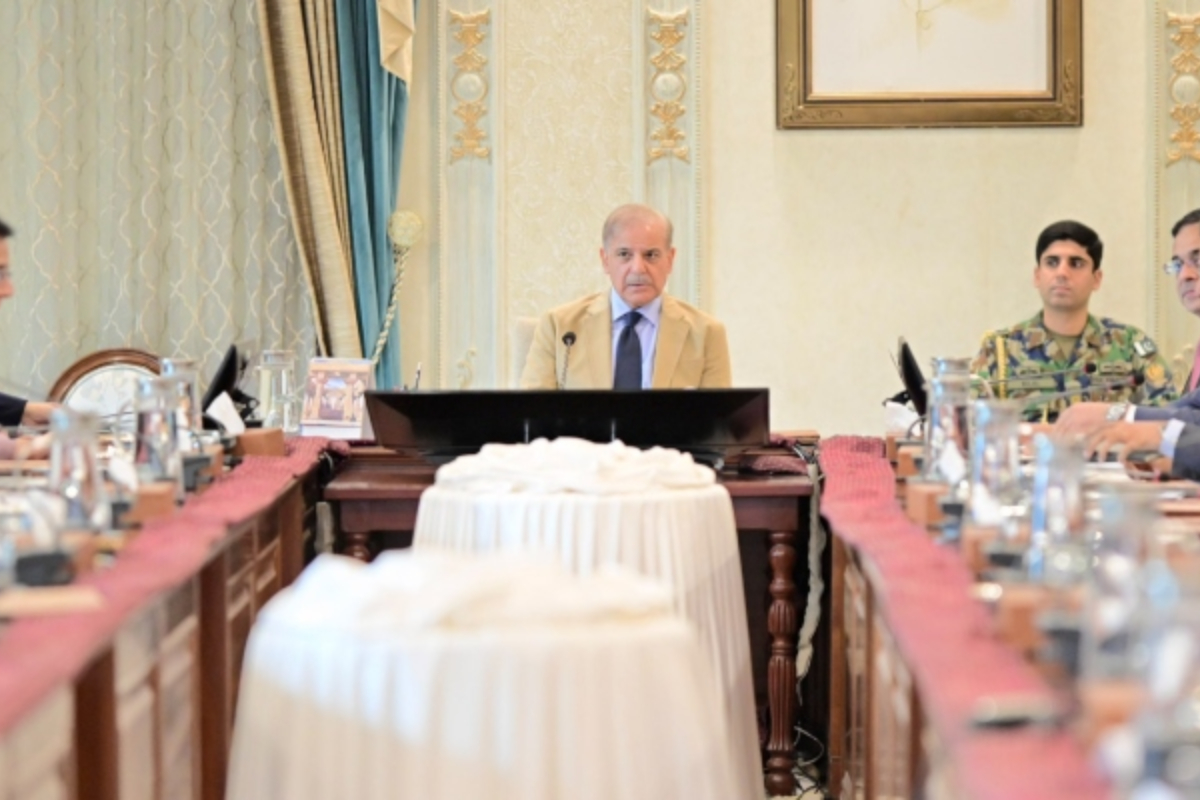
ISLAMABAD: Prime Minister Shehbaz Sharif has ordered a comprehensive review of the performance of federal ministries and divisions, directing them to submit detailed reports on their achievements since February 2024.

According to an official communication from the Prime Minister’s Office, all ministries have been instructed to provide performance reports in a prescribed format, outlining key initiatives, achievements and progress made during the period.

Officials said the ministries must also detail progress on governance reforms, improvements in public service delivery and the extent to which they have met their targets.

The review will cover 18 ministries related to the economy and finance, 14 ministries responsible for law, security and administrative affairs, and nine ministries overseeing social services, including health and education.

The directive requires ministries to provide measurable outcomes, project completion dates and details of completed initiatives.

They must also report on delayed projects, explain the reasons for delays and identify obstacles affecting implementation.

The Prime Minister’s Office has instructed ministries to support every performance claim with documentary or other verifiable evidence, warning that unsupported claims and incomplete reports will not be accepted.

The review will also assess the utilization of development funds and the outcomes of government projects.

Officials said the exercise will also evaluate the performance of the China-Pakistan Economic Corridor Authority and the Planning Commission of Pakistan, as well as the Annual Development Programme, economic policies, improvements in the national census and statistical system, public-private partnership initiatives and the prime minister’s special projects.

PM orders technical audit of power distribution companies’ billing systems

PM orders

ISLAMABAD: Prime Minister Shehbaz Sharif has directed authorities to conduct a technical audit of the billing systems used by Pakistan’s electricity distribution companies (DISCOs) as part of broader efforts to reform the country’s power sector.

During a briefing on the performance of distribution companies, officials informed the prime minister that technical and commercial losses across DISCOs have been declining gradually.

 They said the Islamabad, Lahore and Gujranwala electricity distribution companies recorded the lowest losses during the last fiscal year.

The prime minister instructed officials to establish key performance indicators (KPIs) to evaluate the performance of all distribution companies and said the best-performing DISCO would be recognized with an official award.

Sharif said power sector reforms remain one of the government’s top priorities and stressed that the installation of smart electricity meters nationwide is essential to improving efficiency and transparency.

He also called for stricter measures at every level to eliminate electricity theft completely and directed authorities to prepare village-level solar energy projects to expand access to renewable energy and reduce pressure on the national grid.

PM Shehbaz highlights role of cybersecurity in national defense

PM Shehbaz

ISLAMABAD: Prime Minister Shehbaz Sharif said Pakistan’s armed forces used autonomous systems and cybersecurity capabilities to defend the country’s borders during “Marka-e-Haq,” underscoring the growing role of advanced technology in national security.

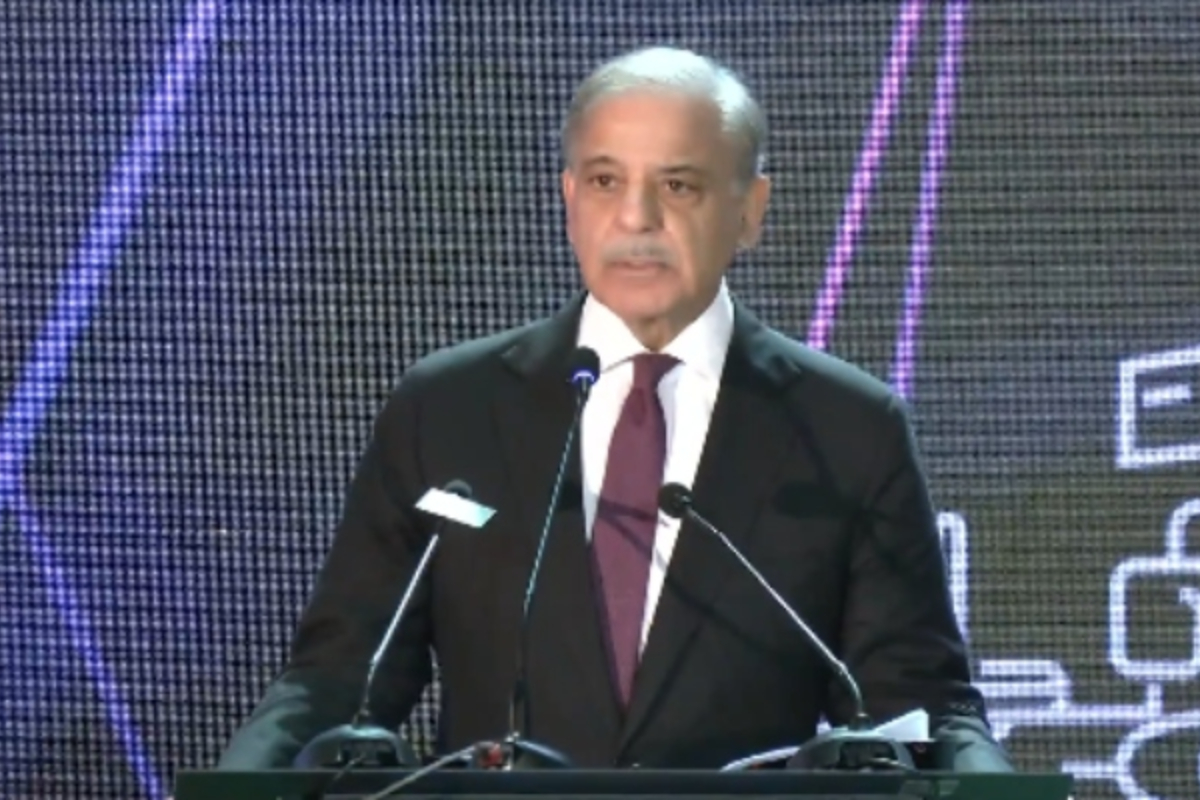
Addressing the Indus Robotics and Autonomous Systems Expo in Islamabad, Sharif said the exhibition reflected Pakistan’s ambition to become a leader in emerging technologies in the 21st century.

The prime minister said the use of technology in the security sector was a source of national pride, adding that Pakistan had made significant progress in advanced technologies, including achieving more than 60% indigenous production of drones.

Sharif credited the armed forces, under the leadership of Field Marshal Syed Asim Munir, for effectively integrating modern technology during “Marka-e-Haq.” He also praised the contributions of the chief of air staff and chief of naval staff.

He said Pakistan would continue to invest in advanced technologies, including autonomous systems and cybersecurity, to strengthen its defense capabilities and safeguard national sovereignty.

PM Shehbaz condemns missile attack on Saudi Arabia

PM Shehbaz

ISLAMABAD: Prime Minister Shehbaz Sharif on Tuesday strongly condemned the missile and drone attack on Saudi Arabia, warning that the escalation could further undermine peace and stability in the region.

In a statement, Sharif said Pakistan “strongly condemns the blatant attacks” carried out against the Kingdom of Saudi Arabia, describing them as a violation of the country’s sovereignty and territorial integrity.

He warned that such actions risk further destabilizing the region and reaffirmed Pakistan’s “unwavering support” for Saudi Arabia’s security.

“Pakistan stands in complete solidarity with the brotherly Kingdom of Saudi Arabia during this difficult time,” the prime minister said, adding that Islamabad would continue to support sincere efforts aimed at promoting regional peace, stability, security and dialogue.

The statement came after Yemen’s Houthi movement launched missiles and drones targeting Abha International Airport in southern Saudi Arabia, in a sharp escalation of regional tensions. Saudi air defenses intercepted the projectiles, and no casualties were immediately reported

PM Shehbaz meets Qatar’s emir, offers condolences on death of ex-ruler

PM Shehbaz

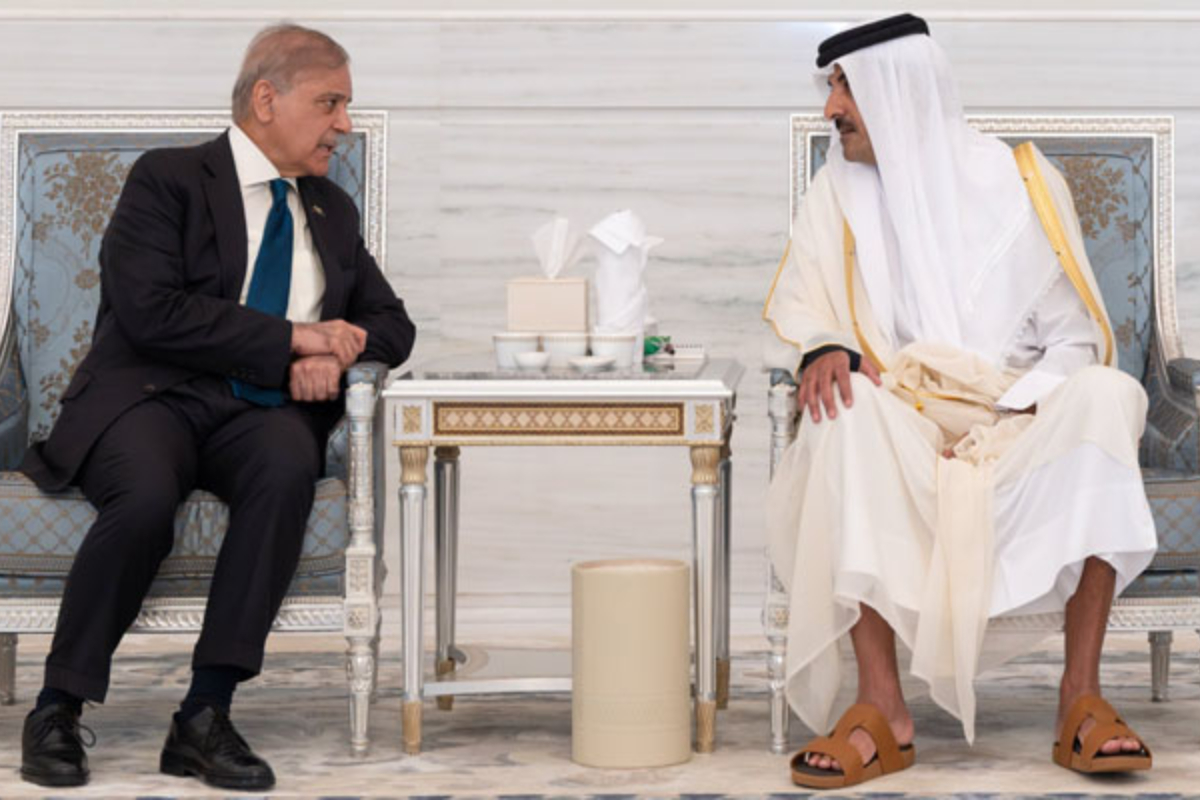
DOHA: Prime Minister Shehbaz Sharif met with Sheikh Tamim bin Hamad Al Thani during a visit to Doha, where he conveyed Pakistan’s condolences over the death of former Qatari emir Sheikh Hamad bin Khalifa Al Thani.

Sharif paid tribute to the late emir’s visionary leadership and his contributions to regional peace, stability and development.

He also recalled Sheikh Hamad’s several visits to Pakistan and reaffirmed Islamabad’s solidarity with Qatar’s leadership and people during their time of mourning.

The Emir of Qatar thanked Prime Minister Shehbaz Sharif, former Prime Minister Nawaz Sharif and the Pakistani delegation for traveling to Doha in person to offer condolences, describing the gesture as a reflection of the close ties between the two countries.

The meeting was attended by Nawaz Sharif, Information Minister Attaullah Tarar and other senior Pakistani officials.

Earlier, upon his arrival in Doha, the Pakistani delegation was received by Qatar’s Deputy Prime Minister Sheikh Saud bin Abdulrahman Al Thani. Prime Minister Shehbaz returned to Pakistan after concluding the one-day visit.

PM directs Pakistani embassies to expand overseas job opportunities for youth

PM directs

ISLAMABAD:  Prime Minister Shehbaz Sharif on Monday directed Pakistani embassies to accelerate efforts to identify overseas employment opportunities for young Pakistanis as part of the government’s strategy to boost skilled workforce exports.

Chairing a meeting to review youth employment initiatives, the prime minister instructed overseas missions to intensify engagement with foreign employers and labor markets to help create more job opportunities for Pakistani workers.

Sharif also ordered the complete digitization of the Protectorate of Emigration system and directed the Ministry of Overseas Pakistanis, the National Vocational and Technical Training Commission and the Prime Minister’s Youth Programme to ensure the provision of internationally recognized vocational skills and language training programs with certification.

The prime minister said Pakistan’s workforce is highly capable and emphasized that the government is working to improve access to internationally recognized education, training and employment opportunities.

He instructed Pakistani embassies to strengthen mechanisms for sharing information on overseas job openings and labor market requirements, while urging relevant institutions to enhance cooperation with foreign countries to align Pakistani certifications with international standards.

Officials told the meeting that more than 800,000 young people have registered on the government’s Digital Youth Hub platform. They said training programs are underway to prepare Pakistanis for overseas employment and that embassies will upload information on available jobs and required qualifications to the portal.

UK to ban social media access for under-16s, Prime Minister announces

UK to ban

London: British Prime Minister Keir Starmer has announced that the government will impose a nationwide ban on social media access for children under the age of 16, calling it a necessary step to protect young people.

Starmer said the move would apply to all under-16s and described a full restriction on social media use for minors as the “right decision” for their wellbeing and development.

The government had launched consultations last month aimed at limiting children’s exposure to social media platforms and related digital devices, with a focus on reducing screen time.

Officials said the policy is intended to shift children’s attention away from mobile phones and laptops and encourage a greater focus on education, physical health, and overall wellbeing.

On the other hand, Social media platform Snapchat has introduced new restrictions for its younger users, barring children aged 13 to 15 from publicly sharing videos on its Spotlight feature.

The platform’s parent company, Snap Inc., said the move is aimed at strengthening online privacy and safety protections for minors.

Under the new policy, videos uploaded by users in this age group will no longer appear on the public Spotlight feed, which functions similarly to TikTok and Instagram Reels.

However, affected users will still be able to share content privately with friends, the company clarified.

Snap Inc. said the decision is intended to reduce risks of online harassment and misuse of personal content while ensuring a safer digital environment for younger users.

PM reiterates call for charter of democracy, dialogue with opposition

PM reiterates

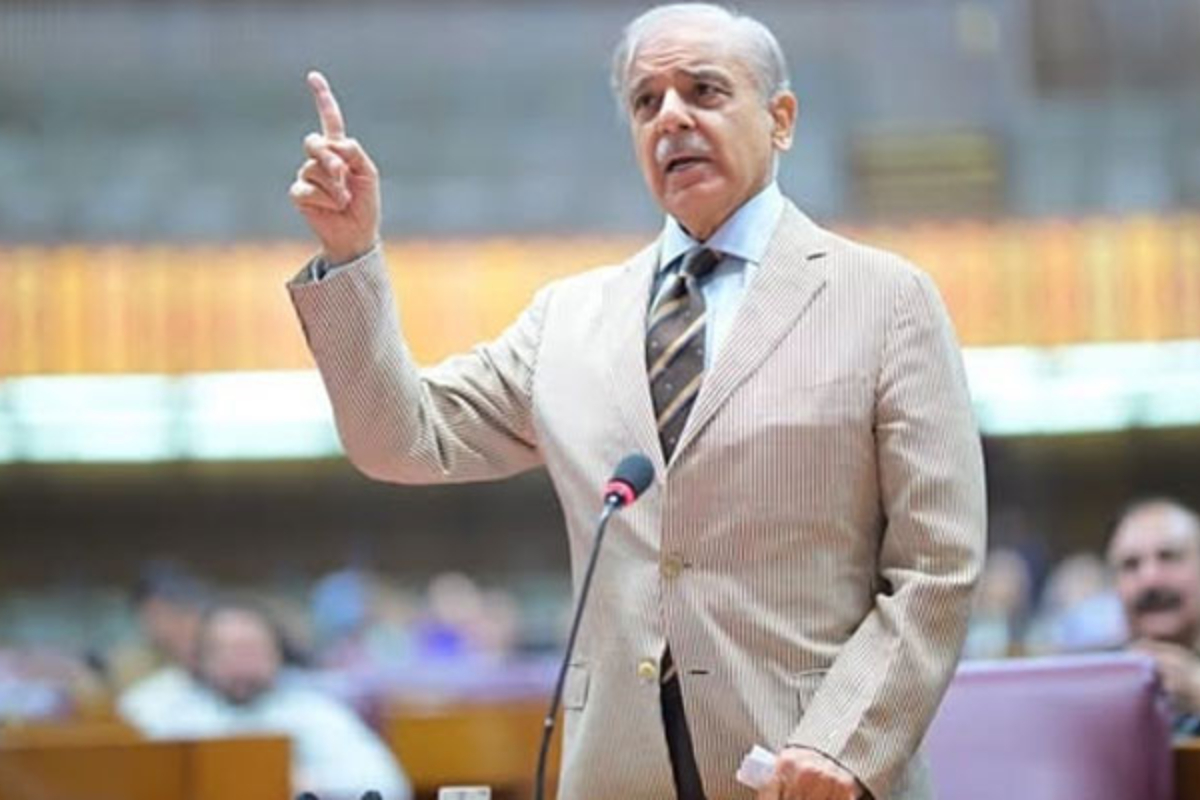
ISLAMABAD: Prime Minister Shehbaz Sharif renewed his call for political dialogue with the opposition, urging progress toward a “Charter of Democracy” and a broader national consensus on governance and the economy.

Speaking during a National Assembly session, Sharif said that 22 security personnel were killed three days earlier, praising the sacrifices of the armed forces and saying their efforts protect millions of citizens from harm.

He stressed the need to respect those sacrifices, saying the children of martyrs are often left unaware of the loss of their fathers who “leave this world while protecting the nation’s children.”

The prime minister reiterated his invitation to the opposition to engage in dialogue on a Charter of Democracy and a Charter of Economy, saying political differences should not come in the way of national interest.

“Politics is our own, visions are our own, but Pakistan comes first,” he said, adding that the development of all provinces is his constitutional responsibility.

Sharif also pointed to development projects in Balochistan, including increased provincial shares under the National Finance Commission (NFC) Award and ongoing infrastructure initiatives.

He cited the Reko Diq mining project as an example of equitable resource distribution, saying Balochistan’s share in the project was transparent and publicly known.

The prime minister further noted that Balochistan’s NFC share was doubled in the 2010 award, and said federal and provincial contributions were being made toward the province’s development.

He added that a road project from Gwadar to Chaman is under construction to highway standards at a cost of 300 billion rupees, aimed at improving regional connectivity.

PM lauds armed forces’ role in safeguarding sovereignty, security

PM lauds

QUETTA: Prime Minister Shehbaz Sharif visited the Command and Staff College in Quetta, where he addressed faculty members and under-training officers, highlighting national security, defence and regional developments.

During his speech, the prime minister praised the armed forces for what he called their “exemplary role” in defending national sovereignty, maintaining peace and ensuring stability.

He paid tribute to military personnel and martyrs, saying the nation would always remember their sacrifices for the country.

Shehbaz Sharif said Pakistan’s armed forces had demonstrated professional excellence and operational readiness, particularly during what he referred to as “Ma’arka-e-Haq,” where, according to him, they successfully responded to external aggression.

He also lauded the leadership of Field Marshal Asim Munir, describing recent achievements under his command as historic, and congratulated the military leadership and troops.

The prime minister said the international community had acknowledged Pakistan’s “wise approach” and principled stance on regional issues.

He added that Pakistan remained fully prepared to respond to any aggression and would continue efforts to safeguard its sovereignty and territorial integrity.

Sharif said operations against terrorism would continue with full resolve and national unity until the threat was eliminated.

PM Shehbaz chairs meeting to finalize strategy for boosting Pakistan’s exports

PM Shehbaz

ISLAMABAD: Prime Minister Shehbaz Sharif chaired a high-level meeting to review a policy framework aimed at increasing Pakistan’s exports, with participants presenting recommendations and suggestions to strengthen the country’s export sector.

During the meeting, the prime minister emphasized that export-oriented industries are essential for achieving Pakistan’s long-term economic development goals.

He said the government is focused on expanding exports and providing greater facilitation to industries, directing officials to formulate a comprehensive plan to support small and medium-sized enterprises (SMEs) and industrial units to enhance export performance.

Prime Minister Shehbaz also called for a strategy to promote new businesses and industries that can contribute to higher exports and diversify Pakistan’s export base.

He stressed that investment in research and development (R&D) and innovation within the industrial and commercial sectors would improve Pakistan’s competitiveness in global markets.

Separately, members of the Senate of Pakistan discussed the economic impact of recent regional tensions and measures needed to reduce government expenditures and stabilize the economy.

Senator Mohsin Aziz said Pakistan’s exports had declined by $4 billion, adding that citizens currently hold Rs 38 trillion in bank deposits, with Rs 18 trillion shifted from businesses into banks.

He further noted that electricity and gas prices have doubled, while circular debt continues to rise despite the increase in utility tariffs.