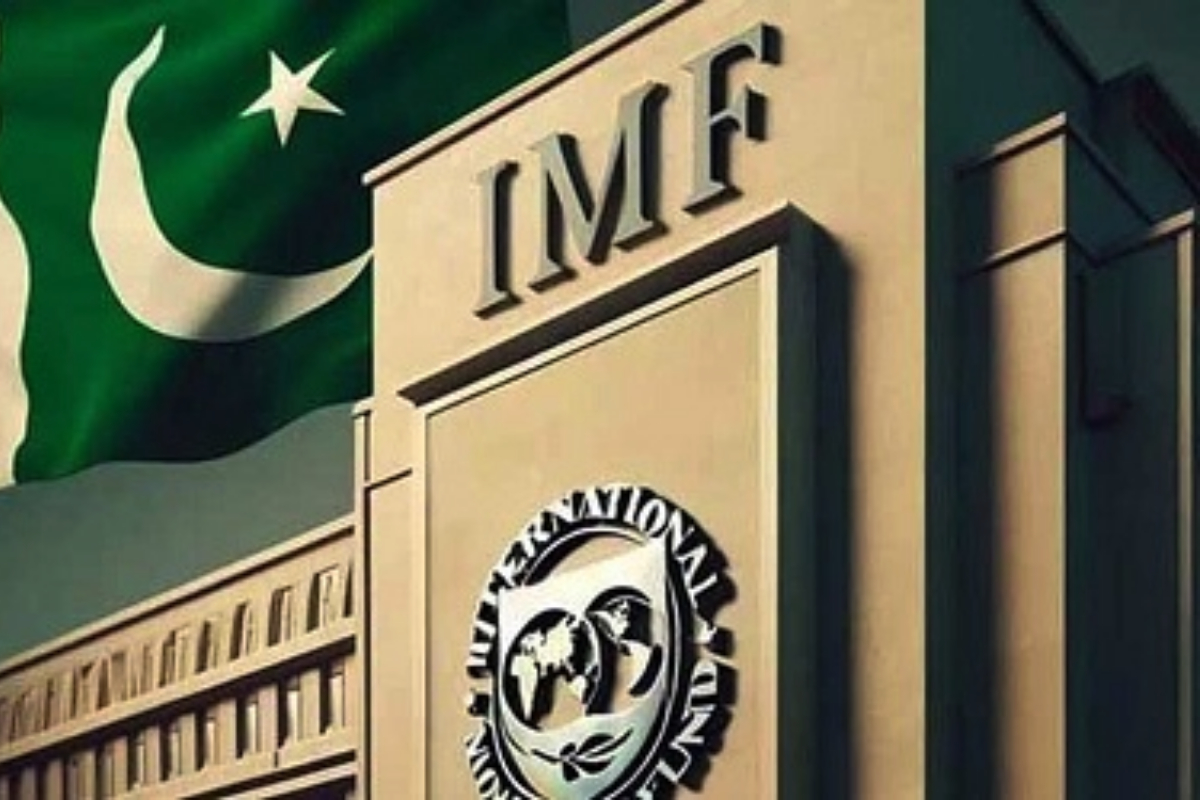
ISLAMABAD: The International Monetary Fund (IMF) has released a governance and corruption report on Pakistan, flagging ongoing concerns over systemic corruption and inefficiency across key public institutions.
The report calls for the immediate implementation of a 15-point reform agenda, which the IMF says could boost Pakistan’s economy by 5 to 6.5 percent.
The report recommends eliminating special privileges in government contracts, enhancing transparency in State Investment Facilitation Council (SIFC) decisions, and strengthening parliamentary oversight of the government’s financial powers.
It also emphasizes the need for reforms in anti-corruption agencies, greater accountability in policy-making, and more transparency in implementation to achieve significant economic benefits.
According to the IMF, Pakistan’s tax system suffers from complexity, weak administration, and poor oversight, contributing to corruption. Judicial delays and procedural inefficiencies further hinder economic activity. The IMF has urged the SIFC to publish annual reports promptly and recommended that all government procurement be integrated into an e-governance system within 12 months.
The report highlights gaps in fiscal transparency, including reduced tax-to-GDP ratios, large budgetary variances, and preferential allocation of development funds influenced by bureaucracy. It notes that from January 2023 to December 2024, the National Accountability Bureau (NAB) recovered PKR 5.3 trillion, representing only a fraction of the economic losses caused by corruption.
The IMF also criticized discretionary policy decisions, such as the PTI government’s 2019 approval of sugar exports, for benefiting elite interests at the expense of broader economic growth.
The IMF further stated that citizens frequently make additional payments to access public services, while political and economic elites capture state policies, obstructing development. Weak continuity and perceived bias in anti-corruption policies have eroded public trust, while deficiencies in budget management and procurement systems exacerbate corruption risks.
Government enterprises suffer losses due to corruption, and excessive regulations constrain the performance of tax and customs officials. Regulatory bottlenecks and reliance on court decisions delay economic progress.
The report underscores that anti-corruption efforts in Pakistan have so far been insufficient and highlights challenges in institutional capacity, technical expertise in ministries, and fragmented governance structures.
The IMF also noted progress in meeting Financial Action Task Force (FATF) objectives but highlighted slow implementation of sanctions and inadequate prosecution of money laundering cases. Attempts to curb public spending and strengthen anti-corruption mechanisms have seen limited success, with many government functions performed on temporary or ad-hoc arrangements.
Overall, the IMF report stresses that comprehensive reforms in governance, transparency, taxation, judicial efficiency, and anti-corruption institutions are crucial for Pakistan to achieve sustainable economic growth.