BREAKING NEWS
Advertise with us >

Pakistan receives $1.2b tranche from IMF

Pakistan receives

ISLAMABAD: The State Bank of Pakistan (SBP) has received a $1.2 billion installment from the International Monetary Fund (IMF).

Sources confirmed that the funds have been transferred to the SBP account. The IMF had approved the disbursement for Pakistan on 8 December.

The amount represents the third tranche under the current IMF loan program. In addition, the IMF has released an extra $20 million for Pakistan to support climate change-related initiatives.

Circular debt in electricity sector likely to climb by PKR 735 Billion

Circular debt

ISLAMABAD: Pakistan’s power sector is facing a potential increase of PKR 735 billion in circular debt during the current fiscal year, officials have cautioned.

Officials said the debt could climb from PKR 1,615 billion to approximately PKR 2,300 billion. However, measures such as annual re-basing, reducing distribution company losses, and improving recoveries are expected to limit the increase by PKR 212 billion.

To eliminate the remaining PKR 522 billion, the government plans PKR 120 billion in principal repayments and will settle PKR 400 billion by paying government power plants and IPPs, aiming to maintain a zero circular debt stock.

Sources further explained that, as per International Monetary Fund (IMF) conditions, the power sector’s circular debt must be kept at zero inflow.

Under the Circular Debt Management Plan, PKR 55 billion is expected through annual re-basing, PKR 18 billion from reduced distribution company losses, and PKR 121 billion from improved recoveries.

With these measures in place, authorities aim to maintain circular debt at zero inflow throughout the fiscal year.

IMF report highlights institutional corruption challenges in Pakistan

IMF

ISLAMABAD: The International Monetary Fund (IMF) has released a governance and corruption report on Pakistan, flagging ongoing concerns over systemic corruption and inefficiency across key public institutions.

The report calls for the immediate implementation of a 15-point reform agenda, which the IMF says could boost Pakistan’s economy by 5 to 6.5 percent.

The report recommends eliminating special privileges in government contracts, enhancing transparency in State Investment Facilitation Council (SIFC) decisions, and strengthening parliamentary oversight of the government’s financial powers.

 It also emphasizes the need for reforms in anti-corruption agencies, greater accountability in policy-making, and more transparency in implementation to achieve significant economic benefits.

According to the IMF, Pakistan’s tax system suffers from complexity, weak administration, and poor oversight, contributing to corruption. Judicial delays and procedural inefficiencies further hinder economic activity. The IMF has urged the SIFC to publish annual reports promptly and recommended that all government procurement be integrated into an e-governance system within 12 months.

The report highlights gaps in fiscal transparency, including reduced tax-to-GDP ratios, large budgetary variances, and preferential allocation of development funds influenced by bureaucracy. It notes that from January 2023 to December 2024, the National Accountability Bureau (NAB) recovered PKR 5.3 trillion, representing only a fraction of the economic losses caused by corruption.

The IMF also criticized discretionary policy decisions, such as the PTI government’s 2019 approval of sugar exports, for benefiting elite interests at the expense of broader economic growth.

The IMF further stated that citizens frequently make additional payments to access public services, while political and economic elites capture state policies, obstructing development. Weak continuity and perceived bias in anti-corruption policies have eroded public trust, while deficiencies in budget management and procurement systems exacerbate corruption risks.

Government enterprises suffer losses due to corruption, and excessive regulations constrain the performance of tax and customs officials. Regulatory bottlenecks and reliance on court decisions delay economic progress.

The report underscores that anti-corruption efforts in Pakistan have so far been insufficient and highlights challenges in institutional capacity, technical expertise in ministries, and fragmented governance structures.

The IMF also noted progress in meeting Financial Action Task Force (FATF) objectives but highlighted slow implementation of sanctions and inadequate prosecution of money laundering cases. Attempts to curb public spending and strengthen anti-corruption mechanisms have seen limited success, with many government functions performed on temporary or ad-hoc arrangements.

Overall, the IMF report stresses that comprehensive reforms in governance, transparency, taxation, judicial efficiency, and anti-corruption institutions are crucial for Pakistan to achieve sustainable economic growth.


Pakistan Reaches $1.2 Billion IMF Staff-Level Agreement to Stabilize Economy

Pakistan ,IMF ,deal ,2025, Pakistan economic, recovery, IMF loan Pakistan, Pakistan, finance, ministry news

ISLAMABAD:
Pakistan and the International Monetary Fund (IMF) have reached a staff-level agreement that will unlock a $1.2 billion disbursement to help the country stabilize its struggling economy.

Pakistan ,IMF ,deal ,2025, Pakistan economic, recovery, IMF loan Pakistan, Pakistan, finance, ministry news

According to the IMF statement, the deal includes $1 billion under the Extended Fund Facility (EFF) and $200 million under the Resilience and Sustainability Facility (RSF). The IMF praised Pakistan’s fiscal discipline, saying inflation and the fiscal deficit have improved since July.

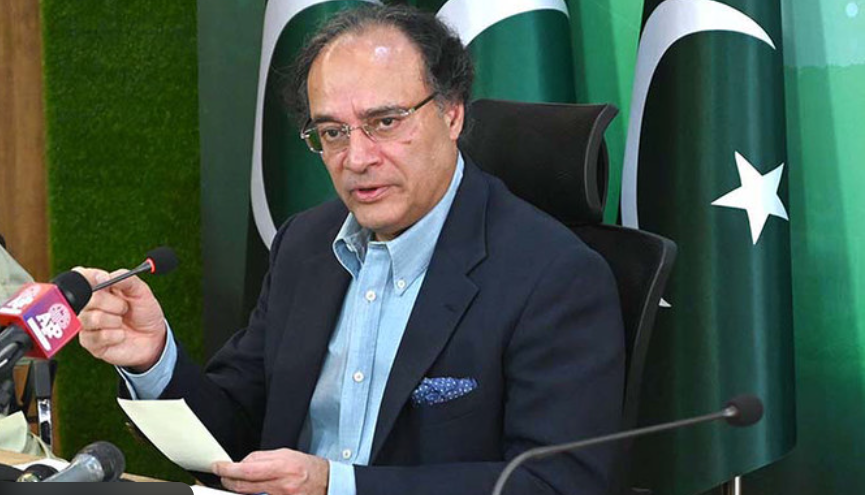
Finance Minister Muhammad Aurangzeb said that the agreement would “restore investor confidence and strengthen the rupee.” Pakistan plans to issue an international bond worth $1 billion early next year, followed by a green yuan-denominated bond to attract Chinese investors.

Analysts say this agreement signals improved trust between Islamabad and the IMF, though challenges remain due to inflationary pressures and slow exports.

Pakistan moves closer to next IMF tranche after staff-level accord

Pakistan

ISLAMABAD: In a major development on the economic front, Pakistan and the International Monetary Fund (IMF) have reached a staff-level agreement under the Extended Fund Facility (EFF) and Resilience and Sustainability Facility (RSF) reviews.

According to an IMF statement, Pakistan will receive $1.2 billion following approval by the Fund’s Executive Board. The IMF noted that Pakistan’s IMF-supported economic reform program continues to make steady progress toward macroeconomic stability and restoring market confidence.

The statement highlighted that for the first time in 14 years, Pakistan’s current account recorded a surplus in fiscal year 2025, while fiscal consolidation efforts exceeded program targets. Inflation has moderated, and foreign exchange reserves have improved. The Fund projected Pakistan’s economic growth between 3.25% and 3.5% for the fiscal year.

The IMF also praised Pakistan’s climate resilience and reform efforts, acknowledging the severe impact of recent floods that affected millions, caused over a thousand deaths, and inflicted widespread damage to crops and housing. It emphasized the need for continued implementation of comprehensive climate and structural reforms to mitigate future risks.

The Fund further acknowledged the government’s commitment to advancing reforms in the energy sector, improving fiscal discipline, and pursuing structural adjustments for long-term stability.

Earlier, Finance Minister Senator Muhammad Aurangzeb said that Pakistan’s talks with the IMF mission had been “constructive and forward-looking.” In an interview with an international news agency, he revealed that Pakistan plans to issue its first Green Panda Bond before the end of this year.

The minister also confirmed progress on the privatization of Pakistan International Airlines (PIA) and three power distribution companies, noting that five investor groups have expressed interest in acquiring the national carrier. He added that the resumption of flights to Europe and the UK has further enhanced PIA’s investment appeal.