
BREAKING NEWS
Advertise with us >

Multan Sultans’ owner Ali Tareen tears up PCB’s legal notice

Multan Sultans

MULTAN: Multan Sultans owner Ali Tareen has torn up a legal notice sent to him by the Pakistan Cricket Board (PCB), declaring that he refuses to be intimidated.

In a video message posted on social media, Tareen revealed that the Pakistan Super League (PSL) management had issued him a legal notice demanding that he withdraw his critical remarks and issue an apology. The notice also warned of the termination of his franchise agreement and the possibility of being blacklisted.

Tareen stated firmly that he would not remain silent in the face of such threats. “If you think I will be silenced by intimidation, you are mistaken,” he said.

Expressing his deep affection for the PSL, Tareen said, “I love this league — it belongs to the entire nation.” He added that he was willing to sit down and resolve the issues but lamented that the PCB had not made any attempt to contact him. “No one has made a single call or sent an email to understand my concerns,” he remarked.

In his latest video message, Tareen offered what appeared to be a tongue-in-cheek apology, saying, “I apologize for demanding that competent people be included in the PSL management. I also apologize for criticizing the draft process, training facilities, and the opening ceremony.”

The PCB had earlier issued a legal notice to the Multan Sultans franchise, accusing it of violating contractual clauses and running a campaign that damaged the reputation of the Pakistan Super League (PSL).

According to sources, the notice was served for breaches of the 10-year franchise agreement. If the franchise fails to provide a satisfactory response, the PCB may terminate the contract and blacklist the franchise owners.

Water at Risk: Indus Basin and Pakistan’s Looming Water Emergency

Pakistan water crisis, Indus Basin, UNDP Climate Promise, sea-level rise Pakistan, salinity intrusion Sindh


Pakistan’s Indus Basin, the lifeline for 80% of its population, is nearing a tipping point due to glacier melt, erratic monsoons, and severe water mismanagement. A World Bank report titled Pakistan: Getting More from Water (2023) warns that per capita water availability has fallen by over 80% since 1950, placing the country among the world’s most water-stressed nations.

“Pakistan’s water crisis is as much a governance issue as a climate one,” said Najy Benhassine, World Bank Country Director for Pakistan.

The UNDP Climate Promise (2024) reports that sea-level rise and declining river flows have accelerated salinity intrusion in Sindh’s Indus Delta, affecting agriculture and fisheries. Coastal districts like Thatta and Badin have seen over 1.2 million acres of farmland rendered unusable due to saltwater.

The Ministry of Climate Change warns that if upstream water regulation and mangrove restoration are not prioritized, the Indus Delta could face “irreversible ecological collapse within two decades.”

“We are witnessing both floods and droughts within the same year — the new climate normal,” said Sherry Rehman, former Federal Minister for Climate Change.

Pakistan’s National Water Policy (2018) is being revised to align with the Paris Agreement, focusing on climate-smart irrigation, groundwater regulation, and transboundary water cooperation with India and Afghanistan.

Poor Captaincy: South Africa defeat Pakistan by 8 wickets

Poor Captaincy

RAWALPINDI: Pakistan’s fragile batting lineup faltered on the fourth day of the Rawalpindi Test, setting South Africa a modest target of just 68 runs — which the visitors comfortably chased down with eight wickets to spare.

Resuming their second innings with a deficit of 71 runs, Pakistan struggled from the outset as wickets fell rapidly in the morning session. Babar Azam top-scored with 50 before being dismissed, while Mohammad Rizwan managed 18 runs.

Salman Ali Agha contributed 28, and Sajid Khan added 13, but the rest of the batting order failed to offer resistance. Nauman Ali and Shaheen Afridi were dismissed without scoring, while Asif Afridi remained unbeaten on zero.

For South Africa, Simon Harmer delivered a stellar performance, taking six wickets, while Keshav Maharaj claimed two and Kagiso Rabada picked up one.

Chasing 68 for victory, South Africa reached the target at the loss of just two wickets. Aiden Markram scored a solid 42, Tristan Stubbs was dismissed for a duck, and Ryan Rickelton remained unbeaten on 25.

Earlier, Pakistan had posted 333 runs in their first innings, while South Africa responded with 404, gaining a crucial first-innings lead that ultimately proved decisive.

Pakistan captain Shan Masood came under scrutiny following Pakistan’s defeat in the second Test against South Africa, as tactical errors and questionable decisions contributed to the team’s disappointing performance.

Cricket analysts and former players criticized Masood’s field placements, bowling changes, and lack of proactive strategy during crucial moments of the match. Despite having a balanced bowling attack, Pakistan failed to maintain pressure on the South African batters, allowing them to take control of the game.

Masood’s captaincy was also questioned for his inability to inspire the batting lineup, which collapsed twice under pressure. His decision to persist with defensive tactics, even when South Africa appeared vulnerable, drew particular criticism from experts.

The defeat has raised serious concerns about Pakistan’s leadership direction in the longer format, especially as the team continues to struggle with consistency and temperament in home conditions.

After the Deluge: Pakistan’s 2022 Floods Expose the Cost of Climate Neglect

Pakistan 2022 floods, World Bank PDNA report, UNDP Pakistan, climate resilience, NDMA, flood recovery


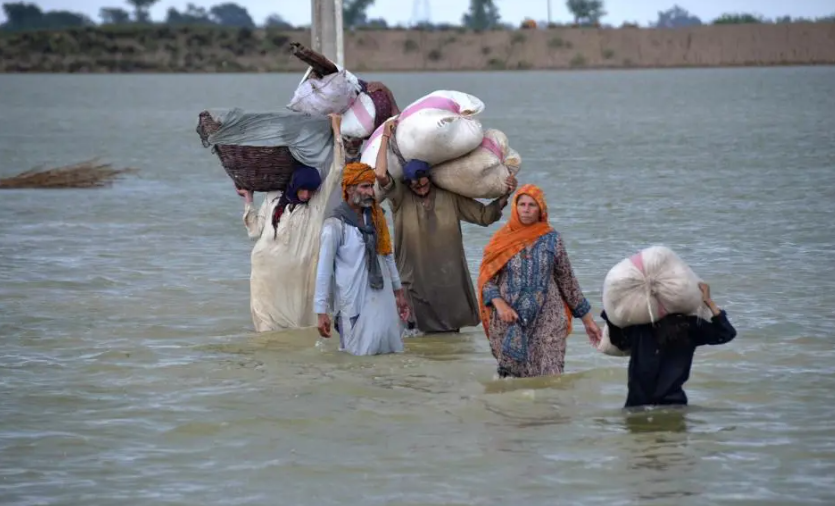
Three years after the devastating 2022 floods, Pakistan continues to grapple with the economic and social aftershocks of one of the most destructive climate disasters in its history. According to the Post-Disaster Needs Assessment (PDNA) prepared jointly by the Government of Pakistan, World Bank, Asian Development Bank, and UNDP, the floods caused over $30 billion in total losses — including $14.9 billion in damages and $15.2 billion in economic losses.

“The scale of the disaster was unprecedented. Over 33 million people were affected and millions displaced. Recovery will take years, not months,” said Henny Kromhout, Senior Disaster Risk Specialist at the World Bank.

The PDNA report warned that unless Pakistan invests heavily in climate-resilient infrastructure, similar events could occur every decade. The UNDP added that the floods were “a stark reminder that Pakistan contributes less than 1% of global greenhouse gas emissions but remains among the top 10 most climate-vulnerable nations.”

The National Disaster Management Authority (NDMA) confirmed that more than 2.3 million homes were damaged, 1.2 million livestock lost, and 4 million acres of farmland destroyed. The floods submerged one-third of the country, affecting major provinces including Sindh, Balochistan, and southern Punjab.

A World Bank Pakistan Climate Report (2023) noted:

“Climate extremes will intensify in South Asia. Building back better is not optional — it is essential for Pakistan’s survival.”

Experts recommend prioritizing early warning systems, climate-proof housing, and sustainable urban drainage systems. Pakistan’s Ministry of Climate Change has since launched the Living Indus Initiative, a $12 billion plan to restore the Indus ecosystem.

IT Secretary confirms internet services not fully restored in Pakistan

IT Secretary

ISLAMABAD: Pakistan’s undersea internet cable fault has not yet been fully repaired, the Secretary of Information Technology informed a parliamentary committee, adding that restoration work by the international consortium is still in progress.

Briefing the National Assembly Standing Committee on Information Technology and Telecommunications, the IT Secretary said that efforts by the international consortium responsible for maintenance are continuing. In the meantime, Pakistan’s internet traffic has been shifted to alternate routes to minimize disruption.

Later in the session, the committee expressed concern over poor mobile network coverage across the country and decided to summon Pakistan Telecommunication Authority (PTA) officials in the next meeting for an explanation.

The National Assembly Standing Committee on Information Technology and Telecommunications was given a detailed briefing on the Islamabad IT Park project, where officials revealed that 80 percent of the construction work has been completed.

During the meeting, Project Director informed the committee that the project is being executed in collaboration with a South Korean company. However, Federal Minister for IT Shaza Fatima Khawaja stated that the Prime Minister has ordered an inquiry into delays in the project’s completion.

Highlighting broader challenges in the telecom sector, the minister said that network issues persist due to spectrum shortage and legal disputes.

She added that Pakistan currently operates on 274 MHz of spectrum, which is insufficient to meet national demand. The government, she noted, is planning to hold a spectrum auction by December or January to enhance connectivity and service quality.

Pakistan Reaches $1.2 Billion IMF Staff-Level Agreement to Stabilize Economy

Pakistan ,IMF ,deal ,2025, Pakistan economic, recovery, IMF loan Pakistan, Pakistan, finance, ministry news

ISLAMABAD:
Pakistan and the International Monetary Fund (IMF) have reached a staff-level agreement that will unlock a $1.2 billion disbursement to help the country stabilize its struggling economy.

Pakistan ,IMF ,deal ,2025, Pakistan economic, recovery, IMF loan Pakistan, Pakistan, finance, ministry news

According to the IMF statement, the deal includes $1 billion under the Extended Fund Facility (EFF) and $200 million under the Resilience and Sustainability Facility (RSF). The IMF praised Pakistan’s fiscal discipline, saying inflation and the fiscal deficit have improved since July.

Finance Minister Muhammad Aurangzeb said that the agreement would “restore investor confidence and strengthen the rupee.” Pakistan plans to issue an international bond worth $1 billion early next year, followed by a green yuan-denominated bond to attract Chinese investors.

Analysts say this agreement signals improved trust between Islamabad and the IMF, though challenges remain due to inflationary pressures and slow exports.

Pakistan collapse leaves South Africa 68-run target in Rawalpindi Test

Pakistan collapse

RAWALPINDI: Pakistan’s batting lineup faltered once again in the Rawalpindi Test, setting South Africa a modest target of just 68 runs after a disappointing second innings performance on the fourth day of play.

Resuming their second innings with a 71-run deficit, Pakistan struggled from the outset as wickets tumbled rapidly in the morning session. Key batters Imam-ul-Haq (9), captain Shan Masood (0), Abdullah Shafique (6), and Saud Shakeel (11) all failed to make an impact, leaving the hosts in deep trouble.

Earlier, Pakistan had scored 333 runs in their first innings, while the visitors replied strongly with 404, thanks to valuable lower-order partnerships.

South Africa’s tail-enders delivered a remarkable performance — Keshav Maharaj and Senuran Muthusamy added 71 runs, followed by a 98-run stand between Muthusamy and Kagiso Rabada.

Later, Marco Jansen contributed 25 runs, while Tristan Stubbs and Tony de Zorzi combined for another 113-run partnership. The final three wickets collectively added 194 runs, giving South Africa a crucial first-innings lead.

For Pakistan, Asif Afridi was the standout bowler with six wickets, while Nauman Ali claimed two, and Shaheen Afridi and Sajid Khan picked up one wicket each.

Polish Foreign Minister begins two-day official visit to Pakistan

Polish Foreign Minister

ISLAMABAD: Polish Deputy Prime Minister and Foreign Minister Radosław Sikorski has arrived in Pakistan for a two-day official visit, aimed at strengthening bilateral relations and enhancing political and economic cooperation between the two countries.

He was received at the airport by Additional Foreign Secretary Khalid Jamali upon arrival.

During his stay, the Polish Deputy Prime Minister is scheduled to hold meetings with senior Pakistani officials to discuss bilateral relations, regional developments, and international issues of mutual interest.

According to diplomatic sources, the visit is being undertaken at the invitation of Pakistan’s Foreign Minister Ishaq Dar and aims to strengthen political, economic, and security cooperation between the two countries.

Six Militants Killed in Balochistan Operation

Balochistan operation, Pakistan Army, terrorism in Pakistan, security forces, ISPR, Dalbandin


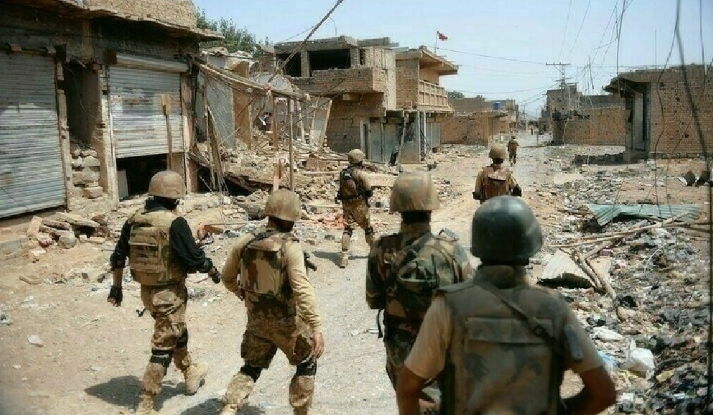
Pakistani security forces killed six suspected militants in a targeted operation in Dalbandin, Balochistan, on Wednesday. The operation was launched after intelligence reports indicated the presence of a militant group in the area.


According to the Inter-Services Public Relations (ISPR), a gun battle broke out as troops closed in on the hideout. A cache of weapons and explosives was also recovered from the site.


Authorities said the militants were linked to recent attacks on security personnel and infrastructure in the region.

The operation marks another step in Pakistan’s ongoing counterterrorism campaign in Balochistan.
Security experts say the latest offensive highlights Islamabad’s continued effort to stabilize the province amid recurring insurgent activity.

Pakistan Navy Seizes Drugs Worth Nearly $1 Billion in Arabian Sea

Pakistan Navy, Arabian Sea, drug bust, Pakistan news, methamphetamine, maritime security, transnational crime


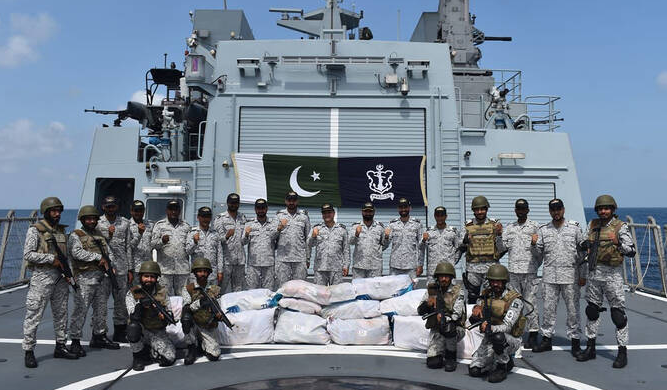
In a major counter-narcotics operation, the Pakistan Navy has seized a massive cache of drugs worth nearly US$972 million in the Arabian Sea. The intercepted haul included crystal methamphetamine and cocaine, reportedly being smuggled through international maritime routes.


According to official sources, the operation was carried out with support from international intelligence partners. The recovered drugs were handed over to the relevant authorities for legal proceedings.


The Pakistan Navy reaffirmed its commitment to maintaining maritime security and curbing illegal trafficking across its waters. Officials said such operations not only protect Pakistan’s coastal borders but also strengthen global efforts against transnational crime.


This is one of the largest narcotics seizures in Pakistan’s maritime history. Maritime experts noted that the operation underscores the country’s strategic role in ensuring safe international trade routes through the Arabian Sea.