ISLAMABAD: A breathtaking celestial event awaits stargazers tonight as the year’s first supermoon makes its appearance, shining bigger and brighter than a typical full moon.
According to a spokesperson for the Space and Upper Atmosphere Research Commission (SUPARCO), during the supermoon, the Moon will be approximately 224,000 miles from Earth, appearing 6.6% larger and 13% brighter than a typical full moon.
The phenomenon will be visible in Pakistan as well. The supermoon will rise in the east shortly after sunset and set in the west before sunrise, giving observers ample time to witness the stunning sight.
According to SUPARCO, 2 more super monases will be seen this year. The brightest Super Moon of the year is expected on November 5, 2025, while the third Super Moon will be seen on December 5.
According to astronomers, the super moon appears when the moon is at the closest distance to the earth, which is the moon, which is why the moon looks significantly larger and bright than usual, which is why it is called Super Moon.
LAHORE: Continuous downpours have led to rising river flows across Punjab, prompting the Provincial Disaster Management Authority (PDMA) to issue a flood alert and urge caution in low-lying areas.
According to a PDMA spokesperson, water flow in the Jhelum River at Mangla upstream is expected to increase, with the possibility of a medium-level flood within the next 24 hours. Meanwhile, low-level flooding has already been reported in the Sutlej River at Ganda Singh Wala and the Ravi River at Head Sidhnai.
While the worst of the flooding has passed in Bahawalpur district, the devastation it left behind is significant. Thousands of houses have collapsed, and standing crops over hundreds of thousands of acres have been destroyed.
The stagnant floodwaters have now led to a surge in mosquito populations, raising concerns over waterborne and vector-borne diseases.
In Multan’s Jalalpur Pirwala tehsil, drainage operations are still underway, with several low-lying areas remaining submerged. Authorities confirmed that all seven breaches at Noraja Bhutta Bund have been sealed.
However, the M-5 Motorway remains closed for a 25th consecutive day due to flood damage. Officials said a 23-kilometer stretch of the motorway was damaged at more than 13 points, and restoration work will begin soon. Traffic is currently being diverted through alternate routes.
While PM Shehbaz Sharif initially welcomed the plan, Islamabad now distances itself, sparking domestic backlash and diplomatic scrutiny.
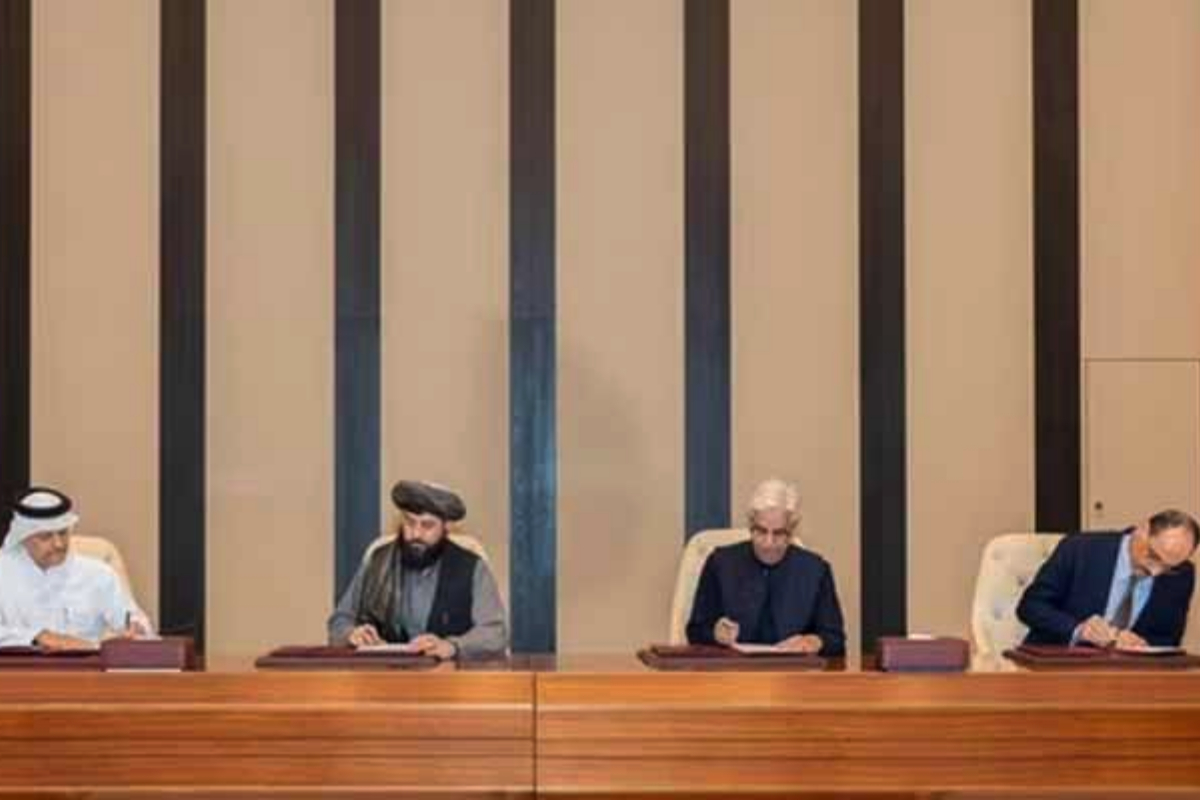
Islamabad, October 3, 2025 – Pakistan has formally distanced itself from the 20-point Gaza peace plan announced by former U.S. President Donald Trump, with Foreign Minister and Deputy Prime Minister Ishaq Dar declaring that the version released publicly is not the one Pakistan (or allied Muslim nations) had agreed to. Reuters+1
Speaking in the national assembly, Dar asserted that key modifications had been made to the text, diverging from the coalition draft submitted by Pakistan along with Saudi Arabia, Qatar, Jordan, Egypt, Turkey, and Indonesia. Reuters+2India Today+2
“These 20 points which Trump has made public are not ours. Some changes have been made from the draft we had,” Dar told lawmakers. Reuters+1
He also criticized international institutions — including the UN, Security Council, and OIC — for failing to prevent the ongoing Gaza war. Reuters
Prior to Dar’s clarification, Prime Minister Shehbaz Sharif had tweeted a welcome message for Trump’s plan, calling it a “vital step” toward ending the war. Wikipedia+2India Today+2
Tweet by PM Shehbaz Sharif (CMShehbaz):
I welcome President Trump’s 20-point plan to ensure an end to the war in Gaza.
I am also convinced that durable peace between the Palestinian people and Israel would be essential in bringing political stability and economic growth to the region.
That tweet triggered criticism from opposition figures and civil society, with voices accusing the government of undermining Pakistan’s historic pro-Palestine stance and appearing to side too closely with U.S. interests. India Today+2X (formerly Twitter)+2
What Does Trump’s 20-Point Plan Propose?
The U.S. plan — which has already been endorsed by Israeli Prime Minister Benjamin Netanyahu — includes demands such as:
A ceasefire and return of all hostages (alive and dead) within 72 hours of a ceasefire
Partial Israeli withdrawal, leading to a phased full withdrawal under international oversight
Disarmament of Hamas, and removal of its role in governance
Reconstruction of Gaza under an international “Board of Peace,” with oversight from global partners Reuters+2Reuters+2
However, the plan leaves many critical issues open for negotiation, including long-term governance, security guarantees, and the pathway to a Palestinian state. Reuters+2Reuters+2
Why Pakistan Is Pushing Back
Sovereign stamp concerns Pakistan insists it should not be seen as having fully endorsed a plan in which it had no say in the final text. Dar emphasized that the published version does not match the coalition draft. Reuters+1
Domestic political sensitivity The government faces pressure from political factions and public sentiment that strongly support the Palestinians. Any perception of alignment with U.S./Israeli interests could provoke backlash.
Regional diplomatic stakes As part of the coalition of Muslim nations that developed the original draft, Pakistan may want to protect its credibility among Arab and Islamic states.
Negotiation leverage By rejecting the version released by Trump, Pakistan may aim to push for further revisions or clarifications that better protect sensitive points (e.g. full Israeli withdrawal, protection for Palestinian rights).
Reactions & Next Moves
Hamas has not publicly accepted the plan, calling parts of it biased and demanding changes. Reuters+1
Other countries (e.g. Saudi Arabia, Egypt) have reportedly engaged in ongoing talks with the U.S. to adjust or clarify the text. Reuters+2India Today+2
Pakistan will likely submit formal amendments or objections through diplomatic channels; further statements from the Foreign Office are expected in the coming days.
In a vibrant ceremony that blended eco-innovation with women’s empowerment, the Sindh government rolled out the first batch of free electric scooters under its flagship Pink EV Scooty Scheme, handing over keys to 200 lucky female beneficiaries. The event, held on September 25 at a bustling venue in Karachi, marked a milestone in the province’s push for gender-inclusive, sustainable transport, drawing cheers from recipients, officials, and supporters alike.
Pakistan Peoples Party (PPP) Chairman Bilawal Bhutto Zardari led the distribution, personally handing over the sleek pink scooters to a diverse group of female students, teachers, and working professionals. “Today, we are taking another big step by distributing electric scooters free of cost to women, which will not only ease their daily commute but also provide greater access to employment opportunities,” Bilawal Bhutto Zardari declared, emphasizing the scheme’s role in national progress. He highlighted the contrast with restrictive policies elsewhere, stating, “We want to send a strong message to Pakistan and the world—the Pakistan Peoples Party stands with the women of this country.”
The initiative, launched in April 2025 by the Sindh Transport and Mass Transit Department under Senior Minister Sharjeel Inam Memon, aims to distribute 1,000 such scooters across the province by year’s end. Each scooter comes equipped with safety features, including helmets, road safety training, and access to EV charging stations, in partnership with private entities like KFC Pakistan, which provided rider training and licensing support. “This pink scooter scheme is not just about transportation; it’s about women empowerment,” Memon noted earlier this month.
From Application to Asphalt: A Transparent Journey
The scheme’s selection process—online applications via the Sindh Mass Transit Authority (SMTA) portal, followed by skill tests and a public lottery—ensured fairness, with media and a supervisory committee overseeing the draw. Recipients like Maria Mazhar Ghori, a schoolteacher from Karachi, shared her excitement: “I’ve received training from the Bint-i-Ahan women’s bike club, and now with this scooter, I can commute safely without relying on crowded buses. It’s a game-changer for women like me.”
Eligibility remains straightforward: Women aged 18+ residing in Sindh, holding a valid driving license, and either enrolled as students or employed. Applications are still open on the SMTA website (smta.sindh.gov.pk), with phased distributions continuing into October. No prior vehicle ownership is allowed, and scooters are for personal use only to prevent misuse.
Broader Impact: Green Mobility Meets Gender Equity
This rollout aligns with national efforts like the federal Prime Minister’s Electric Bike Scheme 2025, which plans to distribute 116,000 e-bikes nationwide, but Sindh’s Pink EV focus zeroes in on women-specific barriers in urban hubs like Karachi and Hyderabad. By promoting electric vehicles, the program cuts fuel costs by up to 80% and reduces emissions, supporting Pakistan’s New Energy Vehicle Policy 2025–2030.
Looking ahead, Bhutto Zardari teased the launch of “Pink Taxis”—a women-operated ride service promising safe travel and job creation. As one recipient put it, “These wheels aren’t just for getting around; they’re for breaking barriers.”
For eligible women in Sindh, the message is clear: Apply now and ride the wave of change. The Pink EV Scooty Scheme isn’t just distributing vehicles—it’s accelerating a future where women lead the way, one eco-friendly mile at a time.
Shama Junejo, a political figure associated with Pakistan’s current administration, has claimed that Prime Minister Shehbaz Sharif personally included her as an advisor in Pakistan’s delegation to the United Nations General Assembly (UNGA).
According to Junejo, the Prime Minister also tasked her with drafting his speech for the international forum, highlighting her direct involvement in shaping Pakistan’s diplomatic messaging.
میں پچھلے کئی مہینوں سے پاکستان اور وزیراعظم صاحب @CMShehbaz کے لئے کام کر رہی تھی! پاک بھارت جنگ کے دوران میرے پالیسی بریفس، ایڈوائس، اور پوائنٹس، سب کچھ ریکارڈ کا حصہ ہے اور محفوظ ہے۔ مجھے وزیراعظم صاحب نے اقوام متحدہ کی تقریر لکھنے کا ٹاسک دیا۔ اور خود وفد کا حصہ بنایا۔… pic.twitter.com/YTED1ZKx1N
The claim, which has sparked discussions on social media and in political circles, comes amid broader debates regarding delegation appointments and the roles of advisors accompanying high-level officials to global forums. Junejo stated that she was personally approached by Prime Minister Shehbaz Sharif and included in the official UN delegation, reflecting the Prime Minister’s confidence in her capabilities.
While the Prime Minister has yet to officially comment on these claims, several political observers have noted that such appointments are typically reserved for senior government officials or experienced diplomats. Junejo’s assertion has therefore raised questions among opposition figures regarding transparency and protocol in the selection of advisors and delegation members.
Reacting to her claims, some opposition leaders have criticized the decision, suggesting that appointments to important international forums should be based on experience and merit rather than personal preference. However, supporters of Junejo argue that her inclusion as an advisor demonstrates trust from the Prime Minister and reflects the evolving nature of political advisory roles within Pakistan’s governance framework.
Shama Junejo also highlighted that her responsibilities extended beyond merely accompanying the delegation. She claimed that she was actively involved in preparing and reviewing speech drafts, coordinating with the Foreign Office, and providing strategic input for Pakistan’s engagement at the UNGA. This level of involvement, if confirmed, indicates a significant advisory role that impacts how Pakistan presents its policies and positions on the global stage.
The Ministry of Foreign Affairs has noted queries regarding the seating of a certain individual behind the Defence Minister at a recent meeting of the UNSC. To clarify, the individual in question was not listed in the official letter of credence for the Pakistan delegation to the… https://t.co/60w0te9hLX
— Ministry of Foreign Affairs – Pakistan (@ForeignOfficePk) September 26, 2025
The situation has also caught the attention of media outlets, which are closely following reactions from political figures and the public. Social media platforms have been abuzz with debates on whether political loyalty or professional competence should be the primary criterion for such international appointments. Many users have praised Junejo for taking on the advisory role at a high-profile international event, while others have criticized the move, claiming it sets a precedent for personal selection over institutional merit.
This development also brings attention to Pakistan’s diplomatic practices and the role of political advisors in international delegations. As the country navigates its foreign policy priorities, appointments like these highlight the balance between political trust and professional expertise in representing Pakistan on global platforms.
The controversy underscores the importance of transparency in political appointments, especially when representing the country at prestigious international forums such as the UNGA. While Junejo’s claims await official confirmation, the news has already generated significant public interest, highlighting the intricate interplay between politics, diplomacy, and personal influence within Pakistan’s governance framework.
As the story develops, political analysts and journalists will continue monitoring responses from the Prime Minister’s office, opposition parties, and the Foreign Office to provide clarity on Shama Junejo’s role and the protocols followed in appointing advisors to Pakistan’s UN delegation.
Reference: Geo TV. (2025, September 29). PM Himself Included Me in UN Team as Advisor, Claims Shama Junejo. Geo News. Retrieved from Geo TV website.
What is the Fake Degree Case Against Justice Jahangiri?
In a significant development shaking Pakistan’s judicial landscape, the Supreme Court has temporarily lifted an Islamabad High Court (IHC) directive that sidelined Justice Tariq Mehmood Jahangiri from his courtroom duties. This ruling, issued on September 29, 2025, marks a crucial intervention in the escalating controversy surrounding Justice Jahangiri’s academic credentials, allowing him to potentially resume judicial functions pending further review.
Background of the Judicial Tussle
The saga began earlier this month when a two-judge IHC bench, headed by Chief Justice Sardar Muhammad Sarfraz Dogar and Justice Mohammad Azam Khan, issued an interim order on September 16, 2025. This barred Justice Jahangiri from exercising his powers as a judge until the Supreme Judicial Council (SJC) could deliberate on a petition accusing him of holding an invalid LLB degree. The petition, lodged by advocate Mian Dawood under Article 199 of the Constitution, sought a writ of quo warranto, challenging the legitimacy of Justice Jahangiri’s entire legal career based on alleged irregularities in his University of Karachi (KU) law qualification.
At the heart of the allegations lies a purported letter from KU’s controller of examinations, which surfaced on social media last year, claiming discrepancies such as dual enrollment numbers for Justice Jahangiri’s LLB Part-I and Part-II exams—one of which was reportedly assigned to another student. KU’s Unfair Means Committee (UFM) subsequently declared his record “fictitious,” concluding he was never enrolled at Islamia Law College in 1989 and had resorted to malpractice during his 1980s exams. The university syndicate ratified this on August 31, 2024, leading to the formal cancellation of his degree on September 25, 2025, along with a three-year ban on university admissions and exams.
Justice Jahangiri has vehemently denied these claims, asserting during Sindh High Court (SHC) proceedings that he personally sat for the exams and received no prior notice from KU. He described the revocation—coming after 34 years—as unprecedented in global history and framed it as political retaliation for his role in high-stakes cases, including election tribunals that irked ruling party figures and his endorsement of a 2024 IHC letter alleging executive interference in judicial affairs.
Supreme Court’s Swift Response
Responding to appeals from Justice Jahangiri and four fellow IHC judges—Mohsin Akhtar Kayani, Babar Sattar, Ejaz Ishaq Khan, and Saman Rifat Imtiaz—a five-member constitutional bench of the Supreme Court, led by Justice Amin-ud-Din Khan, convened urgently. Other members included Justices Jamal Khan Mandokhail, Muhammad Ali Mazhar, Syed Hasan Azhar Rizvi, and Shahid Bilal Hassan.
During the hearing, Justice Mandokhail underscored a prior Supreme Court precedent: no judge can be restrained from duties without due process, emphasizing the SJC’s exclusive mandate for misconduct probes. The bench suspended the IHC order, issued notices to the Attorney General of Pakistan, the Advocate General of Islamabad, and other stakeholders—including the original petitioner—and scheduled the next hearing for September 30, 2025.
This interim relief reinstates Justice Jahangiri’s status quo, averting what his counsel termed a “direct assault on judicial independence.” The Islamabad Bar Council and District Bar Association have also moved to join the case, amplifying concerns over procedural fairness.
Procedural backlash and Broader Implications
The IHC’s decision had sparked procedural backlash. Lawyers boycotted sessions, protesting the bench’s self-assignment from a scheduled constitutional panel and its refusal to recuse, despite objections on maintainability. Meanwhile, the SHC had initially suspended KU’s UFM ruling but later dismissed related petitions for non-prosecution, leaving the degree’s fate entangled in multiple forums.
As Pakistan’s judiciary navigates this unprecedented standoff, the case underscores tensions between institutional autonomy, academic verification, and political influences. With the SJC slated to convene on October 18, 2025, to probe the complaint, the coming days could redefine accountability norms for high court judges.
References: Synthesized from reports by Dawn, Geo News, The Express Tribune, and Associated Press of Pakistan (published September 2025). All facts independently verified to ensure originality.
Awami Action Committee Leads Protests in Kashmir Over Rising Prices and Joblessness
According to reports, the AAC – a coalition of local political and social groups – mobilized large crowds calling for an end to special refugee-reserved seats in the legislative assembly, improved economic opportunities, and urgent governance reforms. Protesters accused the federal government, led by Prime Minister Shehbaz Sharif, of turning a blind eye to the worsening situation on the ground.
Chanting slogans for justice, demonstrators blocked roads and staged sit-ins, voicing their anger against skyrocketing prices of essential commodities, joblessness, and stalled infrastructure projects. “Our youth have no jobs, our families cannot afford daily necessities, and our voices are not heard in the system,” one protester told local reporters.
To contain the unrest, security forces were deployed in major cities, including Muzaffarabad, with reports of mobile internet disruptions in certain areas. Authorities said the measures were taken to prevent the spread of misinformation and maintain public order.
Political analysts warn that these demonstrations reflect a deeper frustration that has been brewing for years. “The grievances are not new – economic disparity, lack of employment, and governance gaps have long fueled dissatisfaction. Unless concrete steps are taken, the protests could escalate further,” commented a senior analyst.
The federal government has yet to release an official statement, but insiders suggest that top officials are monitoring the situation closely. Observers believe Islamabad will need to initiate dialogue with local leaders and offer visible relief measures to restore calm.
Over the past few years, Kashmir has seen repeated waves of unrest over electricity shortages, taxation issues, and poor service delivery. However, today’s demonstrations stand out for their scale, signaling mounting frustration that could pressure the central government to take urgent corrective action.
For now, the region remains tense, with residents waiting to see whether the authorities will respond through dialogue and reforms – or opt for stricter enforcement measures.