
BREAKING NEWS
Advertise with us >

University of Karachi Observes World Food Day 2025

Karachi, University, Food, Nutrition, Health, Agriculture, Sustainability, Technology, Research, Innovation, Education, Awareness, Seminar, Climate, Environment, Students, Science, Safety, FoodDay, Pakistan

The Department of Food Science & Technology at the University of Karachi organized a seminar on Thursday to commemorate World Food Day 2025.


The event was held to raise awareness about the global challenges of hunger, food insecurity, and the importance of sustainable food systems in ensuring a healthy future for all.

Faculty members, students, and guests from academia and the food industry attended the event. The speakers highlighted that World Food Day serves as an important reminder to adopt responsible consumption habits, reduce food waste, and promote sustainable agricultural and food processing practices.

Addressing the participants, the faculty emphasized that Pakistan, being an agriculture-based country, has immense potential to strengthen its food system through innovation, research, and modern technology. They also stressed the role of youth and researchers in developing new methods to improve food preservation, enhance nutritional value, and ensure food safety standards.

The seminar provided an opportunity for students to engage in discussions on global and national food issues. Participants shared their views on how climate change, population growth, and water scarcity are impacting food production and access.

World Food Day is observed annually on October 16 to commemorate the founding of the Food and Agriculture Organization (FAO) of the United Nations. The University of Karachi’s Department of Food Science & Technology continues to play a key role in promoting education, research, and awareness on issues related to food quality, safety, and sustainability.

The event concluded with a note of appreciation for the organizers and participants, reaffirming the department’s commitment to advancing food science education and contributing to a food-secure and sustainable Pakistan.
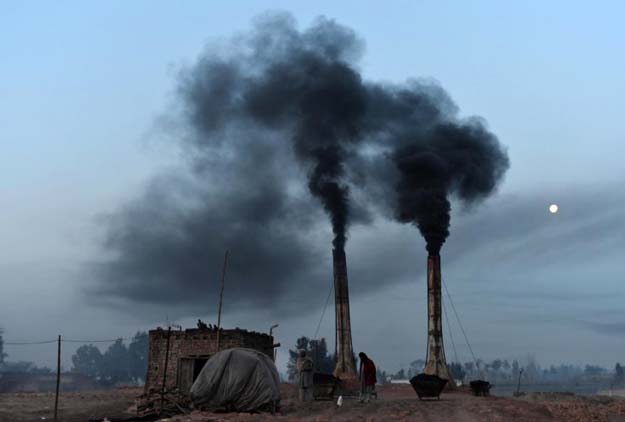
How Climate Change Is Reshaping Life in Pakistan

Melting glaciers in northern Pakistan due to rising temperatures.

Pakistan ranks among the top 10 most climate-vulnerable countries in the world. From melting glaciers to declining crop yields, climate change has begun to reshape every sector of the country’s economy and ecology.

Impact on Agriculture

Agriculture employs around 40% of Pakistan’s workforce, but rising temperatures and unpredictable rainfall are devastating crops.
According to The Agri Economist (2023), Sindh’s mango production dropped from 1.8 million metric tons to 1.44 million metric tons — a 20% decline due to heat stress and untimely rains.
Similarly, a CIMMYT report projects that wheat yields in Pakistan could fall by 16% by 2050 if current climate trends continue.

Glacier Melt and Water Challenges

Pakistan hosts more than 13,000 glaciers, covering around 13,547 sq km, according to Al Jazeera (Aug 28, 2025). These glaciers are melting 65% faster than they did between 2001 and 2010, severely affecting river flows.
The Express Tribune reported in May 2024 that extreme inflows in the Indus and Jhelum rivers — caused by glacier melt and erratic monsoons — led to widespread flooding.

Per capita water availability has now dropped below 900 cubic meters, compared to 5,600 in 1947, making Pakistan officially a water-scarce country (Pakistan Council of Research in Water Resources, 2024).

Urban Life at Risk

Cities like Karachi and Lahore face record heatwaves and flooding. In 2024, Karachi recorded temperatures above 45°C, resulting in heat-related hospitalizations. Meanwhile, smog levels in Punjab reached historic highs.

Conclusion

As per the Pakistan Meteorological Department, without immediate adaptation — from sustainable farming to urban greening — Pakistan’s social and economic stability will remain under threat.