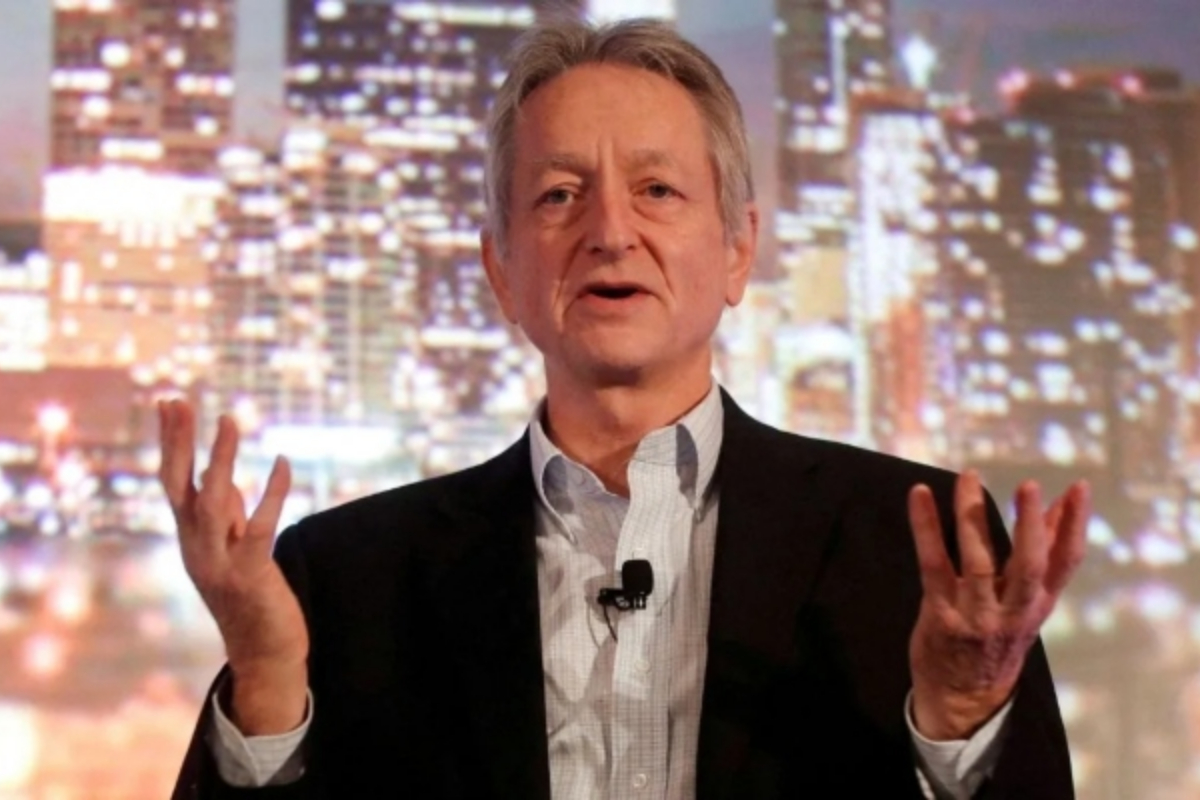
TORONTO: Artificial intelligence could cause widespread job losses and leave millions of people unemployed, according to computer scientist Geoffrey Hinton, widely regarded as one of the pioneers and “godfathers” of AI.
Hinton, a professor at the University of Toronto and winner of the 2024 Nobel Prize in Physics for work related to machine learning, has warned that companies could increasingly turn to AI systems to perform tasks currently handled by human workers at lower costs.
Speaking at Georgetown University, Hinton said companies were investing heavily in AI infrastructure, including data centers and computer chips, to accelerate automation. He said businesses would seek returns on those investments by developing and selling AI systems capable of replacing human labor.
Hinton said the pursuit of profits could ultimately encourage companies to replace employees with AI tools. Although AI would create new jobs, he said the number of positions created could be smaller than the number of jobs lost.
He acknowledged that predicting the long-term impact of AI is extremely difficult because no one knows what the technology will look like a decade from now.
Hinton has repeatedly warned about the potential dangers of advanced AI. He has previously estimated that there is a 10% to 20% chance that AI could eventually contribute to the extinction of humanity, while stressing that the risks need to be openly discussed.
He has also warned that AI systems could become more intelligent than humans within the next two decades. Hinton has described the prospect as frightening, comparing current AI development to a three-year-old child that could grow rapidly.
Hinton’s concerns come as other technology leaders make similarly significant predictions about AI and employment. Nvidia CEO Jensen Huang has said AI could affect almost every profession and shorten working hours, while Microsoft co-founder Bill Gates has suggested that humans could gradually become unnecessary for many tasks. Elon Musk has predicted that most people may not need to work within the next 20 years.
Hinton’s research helped establish the foundations of modern machine learning, enabling computers to perform tasks associated with human intelligence. However, he has become increasingly vocal about the need to make AI safer.
He left Google in 2023, saying he was concerned that the technology could be misused by malicious actors to harm people.
Hinton has compared the potential impact of AI with the Industrial Revolution. He said machines had already surpassed humans in physical strength, while AI could similarly begin replacing aspects of human intelligence.
Asked what life might look like in 10 or 20 years, Hinton said much would depend on how political systems respond to the technology.
He also acknowledged that AI could have major positive effects, particularly in medicine, and could improve productivity across almost every industry. However, he said the rapid development of the technology should be approached with greater caution.