BREAKING NEWS
Advertise with us >

Rubio warns Iran will pay ‘heavier price’ if tensions persist

Rubio warns

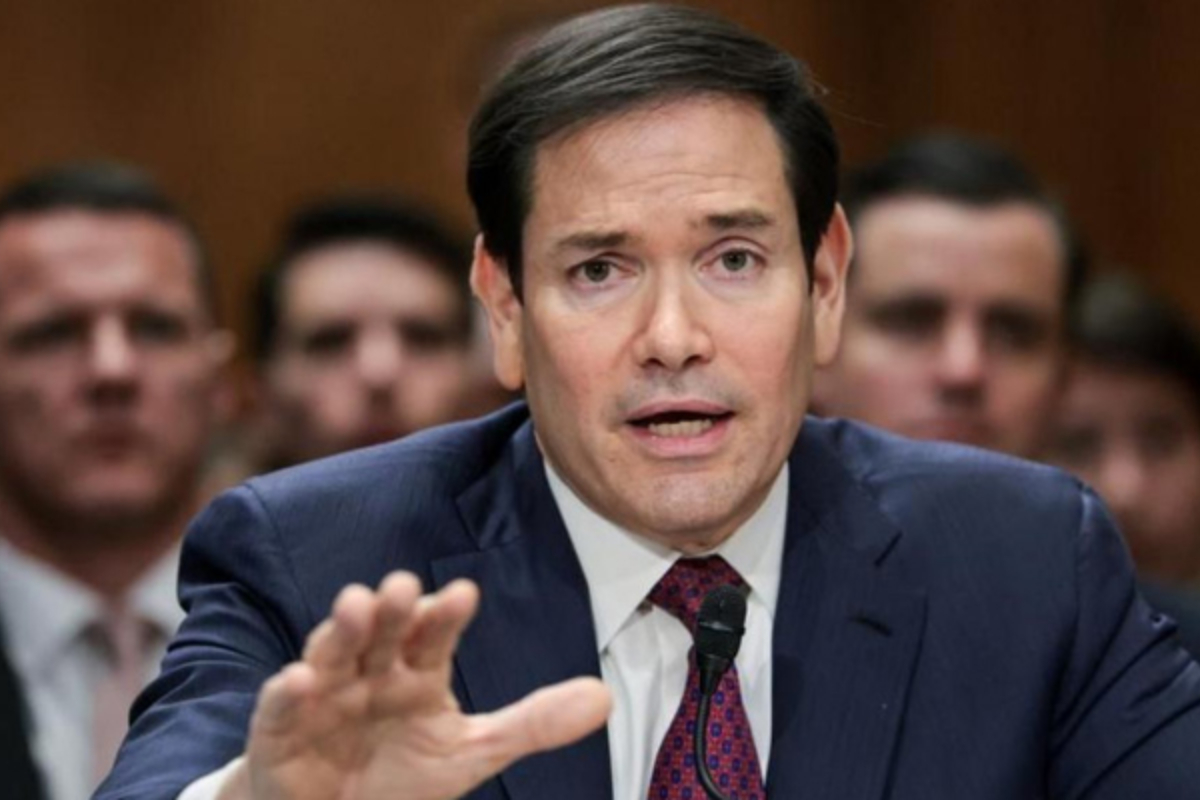
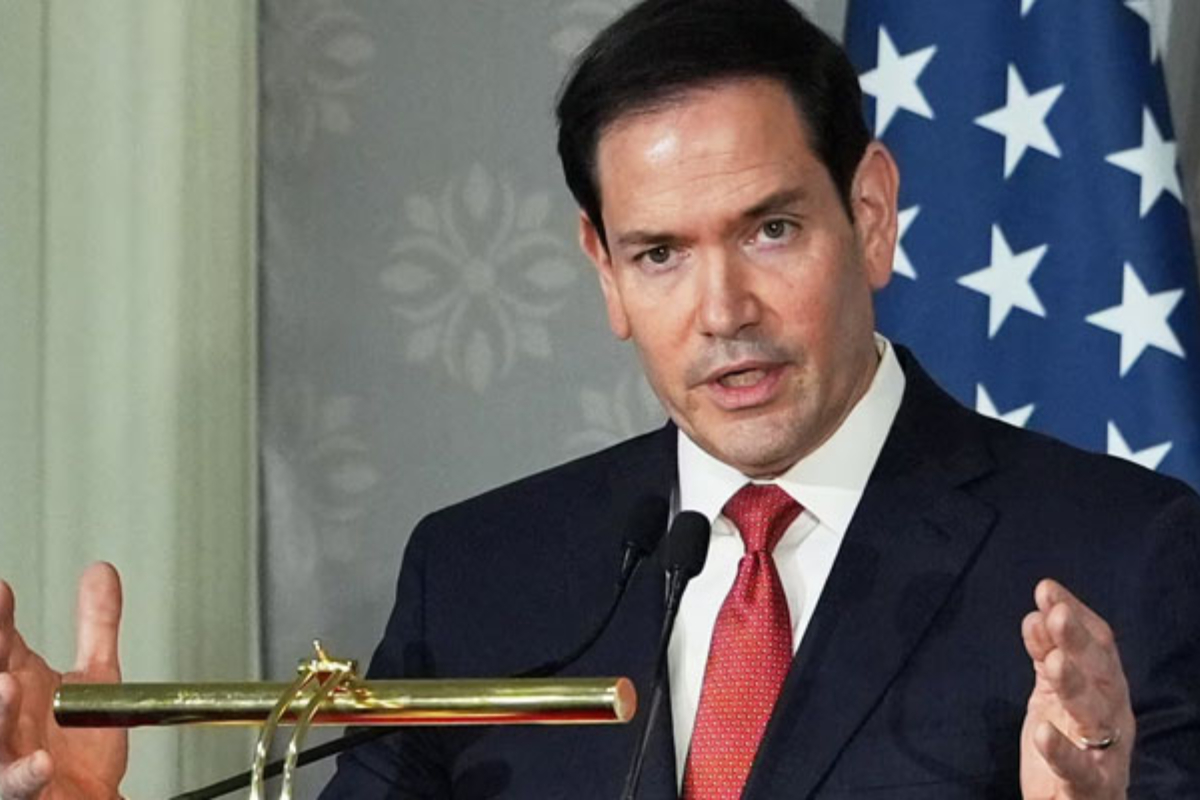
MANILA: US Secretary of State Marco Rubio warned that Iran would face increasingly severe consequences if it continues on its current course, saying President Donald Trump’s policy is based on strong retaliation against hostile actions.

Speaking to reporters in Manila, Rubio said the United States had honored its commitments in past negotiations with Iran but claimed Tehran is currently unwilling to reach a new agreement. He added that Iran could still change its position in the coming days but warned that “every passing night” would carry a heavier cost if the situation remains unchanged.

Rubio also alleged that Iran continues to seek both direct and indirect channels for negotiations with Washington. He accused Iran’s leadership of prioritizing support for groups including Hezbollah, Hamas and the Houthis instead of focusing on economic development, arguing that the country has the potential to become one of the wealthiest in the Middle East.

Commenting on regional security, Rubio said Iran had drawn the Houthis into the broader conflict and expressed hope that attacks on shipping in the Red Sea would cease.

 He also described Saudi Arabia as a key U.S. strategic partner, saying a civilian nuclear agreement with the kingdom would include strict safeguards and require congressional approval.

On international issues, Rubio reiterated that the United States would not join the International Criminal Court, criticizing the institution and saying it would have no jurisdiction over U.S. citizens.

Addressing the war in Ukraine, Rubio said the conflict has caused extensive bloodshed and that Ukraine has paid a heavy price. He said the United States remains prepared to play a constructive role in efforts to end the war. Rubio also said Washington seeks stable and positive relations with China.
Marco Rubio says Iran deal could take days as US launches fresh strikes

Marco Rubio

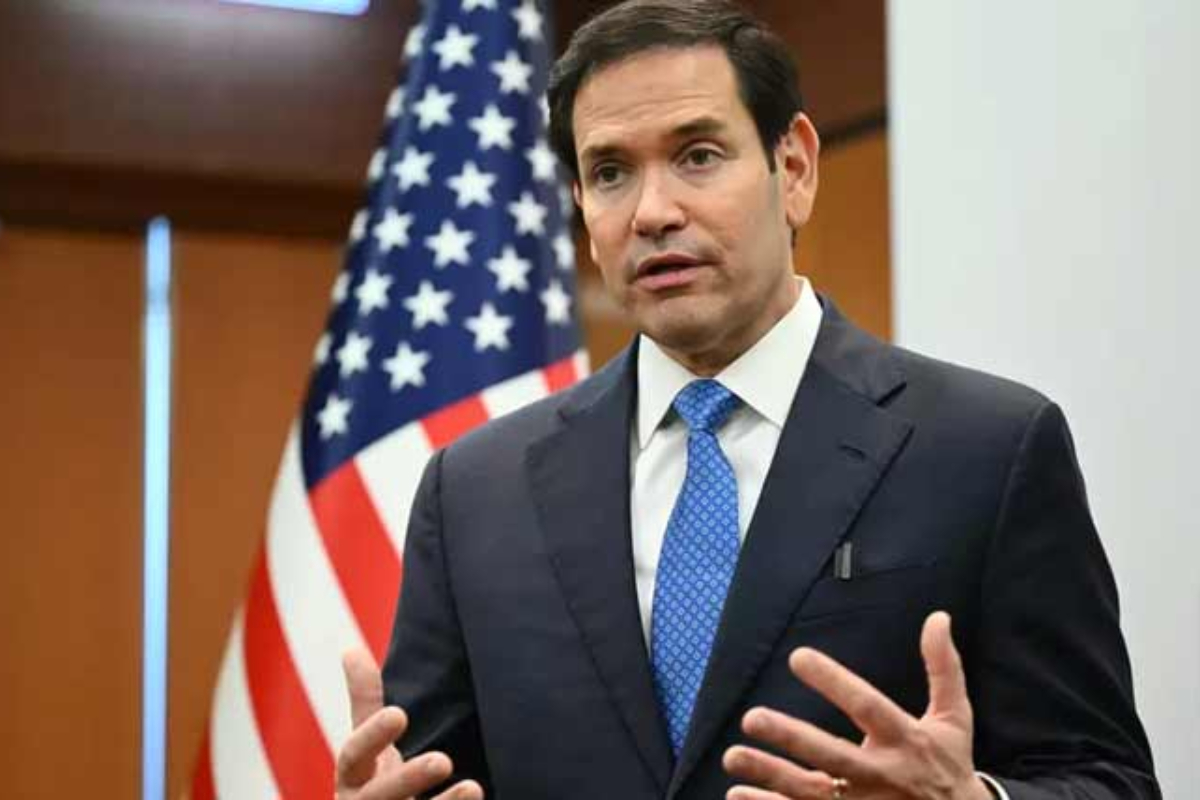
US Sectary of State Marco Rubio said Tuesday that a possible agreement with Iran could take several more days to finalize, as negotiations continue in Qatar amid rising regional tensions.

Speaking to reporters in the Indian city of Jaipur, Rubio said discussions with Iranian officials were ongoing and both sides were continuing talks over the language and key points of an initial framework document.

Rubio said President Donald Trump wants an agreement but stressed that any deal must serve U.S. interests.

He also emphasized that the Strait of Hormuz must remain open because of its critical role in global trade and energy shipments.

Meanwhile, the United States Central Command claimed American forces carried out new strikes in southern Iran targeting missile-launch sites and boats allegedly involved in laying naval mines.

According to U.S. officials, the operations were conducted in defense of American troops and targeted locations reportedly linked to attempts to place mines in the Strait of Hormuz.

Iranian state media reported explosions near Bandar Abbas, though Iranian authorities have neither confirmed nor denied the U.S. claims.

At the same time, a new round of negotiations between Iranian negotiators and other officials is underway in Doha.

Reports said discussions are focusing on the Strait of Hormuz, an extension of the ceasefire, Iran’s enriched uranium stockpiles and the release of frozen Iranian funds.

Marco Rubio says Iran must not acquire nuclear weapons

Marco Rubio

ROME: US Secretary of State Marco Rubio has said that no country in the world wants to see Iran acquire nuclear weapons, stressing that the United States will not allow Tehran to develop such capabilities under any circumstances.

Speaking during a media briefing, Rubio said Washington is still awaiting Iran’s response to recent proposals, but expects a reply to arrive within the day. He expressed hope that serious negotiations with Tehran could move forward.

He also claimed that the US Navy has blocked 70 tankers heading toward Iran, reiterating that control of strategic waterways such as the Strait of Hormuz cannot be monopolized by any single country.

Rubio clarified that recent strikes on Iran were not part of “Operation Epic Fury” and warned that any missile attacks on US forces would be met with a strong retaliatory response.

On regional matters, the US Secretary of State said Washington would not engage in talks with Hezbollah and is focusing its diplomatic efforts solely on the Lebanese government.

Regarding NATO deployments, he stated that no specific decisions were discussed during meetings in Italy, adding that final authority on troop movements rests with the US President.

On China and Taiwan, Rubio said there has been no change in US policy, though discussions may take place during any future presidential visit to China.

He also noted that the United States is ready to mediate a ceasefire in the Russia-Ukraine conflict, urging both sides to make progress in negotiations, while warning that Washington will not engage in endless talks without results.

Rubio emphasized that the United States will continue diplomatic efforts to resolve global conflicts but will avoid prolonged negotiations that fail to deliver practical outcomes.

US signals tough stance as Rubio says Iran seeks path toward agreement

US signals tough

WASHINGTON: US Secretary of State Marco Rubio has stated that Iranian negotiators appear serious about reaching an agreement with the United States and are looking to move past the current diplomatic deadlock.

In an interview with Fox News, Rubio said that while Iranian negotiators want to resolve the ongoing impasse, he believes the country’s political leadership is “fragmented” and creating obstacles in the negotiation process.

He further claimed that Iran’s leadership is seeking additional time, adding that the country is facing severe economic difficulties, including high inflation, financial strain on state institutions, and challenges in paying salaries.

Rubio also asserted that Iran’s missile capabilities have significantly weakened, claiming reductions in stockpiles and damage to production facilities, along with losses in its air and naval strength.

When asked about the US response if Iran refuses to engage in talks, Rubio said such decisions rest with former President Donald Trump, adding that economic sanctions on Iran are already “extraordinary” and could be further intensified.

He argued that the ongoing tensions have highlighted what he described as the threat posed by Iran, claiming that Tehran seeks to use both its energy resources and strategic position to exert pressure globally an approach he termed unacceptable.

US hails Pakistan’s willingness to consider sending troops to Gaza

US hails Pakistan

Washington: US Secretary of State Marco Rubio has said that Pakistan, along with several other countries, has raised questions regarding the possible deployment of military contingents to Gaza and has offered to consider sending troops as part of efforts to restore peace and stability, for which the United States is grateful.

Speaking at a press conference at the US State Department, Rubio was asked whether Pakistan had formally conveyed its consent to deploy troops to Gaza to help maintain law and order. In response, he said Washington appreciated Pakistan’s willingness to be part of the Gaza peace plan, or at least to consider such a role.

Rubio noted that Pakistan and other countries were seeking clarification on certain aspects of the proposal and that only after addressing these questions would the United States be in a position to formally request any country to contribute forces to the Gaza peace initiative.

He added that he was confident many countries were acceptable to all parties involved in the conflict and were willing to step forward to become part of a Gaza stabilisation force aimed at ensuring long-term security and peace in the region.

US seeks balance with Pakistan, India: Marco Rubio

US seeks

NEW YORK: US Secretary of State Marco Rubio stated that Washington seeks to strengthen its strategic partnership with Pakistan while ensuring its relations with India remain unaffected.

“We see an opportunity to expand our strategic relationship with Pakistan, and I think we’ve made – that’s our job, is to try to figure out how many countries we can find how we can work with on things of common interest,” Rubio told journalists, traveling with him En Route to Doha, Qatar, according to a transcript of his remarks released by the State Department..

He was asked if India has raised concerns about the United States’s growing relationship with Pakistan, which have improved rapidly over the past few months with President Donald Trump hosting Pakistan’s Prime Minister Shehbaz Sharif and Army Chief Field Marshal Asim Munir at the White House.

“They really haven’t – I mean, we know they’re concerned for obvious reasons because of the tensions that have existed between Pakistan and India historically,” Rubio said in response to a question if New Delhi raised concerns over Pakistan ties.

The top American diplomat said New Delhi has to understand that the United States needs to have relations with a lot of countries.

“But, I think they have to understand we have to have relations with a lot of different countries,” he noted.

“So, I think the Indians are very mature when it comes to diplomacy and things of that nature. Look, they have some relationships with countries that we don’t have relationships with,” Rubio added.

Rubio added: “So, it’s part of a mature, pragmatic foreign policy. I don’t think anything we’re doing with Pakistan comes at the expense of our relationship or friendship with India, which is deep, historic, and important.”

The relationship between the United States have grown dramatically under President Donald Trump, whose administration has hailed Pakistan as a “phenomenal” counter-terrorism partner.

The two countries have also signed a $500 million agreement on exploration of rare earth, with Pakistan recently shipping the first consignment this month.

Islamabad’s praise for President Trump’s role in working out a ceasefire in May conflict with India and nomination for Nobel Peace Prize for the U.S. leader have also generated goodwill for the ties.

In August, Rubio said every single day the United States keeps an eye on what happens between India and Pakistan, the two nuclear powers who fought a deadly 87-hour long conflict in May.

President Trump announced on May 10, the two countries agreed to a ceasefire, something Pakistan openly acknowledged while India denied US had any role.

Washington’s ties with India have been strained over a delay in trade agreement and Washington’s 50% tariff on Indian goods for its purchases of Russian oil.

Dar praises US, Turkey’s role in ceasefire talks

Dar

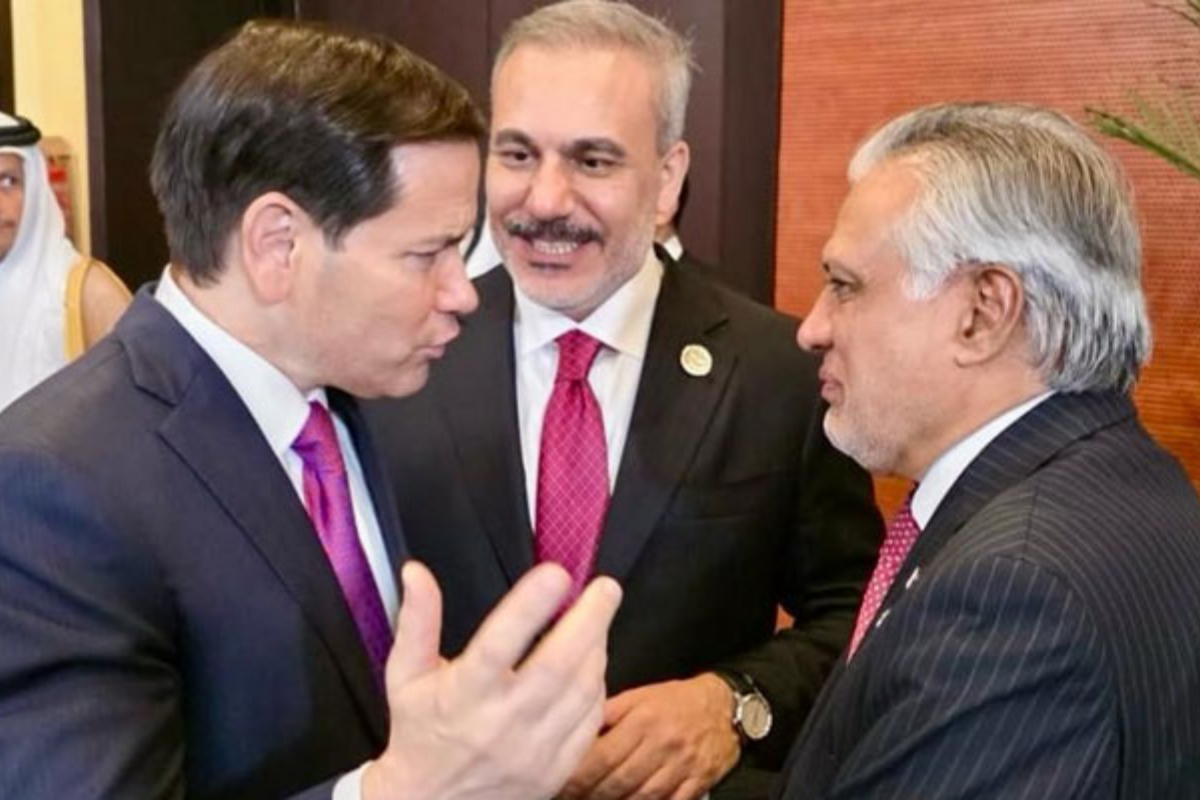
CAIRO: On the sidelines of the Gaza Peace Summit in Sharm El-Sheikh, Deputy Prime Minister Ishaq Dar engaged in talks with U.S. Secretary of State Marco Rubio to discuss regional developments and peace efforts.

The Foreign Office said in a statement, the two leaders discussed matters of mutual interest, including regional stability and ongoing efforts for peace in Gaza.

On the occasion, Deputy Prime Minister Dar also held a separate meeting with Turkish Foreign Minister Hakan Fidan.

Deputy Prime Minister Ishaq Dar appreciated the role of the United States and Turkey in promoting a ceasefire, reaffirming Pakistan’s support for all efforts aimed at lasting peace and stability in the region.

Dar further emphasized that the international community must continue to provide humanitarian assistance to the people of Gaza and Palestine.