BREAKING NEWS
Advertise with us >

Momina Iqbal’s mehndi celebrations go viral on social media

Momina Iqbal

KARACHI: Pakistani actress Momina Iqbal has captured widespread attention on social media as pictures and videos from her wedding festivities, particularly her mehndi ceremony, continue to go viral among fans.

The actress shared glimpses of her mehndi celebrations on social media, where she appeared in a traditional and elegant bridal look.

View this post on Instagram

A post shared by DIVA Magazine Pakistan (@divamagazinepakistan)

For the occasion, Momina Iqbal wore a golden katan silk lehenga adorned with delicate tone-on-tone embroidery, which was widely praised by fans.

Her husband, Hamza Habib, was seen wearing a black sherwani with golden embellishments. The couple also posed together in matching traditional shawls featuring colorful embroidery, adding to the visual charm of the event.

Momina Iqbal also shared a heartfelt message for her husband on social media, writing “My Hamza” in a brief but affectionate post, which quickly attracted congratulatory messages from fans and fellow celebrities.

For the mehndi event, she chose a rust-colored lehenga choli enhanced with gold zardozi and tila work, paired with a purple dupatta that further elevated her bridal look. Traditional jewelry, henna-adorned hands, and gold bangles completed her appearance, giving her a classic Pakistani bridal aesthetic.

View this post on Instagram

A post shared by Galaxy Lollywood (@galaxylollywood)

Despite recent controversy in the lead-up to her wedding, the actress has now begun her wedding celebrations in a joyful atmosphere. Fans have been actively congratulating the newlywed couple, while social media users continue to praise Momina Iqbal’s bridal style, with her photos and videos receiving thousands of likes and shares.

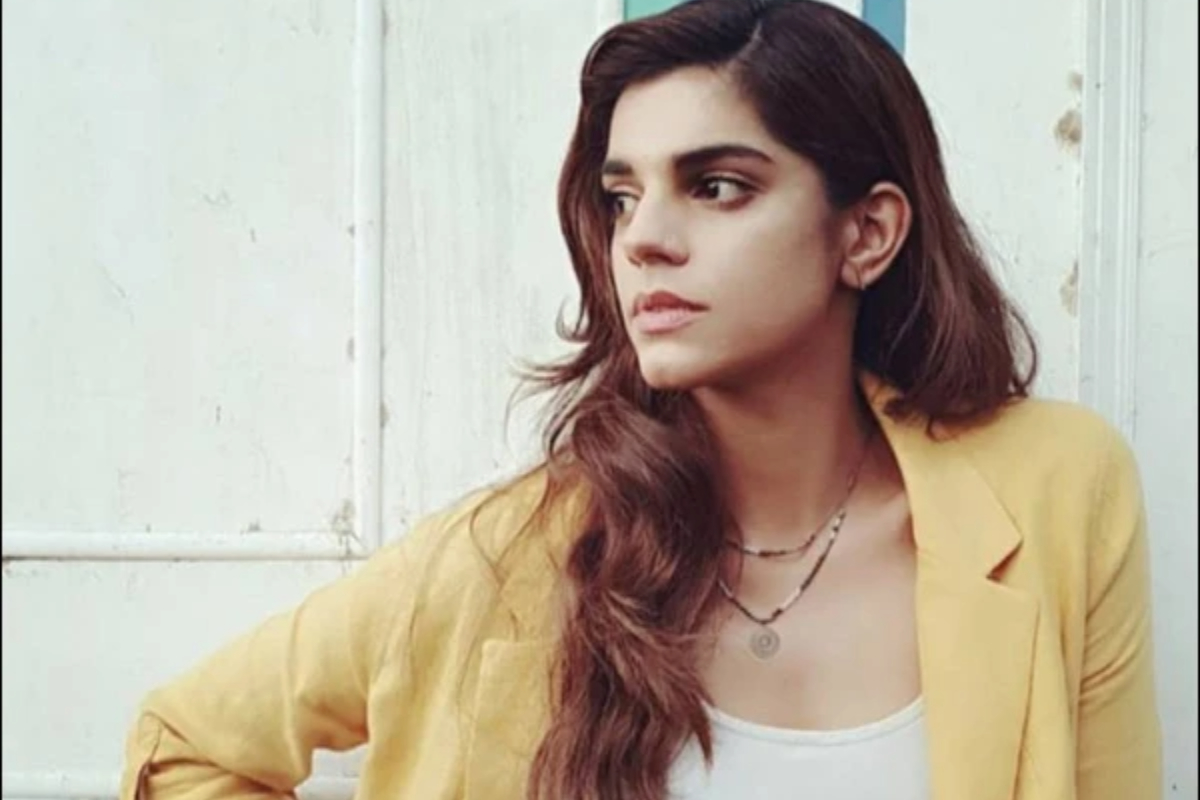
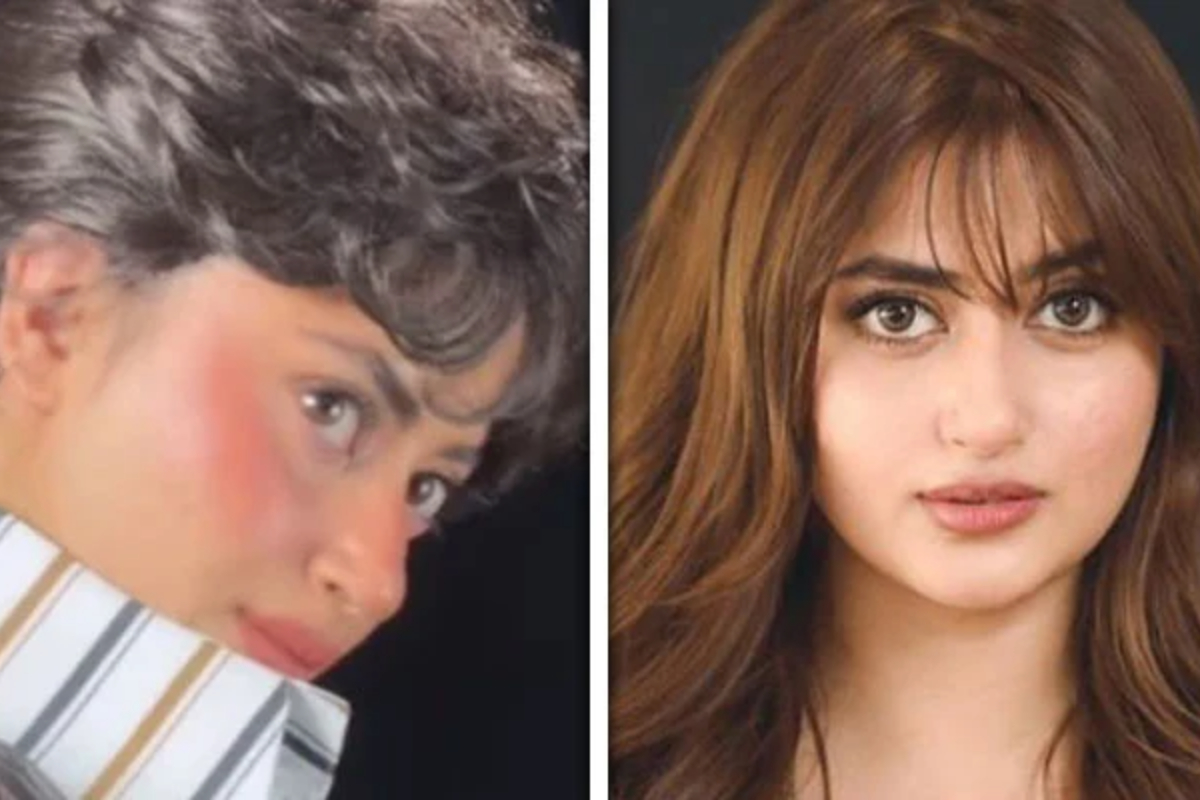
Sajal Aly faces social media backlash over new short pixie haircut

Sajal Aly faces

Pakistani actress Sajal Aly is facing criticism on social media after unveiling a bold new hairstyle that sparked mixed reactions among fans.

The Pakistani actress recently shared a video on Instagram, where she appeared in a short pixie haircut instead of her usual long, thick hair. The post quickly went viral, drawing widespread attention from fans and online users.

In the caption of her video, Sajal Aly tagged her sister, actress Saboor Aly, who had also recently opted for a short bob haircut, further fueling discussions among followers.

Many social media users expressed disappointment over her new look, while others speculated that the hairstyle could be for an upcoming role. Some fans even suggested that the pixie cut might not be permanent and could possibly be a wig.

A section of users also compared her transformation to other celebrities, while some claimed she may have been inspired by fellow actor Sahifa Jabbar Khattak, who previously faced similar attention for her bold fashion and hairstyle choices.

Despite the criticism, the new look has kept Sajal Aly trending across social platforms, with fans divided between praise for her experimentation and preference for her traditional style.

Asher Wajahat compared to Aryan Khan, social media debate intensifies

Asher Wajahat

Young Pakistani actor Asher Wajahat, currently winning hearts with his role as “Sabuk” in the Kafeel on ARY Digital, has become the center of attention online not just for his performance, but for his striking resemblance to Aryan Khan.

Social media users have recently pointed out similarities between Asher Wajahat and Aryan Khan, the son of Bollywood superstar Shah Rukh Khan.

 Many believe the two share similar facial features and style, sparking widespread comparisons across platforms.

Images and videos of both personalities are being widely circulated online, with users analyzing their expressions, mannerisms, and overall appearance. The comparison has triggered a mixed response among fans.

While some users strongly agree with the resemblance, others have rejected the comparison. One user commented that they had long believed both look alike, while another criticized the comparison, questioning why Pakistani talent is being measured against Indian celebrities.

Some also pointed out differences, noting that Aryan Khan has sharper features, whereas Asher Wajahat carries a softer, more innocent look.

The ongoing debate highlights how social media continues to shape celebrity narratives, often creating unexpected cross-border comparisons.

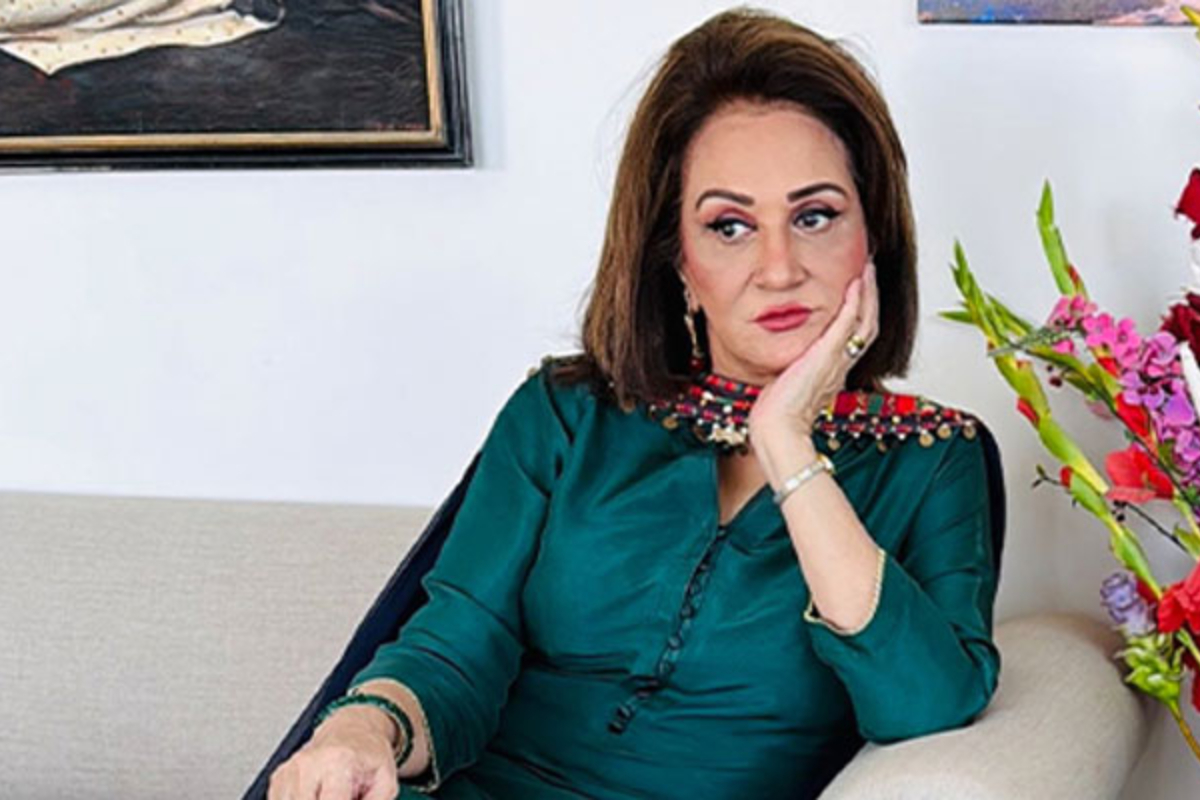
Hina Tariq’s remarks on gender roles spark debate on social media

Hina Tariq’s remarks

KARACHI: Pakistani actress Hina Tariq has stirred debate after sharing her views on women’s rights, feminism, and traditional gender roles during a recent YouTube interview.

Hina Tariq described “feminism” in strong terms, stating that she does not support modern interpretations that, in her view, blur traditional responsibilities between men and women.

During the discussion, she said she prefers men who are strong, decisive, and responsible, rather than overly sensitive or “soft-natured.”

According to her, a man should take charge of planning, financial responsibilities such as paying rent, and expressing affection through gestures like giving flowers and providing emotional support.

The actress added that while she is financially independent herself, she still expects men to fulfil their traditional roles, arguing that women appreciate love, attention, and respect in a more conventional relationship structure.

She further stated that she does not admire women who take on traditionally male roles, such as handling heavy tasks or managing all practical responsibilities independently, suggesting that such roles should remain balanced between genders.

Hina Tariq emphasized that, in her opinion, women are “gentle and beautiful beings” who deserve affection and care rather than anger or conflict.

Her comments have triggered mixed reactions on social media, with some users supporting her views as aligned with traditional values, while others criticized them as being opposed to modern feminist thought.

Despite Ban, Many Australian teens under 16 continue using social media

Despite Ban

A significant number of Australian teenagers under the age of 16 continued using social media platforms even two months after the country introduced a ban restricting access for minors, according to new industry data, raising concerns about the effectiveness of age-verification systems.

A report by parental control software company Qustodio revealed that more than one-fifth of teenagers aged 13 to 15 were still active on popular platforms such as TikTok and Snapchat between December and February, despite the restrictions.

The findings provide some of the earliest insights into how young users’ online behaviour has changed since Australia implemented the social media ban in December. The policy has drawn global attention, with several governments considering similar measures to protect minors online.

According to the report, the number of teenagers aged 13–15 using Snapchat dropped by 13.8 percentage points from November to February, bringing the total to about 20.3%. Usage of TikTok among the same age group also declined by 5.7 percentage points, falling to 21.2%.

Meanwhile, usage of YouTube among teenagers dipped slightly by one percentage point to 36.9%, although the data did not confirm whether these users were logged into accounts. The Australian law still allows people of all ages to access YouTube without logging in.

Under the new regulations, major platforms including Meta’s Instagram, Facebook, and Threads, along with TikTok, Snapchat, and YouTube, must block users under the age of 16 or face fines of up to A$49.5 million (about $35 million).

A spokesperson for Australia’s internet regulator, the eSafety Commissioner, said authorities were aware that some minors were still able to access social media and were actively working with platforms and age-verification providers to monitor compliance and address potential violations of the law.

The office said it was reviewing multiple data sources and insights to assess whether companies are properly enforcing the restrictions.

A spokesperson for Communications Minister Anika Wells acknowledged that raising the minimum age for social media access represents a cultural shift that will take time to fully implement.

The data also suggested that social media use among teenagers typically declines during December and January due to Australia’s long summer school holidays. However, the sharper drop compared to the previous year indicates the ban may have had some effect.

Despite earlier concerns, the report found little evidence that teenagers were shifting to unregulated platforms. However, usage of WhatsApp among 13- to 15-year-olds showed a slight increase during the same period

60-year-old man’s marriage to young woman sparks social media debate

60-year-old man

RAWALPINDI: A video of a 60-year-old man marrying a young woman has gone viral in Pakistan over the past three days, triggering a mix of criticism and discussion online.

Social media users expressed outrage over the videos, arguing that such actions at his age are inappropriate for an elder.

Initially, reactions were mostly negative. Some criticized the elderly man, while others suggested that the young bride had married him for financial reasons.

Elderly Groom Calls It a ‘Love Marriage’

Speaking to media, the 60-year-old groom described his marriage as both arranged and a love marriage. “First, we fell in love, then we got married, which follows the Sunnah. It is both an arranged and love marriage. My wife fell in love first, then the arranged marriage took place,” he explained.

He added, “The heart should stay young—age is just a number. She was divorced, and I followed Allah’s command and the Prophet’s ﷺ Sunnah. I committed no wrongdoing, so why are people criticizing?”

Groom Defends His Marriage Against Criticism

The man further commented, “Negative remarks usually come from those who have had girlfriends or improper relationships and avoid marriage, deceiving women instead. I did the right thing by marrying her.”

His wife also defended the union, saying, “When you truly love someone from the heart, age doesn’t matter. When your heart chooses someone, there should be no delay in marriage.”

Mixed Social Media Reactions

Following the couple’s story, some social media users praised the groom for promoting marriage instead of illicit relationships. “He chose marriage over sin; this should be encouraged,” one user said.

However, subsequent viral videos featuring the couple drew renewed criticism. Users criticized the public display, with comments such as: “He has a long beard, yet behaves like this publicly—where is the dignity? Making such absurd videos at this age is unbecoming.” Another added, “This nation will never reform. Such public displays by an elder show a complete disregard for shame and modesty.”

AI creates big-budget cinematic experience in 24 hours

AI creates big

A three-minute AI-generated sci-fi film clip has gone viral on social media after claims that content equivalent to a $200 million high-budget production was created within just 24 hours using artificial intelligence.

The clip was released by German creative studio The Dor Brothers, which stated that the entire project was produced solely with AI tools — without traditional cameras, actors, physical sets, or conventional VFX processing.

High Production Value, Minimal Time

While the $200 million figure does not represent the actual budget, it refers to the production value typically associated with large Hollywood blockbusters. The video features large-scale urban destruction, cinematic explosions, and sweeping camera movements reminiscent of major studio films.

According to the studio, the project was developed using tools available on its DorLabs platform, where concept development, visual generation, and editing were largely assisted by AI systems. Elements such as dynamic camera motion and expansive cityscapes — which normally require months of work and hundreds of VFX artists — were completed within a single day.

Mixed Reactions Online

The viral clip has sparked widespread debate across the entertainment industry. Many viewers praised its photorealistic visuals and fluid animation, while others pointed out flaws in physics, limited character development, and shallow storytelling. Critics argue that the project resembles a technical AI demonstration rather than a fully realized cinematic narrative.

Implications for the Film Industry

The experiment highlights the rapid advancement of generative AI in filmmaking and raises broader questions about the future of traditional production models. Analysts suggest that while AI can now replicate large-scale cinematic visuals in record time, it still struggles to match the emotional depth, character complexity, and narrative nuance delivered by human creators.

The viral clip underscores a growing reality: AI is no longer limited to short-form content or background VFX work. It may soon play a substantial role in full-length feature films, potentially reshaping the creative and economic structure of the global film industry.

Global moves to limit social media for children and teens

Global moves

In recent months, several countries have announced plans to limit or block social media access for children and teenagers in an effort to protect their mental health and well-being.

Australia

Australia became the first country to implement such a ban at the end of 2025, restricting children under 16 years from using platforms including Facebook, Instagram, Snapchat, Threads, TikTok, X (Twitter), YouTube, and Reddit.

WhatsApp and YouTube Kids are exempt.

Companies failing to enforce the ban could face fines of up to AUD 34.4 million.

The government requires social media apps to use robust age verification methods, rather than relying on self-reported ages.

Denmark

Denmark plans to restrict social media for children under 15 years.

In November 2025, government and opposition parties agreed on the proposal.

The law is expected to be introduced mid-2026, along with a dedicated age-verification app.

France

In January 2026, the French Parliament approved a bill to block social media access for children under 15 years.

The French President supports the law, stating it will help keep children away from excessive screen time.

The bill will next move to the upper house before returning to the lower house for final approval.

Germany

Germany’s Chancellor’s party began consultations in early 2026 on restricting social media for children under 16, though approval remains uncertain due to reluctance within the ruling coalition.

Greece

Media reports in February 2026 indicate Greece will soon announce a ban for children under 15 years.

Malaysia

The Malaysian government announced in November 2025 that it plans to restrict social media access for children under 16 years, with implementation expected later in 2026.

Slovenia

Slovenia has drafted legislation to regulate social media for minors and control shared content, announced by the Deputy Prime Minister in February 2026.

Spain

Spain is planning a social media ban for children under 16, with parliamentary approval required.

The government is also considering laws to hold platform officials accountable for spreading harmful content.

United Kingdom

The UK is exploring ways to restrict social media access for children under 16 years, with ongoing consultations with stakeholders.

These initiatives reflect a growing global concern about the impact of social media on children’s mental health, with countries seeking to balance digital access and safety.

Film Writer Nasir Adeeb targets Shan Shahid in social media

Film Writer Nasir Adeeb

ISLAMABAD: Renowned Pakistani writer Nasir Adeeb has strongly responded to remarks made by legendary actor Shan Shahid during the promotion of his upcoming Eid-ul-Fitr Punjabi film Bhalla.

Shan Shahid had jokingly commented during a promotional event that writer Nasir Adeeb was “probably sitting somewhere criticizing people,” which went viral on social media. While Adeeb initially did not respond, he recently released a video addressing Shan Shahid directly.

View this post on Instagram

A post shared by Pakistani Cinema (@pakistanicinemaa)

In the video, Nasir Adeeb defended his record, stating that his podcast has been running for the past two years and challenging the actor: “Which statement of mine has been wrong? Who have I falsely accused? Whose character have I tried to tarnish?”

Adeeb also emphasized the importance of writers in the film industry, saying: “I did a program about you! You should know that without a writer, where is your heroism? If you are nothing without a writer, then how can you claim I am sitting somewhere criticizing?”

He further explained that his opposition to casting Shan Shahid in the film was due to repeated delays and script objections: actors arriving late, causing hours-long waits, making unauthorized changes to the script, and disregarding the director’s guidance.

Adeeb clarified that he had told the director that if guarantees were given that the actor would cooperate, he had no objection, acknowledging Shan Shahid as a prominent artist.

Criticizing Shan Shahid’s professional conduct, Adeeb stated: “The issue is that you have harmed the Pakistani film industry. Have you ever wondered why the industry is in decline? Your delays and behavior on set have contributed to this downfall, and this is why roles for you became limited.”

The exchange has reignited debates on social media regarding accountability and professionalism in the Pakistani film industry.

Influencer Areeka Haq warns girls about risks of social media fame

Influencer Areeka Haq

LAHORE: Pakistani social media influencer Areeka Haq has cautioned young girls aspiring to become influencers about the potential dangers of pursuing fame online.

In a recent interview, Areeka Haq advised girls to exercise caution when engaging on social media, protect their privacy, and avoid taking shortcuts to fame that could lead to long-term problems.

“Some girls go too far in the race for attention, deliberately sharing private or controversial videos to gain recognition,” Areeka Haq said.

She added that in the past, couple or duo videos were a popular trend that helped some individuals rise to fame. However, when that trend faded, some people sought controversial methods to regain attention. While this behavior is not universal, such incidents have occurred frequently.

Areeka Haq emphasized that she has always maintained her personal boundaries and never exploited her private life for popularity.

She stressed that maintaining integrity and dignity is essential for sustainable success on social media, as short-term fame can often lead to later complications.

Speaking on the negative aspects of online platforms, Areeka Haq noted that criticism, trolling, and inappropriate comments can take a serious toll on mental health.

 She admitted to having experienced mental stress and depression herself but said she overcame it with the support of her family and close friends.

Areeka Haq’s advice serves as a reminder for aspiring social media personalities to prioritize safety, privacy, and mental well-being while navigating the world of online fame.