
BREAKING NEWS
Advertise with us >

JPMC ED Prof Shahid Rasool passes away

JPMC ED

KARACHI: Professor Shahid Rasool, the Executive Director of Jinnah Postgraduate Medical Centre (JPMC) Karachi, has passed away, leaving a significant void in Pakistan’s medical community.

Colleagues and staff at Jinnah Hospital expressed deep sorrow over his untimely demise, highlighting his commitment to medical education and the professional development of hospital personnel.

Under his leadership, the hospital undertook numerous initiatives to enhance healthcare delivery, streamline operations, and expand patient facilities.

Medical associations and public health officials have extended condolences to his family, describing Professor Rasool as a visionary leader whose contributions will have a lasting impact on the healthcare sector in Karachi and across Pakistan.

The hospital administration has announced that memorial arrangements and tributes will be organized in his honor to recognize his decades-long service to medicine and public health.

On the other hand, Sindh Chief Minister Murad Ali Shah has expressed deep grief over the passing of Professor Shahid Rasool, Executive Director of Jinnah Hospital Karachi.

In his statement, the Chief Minister described Dr. Shahid as one of the country’s finest surgeons, praising his dedication to medicine and healthcare. He added that Dr. Shahid Rasool’s services to the medical community will always be remembered.

The Sindh Chief Minister also prayed for the elevation of the late doctor’s ranks in the hereafter and extended his condolences to the bereaved family, wishing them strength and patience during this difficult time.

Dr. Shahid Rasool’s contributions to patient care, medical education, and hospital administration have left a lasting legacy in Pakistan’s healthcare sector.

11 Palestinian girls top intermediate board despite war

11 Palestinian girls

Gaza: Eleven Palestinian girls have secured top positions in the Gaza Intermediate Board examinations by scoring 99 percent marks, according to international media reports.

Despite the ongoing Israeli offensive, Gaza’s youth continue to pursue education with determination, holding on to the hope of a better future even in the harshest circumstances.

The report states that the exceptional performance of these 11 girls has brought a wave of joy among Palestinians enduring Israeli atrocities, with families celebrating the achievement amid the ruins of devastated neighborhoods.

Tragically, the report also notes that many of the students who passed the intermediate exams have since been martyred in Israeli bombardments.

US bars visas for individuals with obesity, diabetes and mental illness

US bars visas

WASHINGTON: The US Department of State has issued a new directive to American embassies worldwide, stating that individuals with certain medical conditions may be denied visas for entry or permanent residence in the United States.

Under the “public charge” rule, applicants with obesity, diabetes, cancer, heart disease, or other serious medical conditions may be refused a visa if they are deemed likely to rely on government resources for treatment.

However, the directive allows for exceptions if applicants can prove they can cover their own medical expenses. The measure reflects concerns that costly treatments could place a financial burden on the US government.

It is noted that in the United States, over 100 million people suffer from obesity, while more than 38 million are affected by diabetes.

The new rule comes amid ongoing adjustments to US immigration policies and is expected to affect prospective immigrants worldwide.

Lahore ranks second globally as smog crisis deepens

Lahore ranks

LAHORE: Air pollution in Punjab has surged to alarming levels, with Lahore emerging as the world’s second most polluted city, posing serious health risks to residents.

According to data from a global environmental monitoring website. The city’s average smog level has surged to an alarming AQI of 437.

In Lahore, the Air Quality Index (AQI) was recorded at 667 in Allama Iqbal Town, 663 on Sanda Road, 649 near Government College University, 605 on Muratib Ali Road, 554 near Punjab University, 503 in Model Town, 498 in Shalimar, and 445 in Cantt.

Environmental experts warn that these readings fall in the “hazardous” category, posing serious health risks to residents, especially children, the elderly, and those with respiratory illnesses.

Meanwhile, New Delhi remains the most polluted city globally, with an AQI of 678. In other Punjab cities, the AQI was measured at 639 in Gujranwala, 460 in Faisalabad, and 429 in Multan.

Medical experts said that the ever-increasing pollution has become a serious threat to citizens, citizens should avoid unnecessary travel, make sure to use masks and avoid outdoor activities in the morning hours.

On the other hand, the weather forecasters say that today the maximum temperature of Lahore city was recorded at 26 while the minimum was recorded at 12 degrees Celsius, the wind is blowing at a speed of 3 km per hour in the city while the humidity ratio in the atmosphere was recorded at 80 percent.

Jonty Rhodes expresses concern over Delhi’s air quality

Jonty Rhodes

Former South African cricketer Jonty Rhodes expressed concern over Delhi’s worsening air quality during a recent visit to India.

Rhodes shared comparative images of Delhi and Goa on social media platform X, highlighting the stark difference in air conditions.

Alongside the photos, he wrote, “Thankful that we live in South Goa where our children can play football outside, whereas in Delhi, children are told to stay indoors.”

It is worth noting that Delhi’s Air Quality Index (AQI) can reach up to 400 as winter approaches, making outdoor activities hazardous.

Scientists achieve partial vision restoration using implanted computer chips

Scientists achieve

Paris: Scientists have sparked a medical breakthrough by partially restoring vision through computer chips implanted in the human body, marking a significant advance at the intersection of medicine and technology.

According to Time magazine, this pioneering development allows implanted microchips to help recover lost visual capabilities in patients with severe eye conditions.

The report highlighted 87-year-old French woman Alice Charton, who had lost her central vision due to age-related macular degeneration (AMD), a common age-related eye disease.

The San Francisco-based company Science Corp has developed an experimental technology called “Prima”, which involves implanting a small microchip onto the affected part of the retina. This device helps in partially restoring visual perception in patients affected by retinal degeneration.

Nobel Laureate James Watson passes away at 97

Nobel Laureate

NEW YORK: James Watson, the renowned American scientist who won the Nobel Prize for his groundbreaking work on the structure of DNA, has passed away at the age of 97 after a prolonged illness, U.S. media reported.

His death was confirmed by a spokesperson for the Cold Spring Harbor Laboratory, where Watson spent much of his scientific career.

Before his passing, Watson said in an interview that he had hoped to accomplish more in life, adding that his lifelong mission was “the pursuit of truth,” which he described as his ultimate purpose.

Watson was awarded the Nobel Prize in 1962, sharing the honor with Francis Crick and Maurice Wilkins for the discovery of the double-helix structure of DNA in 1953.

Their findings, first published in the journal Nature, are considered a monumental breakthrough in molecular biology, shaping modern scientific understanding of genetic material.

The Wellness Economy 2025: Why Self-Care Has Become a Global Industry

Wellness Economy 2025, Self-Care Trends, Mental Health, Travel Wellness, Future Soch Global


From mindfulness apps to sleep tourism, wellness is no longer just a habit — it’s a trillion-dollar movement transforming how the world works, travels, and lives.


The Business of Feeling Better

In 2025, the global wellness economy is valued at over $8.5 trillion, according to the Global Wellness Institute. What started as a niche market of yoga retreats and spa products has evolved into a lifestyle revolution — merging health, technology, travel, and productivity.

Across Asia, the Middle East, and Europe, consumers are spending more on mental health, fitness tech, holistic medicine, and mindful living than ever before. The message is universal: people are tired of burnout.

“Wellness is the new wealth,” says Dr. Leena Arora, a behavioral scientist based in Singapore. “The future consumer isn’t chasing status — they’re chasing peace.”


Tech-Enabled Calm

Technology, once blamed for stress, is now a key driver of wellness.
AI-powered meditation tools like CalmMind AI, wearable stress trackers, and sleep-optimization apps have turned mental health into a daily routine.

In Pakistan, startups such as MindEase and HappiFi are launching AI-based therapy platforms, offering affordable counseling in Urdu and English. Globally, digital detox retreats are booming — offering phone-free weekends for professionals seeking real connection.


Travel Meets Wellness

“Transformational travel” is now one of the fastest-growing global tourism segments. Instead of sightseeing, travelers are booking eco-retreats, silent meditation camps, and yoga-infused safaris.

Destinations like Bali, Bhutan, Hunza, and Cappadocia are becoming sanctuaries for self-care. Pakistan’s northern valleys are attracting wellness tourists seeking high-altitude healing, traditional herbal remedies, and digital silence.

Travel companies are partnering with mental-health experts and nutritionists to curate itineraries designed to restore, not exhaust.


Corporate Wellness Goes Mainstream

Global corporations are realizing that burnout is expensive. Companies in Japan, the U.K., and the UAE now offer mental-health stipends, mindfulness breaks, and flexible schedules.

The four-day workweek trend (covered earlier by Future Soch) is part of this same movement — employees perform better when they’re balanced.
In Pakistan, major firms like Engro, Jazz, and Unilever have begun investing in corporate wellness programs, counseling hotlines, and hybrid work policies.


Mindful Consumption

The 2025 consumer wants authenticity. Organic skincare, clean nutrition, and ethical products are replacing fast trends. Wellness is not just about yoga mats — it’s about values.

Gen Z, especially, is driving this shift. They prefer brands that care about the planet, mental health, and inclusivity. Hashtags like #SlowLiving, #SelfCareSunday, and #WellnessAtWork dominate global social feeds, reflecting a shared pursuit of balance in a noisy world.


The Future: From Wellness to Wholeness

Wellness in 2025 is no longer luxury — it’s survival. As mental-health awareness spreads and technology integrates into lifestyle choices, the wellness economy is set to define the next decade.

Whether through mindful travel, AI therapy, or community fitness, the world is collectively realizing one truth: a healthy mind is the foundation of every future.

MDCAT Results: Karachi candidates claim majority of top spots

MDCAT Results

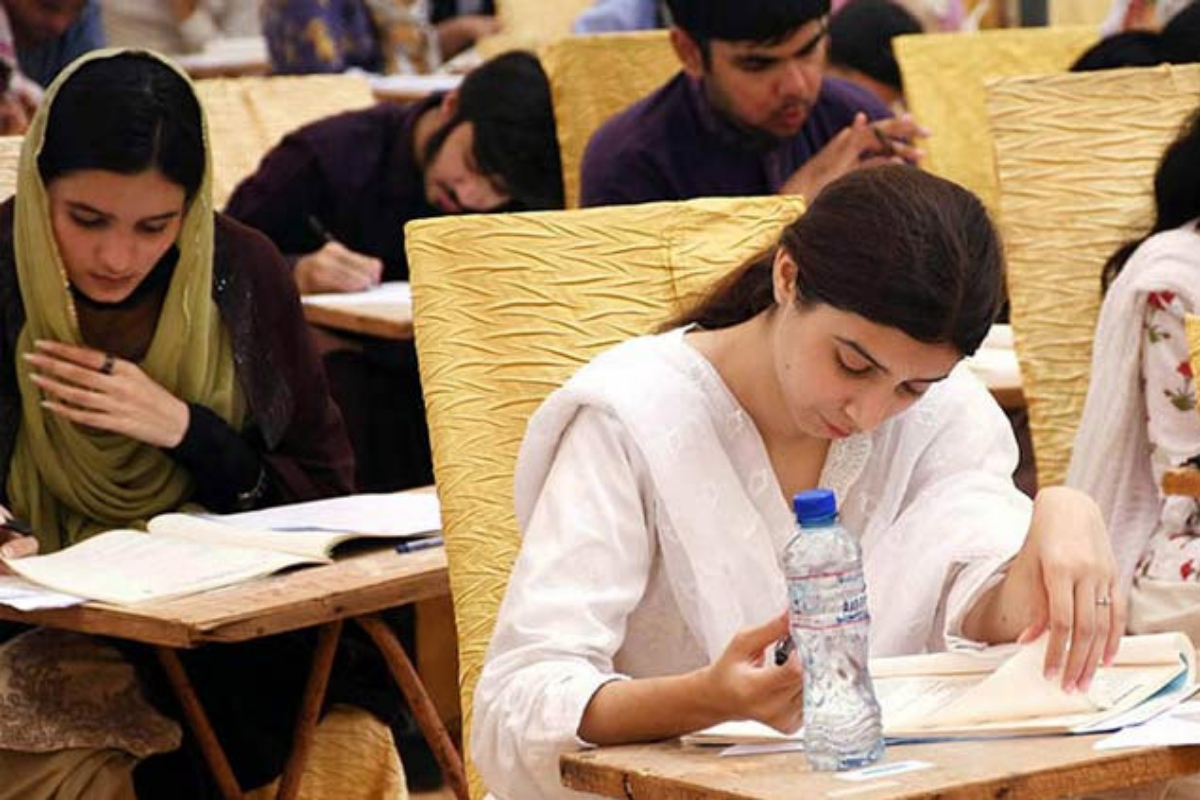
KARACHI: The final results of the Medical and Dental College Admission Test (MDCAT) have been officially announced, marking the conclusion of this year’s admissions process for government medical and dental colleges across Sindh.

According to the CEO of STS, the provisional results have been declared final, as no errors were found during the verification process.

This year, a total of 32,424 candidates appeared in the MDCAT examination. The passing criteria were set at 55% marks for MBBS and 50% marks for BDS programs.

Students from Karachi outperformed candidates from other districts, securing the top positions. Across Sindh, 14,300 candidates obtained 55% marks or above, while 17,123 candidates scored 50% or higher.

In the IBA Sukkur-conducted MDCAT 2025, Karachi students dominated the merit list, claiming the top three positions.

Among the top 124 candidates, 41 belonged to Karachi, reflecting the city’s strong academic performance in this year’s medical entrance test.

Excessive mobile use causing myopia in young children, experts warn

Excessive mobile

LAHORE: Excessive use of mobile phones is leading to a surge in cases of myopia (short-sightedness) among young children, experts revealed during a seminar organized by the Department of Pediatric Ophthalmology at Mughal Eye Trust Hospital.

Head of Pediatric Ophthalmology, Professor Seema Qayyum, said prolonged screen exposure alters the structure of the eye, as children often stare at mobile screens without blinking and frequently rub their eyes.

She warned that even very young children are now developing high levels of myopia, with some requiring corrective lenses ranging from –7 to –10 diopters.

According to Professor Qayyum, around 40% of children under the age of 10 are already affected by myopia, with cases projected to rise by up to 14% annually if preventive measures are not taken.