BREAKING NEWS
Advertise with us >

AI Jobs 2025: How Automation is Reshaping Pakistan’s Workforce

AI in Pakistan, Automation, Jobs 2025, Workforce, Technology


As artificial intelligence transforms industries worldwide, Pakistan’s job market is entering a new era where skills in data, design, and digital innovation are replacing traditional roles.


The rise of artificial intelligence (AI) and automation is reshaping how people work across the globe — and Pakistan is no exception. In 2025, local companies are rapidly adopting AI tools to boost productivity, streamline operations, and reduce costs. From banking to logistics, industries are turning to smart software for decision-making, data processing, and customer engagement.

Experts warn that while automation may replace repetitive jobs, it is also creating new opportunities in data science, software development, AI engineering, and content creation. According to the Pakistan Software Houses Association (P@SHA), demand for AI specialists and prompt engineers has doubled in the last year, especially in Karachi, Lahore, and Islamabad.

Educational institutions are also responding. Universities like NUST and IBA have introduced AI-focused programs, preparing graduates for the digital future. However, experts say Pakistan must invest in skill development and digital literacy to prevent a widening employment gap between tech-savvy youth and traditional workers.

Globally, the World Economic Forum estimates that AI could create 97 million new roles by 2030. For Pakistan, this shift represents both a challenge and an opportunity — a moment to redefine its workforce and position itself in the global digital economy.

Gold prices surge by Rs3,500 per tola across Pakistan

Gold prices

KARACHI: The price of gold in Pakistan increased by Rs3,500 per tola on Wednesday, according to the All Pakistan Gems and Jewellers Association (APGJA).

With the latest rise, the price of 24-karat gold now stands at Rs419,862 per tola, while the price of 10 grams of gold has gone up by Rs3,000, reaching Rs359,963.

In the international market, the price of gold also saw an uptick of $35, climbing to $3,975 per ounce.

Market experts attribute the surge to global economic uncertainty and rising investor demand for safe-haven assets.

PM Shehbaz Sharif Launches National Solar Energy Plan 2025

Solar energy Pakistan, Shehbaz Sharif, renewable energy, power sector reforms, National Solar Plan 2025, clean energy, green Pakistan


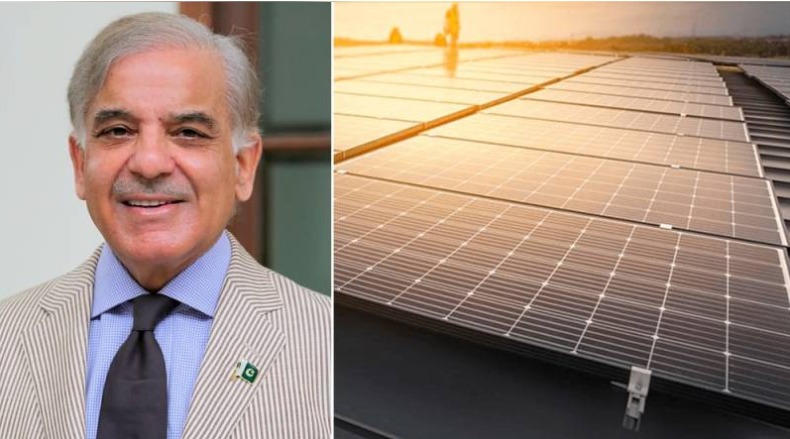
Prime Minister Shehbaz Sharif launches Pakistan’s National Solar Energy Plan to reduce power costs and promote clean energy.


Prime Minister Shehbaz Sharif announced the launch of Pakistan’s National Solar Energy Plan 2025, aimed at cutting electricity costs and reducing dependency on imported fuels.


The project includes the installation of 10,000 megawatts of solar power across major cities, replacing expensive thermal generation units. The government will provide subsidies for home-based solar panels and net-metering systems.


Shehbaz Sharif said, “This is Pakistan’s step toward a green and sustainable energy future.” The plan also supports local solar equipment manufacturing and foreign investment partnerships.


Energy experts believe the project could save billions in fuel imports annually while reducing load-shedding. Implementation will begin in early 2026 under the supervision of the Ministry of Energy.

Tomato prices surge amid supply chain disruptions

Tomato prices

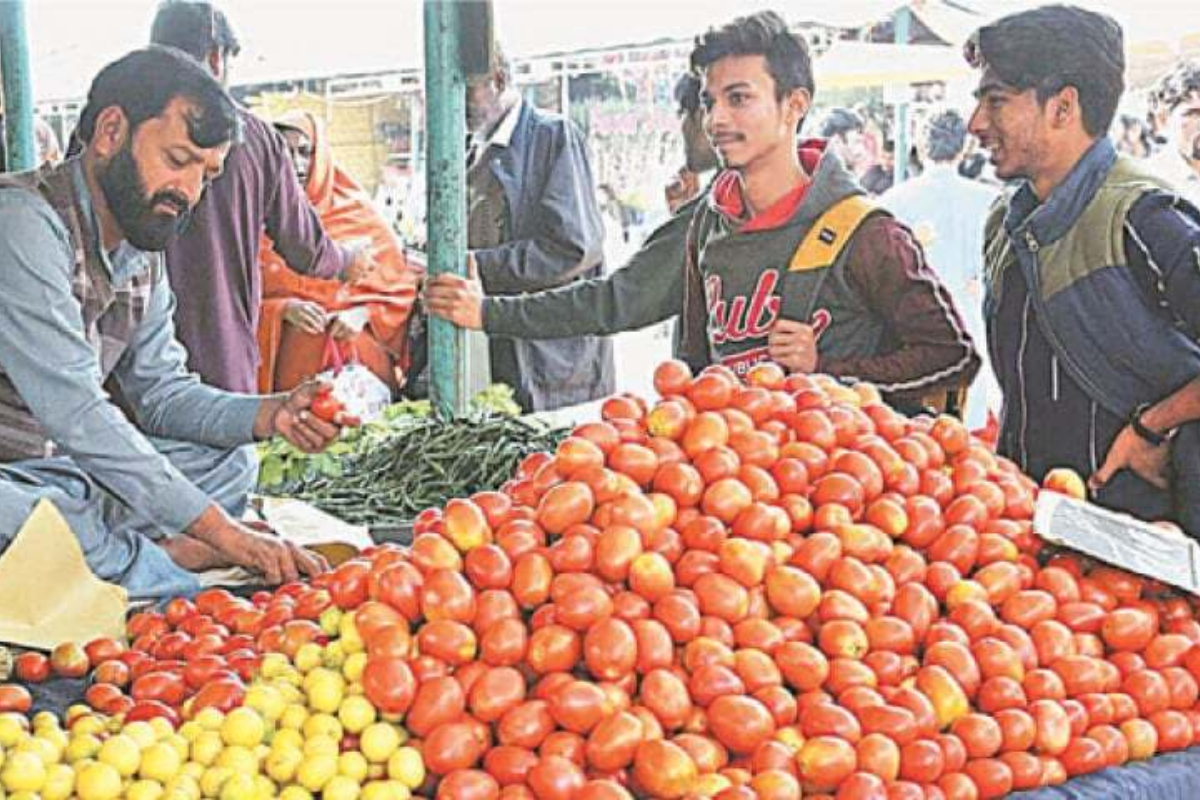
ISLAMABAD: The Price Control Department has attributed the recent surge in tomato prices to temporary supply disruptions caused by adverse weather and logistical challenges.

A department spokesperson said that heavy rains in Khyber Pakhtunkhwa had damaged tomato crops, creating a temporary shortage in the market.

The spokesperson added that delays in tomato imports from Afghanistan and Iran further strained supply, resulting in short-term price increases.

“The recent hike in tomato prices is primarily due to seasonal changes, rainfall, and transport constraints,” the statement said.

According to the department, the price surge is temporary, and rates are expected to decline next week as supply normalizes. The spokesperson also noted that Sindh’s tomato harvest in November and Punjab’s crop in April–May will ensure ample availability in the coming months.

Sindh’s Fuel Cess Likely to Raise Prices Nationwide

Sindh fuel cess, Pakistan oil prices, infrastructure tax Sindh, inflation in Pakistan, fuel import levy, petroleum news Pakistan


Sindh’s new 1.8% infrastructure cess on oil imports may push fuel prices higher by Rs 3 per litre, sparking economic concerns nationwide.


The Sindh government’s decision to impose a 1.8% infrastructure cess on oil imports has raised alarm among economists and transport associations, who warn of potential fuel price hikes of up to Rs 3 per litre across Pakistan.

The cess, announced earlier this week, aims to generate funds for infrastructure maintenance and development within Sindh. However, oil marketing companies say the added cost will likely be passed on to consumers, worsening inflation at a time when the rupee remains under pressure.

According to industry sources, Pakistan’s current account deficit has widened again, and any additional tax burden could further slow industrial output. Transport unions have already threatened protests if the increase is not withdrawn or adjusted.

The Petroleum Division is in talks with provincial authorities to reconsider the levy or develop a shared revenue mechanism that would not burden end-users. Sindh officials, however, argue that the cess is “necessary to maintain critical logistics infrastructure used by the oil industry.”

Economists suggest that such regional levies could complicate federal-provincial fiscal coordination. With global oil prices fluctuating, even minor tax changes can have cascading effects on transportation, manufacturing, and household budgets.

The federal government has yet to issue an official statement on whether it will intervene or offer a subsidy to offset the increase.

Global Outage Disrupts Amazon Web Services and Major Platforms

Amazon Web Services outage, AWS global downtime, internet disruption, cloud infrastructure, tech news, cybersecurity, web services


A major Amazon Web Services outage disrupted websites, apps, and streaming platforms worldwide, exposing internet infrastructure vulnerabilities.


A massive outage affecting Amazon Web Services (AWS) caused widespread disruption across major global websites, financial apps, and media streaming services on Monday. The incident impacted platforms such as Netflix, Spotify, Slack, and several government portals that rely on AWS for cloud hosting.

Amazon confirmed that an internal network configuration error caused the downtime, affecting multiple regions including North America, Europe, and parts of Asia. Services began gradually returning online after several hours, though some users continued to report issues.

Cybersecurity experts said the incident highlights the risks of over-reliance on centralized cloud infrastructure. AWS powers nearly one-third of the world’s cloud-based applications, making such disruptions critical for business continuity.

In a statement, Amazon apologized for the inconvenience and pledged to “strengthen its backup and recovery systems.” Industry observers say the outage may prompt regulators to examine the resilience of cloud service providers.

Stock markets showed limited reaction, but several companies reported temporary operational losses. The event reignited discussions about decentralization and the need for multi-cloud strategies in the digital economy.

Gold prices surge by Rs14,100 per tola

Gold prices

KARACHI: In a major upward movement, gold prices across Pakistan hit new all-time highs on Friday, reflecting strong gains in both local and global markets.

According to the All Pakistan Gems and Jewellers Association, the price of per tola gold soared by Rs14,100, reaching an all-time high of Rs456,900.

Similarly, the rate of 10 grams of gold increased by Rs12, 089, pushing it to Rs391,718.

In the international bullion market, gold prices surged by $141, touching a record high of $4,358 per ounce.

Meanwhile, the price of silver rose by Rs167 per tola, settling at Rs5,504.

Gold prices in Pakistan have risen sharply by Rs54,800 per tola over the past month following the suspension of gold imports, according to official data.

Documents from the Pakistan Bureau of Statistics (PBS) indicate a likelihood of further price hikes, as gold imports have remained at zero for the fourth consecutive month.

The report revealed that the ongoing import ban has driven up gold prices by nearly Rs86,000 per tola in just four months. In June 2025, the per tola price stood at Rs356,900 in local bullion markets.

Official data also showed that gold imports fell by 100% year-on-year in September, with no gold imported during the first quarter of the current fiscal year.

The documents stated that not a single tola of gold was imported in September, whereas the last import occurred in May 2025, amounting to 9 kilograms. During the same month last year, Pakistan had imported 55 kilograms of gold worth over $4.6 million.

The report further noted that February 2025 recorded the highest gold imports of the year, with 43 kilograms valued at more than $4.06 million.

FBR halts Afghan Transit Trade from Karachi ports

FBR

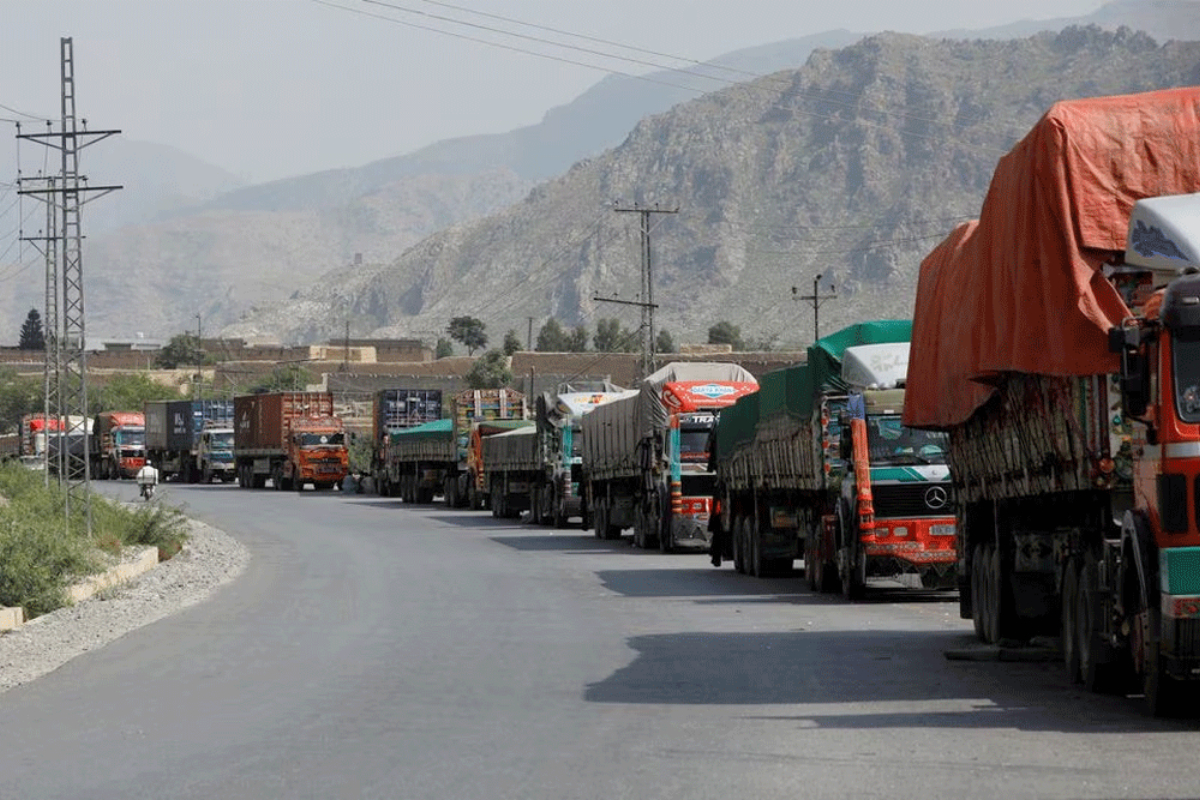
KARACHI: The Federal Board of Revenue (FBR) has temporarily halted Afghan Transit Trade operations from Karachi ports, citing capacity constraints at customs stations in Quetta and Peshawar.

The decision was taken during a key meeting held at the Directorate of Transit Trade Headquarters, Customs House Karachi, chaired by the Director General of Afghan Transit Trade. Directors of Afghan Transit Quetta and Peshawar attended the session via Zoom.

Following the meeting, the FBR issued Customs General Order No. 98/2025, stating that the movement of Afghan Transit Trade consignments has been suspended indefinitely due to severe congestion and lack of storage capacity at the Quetta and Peshawar customs stations, where no additional space is available to accommodate containers.

The order directed that all terminals unload Afghan Transit containers already placed on vehicles, cancel gate passes, and halt all transportation activities related to Afghan Transit Trade until further instructions are issued.

As a result of this directive, terminals at Karachi Port and Port Qasim have suspended the clearance of Afghan Transit consignments.

According to customs sources, long queues of Transit Procedure (TP) containers have formed at the South Asia Pakistan Terminals (SAPT), with hundreds of containers already loaded on trucks and many more stranded en route to Quetta and Peshawar, where drivers are waiting for the border to reopen.

Petrol prices likely to decrease from October 16

Petrol prices

ISLAMABAD: The Petroleum product prices in Pakistan are expected to decline from October 16, offering slight relief to inflation-hit consumers.

According to sources in the petroleum sector, the price of petrol is likely to be reduced by Rs6.10 per litre.

Industry estimates submitted to the Oil and Gas Regulatory Authority (OGRA) also indicate a possible decrease of 97 paisas per litre in the price of high-speed diesel.

Officials believe the expected price revision will provide marginal relief to the public amid persistent inflationary pressures.

Pakistan moves closer to next IMF tranche after staff-level accord

Pakistan

ISLAMABAD: In a major development on the economic front, Pakistan and the International Monetary Fund (IMF) have reached a staff-level agreement under the Extended Fund Facility (EFF) and Resilience and Sustainability Facility (RSF) reviews.

According to an IMF statement, Pakistan will receive $1.2 billion following approval by the Fund’s Executive Board. The IMF noted that Pakistan’s IMF-supported economic reform program continues to make steady progress toward macroeconomic stability and restoring market confidence.

The statement highlighted that for the first time in 14 years, Pakistan’s current account recorded a surplus in fiscal year 2025, while fiscal consolidation efforts exceeded program targets. Inflation has moderated, and foreign exchange reserves have improved. The Fund projected Pakistan’s economic growth between 3.25% and 3.5% for the fiscal year.

The IMF also praised Pakistan’s climate resilience and reform efforts, acknowledging the severe impact of recent floods that affected millions, caused over a thousand deaths, and inflicted widespread damage to crops and housing. It emphasized the need for continued implementation of comprehensive climate and structural reforms to mitigate future risks.

The Fund further acknowledged the government’s commitment to advancing reforms in the energy sector, improving fiscal discipline, and pursuing structural adjustments for long-term stability.

Earlier, Finance Minister Senator Muhammad Aurangzeb said that Pakistan’s talks with the IMF mission had been “constructive and forward-looking.” In an interview with an international news agency, he revealed that Pakistan plans to issue its first Green Panda Bond before the end of this year.

The minister also confirmed progress on the privatization of Pakistan International Airlines (PIA) and three power distribution companies, noting that five investor groups have expressed interest in acquiring the national carrier. He added that the resumption of flights to Europe and the UK has further enhanced PIA’s investment appeal.