
Makkah Defence Pact Explained: What Pakistan, Saudi Arabia and Turkiye Agreed
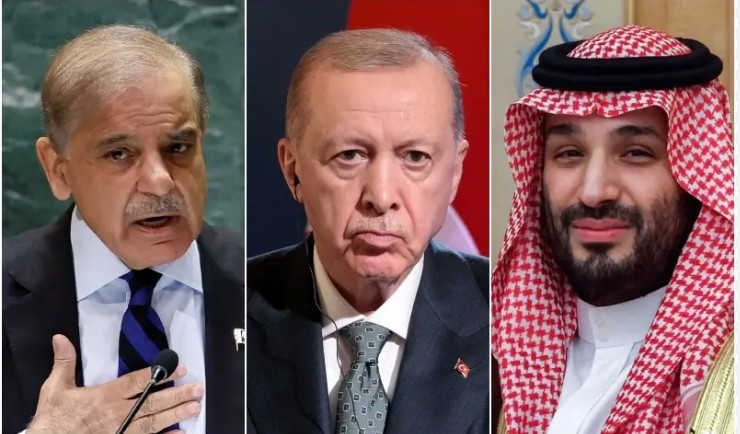
The Makkah Defence Pact is the trilateral security agreement that Pakistan, Saudi Arabia and Turkiye signed in Makkah on Friday, 7 August 2026. Its central promise is short and unusually explicit for this region: an armed attack on any one of the three will be treated as an attack on all three.
That single clause has generated more commentary than almost any other diplomatic development of the year, much of it speculative. This explainer sets out what has actually been confirmed, what remains unpublished, and what the agreement realistically changes for Pakistan.
Who signed the Makkah Defence Pact, and when
The agreement was signed in Makkah on 7 August 2026 by three heads of government: Pakistan’s Prime Minister Shehbaz Sharif, Saudi Crown Prince Mohammed bin Salman, and Turkish President Recep Tayyip Erdogan.
Pakistan’s Ministry of Foreign Affairs described the pact as reflecting “the three states’ shared commitment to further strengthening their collective security and to promoting peace, security, and stability in the region.” A Turkish official told Reuters the agreement “is defensive in nature and not directed at any specific actor” and said it remains open to other regional countries.
What the agreement reportedly covers
The full text has not been published. Based on official statements and analyst briefings, the framework is understood to cover four areas:
- Collective deterrence — the mutual-defence clause treating an attack on one as an attack on all.
- Military and defence-industrial coordination — joint production, procurement and logistics.
- Intelligence sharing and capacity building in Saudi defence capabilities.
- Energy and manufacturing cooperation, sitting alongside the security provisions.
The important caveat: because the text is unpublished, the exact triggers, escalation procedures and any carve-outs are not publicly verifiable. Readers should be cautious about confident claims — in either direction — about what the pact obliges its members to do in a specific scenario.
How this builds on the 2025 Pakistan–Saudi agreement
The Makkah pact did not appear from nowhere. It extends the Strategic Mutual Defence Agreement (SMDA) that Saudi Arabia and Pakistan signed in Riyadh on 17 September 2025, which stated that “any aggression against either country shall be considered an aggression against both.”
That bilateral agreement was significant in its own right: it was the first military alliance between an Arab Gulf state and a nuclear-armed power. Reuters, citing anonymous Pakistani sources, reported provisions allowing the deployment of up to 80,000 Pakistani troops to Saudi Arabia. The Belfer Center assessed it more cautiously as “primarily a political signal of solidarity” rather than an unconditional war guarantee.
Turkiye had sought to join that bilateral framework in January 2026, but officials confirmed by 31 January that the SMDA would remain a Saudi–Pakistan arrangement. The Makkah pact is therefore a new trilateral instrument rather than an expansion of the older one.
Why now: the regional context
Negotiations on closer Gulf–Pakistan–Turkiye security cooperation began after October 2023 and accelerated sharply during 2026. The immediate backdrop includes the US–Israel war against Iran that began in late February 2026, Iranian strikes on Gulf states, and the effective closure of the Strait of Hormuz to commercial shipping.
The SMDA has already been tested in that environment. During the 2026 Iran war, Saudi Arabia invoked the agreement and Pakistan deployed at least 8,000 troops, 16 aircraft and two drone squadrons — moving the arrangement from paper commitment to operational reality.
We have covered the economic side of that same crisis in detail in our reporting on oil prices and ceasefire prospects.
The reactions that matter
Iran: No formal government statement followed the Makkah signing. Iranian MP Ebrahim Rezaei dismissed it publicly, posting that “a paper agreement…will not bring them security.” Notably, when the earlier bilateral SMDA was signed in 2025, President Masoud Pezeshkian had welcomed it as the beginning of a “comprehensive regional security system” — a markedly warmer response than the 2026 reaction.
India: New Delhi said it was “carefully monitoring” developments following the 2025 agreement. Analysts have argued the arrangement alters India’s regional security calculus, though official Indian commentary has remained measured.
Others: The pact’s stated openness to new members has already drawn interest. Egypt is reported to be considering joining, and President Erdogan has said the pact is open to peace-seeking countries in the region.
The nuclear question
This is where speculation has run furthest ahead of evidence. After the 2025 SMDA, Pakistan’s Defence Minister Khawaja Asif appeared to hint at a nuclear dimension before walking the comment back. A Saudi official said the pact “encompasses all military means” without explicitly confirming nuclear coverage.
No signatory has confirmed any nuclear-sharing provision in either agreement. Pakistan’s declared position on command and control of its strategic assets has not changed. Claims that the Makkah pact extends a nuclear umbrella to Saudi Arabia or Turkiye are, at present, inference rather than established fact.
What it means for Pakistan
Three practical implications stand out.
Diplomatic weight. Pakistan is now a named security guarantor alongside the region’s largest economy and NATO’s second-largest army. That is a meaningful upgrade in standing.
Economic linkage. The energy and manufacturing provisions matter for a country whose external accounts depend heavily on Gulf remittances and investment. Saudi Arabia and the UAE remain the two largest destinations for Pakistani workers — a relationship we examine in our coverage of Gulf employment and migration.
Commitment risk. A mutual-defence clause runs in both directions. The 2026 deployment under the SMDA showed that invocation is not hypothetical, and any future call carries fiscal and military cost for Pakistan.
Frequently asked questions
Is the Makkah Defence Pact the same as NATO’s Article 5?
It is similar in language but not in machinery. NATO’s Article 5 sits inside a decades-old alliance with an integrated command structure, standing forces and detailed planning. The Makkah Defence Pact has the mutual-defence principle without that institutional apparatus — and its text is not public.
Can other countries join?
Yes. Turkish officials have described it as open to other regional states, and Erdogan has repeated that publicly. Egypt has been reported as considering membership.
Has the pact been used yet?
The trilateral Makkah Defence Pact has not been invoked. The earlier bilateral Saudi–Pakistan SMDA was invoked by Saudi Arabia during the 2026 Iran war, leading to a Pakistani deployment.
Does it include a nuclear guarantee?
No signatory has confirmed one. Statements have been deliberately ambiguous, and no published provision establishes nuclear sharing.
Reporting compiled from official statements by Pakistan’s Ministry of Foreign Affairs, Reuters, Al Jazeera, the Atlantic Council, Brookings and the Belfer Center. Where the agreement’s text is unpublished, this article says so rather than filling the gap. Last updated 15 August 2026.
Related coverage: Saudi Arabia, Pakistan and Turkiye sign Makkah Defence Pact · Ishaq Dar briefs Iran leadership on the agreement · Zardari and Shehbaz discuss the pact · Bilawal calls the pact a guarantee for three nations
Related reading: Strait of Hormuz and Pakistani fuel prices · Gulf jobs for Pakistanis 2026 · Gold rate in Pakistan today