BREAKING NEWS
Advertise with us >

US military quietly establishes shipping corridor through Strait of Hormuz

US military

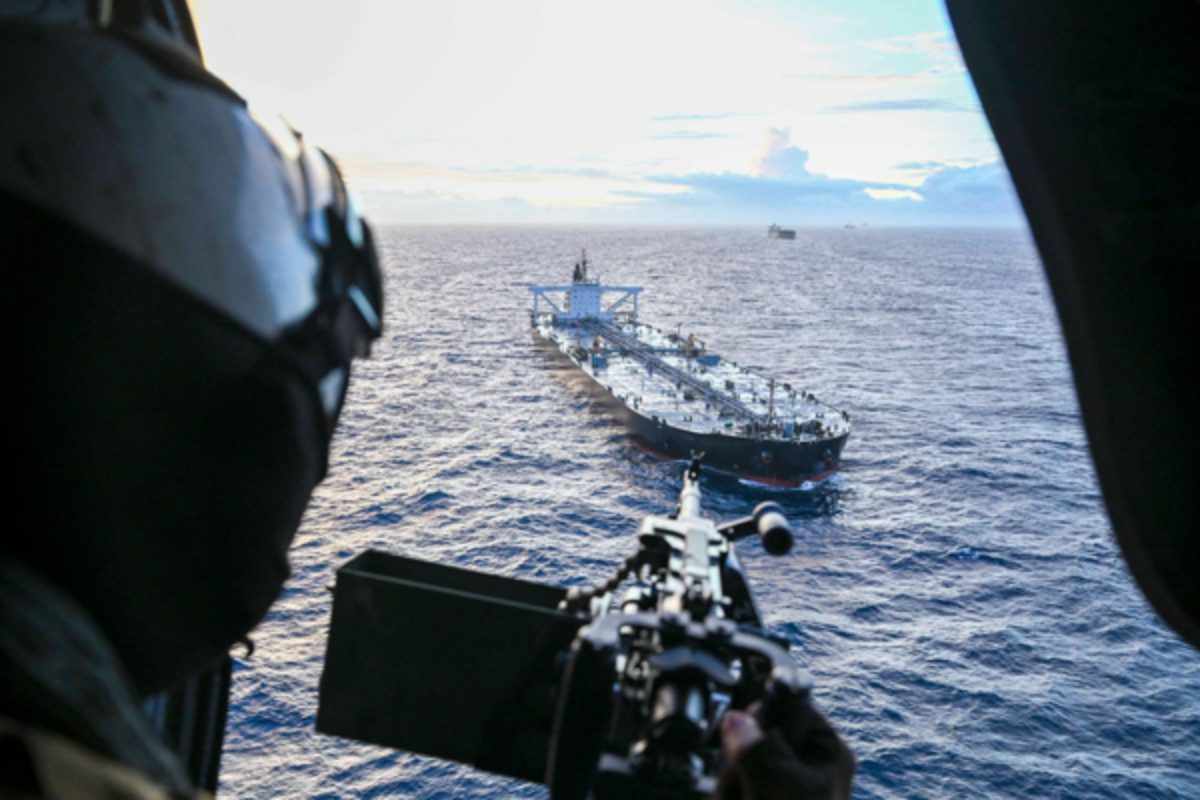
WASHINGTON:  The US military has quietly established a shipping corridor through the Strait of Hormuz to facilitate the movement of millions of barrels of oil a day, according to Axios, citing two US officials.

The operation, which has been underway for several weeks despite a broader pause in fighting, is being described by officials as a significant achievement in maintaining global energy supplies.

According to Axios, between 15 and 20 oil tankers enter or leave the Strait of Hormuz each night through a southern channel along the coast of Oman. Officials estimate that about 10 million barrels of oil a day roughly half the prewar volume are currently being moved safely through the waterway and into global energy markets.

The operation extends beyond escorting loaded oil tankers out of the Strait. U.S. forces are also helping empty tankers travel from the Arabian Sea through the strait into the Gulf, load oil in regional countries and safely return through the waterway.

A U.S. official familiar with the operation told Axios that American forces have controlled the southern shipping lane for about two months. The official said Iran’s Islamic Revolutionary Guard Corps could disrupt traffic but does not control the strait.

The task force overseeing the operation is based at an Army headquarters at Fort Bragg, North Carolina, and remains in regular contact with Gulf partners, according to the report.

Nighttime Convoys Receive Air Protection

The task force prepares daily lists of vessels and schedules them to pass through the waterway in large nighttime convoys. U.S. fighter aircraft provide air protection against Iranian cruise missiles and drones during the transit.

Officials said the operation became possible after a two-week U.S. Central Command military campaign severely damaged Iran’s radar and maritime surveillance systems.

The damage has significantly reduced Iran’s ability to monitor maritime traffic in the southern channel, according to Axios. Iranian forces are reportedly launching drones and cruise missiles based largely on estimates of where ships are expected to travel.

Some vessels have been hit in Iranian attacks, but U.S. forces have intercepted most of the incoming threats, officials said.

The continued flow of oil through the Strait of Hormuz is particularly important to global energy markets because the waterway is one of the world’s most critical routes for crude oil shipments.

Gulf Jobs for Pakistanis 2026: Sectors, Process, Red Flags

Man holding a handwritten Need A Job sign, representing overseas jobseekers

Gulf jobs for Pakistanis have proved remarkably durable through a year of regional conflict. More than 300,000 Pakistanis secured employment abroad in the first five months of 2026, according to the Bureau of Emigration and Overseas Employment — with demand “largely unaffected” by a war that began on 28 February 2026.

This guide sets out where the demand actually is, how the legal process works, and the warning signs that separate a genuine offer from a costly one.

Where Pakistanis are going: the numbers

DestinationPakistani workers (Jan–May 2026)
Saudi Arabia143,586
United Arab Emirates~50,000
Qatar25,500
Bahrain10,129

Saudi Arabia alone accounts for close to half the total. Read the distribution carefully before making plans: Saudi Arabia and the UAE together represent the overwhelming majority of placements, so opportunity is concentrated rather than spread evenly across the Gulf.

Related official figures give the wider picture. Overseas job registrations reached 278,563 in the period reported by the Express Tribune, and the government has set a target of 800,000 overseas placements for 2026. Remittances ran at $4.2 billion in May 2026, with the full financial year expected to exceed $40 billion — which is why this is treated as economic policy rather than a labour footnote.

The National Emigration and Welfare Policy 2026

Pakistan launched the National Emigration and Welfare Policy 2026 in July 2026. Its stated aims are safer migration and a more skilled overseas workforce, alongside reforms involving the EOBI and FIA processes.

The direction of travel is a shift from volume toward skills. Workers with certified trade qualifications command higher wages, face fewer exploitative conditions and are less exposed to sudden policy changes in destination countries. If you are weighing a move, formal certification in your trade is the single highest-return preparation step.

Which sectors are hiring

Demand across the Gulf has concentrated in a familiar set of areas:

  • Construction and infrastructure — the largest single employer of Pakistani labour, driven by Saudi giga-projects and continued UAE development.
  • Transport and logistics — drivers, warehouse and delivery staff.
  • Hospitality and retail — particularly in the UAE and Qatar.
  • Healthcare — nurses and allied health professionals, where licensing requirements are strict but pay is materially better.
  • Skilled trades — electricians, welders, plumbers, HVAC technicians. Certified tradespeople consistently out-earn general labour.
  • Domestic work — significant in volume but the category with the highest documented protection risks.

The legal process, step by step

  1. Use a licensed Overseas Employment Promoter (OEP). Only recruiters licensed by the Bureau of Emigration may legally place workers abroad. Verify the licence number against the Bureau’s own records — not a certificate shown to you on a phone screen.
  2. Get the offer in writing. The contract should state job title, gross salary, working hours, overtime terms, accommodation, food, annual leave and who pays for flights. Verbal assurances are unenforceable.
  3. Obtain the work visa. Issued by the destination country, sponsored by the employer. You should never be asked to pay for a visa that the employer is legally required to provide.
  4. Complete Protectorate of Emigrants registration. This is mandatory and it is your legal protection. Workers who skip it to save time have no recourse if the job turns out to be different from what was promised.
  5. Medical and police clearance as required by the destination.
  6. Register with the Overseas Pakistanis Foundation for welfare coverage.

Warning signs of a bad offer

Recruitment fraud remains the largest single risk facing Pakistani jobseekers. The pattern is consistent enough to list:

  • Large upfront fees. Legitimate recruitment charges are regulated and capped. Demands for several lakh rupees before any documentation is the clearest signal of a problem.
  • No written contract, or a contract you are asked to sign only on arrival.
  • Visit or umrah visa offered as a work route. Working on a visit visa is illegal in Gulf states and leaves you with no protection, no recourse and deportation risk.
  • Salary far above the market rate for your skill level.
  • Pressure to decide immediately, or to pay in cash without a receipt.
  • Refusal to let you verify the employer independently.

If an agent asks you to bypass Protectorate registration, treat that as disqualifying regardless of how convincing the rest of the offer sounds.

What the regional conflict changes

Placement volumes have held up, and Gulf News reported that employment demand stayed resilient despite the conflict. But steady headline numbers do not mean nothing has changed:

  • Flight routes and costs have been affected by regional airspace disruption.
  • Some project timelines have shifted, which can delay start dates after a contract is signed.
  • Security conditions vary by location within destination countries.

Practical advice: confirm your reporting date and flight arrangements in writing before resigning an existing job, and check current travel advisories for your specific destination city.

The broader relationship between Pakistan and the Gulf has deepened this year on the security side too — see our explainer on the Makkah Defence Pact signed by Pakistan, Saudi Arabia and Turkiye.

Frequently asked questions

Which Gulf country hires the most Pakistanis?

Saudi Arabia, by a wide margin — 143,586 placements between January and May 2026, followed by the UAE at roughly 50,000.

Can I work in the Gulf on a visit visa?

No. It is illegal in Gulf states and exposes you to fines, detention and deportation with no labour protection. Any agent proposing this should be avoided.

How do I verify a recruitment agent is licensed?

Check the agent’s Overseas Employment Promoter licence against the Bureau of Emigration and Overseas Employment’s official records, and confirm your registration with the Protectorate of Emigrants directly rather than through the agent.

Is Protectorate registration really compulsory?

Yes, for workers emigrating for employment. It is also the mechanism through which you can pursue a complaint if the job differs from your contract, so skipping it removes your main protection.


Figures from the Bureau of Emigration and Overseas Employment as reported by Gulf News, Daily Pakistan, Profit by Pakistan Today, Arab News and the Express Tribune. Procedural requirements change — always confirm current rules with the Bureau of Emigration, the Protectorate of Emigrants and the relevant embassy before paying any fee or resigning a job. FutureSoch is not a recruitment agency and does not place workers.

More: Gulf & Middle East coverage

Related reading: Makkah Defence Pact explained · Strait of Hormuz and Pakistani fuel prices · Gold rate in Pakistan today

Strait of Hormuz: What It Means for Pakistan’s Petrol Prices

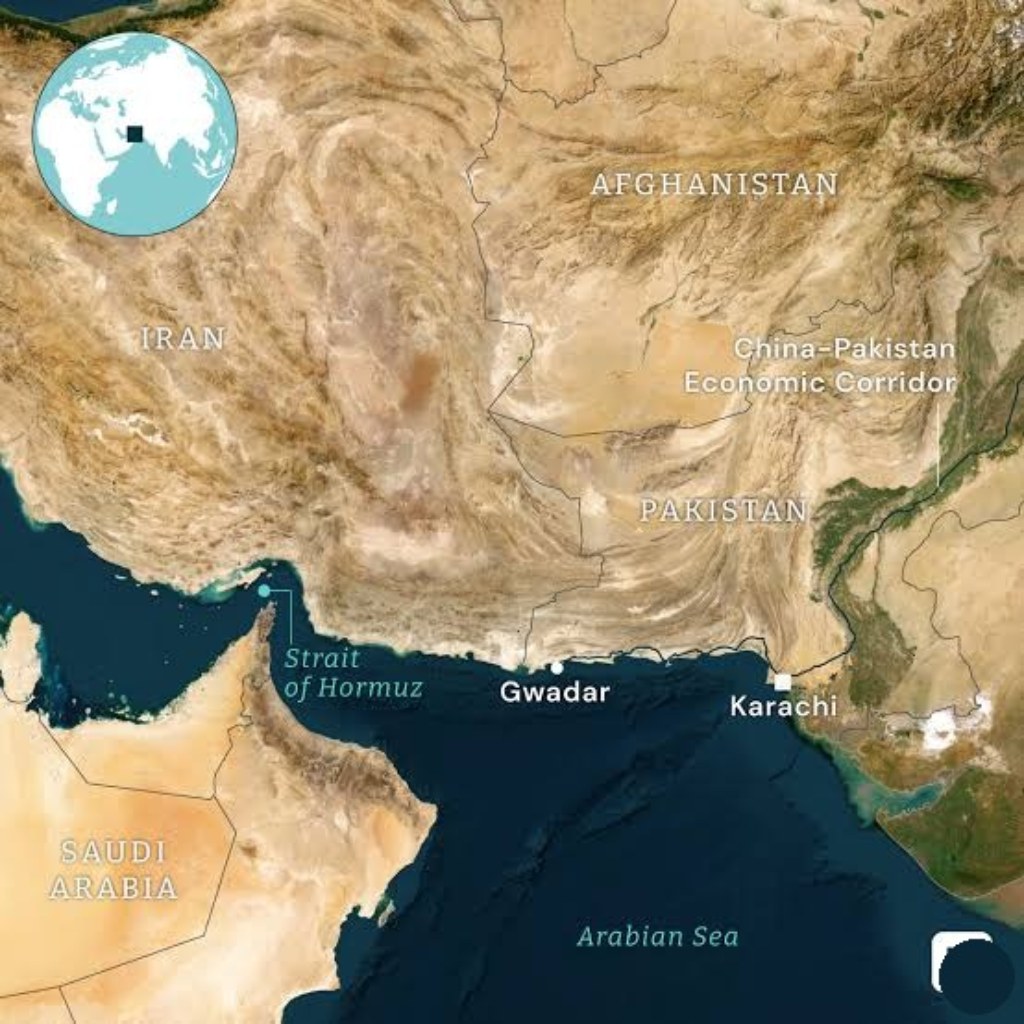
Map showing the Strait of Hormuz between Iran, Pakistan and the Gulf states, with Gwadar and Karachi marked

The Strait of Hormuz — the 21-mile-wide channel that normally carries one-fifth of the world’s oil — is effectively closed to commercial traffic. Between 4 and 6 August 2026, just 8 to 15 vessels crossed daily, against roughly 130 transits before the conflict began.

Pakistan imports most of its crude and refined fuel, and a large share of it moves through or near that chokepoint. This article traces the chain from a closed waterway to the price on the pump — and explains why the connection is less direct than it first appears.

Where things stand

Brent crude for October delivery was trading around $84.11 a barrel on 10 August 2026, up about 0.7% on the day and roughly 16% higher than before the US–Israel war on Iran began in late February 2026.

Iran has attached conditions to reopening the strait. Foreign Minister Abbas Araghchi has said Tehran requires the easing of US sanctions and the payment of war reparations, adding that Iran and Oman were close to an understanding but that these conditions must be met first.

The human cost of the disruption is documented: the International Maritime Organization has recorded 64 violent incidents and 17 deaths involving commercial vessels since the war began.

Markets are pricing uncertainty rather than a resolution. As KCM Trade chief analyst Tim Waterer put it, the absence of concrete movement and unresolved questions about how any deal would work in practice keeps “a risk premium in the price.”

Why $84 oil is lower than you might expect

This deserves attention, because it runs against intuition. A fifth of global oil supply losing its main route would, in most historical scenarios, have sent prices well past $120. Brent at $84 reflects several offsetting factors:

  • Alternative routes exist. Saudi Arabia’s East–West pipeline and the UAE’s Fujairah pipeline can move some volumes to Red Sea and Gulf of Oman terminals, bypassing Hormuz — though at reduced capacity.
  • Strategic reserves. Consumer countries have released stocks to cushion the shortfall.
  • Non-OPEC supply. US, Brazilian and Guyanese production has grown substantially over the past decade, diluting the Gulf’s share of marginal supply.
  • Demand destruction. High prices and slower global growth have themselves reduced consumption.

The implication for Pakistan is double-edged. The buffers have worked so far, but they are finite. Reserves deplete and bypass pipelines are already near capacity. If the closure extends, the cushion thins.

How this reaches the Pakistani pump

Pakistan now uses a more frequent fuel-pricing mechanism tied to international movements. Recent OGRA-notified rates, effective 13 August 2026:

FuelPrice (PKR/litre)Change
Petrol324.98−0.94
High-speed diesel382.79+0.54
Kerosene291.45
Light diesel oil248.72

Notice the direction: petrol fell slightly while diesel rose, on a day when Brent was climbing. Four things sit between the crude price and your receipt:

  1. Refined product prices, not crude. Pakistan imports finished petrol and diesel. Refining margins move independently of crude, which is why petrol and diesel can diverge on the same day.
  2. The exchange rate. Oil is priced in dollars and sold in rupees. Currency movement can amplify or offset the crude move entirely.
  3. Taxes and levies. Petroleum levy and sales tax are a large share of the retail price, and they are policy variables — the government can absorb or pass on international moves.
  4. Margins. Dealer and oil marketing company margins are regulated and adjusted periodically. The ECC recently approved a Rs1.34 increase in dealers’ margin, which raises the pump price independently of anything happening in the Gulf.

The knock-on effects that matter more than petrol

For most Pakistani households, the fuel price itself is not the largest channel. Three indirect effects hit harder.

Freight and food prices

High-speed diesel powers trucking and agricultural machinery, so diesel increases propagate into food prices across the country. Diesel rising while petrol falls is therefore worse for inflation than the headline suggests. Transport costs have already triggered friction — Pakistani goods transporters began an indefinite strike over fuel prices and taxes.

LNG and electricity

Much of Pakistan’s imported LNG is priced on oil-linked contracts, and a large share of generation is gas-fired. Pakistan raised LNG prices by a record $6.45 per MMBTU, which feeds into power tariffs. That sits on top of the structural cost problem we examined in why electricity bills stay high in Pakistan.

The external account

Energy is Pakistan’s largest import category. A sustained rise widens the import bill, pressures the current account and the rupee, and constrains the State Bank’s room to cut rates — the transmission channel set out in our inflation outlook.

There is one meaningful offset. Gulf employment has held up through the conflict, and remittances — over $4.2 billion in May 2026 alone — help fund the higher import bill.

What to watch next

  • Daily Hormuz transit counts. A move back toward 130 vessels a day would deflate the risk premium faster than any announcement.
  • The Oman-mediated track. Araghchi has pointed to it as the live channel.
  • Tanker insurance rates. War-risk premiums are a real-time market read on whether traders expect escalation.
  • Ceasefire signals. Prices have already moved on these — see Iran-US ceasefire extension prospects pushing oil prices lower.

Frequently asked questions

Is the Strait of Hormuz completely closed?

Not legally closed, but effectively so for commercial shipping. Traffic fell to 8–15 vessels a day in early August 2026 from about 130 before the conflict. A small number of transits continue under elevated risk.

Will petrol prices in Pakistan rise sharply?

That depends on refined product prices, the rupee and government tax decisions — not on crude alone. Recent notifications have shown small moves in both directions. Anyone claiming to know the next figure in advance is guessing.

Does Pakistan get its oil through Hormuz?

A significant share of Pakistan’s crude and refined imports originates from Gulf suppliers whose exports transit or depend on the strait. Pakistan has been broadening its oil import framework, partly to diversify sourcing.

Why did diesel go up while petrol went down?

They are separate products with separate international benchmarks and refining margins. Diesel demand is driven by freight and industry, petrol by private vehicles, and the two markets frequently move apart.


Oil prices, transit data and official statements sourced from Al Jazeera, CNBC, the International Maritime Organization and OGRA notifications as reported. Fuel prices are those effective 13 August 2026 and change under Pakistan’s revised pricing mechanism — check current OGRA notifications before relying on them. Last updated 15 August 2026.

Related reading: Gold rate in Pakistan today · Europe’s heatwave power crunch · Makkah Defence Pact explained

Makkah Defence Pact Explained: What Pakistan, Saudi Arabia and Turkiye Agreed

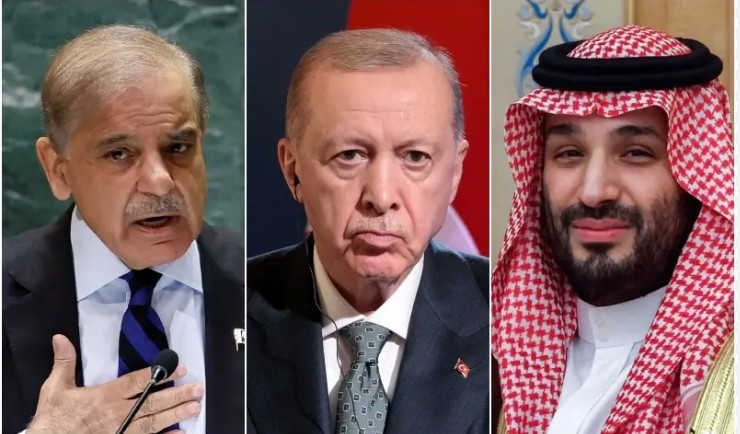
Pakistan PM Shehbaz Sharif, Turkish President Erdogan and Saudi Crown Prince Mohammed bin Salman - Makkah Defence Pact signatories

The Makkah Defence Pact is the trilateral security agreement that Pakistan, Saudi Arabia and Turkiye signed in Makkah on Friday, 7 August 2026. Its central promise is short and unusually explicit for this region: an armed attack on any one of the three will be treated as an attack on all three.

That single clause has generated more commentary than almost any other diplomatic development of the year, much of it speculative. This explainer sets out what has actually been confirmed, what remains unpublished, and what the agreement realistically changes for Pakistan.

Who signed the Makkah Defence Pact, and when

The agreement was signed in Makkah on 7 August 2026 by three heads of government: Pakistan’s Prime Minister Shehbaz Sharif, Saudi Crown Prince Mohammed bin Salman, and Turkish President Recep Tayyip Erdogan.

Pakistan’s Ministry of Foreign Affairs described the pact as reflecting “the three states’ shared commitment to further strengthening their collective security and to promoting peace, security, and stability in the region.” A Turkish official told Reuters the agreement “is defensive in nature and not directed at any specific actor” and said it remains open to other regional countries.

What the agreement reportedly covers

The full text has not been published. Based on official statements and analyst briefings, the framework is understood to cover four areas:

  • Collective deterrence — the mutual-defence clause treating an attack on one as an attack on all.
  • Military and defence-industrial coordination — joint production, procurement and logistics.
  • Intelligence sharing and capacity building in Saudi defence capabilities.
  • Energy and manufacturing cooperation, sitting alongside the security provisions.

The important caveat: because the text is unpublished, the exact triggers, escalation procedures and any carve-outs are not publicly verifiable. Readers should be cautious about confident claims — in either direction — about what the pact obliges its members to do in a specific scenario.

How this builds on the 2025 Pakistan–Saudi agreement

The Makkah pact did not appear from nowhere. It extends the Strategic Mutual Defence Agreement (SMDA) that Saudi Arabia and Pakistan signed in Riyadh on 17 September 2025, which stated that “any aggression against either country shall be considered an aggression against both.”

That bilateral agreement was significant in its own right: it was the first military alliance between an Arab Gulf state and a nuclear-armed power. Reuters, citing anonymous Pakistani sources, reported provisions allowing the deployment of up to 80,000 Pakistani troops to Saudi Arabia. The Belfer Center assessed it more cautiously as “primarily a political signal of solidarity” rather than an unconditional war guarantee.

Turkiye had sought to join that bilateral framework in January 2026, but officials confirmed by 31 January that the SMDA would remain a Saudi–Pakistan arrangement. The Makkah pact is therefore a new trilateral instrument rather than an expansion of the older one.

Why now: the regional context

Negotiations on closer Gulf–Pakistan–Turkiye security cooperation began after October 2023 and accelerated sharply during 2026. The immediate backdrop includes the US–Israel war against Iran that began in late February 2026, Iranian strikes on Gulf states, and the effective closure of the Strait of Hormuz to commercial shipping.

The SMDA has already been tested in that environment. During the 2026 Iran war, Saudi Arabia invoked the agreement and Pakistan deployed at least 8,000 troops, 16 aircraft and two drone squadrons — moving the arrangement from paper commitment to operational reality.

We have covered the economic side of that same crisis in detail in our reporting on oil prices and ceasefire prospects.

The reactions that matter

Iran: No formal government statement followed the Makkah signing. Iranian MP Ebrahim Rezaei dismissed it publicly, posting that “a paper agreement…will not bring them security.” Notably, when the earlier bilateral SMDA was signed in 2025, President Masoud Pezeshkian had welcomed it as the beginning of a “comprehensive regional security system” — a markedly warmer response than the 2026 reaction.

India: New Delhi said it was “carefully monitoring” developments following the 2025 agreement. Analysts have argued the arrangement alters India’s regional security calculus, though official Indian commentary has remained measured.

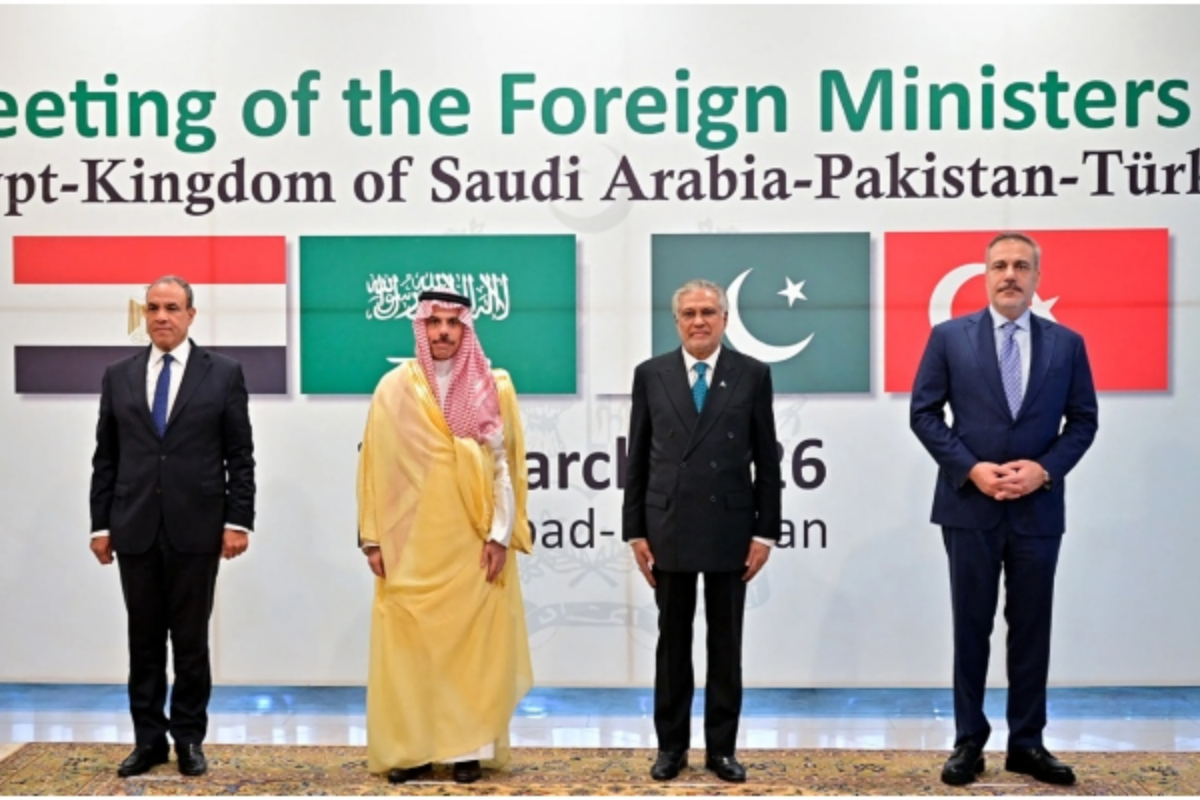
Others: The pact’s stated openness to new members has already drawn interest. Egypt is reported to be considering joining, and President Erdogan has said the pact is open to peace-seeking countries in the region.

The nuclear question

This is where speculation has run furthest ahead of evidence. After the 2025 SMDA, Pakistan’s Defence Minister Khawaja Asif appeared to hint at a nuclear dimension before walking the comment back. A Saudi official said the pact “encompasses all military means” without explicitly confirming nuclear coverage.

No signatory has confirmed any nuclear-sharing provision in either agreement. Pakistan’s declared position on command and control of its strategic assets has not changed. Claims that the Makkah pact extends a nuclear umbrella to Saudi Arabia or Turkiye are, at present, inference rather than established fact.

What it means for Pakistan

Three practical implications stand out.

Diplomatic weight. Pakistan is now a named security guarantor alongside the region’s largest economy and NATO’s second-largest army. That is a meaningful upgrade in standing.

Economic linkage. The energy and manufacturing provisions matter for a country whose external accounts depend heavily on Gulf remittances and investment. Saudi Arabia and the UAE remain the two largest destinations for Pakistani workers — a relationship we examine in our coverage of Gulf employment and migration.

Commitment risk. A mutual-defence clause runs in both directions. The 2026 deployment under the SMDA showed that invocation is not hypothetical, and any future call carries fiscal and military cost for Pakistan.

Frequently asked questions

Is the Makkah Defence Pact the same as NATO’s Article 5?

It is similar in language but not in machinery. NATO’s Article 5 sits inside a decades-old alliance with an integrated command structure, standing forces and detailed planning. The Makkah Defence Pact has the mutual-defence principle without that institutional apparatus — and its text is not public.

Can other countries join?

Yes. Turkish officials have described it as open to other regional states, and Erdogan has repeated that publicly. Egypt has been reported as considering membership.

Has the pact been used yet?

The trilateral Makkah Defence Pact has not been invoked. The earlier bilateral Saudi–Pakistan SMDA was invoked by Saudi Arabia during the 2026 Iran war, leading to a Pakistani deployment.

Does it include a nuclear guarantee?

No signatory has confirmed one. Statements have been deliberately ambiguous, and no published provision establishes nuclear sharing.


Reporting compiled from official statements by Pakistan’s Ministry of Foreign Affairs, Reuters, Al Jazeera, the Atlantic Council, Brookings and the Belfer Center. Where the agreement’s text is unpublished, this article says so rather than filling the gap. Last updated 15 August 2026.

Related coverage: Saudi Arabia, Pakistan and Turkiye sign Makkah Defence Pact · Ishaq Dar briefs Iran leadership on the agreement · Zardari and Shehbaz discuss the pact · Bilawal calls the pact a guarantee for three nations

Related reading: Strait of Hormuz and Pakistani fuel prices · Gulf jobs for Pakistanis 2026 · Gold rate in Pakistan today

Egypt considers joining Pakistan-Saudi Arabia-Turkiye Defence Pact

Egypt considers

CAIRO: Egypt is seriously considering joining the Makkah mutual defence agreement signed by Pakistan, Saudi Arabia and Turkiye, Egyptian Foreign Minister Badr Abdelatty said.

Abdelatty said Egypt had been aware of the agreement from the outset and that the matter was undergoing a comprehensive review by the country’s relevant state institutions.

Asked about Egypt’s possible participation in the pact, the foreign minister said Cairo maintains deep and special relations with Pakistan, Saudi Arabia and Turkiye that extend beyond the political sphere.

He said Egypt would need to carefully assess the defence commitments associated with the agreement in accordance with the country’s Constitution and legal requirements before making a final decision.

Saudi Arabia, Pakistan and Turkiye signed the mutual defence agreement in Makkah several days ago. Under the pact, an attack against one of the three countries is to be regarded as an attack against all three.