
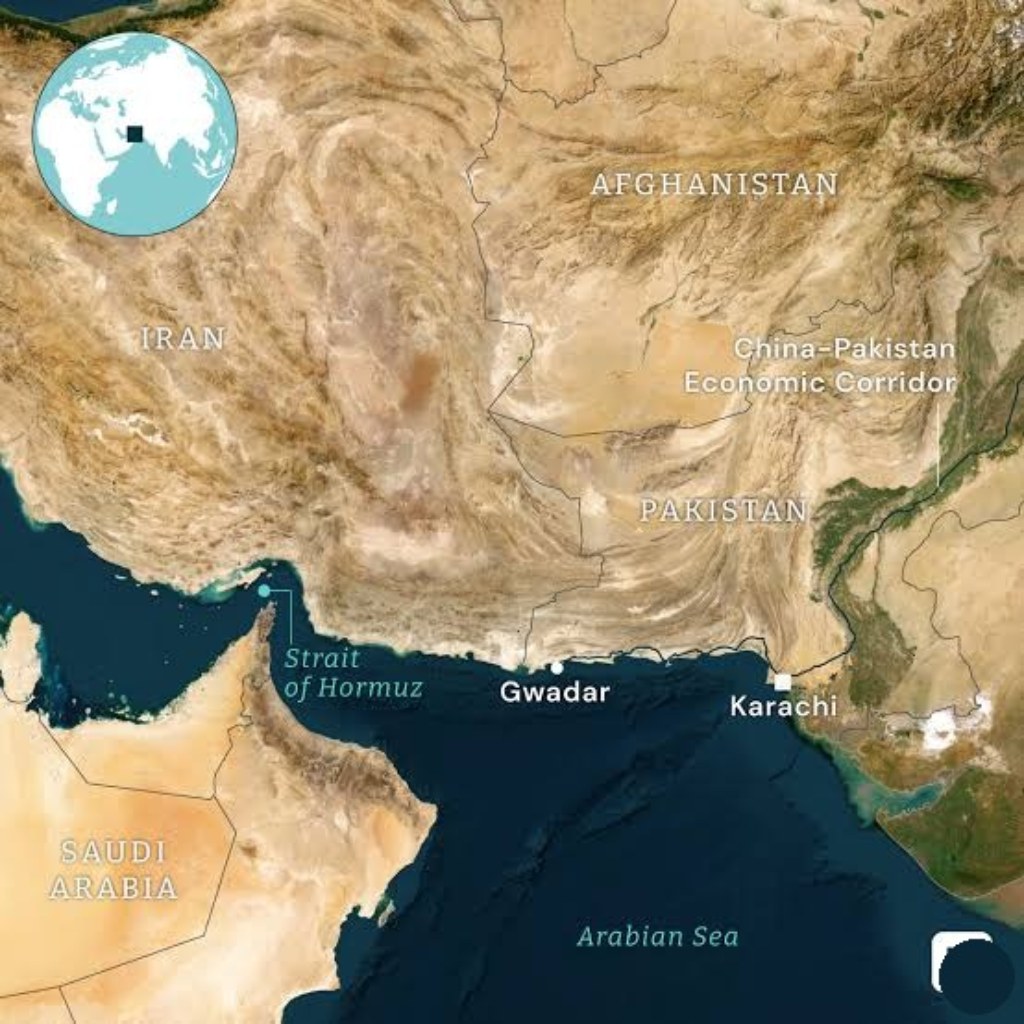
The Strait of Hormuz — the 21-mile-wide channel that normally carries one-fifth of the world’s oil — is effectively closed to commercial traffic. Between 4 and 6 August 2026, just 8 to 15 vessels crossed daily, against roughly 130 transits before the conflict began.
Pakistan imports most of its crude and refined fuel, and a large share of it moves through or near that chokepoint. This article traces the chain from a closed waterway to the price on the pump — and explains why the connection is less direct than it first appears.
Where things stand
Brent crude for October delivery was trading around $84.11 a barrel on 10 August 2026, up about 0.7% on the day and roughly 16% higher than before the US–Israel war on Iran began in late February 2026.
Iran has attached conditions to reopening the strait. Foreign Minister Abbas Araghchi has said Tehran requires the easing of US sanctions and the payment of war reparations, adding that Iran and Oman were close to an understanding but that these conditions must be met first.
The human cost of the disruption is documented: the International Maritime Organization has recorded 64 violent incidents and 17 deaths involving commercial vessels since the war began.
Markets are pricing uncertainty rather than a resolution. As KCM Trade chief analyst Tim Waterer put it, the absence of concrete movement and unresolved questions about how any deal would work in practice keeps “a risk premium in the price.”
Why $84 oil is lower than you might expect
This deserves attention, because it runs against intuition. A fifth of global oil supply losing its main route would, in most historical scenarios, have sent prices well past $120. Brent at $84 reflects several offsetting factors:
- Alternative routes exist. Saudi Arabia’s East–West pipeline and the UAE’s Fujairah pipeline can move some volumes to Red Sea and Gulf of Oman terminals, bypassing Hormuz — though at reduced capacity.
- Strategic reserves. Consumer countries have released stocks to cushion the shortfall.
- Non-OPEC supply. US, Brazilian and Guyanese production has grown substantially over the past decade, diluting the Gulf’s share of marginal supply.
- Demand destruction. High prices and slower global growth have themselves reduced consumption.
The implication for Pakistan is double-edged. The buffers have worked so far, but they are finite. Reserves deplete and bypass pipelines are already near capacity. If the closure extends, the cushion thins.
How this reaches the Pakistani pump
Pakistan now uses a more frequent fuel-pricing mechanism tied to international movements. Recent OGRA-notified rates, effective 13 August 2026:
| Fuel | Price (PKR/litre) | Change |
|---|---|---|
| Petrol | 324.98 | −0.94 |
| High-speed diesel | 382.79 | +0.54 |
| Kerosene | 291.45 | — |
| Light diesel oil | 248.72 | — |
Notice the direction: petrol fell slightly while diesel rose, on a day when Brent was climbing. Four things sit between the crude price and your receipt:
- Refined product prices, not crude. Pakistan imports finished petrol and diesel. Refining margins move independently of crude, which is why petrol and diesel can diverge on the same day.
- The exchange rate. Oil is priced in dollars and sold in rupees. Currency movement can amplify or offset the crude move entirely.
- Taxes and levies. Petroleum levy and sales tax are a large share of the retail price, and they are policy variables — the government can absorb or pass on international moves.
- Margins. Dealer and oil marketing company margins are regulated and adjusted periodically. The ECC recently approved a Rs1.34 increase in dealers’ margin, which raises the pump price independently of anything happening in the Gulf.
The knock-on effects that matter more than petrol
For most Pakistani households, the fuel price itself is not the largest channel. Three indirect effects hit harder.
Freight and food prices
High-speed diesel powers trucking and agricultural machinery, so diesel increases propagate into food prices across the country. Diesel rising while petrol falls is therefore worse for inflation than the headline suggests. Transport costs have already triggered friction — Pakistani goods transporters began an indefinite strike over fuel prices and taxes.
LNG and electricity
Much of Pakistan’s imported LNG is priced on oil-linked contracts, and a large share of generation is gas-fired. Pakistan raised LNG prices by a record $6.45 per MMBTU, which feeds into power tariffs. That sits on top of the structural cost problem we examined in why electricity bills stay high in Pakistan.
The external account
Energy is Pakistan’s largest import category. A sustained rise widens the import bill, pressures the current account and the rupee, and constrains the State Bank’s room to cut rates — the transmission channel set out in our inflation outlook.
There is one meaningful offset. Gulf employment has held up through the conflict, and remittances — over $4.2 billion in May 2026 alone — help fund the higher import bill.
What to watch next
- Daily Hormuz transit counts. A move back toward 130 vessels a day would deflate the risk premium faster than any announcement.
- The Oman-mediated track. Araghchi has pointed to it as the live channel.
- Tanker insurance rates. War-risk premiums are a real-time market read on whether traders expect escalation.
- Ceasefire signals. Prices have already moved on these — see Iran-US ceasefire extension prospects pushing oil prices lower.
Frequently asked questions
Is the Strait of Hormuz completely closed?
Not legally closed, but effectively so for commercial shipping. Traffic fell to 8–15 vessels a day in early August 2026 from about 130 before the conflict. A small number of transits continue under elevated risk.
Will petrol prices in Pakistan rise sharply?
That depends on refined product prices, the rupee and government tax decisions — not on crude alone. Recent notifications have shown small moves in both directions. Anyone claiming to know the next figure in advance is guessing.
Does Pakistan get its oil through Hormuz?
A significant share of Pakistan’s crude and refined imports originates from Gulf suppliers whose exports transit or depend on the strait. Pakistan has been broadening its oil import framework, partly to diversify sourcing.
Why did diesel go up while petrol went down?
They are separate products with separate international benchmarks and refining margins. Diesel demand is driven by freight and industry, petrol by private vehicles, and the two markets frequently move apart.
Oil prices, transit data and official statements sourced from Al Jazeera, CNBC, the International Maritime Organization and OGRA notifications as reported. Fuel prices are those effective 13 August 2026 and change under Pakistan’s revised pricing mechanism — check current OGRA notifications before relying on them. Last updated 15 August 2026.
Related reading: Gold rate in Pakistan today · Europe’s heatwave power crunch · Makkah Defence Pact explained