ISLAMABAD: Oil prices fell Wednesday as signs of progress in talks between the United States and Iran and improving crude supplies eased concerns over disruptions.
Brent crude fell about 4% to around $99 a barrel, while West Texas Intermediate crude was trading at about $89 a barrel. Murban crude stood at around $108 a barrel.
Meanwhile, Iran announced that restoration work had begun at the Pars gas field, which was damaged in U.S. strikes in March.
Iranian Deputy Oil Minister said about half of the field’s capacity had been restored, according to reports.
WASHINGTON: Global crude oil prices rose to three-week highs for a fourth consecutive day Wednesday as uncertainty over a ceasefire between the United States and Iran and disruptions to oil shipments through the Strait of Hormuz continued to weigh on markets.
According to Reuters, Brent crude futures for October delivery rose 45 cents, or 0.49%, to $91.47 a barrel. U.S. West Texas Intermediate crude also gained 45 cents, or 0.53%, to $85.39 a barrel.
Later in the session, Brent climbed further to $91.56 a barrel, while WTI rose to about $85.53.
Investors remained focused on when commercial shipping through the Strait of Hormuz would return to normal. Reuters reported that shipping activity through the strategic waterway remained well below normal levels, with several shipowners avoiding the route because of security risks.
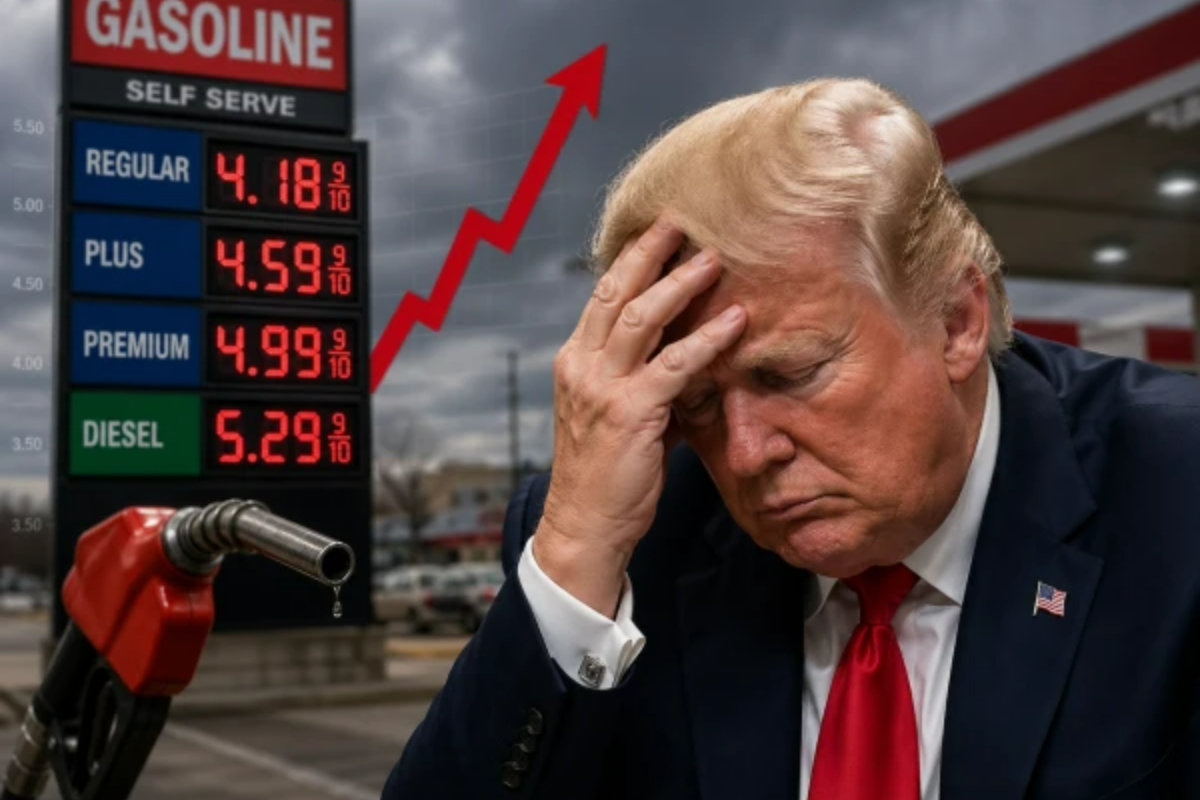
The disruption has also created difficulties for Russia, while rising gasoline prices are adding to political pressure on President Donald Trump ahead of the U.S. midterm elections.
Trump has repeatedly accused oil companies of making excessive profits amid rising gasoline prices and has threatened to impose additional taxes on them. Oil companies have rejected the allegations.
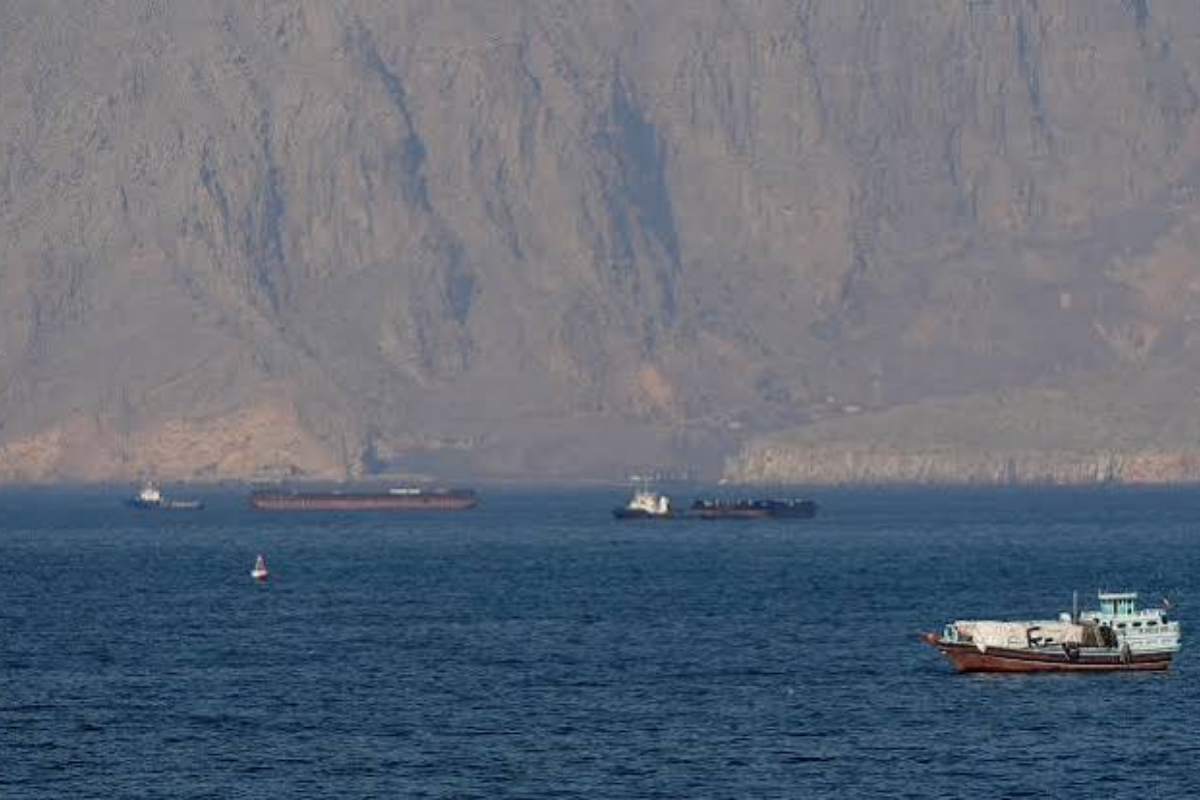
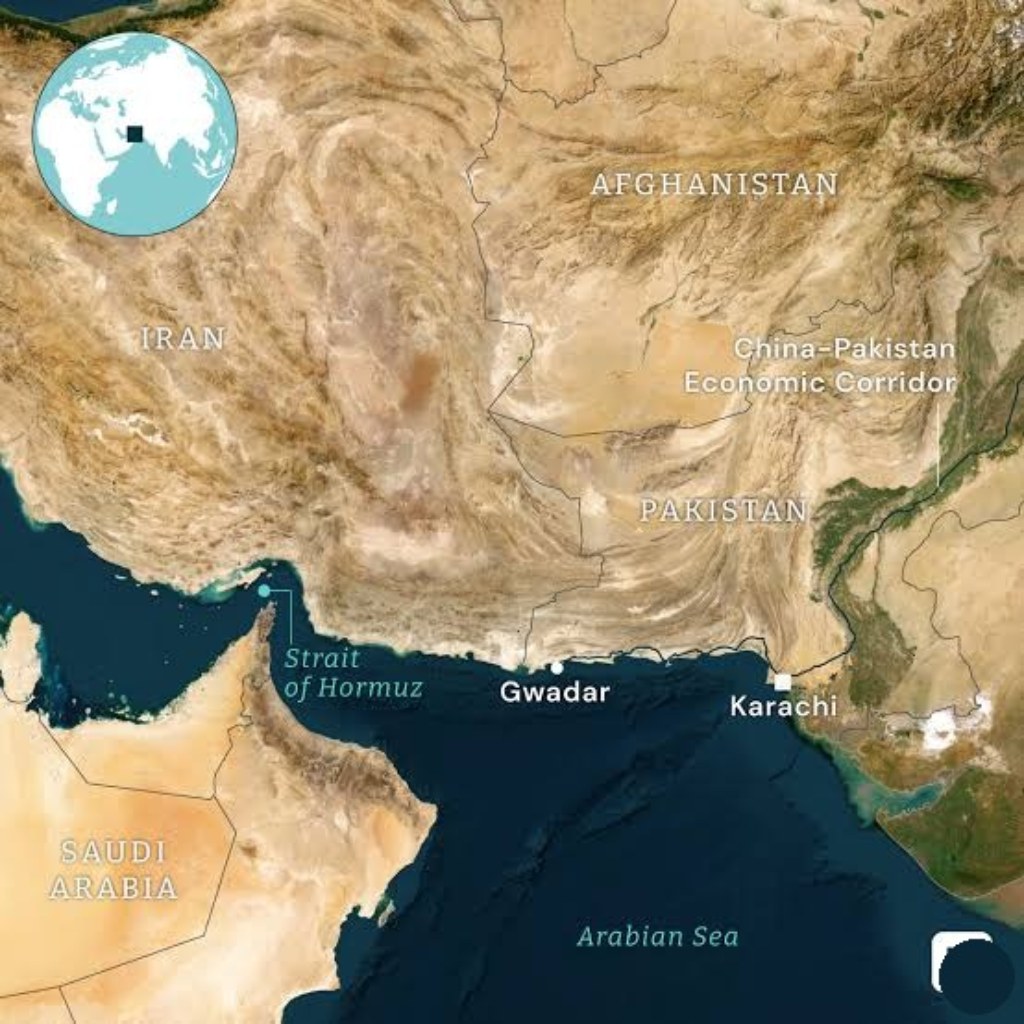
The Strait of Hormuz is one of the world’s most important oil transit routes, carrying more than 20% of global oil and gas supplies. Iran has closed the waterway in response to U.S. and Israeli attacks, further increasing uncertainty in global energy markets.
LONDON: Global oil prices climbed to their highest levels since July on Tuesday as attacks on vessels near the Strait of Hormuz and a lack of progress in U.S.-Iran negotiations heightened concerns over disruptions to crude supplies.
Brent crude rose above $91 a barrel, while U.S. West Texas Intermediate crude approached $85 a barrel. Reuters reported that Brent reached $91.07 a barrel, marking its third consecutive session of gains, while WTI traded around $84.99. Other market reports put Brent as high as $91.60 a barrel.
The latest price increase followed a report by the United Kingdom Maritime Trade Operations that a commercial vessel was struck by a projectile of unknown origin while departing the Strait of Hormuz.
The incident reportedly damaged the vessel’s engine room. One crew member was reported killed or injured, while other crew members were rescued by the Omani coast guard.
No group has claimed responsibility for the incident. Iran’s Revolutionary Guard and Yemen’s Houthi movement have neither confirmed nor denied involvement.
US-Iran tensions fuel oil market concerns
Oil prices have also been supported by uncertainty surrounding a 60-day ceasefire between the United States and Iran and the lack of progress toward extending the truce or resuming negotiations.
U.S. President Donald Trump has rejected an extension of the ceasefire, while Iran has indicated it could adopt a more aggressive military posture if negotiations fail.
Iran has said the Strait of Hormuz will not be fully reopened until the United States meets the terms of an agreement, while Washington continues to maintain pressure on Tehran.
The developments have disrupted the movement of petroleum products through the Strait of Hormuz and the Bab el-Mandeb, raising concerns over fuel and gas supplies and pushing prices higher.
Saudi Arabia seeks alternative oil routes
Saudi Arabia has resumed some crude oil loading operations from inside the Strait of Hormuz using ship-to-ship transfers near Fujairah for Asian buyers, Reuters reported.
Between Aug. 12 and Aug. 16, about 6 million barrels of Saudi crude were loaded onto three large oil tankers through the alternative arrangement, according to the report. However, the method does not fully replace normal shipping routes.
Meanwhile, several major shipping operators have begun avoiding the Strait of Hormuz and Bab el-Mandeb because of heightened security risks.
Chinese state-owned shipping companies have also reduced operations through key regional waterways and shifted some vessels toward alternative routes near Fujairah and Oman.
The Strait of Hormuz — the 21-mile-wide channel that normally carries one-fifth of the world’s oil — is effectively closed to commercial traffic. Between 4 and 6 August 2026, just 8 to 15 vessels crossed daily, against roughly 130 transits before the conflict began.
Pakistan imports most of its crude and refined fuel, and a large share of it moves through or near that chokepoint. This article traces the chain from a closed waterway to the price on the pump — and explains why the connection is less direct than it first appears.
Where things stand
Brent crude for October delivery was trading around $84.11 a barrel on 10 August 2026, up about 0.7% on the day and roughly 16% higher than before the US–Israel war on Iran began in late February 2026.
Iran has attached conditions to reopening the strait. Foreign Minister Abbas Araghchi has said Tehran requires the easing of US sanctions and the payment of war reparations, adding that Iran and Oman were close to an understanding but that these conditions must be met first.
The human cost of the disruption is documented: the International Maritime Organization has recorded 64 violent incidents and 17 deaths involving commercial vessels since the war began.
Markets are pricing uncertainty rather than a resolution. As KCM Trade chief analyst Tim Waterer put it, the absence of concrete movement and unresolved questions about how any deal would work in practice keeps “a risk premium in the price.”
Why $84 oil is lower than you might expect
This deserves attention, because it runs against intuition. A fifth of global oil supply losing its main route would, in most historical scenarios, have sent prices well past $120. Brent at $84 reflects several offsetting factors:
Alternative routes exist. Saudi Arabia’s East–West pipeline and the UAE’s Fujairah pipeline can move some volumes to Red Sea and Gulf of Oman terminals, bypassing Hormuz — though at reduced capacity.
Strategic reserves. Consumer countries have released stocks to cushion the shortfall.
Non-OPEC supply. US, Brazilian and Guyanese production has grown substantially over the past decade, diluting the Gulf’s share of marginal supply.
Demand destruction. High prices and slower global growth have themselves reduced consumption.
The implication for Pakistan is double-edged. The buffers have worked so far, but they are finite. Reserves deplete and bypass pipelines are already near capacity. If the closure extends, the cushion thins.
How this reaches the Pakistani pump
Pakistan now uses a more frequent fuel-pricing mechanism tied to international movements. Recent OGRA-notified rates, effective 13 August 2026:
Fuel
Price (PKR/litre)
Change
Petrol
324.98
−0.94
High-speed diesel
382.79
+0.54
Kerosene
291.45
—
Light diesel oil
248.72
—
Notice the direction: petrol fell slightly while diesel rose, on a day when Brent was climbing. Four things sit between the crude price and your receipt:
Refined product prices, not crude. Pakistan imports finished petrol and diesel. Refining margins move independently of crude, which is why petrol and diesel can diverge on the same day.
The exchange rate. Oil is priced in dollars and sold in rupees. Currency movement can amplify or offset the crude move entirely.
Taxes and levies. Petroleum levy and sales tax are a large share of the retail price, and they are policy variables — the government can absorb or pass on international moves.
Margins. Dealer and oil marketing company margins are regulated and adjusted periodically. The ECC recently approved a Rs1.34 increase in dealers’ margin, which raises the pump price independently of anything happening in the Gulf.
The knock-on effects that matter more than petrol
For most Pakistani households, the fuel price itself is not the largest channel. Three indirect effects hit harder.
Freight and food prices
High-speed diesel powers trucking and agricultural machinery, so diesel increases propagate into food prices across the country. Diesel rising while petrol falls is therefore worse for inflation than the headline suggests. Transport costs have already triggered friction — Pakistani goods transporters began an indefinite strike over fuel prices and taxes.
Energy is Pakistan’s largest import category. A sustained rise widens the import bill, pressures the current account and the rupee, and constrains the State Bank’s room to cut rates — the transmission channel set out in our inflation outlook.
There is one meaningful offset. Gulf employment has held up through the conflict, and remittances — over $4.2 billion in May 2026 alone — help fund the higher import bill.
What to watch next
Daily Hormuz transit counts. A move back toward 130 vessels a day would deflate the risk premium faster than any announcement.
The Oman-mediated track. Araghchi has pointed to it as the live channel.
Tanker insurance rates. War-risk premiums are a real-time market read on whether traders expect escalation.
Not legally closed, but effectively so for commercial shipping. Traffic fell to 8–15 vessels a day in early August 2026 from about 130 before the conflict. A small number of transits continue under elevated risk.
Will petrol prices in Pakistan rise sharply?
That depends on refined product prices, the rupee and government tax decisions — not on crude alone. Recent notifications have shown small moves in both directions. Anyone claiming to know the next figure in advance is guessing.
Does Pakistan get its oil through Hormuz?
A significant share of Pakistan’s crude and refined imports originates from Gulf suppliers whose exports transit or depend on the strait. Pakistan has been broadening its oil import framework, partly to diversify sourcing.
Why did diesel go up while petrol went down?
They are separate products with separate international benchmarks and refining margins. Diesel demand is driven by freight and industry, petrol by private vehicles, and the two markets frequently move apart.
Oil prices, transit data and official statements sourced from Al Jazeera, CNBC, the International Maritime Organization and OGRA notifications as reported. Fuel prices are those effective 13 August 2026 and change under Pakistan’s revised pricing mechanism — check current OGRA notifications before relying on them. Last updated 15 August 2026.
ISLAMABAD: Global oil prices fell as prospects for an extension of the Iran-U.S. ceasefire eased concerns about potential disruptions to crude supplies from the Middle East, while expectations of weaker global oil demand also weighed on the market.
Brent crude futures for October delivery fell $1.29, or about 1.5%, to $87.69 a barrel. U.S. West Texas Intermediate crude declined $1.30, or 1.6%, to $81.97 a barrel, according to market data.
U.S. President Donald Trump has also signaled that consumers could soon see a significant decline in gasoline prices, adding to expectations of lower energy costs.
Analysts said the latest decline was driven largely by concerns over weaker global oil demand in 2026 and reports of rising U.S. crude inventories. Higher inventories generally indicate increased supply availability and can put downward pressure on prices.
Investors, however, remained cautious because of continuing risks linked to the Iran conflict and the Strait of Hormuz, a critical shipping route through which a significant share of global oil supplies passes.
Any disruption to oil shipments through the Strait of Hormuz could sharply reduce global supplies and trigger another surge in crude prices. The geopolitical risks have therefore limited the extent of the recent decline.
According to Reuters, investors are closely watching forecasts for global oil demand, U.S. inventory data and developments surrounding the Iran conflict. Lower demand projections from OPEC and other energy agencies have raised concerns that global oil consumption could remain weaker than previously expected.
Market participants are also monitoring developments in the Middle East as any deterioration in the security situation could quickly reverse the recent decline in oil prices.
Analysts said demand data, U.S. crude inventories, the Iran conflict and the situation around the Strait of Hormuz are likely to remain key factors determining the direction of global oil prices in the coming days.
The latest decline should not necessarily be viewed as a sign of a sustained downward trend, as supply risks in the Middle East remain significant.
LONDON: Global oil prices fell by more than 5% after US President Donald Trump announced a pause in military strikes against Iran, easing concerns over potential disruptions to global crude supplies.
According to Reuters, the announcement followed nearly two weeks of US military operations targeting Iran and prompted investors to scale back fears of a broader regional conflict affecting energy markets.
Brent crude dropped $5.58, or 5.77%, to $91.20 per barrel, while U.S. West Texas Intermediate (WTI) crude fell $4.91, or 5.50%, to $84.40 per barrel.
Market analysts said expectations of reduced tensions between the United States and Iran, along with hopes for a diplomatic resolution, helped ease concerns over oil supply disruptions, leading to the sharp decline in prices.
US media reported that Trump ordered a halt to military operations after 13 days of strikes. It remains unclear whether the pause is temporary or marks the beginning of a broader ceasefire.
LONDON: Global oil prices fluctuated Monday, with Brent crude trading at about $71 per barrel and US West Texas Intermediate (WTI) crude hovering near $68 per barrel, according to market data.
UAE Murban crude was trading at approximately $66 per barrel.
Asian stock markets posted mixed results during the trading session, with gains in some markets offset by losses in others as investors assessed global economic and market conditions.
Meanwhile, Pakistan’s stock market rallied sharply on strong investor sentiment. The benchmark KSE-100 gained 2,082 points to close at 187,454, extending recent gains in the market.
Global oil markets witnessed a sharp rise following reports of a blockade in the Strait of Hormuz, a key route for global energy supplies.
The price of Brent crude jumped by $7, crossing $102 per barrel, while West Texas Intermediate (WTI) rose by around $6.5 to reach $103 per barrel.
Shipping costs in the Gulf region also surged significantly, with insurance premiums for vessels increasing by as much as 1,000%.
Reports indicate that a tanker carrying oil worth $150 million would now require approximately $7.5 million in insurance premiums.
Meanwhile, global demand for alternative energy sources is rising. China has taken a lead in this sector, with exports from Chinese renewable energy companies increasing by 57%.
On the other hand, OPEC has expressed concerns that global oil demand could decline amid shifting energy trends.