BREAKING NEWS
Advertise with us >

Petrol Price in Pakistan Today: Rs343.10 per Litre

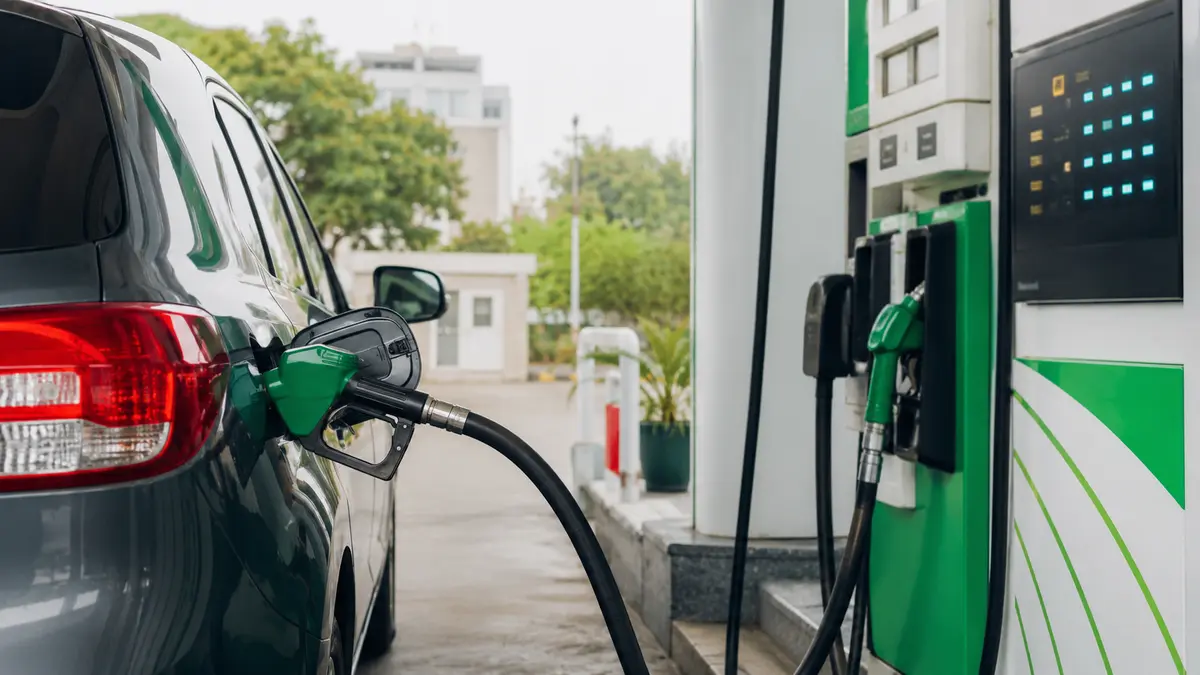
Car being refuelled at a petrol station in Pakistan

Petrol price in Pakistan today is Rs343.10 per litre, while high-speed diesel (HSD) costs Rs371.80 per litre. The revised rates are effective for August 26 and 27, 2026, under the government’s daily petroleum price review mechanism.

The latest prices have been verified against Pakistan State Oil’s official fuel price list. Petrol increased by Rs1.12 per litre from Rs341.98, while diesel rose by Rs1.11 from Rs370.69.

Petrol and diesel prices in Pakistan — August 26, 2026

Fuel Previous price New price Change
Petrol (Motor Spirit) Rs341.98/litre Rs343.10/litre +Rs1.12
High-Speed Diesel Rs370.69/litre Rs371.80/litre +Rs1.11

PSO also lists light diesel oil at Rs269.69 per litre, kerosene oil at Rs303.50 per litre and JP-1 at Rs322.41 per litre, effective August 26. PSO notes that freight-related differences may apply depending on the shipping point, while the final retail price at the outlet includes the applicable freight charge.

What the new petrol price means for your fuel budget

The increase is small per litre, but the total cost becomes clearer when calculated for a full tank. At Rs343.10 per litre:

  • 10 litres of petrol cost Rs3,431.
  • 20 litres cost Rs6,862.
  • 40 litres cost Rs13,724.

A 40-litre petrol purchase now costs Rs44.80 more than it did at the previous rate. For diesel users, 40 litres cost Rs14,872, while 60 litres cost Rs22,308. A 60-litre diesel purchase is Rs66.60 more expensive than before.

For an individual motorist, the increase may appear modest. Across repeated trips and commercial fleets, however, even small daily revisions can affect transport expenses, delivery costs and household budgeting.

Why are fuel prices changing more frequently?

Pakistan has moved toward a daily petroleum price review system during a period of volatility in international energy markets. Under the mechanism, the Oil and Gas Regulatory Authority (OGRA) calculates and notifies ex-depot fuel prices using the government’s petroleum pricing framework.

The purpose of more frequent revisions is to pass changes in international prices to the domestic market faster and improve transparency. It also means consumers and businesses need to check the latest rate more often instead of relying on a price announced for an entire fortnight.

Fuel prices in Pakistan are influenced by several components, including international petroleum prices, the rupee-dollar exchange rate, freight and distribution costs, margins, and government taxes and duties. A change in any of these components can affect the final retail rate.

How petrol and diesel prices affect everyday costs

Petrol has a direct impact on cars, motorcycles and rickshaws. High-speed diesel matters heavily for trucks, buses, agricultural machinery and generators. That makes diesel particularly important for the cost of moving food, construction material and other goods across the country.

A one-day price increase does not automatically translate into the same percentage rise in retail prices. Businesses also consider inventory, routes, labour, competition and other operating costs. Still, sustained fuel increases can gradually raise transport and logistics expenses.

Where to verify the latest official fuel prices

Consumers should verify rates through official sources because daily price changes can make older social media posts inaccurate within hours. The most useful sources are:

Frequently asked questions

What is the petrol price in Pakistan today?

Petrol costs Rs343.10 per litre, effective August 26 and 27, 2026.

What is the diesel price in Pakistan today?

High-speed diesel costs Rs371.80 per litre for the same period.

How much did petrol and diesel increase?

Petrol increased by Rs1.12 per litre, while high-speed diesel increased by Rs1.11 per litre.

When will fuel prices be revised again?

Pakistan’s current daily review mechanism allows prices to be revised more frequently. Consumers should check the next official OGRA or Petroleum Division notification rather than relying on an older rate.


Future Soch Newsdesk verified the rates against PSO’s official fuel price list and reviewed OGRA’s notified petroleum price resources. This article will be updated if an official revision changes the stated rates.
Govt Raises Petroleum Dealers’ Margin to Rs9.98 Per Litre

Petrol pump nozzle representing Pakistan's fuel dealer margin increase

Pakistan’s government has raised the petroleum dealers’ margin to Rs9.98 per litre on petrol and high-speed diesel, an increase of Rs1.34 announced on 14 August 2026 — a move that headed off a nationwide pump strike called for the very next day.

The decision came from the Economic Coordination Committee (ECC), chaired by Finance Minister Senator Muhammad Aurangzeb, hours before the All Pakistan Petroleum Dealers Association’s strike deadline. Here’s what changed, why, and what it means for the price you pay at the pump.

What actually changed

ItemBeforeAfter
Dealers’ margin (petrol & diesel)Rs8.64/litreRs9.98/litre
IncreaseRs1.34 per litre
Approved byECC, 14 August 2026

The dealers’ margin is the fixed cut retail outlets earn on every litre sold, separate from the ex-refinery price, oil marketing company (OMC) margin, petroleum levy and sales tax that together make up the pump price. Raising it does not automatically mean petrol gets Rs1.34 more expensive for consumers — that depends on whether the government absorbs the cost elsewhere or lets it flow through at the next fortnightly price review.

Why the increase happened now

The All Pakistan Petroleum Dealers Association had threatened to shut down fuel stations countrywide from 15 August 2026, arguing their margin had failed to keep pace with rising operating costs — wages, electricity, compliance and transport — while remaining fixed for an extended period. A nationwide pump closure would have hit commuters, freight and emergency services within hours, so the ECC moved a day ahead of the deadline.

The Vice Chairman of the All Pakistan Petrol Pump Owners Association confirmed the increase and thanked Prime Minister Shehbaz Sharif and Petroleum Minister Ali Pervaiz Malik for resolving the dispute before the strike took effect.

Who this affects

  • Petrol pump owners get a higher per-litre margin immediately, easing pressure that had built up over months of flat or falling retail margins relative to cost.
  • Consumers may or may not see the increase reflected at the pump — it depends on the next OGRA price notification and how much of the levy/margin adjustment the government chooses to pass on versus absorb.
  • Transporters and industry that depend on uninterrupted diesel supply avoided a one-day (or longer) countrywide disruption that a strike would have caused.

How this fits the bigger fuel-pricing picture

Pakistan’s pump price is built from several moving pieces: the international product price (linked to Brent crude and refining margins), the rupee-dollar exchange rate, the petroleum levy, general sales tax, the OMC margin and the dealers’ margin. A change in any one of these can move the retail price independently of what is happening to crude oil internationally — which is also why petrol and diesel prices sometimes move in opposite directions on the same review date, as seen with recent Strait of Hormuz-driven price swings.

Margin increases like this one are a recurring flashpoint. Dealers argue their cut has not kept up with inflation; consumer groups argue every rupee added anywhere in the chain eventually reaches the pump. Both are broadly correct — the margin is a real cost element, but it is a small share of the roughly Rs300+ per litre retail price compared with the international product cost and taxes.

What to watch next

  • The next OGRA price notification (fortnightly) — this will show whether the margin hike is absorbed by the government or passed through to consumers.
  • OMC margin talks — oil marketing companies have periodically sought similar increases; a parallel demand could follow.
  • Petroleum levy adjustments — the government has room to offset dealer-margin costs by trimming the levy, or to let both increases stack.

Frequently asked questions

Will petrol prices in Pakistan go up because of this?

Not necessarily right away. The dealers’ margin is one small component of the pump price. Whether the increase shows up in what you pay depends on the next fortnightly OGRA price review and whether the government offsets it through the levy.

What is a petroleum dealers’ margin?

It’s the fixed amount, in rupees per litre, that a fuel retailer (petrol pump) earns on every litre sold — set by the government and reviewed periodically, separate from the OMC margin, levy and taxes.

Why were dealers threatening a strike?

The All Pakistan Petroleum Dealers Association said their margin had not risen in line with operating costs, and called a nationwide strike for 15 August 2026 to press for an increase — which the ECC granted a day earlier.


Figures and statements sourced from ECC announcements and petroleum-industry reporting as of 15 August 2026. Pump prices change under OGRA’s fortnightly pricing mechanism — check the latest official notification before relying on any figure here.

Related reading: Strait of Hormuz and Pakistan’s petrol prices · Gold rate in Pakistan today

Strait of Hormuz: What It Means for Pakistan’s Petrol Prices

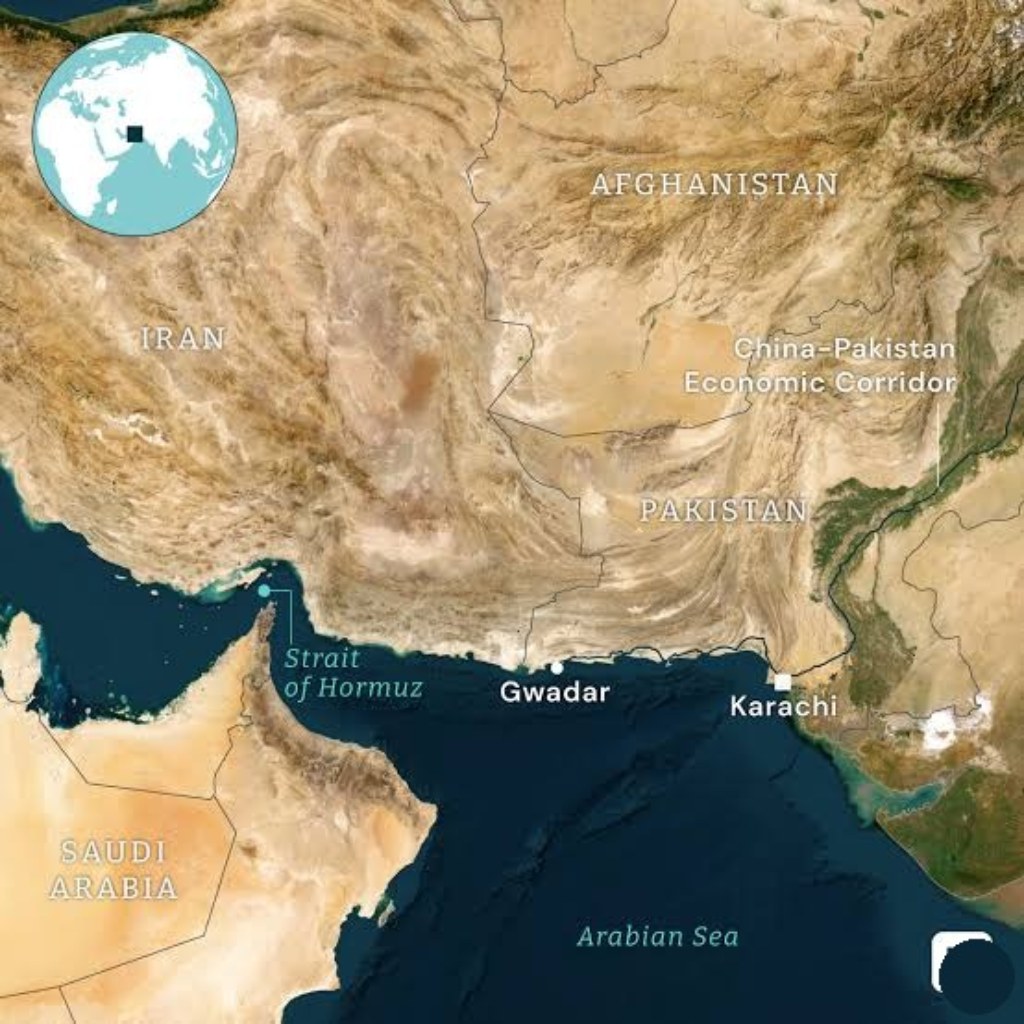
Map showing the Strait of Hormuz between Iran, Pakistan and the Gulf states, with Gwadar and Karachi marked

The Strait of Hormuz — the 21-mile-wide channel that normally carries one-fifth of the world’s oil — is effectively closed to commercial traffic. Between 4 and 6 August 2026, just 8 to 15 vessels crossed daily, against roughly 130 transits before the conflict began.

Pakistan imports most of its crude and refined fuel, and a large share of it moves through or near that chokepoint. This article traces the chain from a closed waterway to the price on the pump — and explains why the connection is less direct than it first appears.

Where things stand

Brent crude for October delivery was trading around $84.11 a barrel on 10 August 2026, up about 0.7% on the day and roughly 16% higher than before the US–Israel war on Iran began in late February 2026.

Iran has attached conditions to reopening the strait. Foreign Minister Abbas Araghchi has said Tehran requires the easing of US sanctions and the payment of war reparations, adding that Iran and Oman were close to an understanding but that these conditions must be met first.

The human cost of the disruption is documented: the International Maritime Organization has recorded 64 violent incidents and 17 deaths involving commercial vessels since the war began.

Markets are pricing uncertainty rather than a resolution. As KCM Trade chief analyst Tim Waterer put it, the absence of concrete movement and unresolved questions about how any deal would work in practice keeps “a risk premium in the price.”

Why $84 oil is lower than you might expect

This deserves attention, because it runs against intuition. A fifth of global oil supply losing its main route would, in most historical scenarios, have sent prices well past $120. Brent at $84 reflects several offsetting factors:

  • Alternative routes exist. Saudi Arabia’s East–West pipeline and the UAE’s Fujairah pipeline can move some volumes to Red Sea and Gulf of Oman terminals, bypassing Hormuz — though at reduced capacity.
  • Strategic reserves. Consumer countries have released stocks to cushion the shortfall.
  • Non-OPEC supply. US, Brazilian and Guyanese production has grown substantially over the past decade, diluting the Gulf’s share of marginal supply.
  • Demand destruction. High prices and slower global growth have themselves reduced consumption.

The implication for Pakistan is double-edged. The buffers have worked so far, but they are finite. Reserves deplete and bypass pipelines are already near capacity. If the closure extends, the cushion thins.

How this reaches the Pakistani pump

Pakistan now uses a more frequent fuel-pricing mechanism tied to international movements. Recent OGRA-notified rates, effective 13 August 2026:

FuelPrice (PKR/litre)Change
Petrol324.98−0.94
High-speed diesel382.79+0.54
Kerosene291.45—
Light diesel oil248.72—

Notice the direction: petrol fell slightly while diesel rose, on a day when Brent was climbing. Four things sit between the crude price and your receipt:

  1. Refined product prices, not crude. Pakistan imports finished petrol and diesel. Refining margins move independently of crude, which is why petrol and diesel can diverge on the same day.
  2. The exchange rate. Oil is priced in dollars and sold in rupees. Currency movement can amplify or offset the crude move entirely.
  3. Taxes and levies. Petroleum levy and sales tax are a large share of the retail price, and they are policy variables — the government can absorb or pass on international moves.
  4. Margins. Dealer and oil marketing company margins are regulated and adjusted periodically. The ECC recently approved a Rs1.34 increase in dealers’ margin, which raises the pump price independently of anything happening in the Gulf.

The knock-on effects that matter more than petrol

For most Pakistani households, the fuel price itself is not the largest channel. Three indirect effects hit harder.

Freight and food prices

High-speed diesel powers trucking and agricultural machinery, so diesel increases propagate into food prices across the country. Diesel rising while petrol falls is therefore worse for inflation than the headline suggests. Transport costs have already triggered friction — Pakistani goods transporters began an indefinite strike over fuel prices and taxes.

LNG and electricity

Much of Pakistan’s imported LNG is priced on oil-linked contracts, and a large share of generation is gas-fired. Pakistan raised LNG prices by a record $6.45 per MMBTU, which feeds into power tariffs. That sits on top of the structural cost problem we examined in why electricity bills stay high in Pakistan.

The external account

Energy is Pakistan’s largest import category. A sustained rise widens the import bill, pressures the current account and the rupee, and constrains the State Bank’s room to cut rates — the transmission channel set out in our inflation outlook.

There is one meaningful offset. Gulf employment has held up through the conflict, and remittances — over $4.2 billion in May 2026 alone — help fund the higher import bill.

What to watch next

  • Daily Hormuz transit counts. A move back toward 130 vessels a day would deflate the risk premium faster than any announcement.
  • The Oman-mediated track. Araghchi has pointed to it as the live channel.
  • Tanker insurance rates. War-risk premiums are a real-time market read on whether traders expect escalation.
  • Ceasefire signals. Prices have already moved on these — see Iran-US ceasefire extension prospects pushing oil prices lower.

Frequently asked questions

Is the Strait of Hormuz completely closed?

Not legally closed, but effectively so for commercial shipping. Traffic fell to 8–15 vessels a day in early August 2026 from about 130 before the conflict. A small number of transits continue under elevated risk.

Will petrol prices in Pakistan rise sharply?

That depends on refined product prices, the rupee and government tax decisions — not on crude alone. Recent notifications have shown small moves in both directions. Anyone claiming to know the next figure in advance is guessing.

Does Pakistan get its oil through Hormuz?

A significant share of Pakistan’s crude and refined imports originates from Gulf suppliers whose exports transit or depend on the strait. Pakistan has been broadening its oil import framework, partly to diversify sourcing.

Why did diesel go up while petrol went down?

They are separate products with separate international benchmarks and refining margins. Diesel demand is driven by freight and industry, petrol by private vehicles, and the two markets frequently move apart.


Oil prices, transit data and official statements sourced from Al Jazeera, CNBC, the International Maritime Organization and OGRA notifications as reported. Fuel prices are those effective 13 August 2026 and change under Pakistan’s revised pricing mechanism — check current OGRA notifications before relying on them. Last updated 15 August 2026.

Related reading: Gold rate in Pakistan today · Europe’s heatwave power crunch · Makkah Defence Pact explained

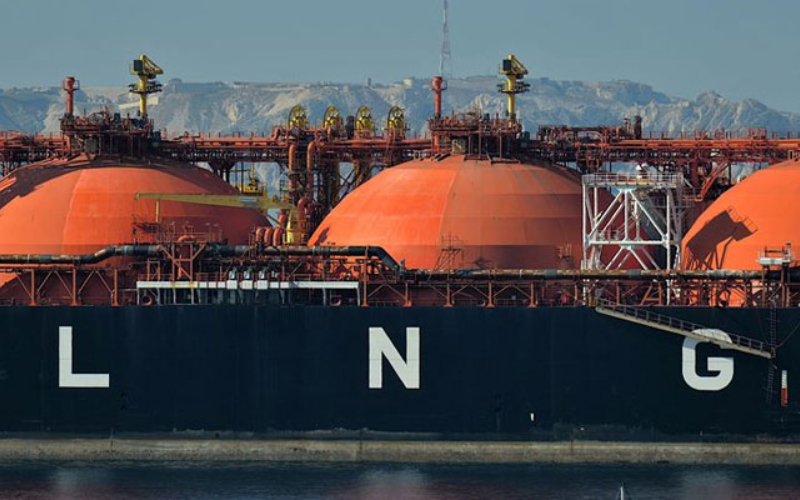
Pakistan raises LNG prices by record $6.45 per MMBTU

Pakistan raises

ISLAMABAD: Pakistan has recorded the highest-ever increase in liquefied natural gas (LNG) prices, with the Oil and Gas Regulatory Authority (OGRA) raising the sale price for July by up to $6.45 per MMBTU.

According to an OGRA notification, the LNG sale price has increased significantly, with the rate on the Sui Northern Gas Pipelines Limited (SNGPL) system rising to $25.83 per MMBTU.

The LNG price on the Sui Southern Gas Company (SSGC) system has also increased to $25.80 per MMBTU, according to the notification.

The increase comes as Pakistan had to purchase five expensive spot LNG cargoes in July due to the tense situation in the Middle East, resulting in a sharp rise compared with June prices.

Despite regional tensions, Pakistan received a new LNG cargo from Qatar; however, higher global market costs pushed domestic LNG prices to record levels.

Petrol up Rs20.81, diesel Rs55.36 per liter in six days

Petrol up

ISLAMABAD: Petrol and diesel prices have risen sharply since Pakistan adopted a daily petroleum pricing mechanism, with petrol increasing by Rs20.81 per liter and high-speed diesel by Rs55.36 per liter over the past six days.

The daily pricing system came into effect after the federal cabinet on July 17 authorized the Oil and Gas Regulatory Authority (OGRA) to revise petroleum prices each day in line with fluctuations in international oil markets.

Under the new mechanism, petrol was increased by Rs5.44 per liter and diesel by Rs31.05 per liter effective July 18. On July 21, petrol prices were reduced by 35 paisas, while diesel rose by Rs5.71 per liter.

Subsequent revisions saw petrol increase by Rs4.93 and diesel by Rs7.15 for July 22, followed by hikes of Rs6.39 for petrol and Rs7.83 for diesel for July 23. For July 24, petrol prices increased by Rs4.40 per liter, while diesel was raised by Rs3.62 per liter.

The government says the new daily pricing mechanism allows OGRA to adjust petroleum prices based on international market trends, replacing the previous periodic review system.