BREAKING NEWS
Advertise with us >

Pakistan’s Environmental Crisis A Nation on the Edge of Ecological Collapse

By Tayyab jajjvi | October 10, 2025

Pakistan stands at a dangerous intersection where rapid urbanization, poor governance, and global climate shifts are colliding to create a full-blown environmental crisis. From Karachi’s choking air to Sindh’s vanishing water, the country is in ecological freefall that threatens its economy, food security, and human survival.


Climate Change: A Global Threat with Local Disasters

According to the Global Climate Risk Index 2023 (Germanwatch), Pakistan is among the top 10 most climate-vulnerable countries in the world, despite contributing less than 1% to global emissions.

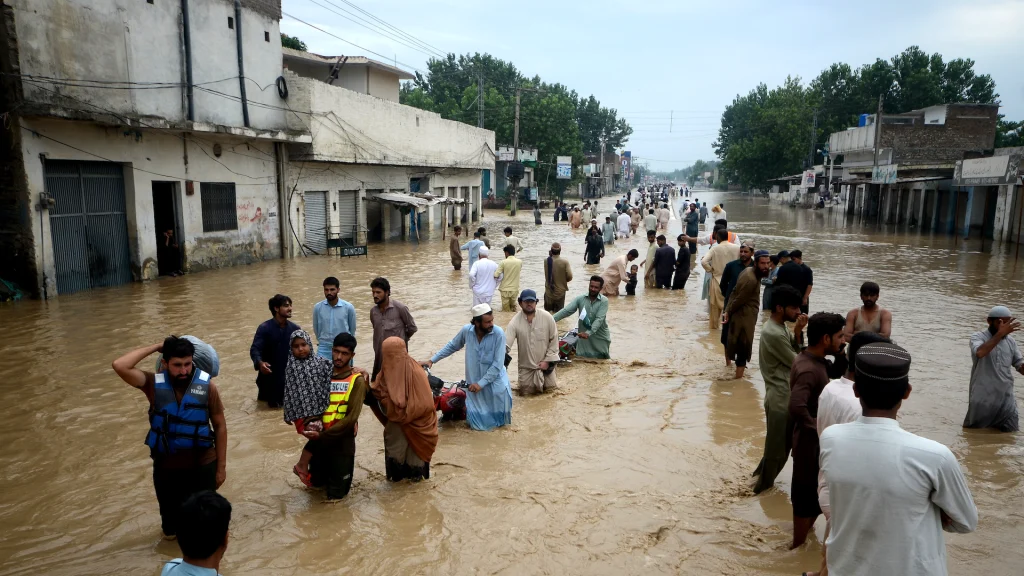
The 2022 floods, which submerged one-third of the nation and displaced over 33 million people, revealed the sheer scale of this threat.

In northern Pakistan, glaciers are melting faster than ever, according to the Pakistan Meteorological Department (2024) — causing dangerous Glacial Lake Outburst Floods (GLOFs). Meanwhile, the southern regions face prolonged droughts and saline intrusion from rising seas. Pakistan is now trapped between both extremes — too much water and too little.


Air Pollution: Breathing Becomes a Privilege

Pakistan’s largest cities — Karachi, Lahore, Faisalabad — are consistently among the world’s top 10 most polluted (Source: IQAir 2024 World Air Quality Report).

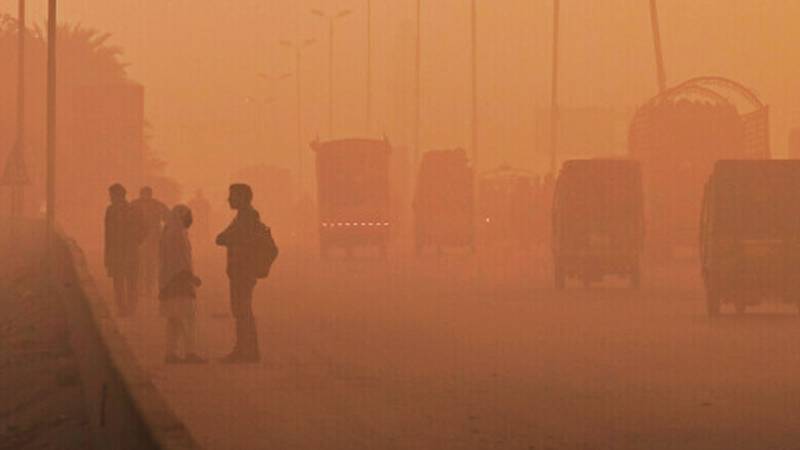
Smog has become a seasonal epidemic, forcing school closures and causing widespread respiratory illness. The WHO (2023) estimates 135,000 premature deaths annually in Pakistan from air pollution-related diseases.

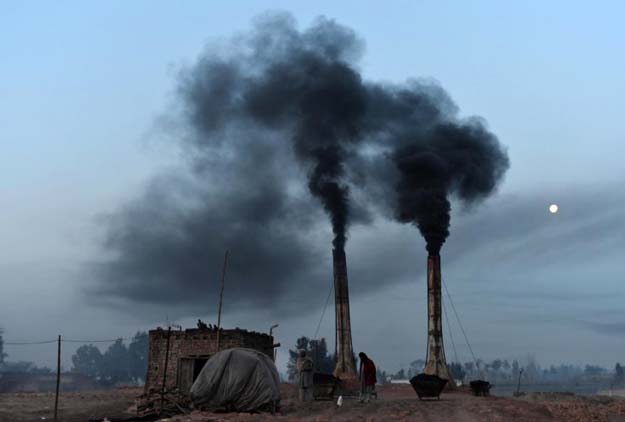
Vehicular emissions, industrial discharge, garbage burning, and deforestation are the leading causes — yet the country still lacks a National Clean Air Policy with enforceable standards.


Water Scarcity: When the Taps Run Dry

Pakistan’s water availability has fallen from 5,600 cubic meters per person in 1947 to under 900 cubic meters in 2024 (PCRWR Report).

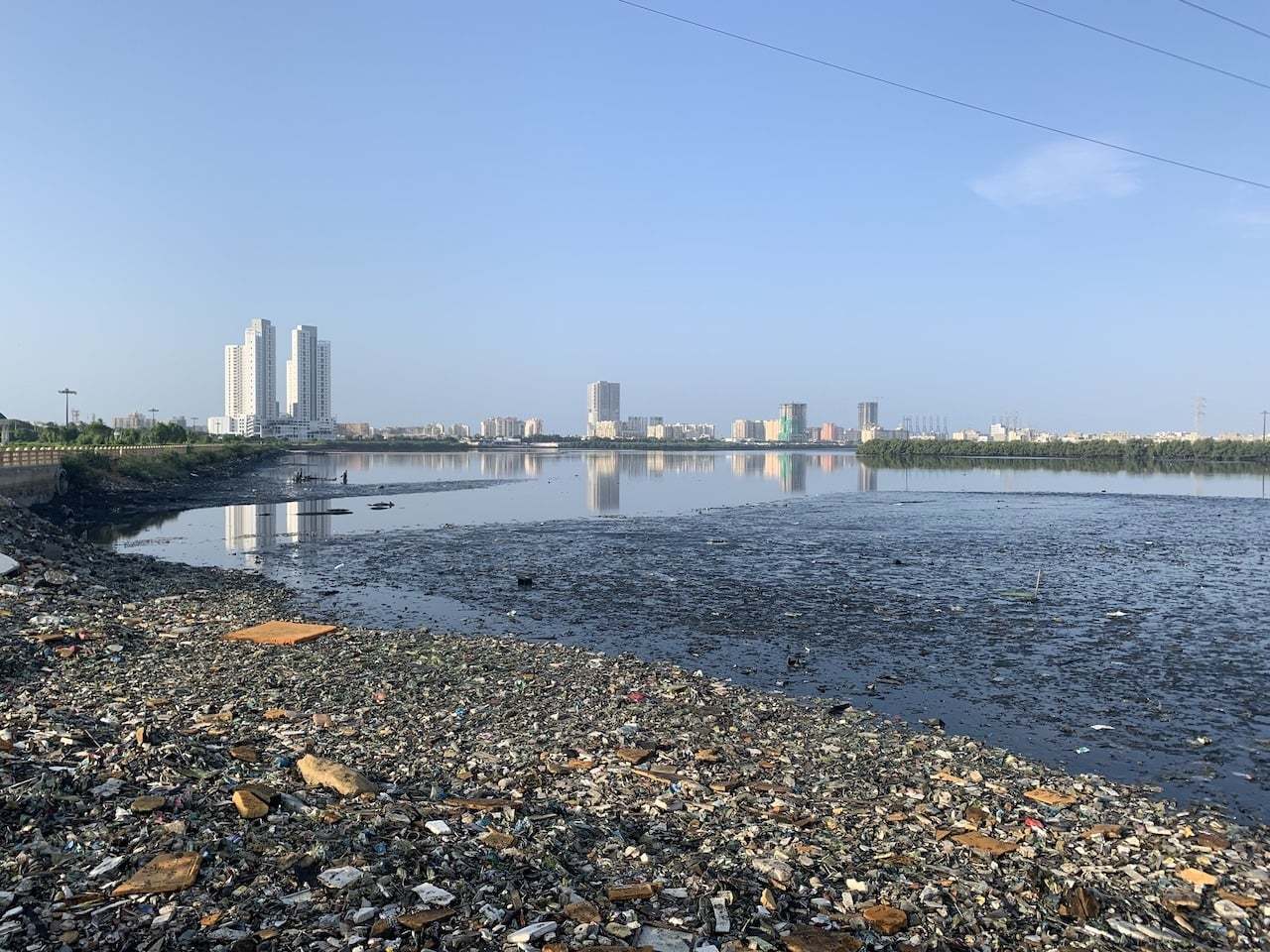
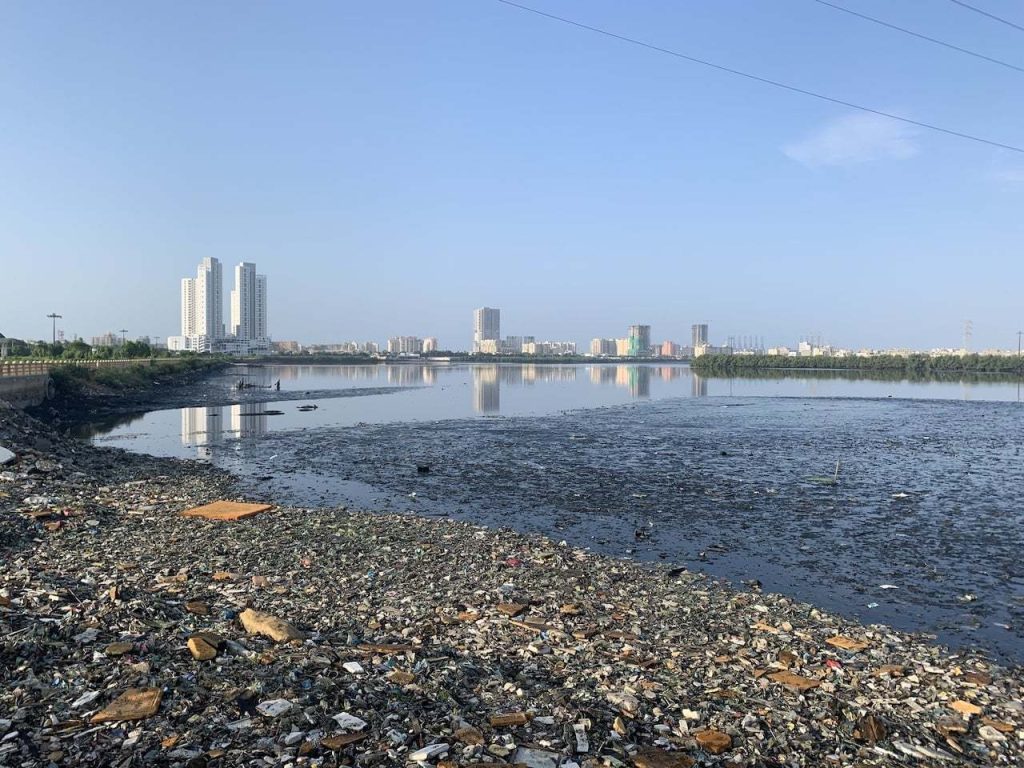
Over-extraction of groundwater, climate-driven droughts, and mismanagement of irrigation systems have pushed the country into a severe water crisis.

In Sindh, groundwater is turning saline, while Karachi’s residents rely on illegal hydrants for daily use. The World Bank (2024) warns that water scarcity could trigger migration, unemployment, and social unrest in the coming decade.


Heatwaves and Urban Mismanagement

In May 2024, Jacobabad hit 52°C, making it one of the hottest cities on Earth. The Pakistan Meteorological Department attributes this to deforestation and urban “heat islands” caused by excessive concrete, steel, and lack of green cover.

Cities like Karachi suffer from poor planning, plastic burning, and the absence of urban forests. As temperatures rise, so do energy demands, health emergencies, and mortality rates.


Agriculture: The Collapsing Backbone

Agriculture provides livelihoods for 40% of Pakistan’s population — but it’s collapsing under climate pressure. Erratic monsoons and groundwater depletion are cutting yields and threatening food security.

A World Bank Climate Report (2024) estimates that unchecked environmental degradation could cost Pakistan up to 9% of GDP annually by 2050. That’s not just a climate issue — it’s an economic emergency.


Policy Gaps and The Way Forward

Despite policies like the Ten Billion Tree Tsunami and the National Climate Change Policy 2021, Pakistan’s environmental response remains fragmented and weakly enforced.

To reverse course, Pakistan must:

  • Establish independent environmental tribunals for accountability.
  • Reform urban planning to include green spaces and sustainable transport.
  • Modernize water management and pricing systems.
  • Expand renewable energy projects in Sindh and Balochistan.
  • Launch community education programs to shift behavior toward sustainability.

The Time to Act Was Yesterday

Pakistan’s environmental collapse isn’t inevitable — but time is running out. Climate change, pollution, and resource depletion are converging into a national security threat.

Environmental protection must no longer be treated as a secondary issue; it’s central to Pakistan’s survival. The future will belong to nations that protect their people by protecting their planet.


The writer is a journalist. He tweets at @tayyabjajjvi and can be reached at: tayyabjajjvi@gmail.com


Originally published in www.futuresoch.pk

Sources of content

Running Dry: Sindh’s Deepening Water Crisis

Dry riverbed in Sindh showing water scarcity and drought.

Sindh is experiencing one of Pakistan’s worst water crises. With declining river inflows and unsustainable groundwater extraction, water scarcity is deepening both in rural and urban regions.

Causes of Water Shortage

According to a study published on arXiv (2020), groundwater storage across the Indus Basin declined significantly between 2005–2015, beyond normal seasonal variation.
The Pakistan Council of Research in Water Resources (PCRWR) report (2024) found that out of 1,247 water supply schemes surveyed in Sindh, only 42% were operational, and 75% of water samples were unsafe for drinking.

Impact on Agriculture

As Dawn (2023) reported, soil salinity and waterlogging have reduced productivity in Thatta and Badin, forcing many farmers to abandon agriculture and migrate to urban centers.

Urban Water Challenges

In Karachi, The Express Tribune (Feb 2024) highlighted how illegal water tanker mafias control distribution, charging up to 10 times the normal rate — deepening inequality between poor and wealthy areas.

Sustainable Solutions

  • Modernize canal irrigation systems to reduce leakage.
  • Encourage drip irrigation and rainwater harvesting.
  • Enforce groundwater extraction laws.
  • Recycle treated wastewater for industrial use.

Conclusion

Sindh’s water future depends on urgent reforms and cooperation between provinces. Without sustainable water governance, the crisis could soon become Pakistan’s largest human security challenge.

Karachi Is Sinking: Rising Seas and Vanishing Shores

Flooded coastal homes in Karachi after sea intrusion.

Karachi’s 70 km coastline faces a growing threat from rising sea levels.
A MDPI study (2023) recorded Karachi’s relative sea level rising 1.9 millimeters per year since 1916.
The Institute for Strategic Studies Pakistan (ISSP) (June 16, 2025) confirmed further acceleration linked to global warming.

Coastal Erosion and Flooding

According to Dawn News (May 2020), over 3.1 million acres of agricultural land in Badin, Thatta, and Sujawal have already been submerged or rendered infertile by seawater intrusion.
The World Wildlife Fund (WWF Pakistan) reports that Sindh has lost more than 50% of its mangroves over the past 50 years — removing the natural buffer that once protected Karachi from tidal surges.

Communities in Crisis

Fishing villages like Ibrahim Hyderi and Keti Bunder are being forced to relocate as saline water destroys homes and farmland. Sea intrusion has advanced 67 km inland, forcing mass migration (Dawn News, 2020).

Economic Risks

Karachi Port and nearby industries are at serious risk of flooding, threatening billions in infrastructure and trade. Coastal erosion also endangers DHA’s waterfront zones and Clifton areas.

Solutions

  • Replant mangroves along the Sindh coastline.
  • Ban sand mining and control development in high-risk zones.
  • Build sea walls and climate-resilient infrastructure.
  • Integrate coastal climate risk into city planning.

Conclusion

As ISSP warned (2025), Karachi’s rising sea levels are a long-term economic and humanitarian risk. Without urgent restoration of natural defenses and smarter coastal policy, Pakistan’s largest city could face irreversible damage.

Karachi’s Air Pollution: The City That Can’t Breathe

Smog and traffic pollution covering Karachi’s skyline.

Pakistan’s largest city and economic hub — has become one of the most polluted cities globally.
According to The Nation (Mar 4, 2025), Karachi’s Air Quality Index (AQI) reached 179, categorized as “unhealthy.” At times in 2023, the AQI exceeded 200, ranking the city 9th most polluted in the world.

Main Causes

  • Vehicular emissions: Over 4 million vehicles on Karachi’s roads run on low-quality fuel.
  • Industrial smoke: Factories release toxic gases without emission control systems.
  • Garbage burning: According to The News (Dec 2023), open burning contributes over 30% of airborne particulate matter.
  • Construction dust: Continuous urban expansion adds high levels of PM2.5 pollutants.

Health Impacts

The News International (Feb 2024) found that Karachi’s PM2.5 levels are 25.8 times higher than WHO’s safe limit, increasing cases of asthma, lung infections, and heart disease.

Policy Gaps

Despite these dangers, environmental laws are weakly enforced. As The Nation (Mar 2024) noted, Karachi ranks among the top 10 most polluted cities worldwide, yet lacks a comprehensive clean air policy.

Way Forward

  • Promote electric buses and hybrid vehicles.
  • Enforce industrial emission standards.
  • Expand urban green belts and forests.
  • Launch public awareness campaigns on clean air.

Conclusion

Karachi’s air pollution crisis endangers millions. Without strict regulation and long-term strategy, the city’s environment — and public health — will continue to deteriorate.

How Climate Change Is Reshaping Life in Pakistan

Melting glaciers in northern Pakistan due to rising temperatures.

Pakistan ranks among the top 10 most climate-vulnerable countries in the world. From melting glaciers to declining crop yields, climate change has begun to reshape every sector of the country’s economy and ecology.

Impact on Agriculture

Agriculture employs around 40% of Pakistan’s workforce, but rising temperatures and unpredictable rainfall are devastating crops.
According to The Agri Economist (2023), Sindh’s mango production dropped from 1.8 million metric tons to 1.44 million metric tons — a 20% decline due to heat stress and untimely rains.
Similarly, a CIMMYT report projects that wheat yields in Pakistan could fall by 16% by 2050 if current climate trends continue.

Glacier Melt and Water Challenges

Pakistan hosts more than 13,000 glaciers, covering around 13,547 sq km, according to Al Jazeera (Aug 28, 2025). These glaciers are melting 65% faster than they did between 2001 and 2010, severely affecting river flows.
The Express Tribune reported in May 2024 that extreme inflows in the Indus and Jhelum rivers — caused by glacier melt and erratic monsoons — led to widespread flooding.

Per capita water availability has now dropped below 900 cubic meters, compared to 5,600 in 1947, making Pakistan officially a water-scarce country (Pakistan Council of Research in Water Resources, 2024).

Urban Life at Risk

Cities like Karachi and Lahore face record heatwaves and flooding. In 2024, Karachi recorded temperatures above 45°C, resulting in heat-related hospitalizations. Meanwhile, smog levels in Punjab reached historic highs.

Conclusion

As per the Pakistan Meteorological Department, without immediate adaptation — from sustainable farming to urban greening — Pakistan’s social and economic stability will remain under threat.

Lahore Braces for ‘Fifth Season’ of Toxic Smog as Winter Looms

Thick smog blanketing Lahore skyline with masked residents, AQI gauge at 300

October 10, 2025 – Lahore, Pakistan – As cooler weather approaches, Lahore residents are preparing for the city’s infamous “fifth season”—a blanket of hazardous smog fueled by crop burning, traffic emissions, and stagnant air trapped by the Himalayas. Air quality indices already hit 300 AQI, far exceeding WHO safe limits, linking to thousands of respiratory cases annually.

Climate experts tie the haze to broader warming trends that prolong inversion layers, worsening pollution. “Without emission controls and green zoning, Lahore’s health crisis will deepen,” warned local activists. Authorities plan stubble-burning bans, but enforcement remains spotty amid farmer protests.

Pakistan Floods Trigger Worsening Hunger Crisis in Punjab Farmlands

Flooded Punjab rice fields with displaced farmers and aid trucks, hunger

October 10, 2025 – Islamabad, Pakistan – Catastrophic floods have ravaged Punjab province, Pakistan’s breadbasket, wiping out vast farmlands and igniting a severe hunger emergency that threatens millions. Heavy monsoon rains, intensified by climate change, submerged wheat and rice fields, with losses estimated at $2 billion.

Aid agencies report acute malnutrition rising among children, as displaced families struggle without clean water or food supplies. “This is climate injustice at its worst—Pakistan emits less than 1% globally but suffers disproportionately,” said a UN relief coordinator. The government has appealed for $500 million in international aid to rebuild irrigation and resilient crops

EU Delays on Anti-Deforestation Law Spark Warnings of Forest Catastrophe

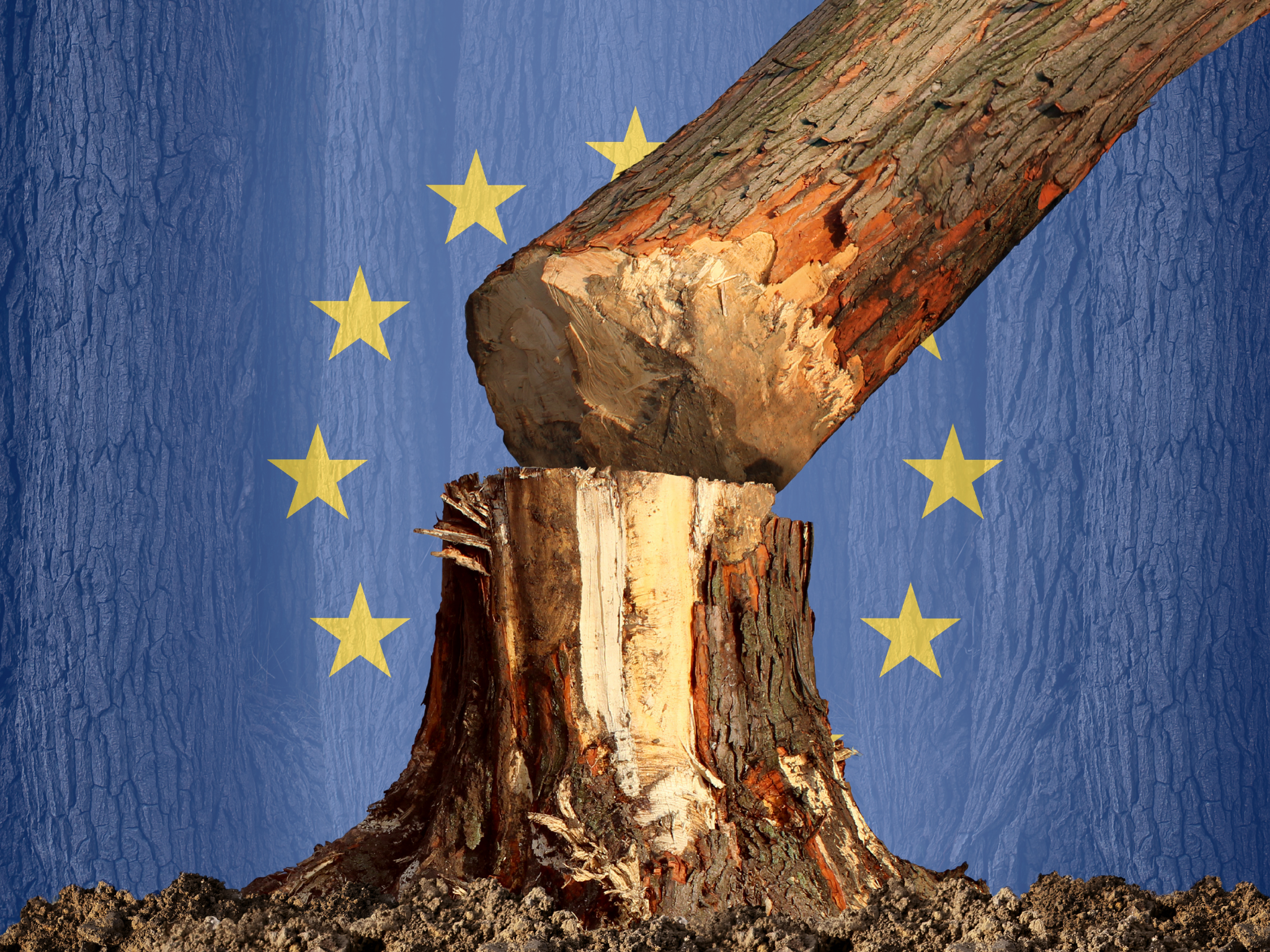
Aerial deforestation in Amazon rainforest, EU flag and stalled law documents, October 2025 urgency

October 10, 2025 – Brussels, Belgium – Major companies including Unilever and Nestlé have sounded the alarm over stalled EU anti-deforestation regulations, warning that delays could doom tropical forests and accelerate climate breakdown.

The law, aimed at curbing imports linked to deforestation, faces pushback from trade lobbies, risking a surge in Amazon and Congo basin clearances.

Environmental groups decry the hold-up as a betrayal of Paris Agreement goals, noting that forests absorb 30% of global CO2 emissions. “Pushing this back endangers billions in carbon sinks,” stated a WWF spokesperson. EU lawmakers are set to vote next week amid mounting pressure.

Over Half of World’s Bird Species in Steep Decline Amid Extinction Crisis

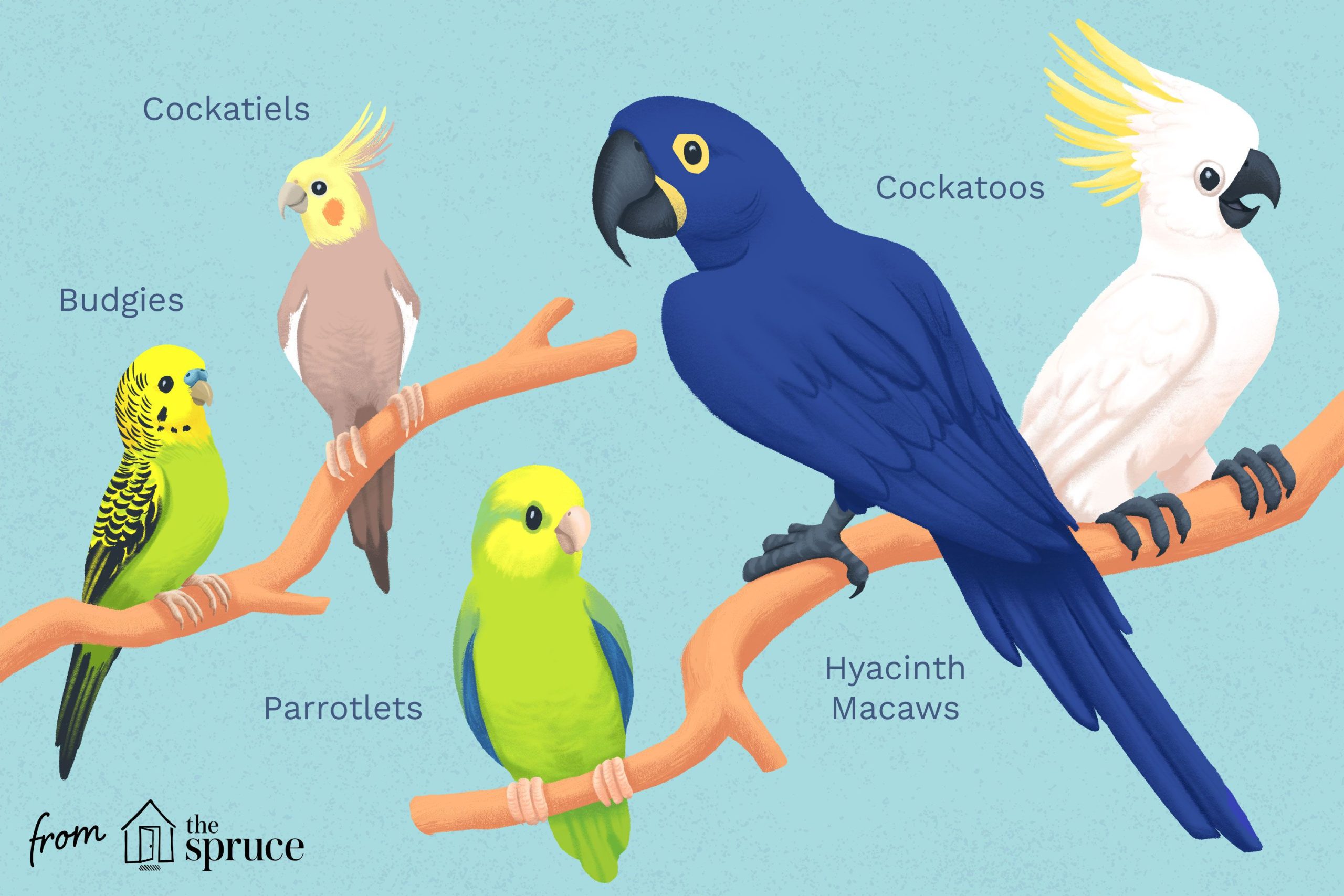
Flock of endangered birds migrating over shrinking wetlands, climate impact graphic overlay, October 2025.

October 10, 2025 – Geneva, Switzerland – A stark report from the International Union for Conservation of Nature (IUCN) reveals that more than 50% of global bird species are declining, with one in eight facing extinction due to habitat loss, climate change, and pollution. As world leaders convene for biodiversity talks in the UAE, experts warn that Arctic seals and green turtles are also at risk, signaling a broader ecosystem collapse.

The study highlights how warming temperatures disrupt migration patterns and breeding grounds, exacerbating the crisis. “This is a red alert for planetary health,” said IUCN Director General Grethel Aguilar. Conservationists urge immediate protected area expansions and reduced emissions to halt the slide.

Trump Heads to Walter Reed for Semiannual Physical – Health Check Amid High-Stakes Term

President Donald Trump waving from his motorcade en route to Walter Reed Medical Center for routine health check, Secret Service in tow, October 10, 2025.

President Donald Trump arrived at Walter Reed National Military Medical Center today for his routine semiannual physical exam, drawing widespread media attention. At 79, the president’s health remains a hot topic in US politics news October 2025.

White House physicians expect a standard check-up, including cognitive and cardiovascular assessments. Trump, known for his vigor on the campaign trail, joked to reporters, “I’ll be out before you finish your coffee.” Results are due Friday, potentially influencing midterm strategies.

With speculation rife, this visit reminds us of the demands on aging leaders. Follow Trump health update 2025 for real-time insights.