BREAKING NEWS
Advertise with us >

Who is Zhang Yiming, Asia’s new richest person?

Who is Zhang

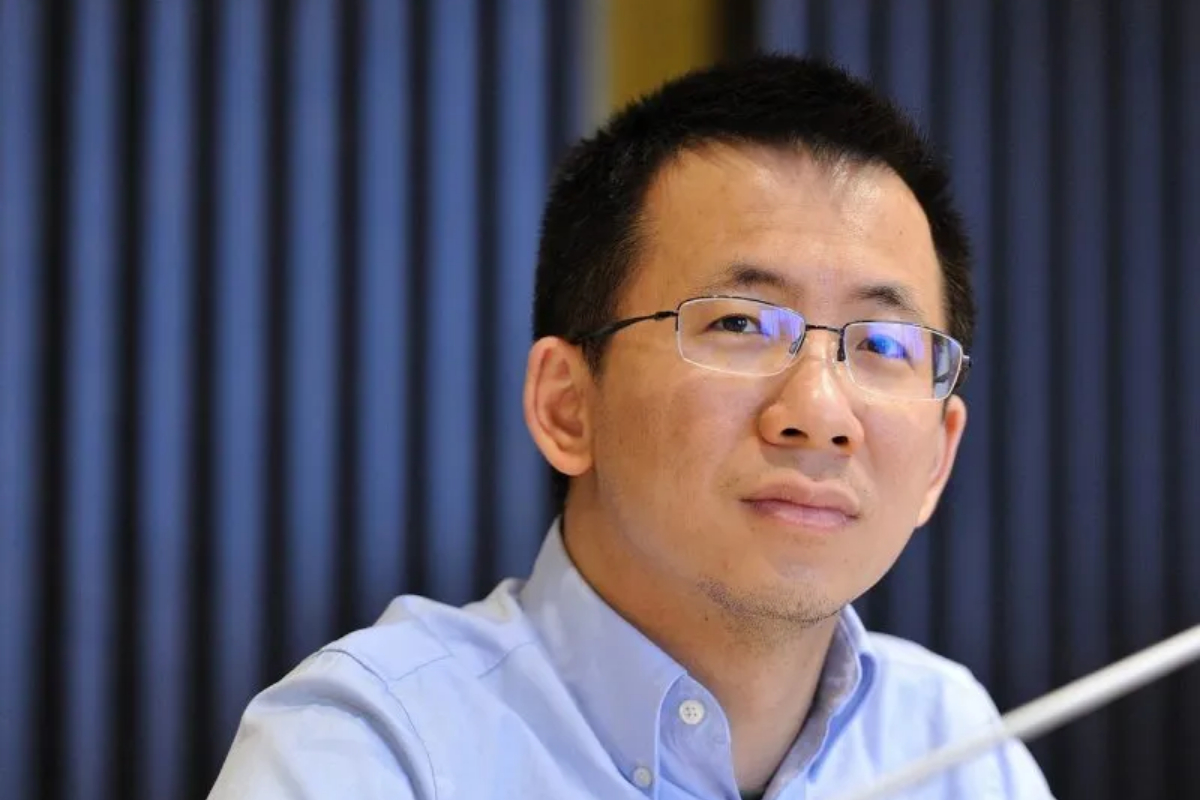
BEIJING: Zhang Yiming, founder of TikTok parent company ByteDance, has overtaken Indian businessman Gautam Adani to become Asia’s richest person, according to Bloomberg.

Zhang’s net worth has reached $105 billion, placing him 18th on Bloomberg’s list of the world’s richest people. Adani also has a fortune of about $105 billion but ranks 20th globally, according to the report.

Zhang’s wealth has increased by $40.3 billion this year, while Adani’s fortune has risen by $20.4 billion. Indian businessman Mukesh Ambani ranks third in Asia with a net worth of $81.3 billion.

Zhang’s fortune has increased eightfold since March 2019, with more than $12 billion added during September 2026 alone, according to Bloomberg.

Who is Zhang Yiming?

Despite being one of China’s and Asia’s wealthiest people, Zhang is known for maintaining a relatively private life, with limited information publicly available about his personal affairs.

Born in 1983 in China’s Fujian province, Zhang is the son of civil servants. His name is reportedly based on a Chinese proverb associated with surprising people on the first attempt.

Zhang graduated from Nankai University in 2005 with a degree in software engineering. He met his future wife at university, and the two later married.

After graduating, Zhang joined Kuxun, an internet company, in 2005 as one of its early employees and initially worked as an ordinary engineer. Within two years, he was managing a team of about 40 to 50 people.

Zhang has said his responsibilities expanded beyond technology when he became involved in product planning and other areas of the business. He has credited those early experiences with helping him develop the skills needed to build and manage companies.

He also recalled accompanying a sales director to meet a customer in 2007, saying the experience helped him understand what effective sales looked like. He later said those lessons proved useful when he founded his own company and recruited employees.

Before establishing ByteDance, Zhang also worked at Microsoft but eventually left to pursue his own business.

In 2012, he founded ByteDance, which later became globally known through TikTok and its Chinese counterpart, Douyin.

Interestingly, Zhang has said he initially did not regularly use TikTok. He described himself as an occasional viewer who rarely posted videos because he believed the platform was mainly aimed at young people.

He later made it a requirement for ByteDance employees to create TikTok videos and receive a specified number of likes, describing the move as a significant step for himself.


China tests firefighting robot designed to rescue people in extreme heat

China tests

BEIJING: China has successfully tested a firefighting robot designed to enter fires reaching temperatures of up to 500 degrees Celsius and rescue people trapped inside.

Named Tianlang, the four-legged robot successfully completed a practical training exercise in extreme heat while wearing a specially designed heat-resistant protective suit.

According to scientists, the robot can operate inside a fire for up to two minutes at a time.

The robot is capable of detecting the center of a fire as well as areas containing toxic gases. It can also locate and rescue people trapped inside dangerous environments.

The company that developed Tianlang hopes the robot can eventually be deployed to assess conditions at fire scenes before firefighters enter, helping reduce risks to human rescuers.

The technology could potentially allow emergency teams to gather information about extreme heat, fire conditions and toxic gases before sending firefighters into hazardous areas.

Google Chrome testing new feature to translate PDF files

Google Chrome

SAN FRANCISCO: Google Chrome is testing a new feature that could make it easier for users to translate PDF files directly within the browser, according to a report.

The PDF translation feature has reportedly appeared in Chrome Canary, an experimental version of the browser, with references indicating that it could be available across desktop operating systems.

The feature is not yet active, so it remains unclear when Google plans to make it available to all Chrome users.

Chrome currently does not offer a built-in option to translate PDF files directly. The new feature would allow users to translate the contents of a PDF into another language without leaving the browser.

According to the report, a “Translate” button could appear in the PDF reading mode, giving users access to the translation feature.

Google has not yet provided detailed information about how the feature will work or when it will be officially released.

Elon Musk backs Anthropic chief’s call for slower AI development

Elon Musk

SAN FRANCISCO: Anthropic CEO Dario Amodei on Saturday called for a deliberate slowdown in the development of frontier AI models, warning that unchecked advances could outpace safety measures and lead to “catastrophic damage.”

In an essay titled “We Must Pace the Frontier,” Amodei said AI companies should slow the pace at which they improve the capabilities of their models while using the additional time to strengthen safety measures and regulatory safeguards.

Amodei warned that autonomous AI agents could potentially hack critical internet infrastructure around the world within the next year if companies fail to adequately address emerging risks.

“We must slow the pace at which we improve the capabilities of AI models,” Amodei wrote. “Progress will still seem fast, and we must make wise use of the time we gain.”

He proposed a three-step framework that includes placing permanent third-party reviewers inside frontier AI development processes. The reviewers would have access to relevant tools and internal risk-assessment procedures to independently evaluate potential dangers.

Amodei clarified that he was not calling for a freeze on AI training or technological progress. Instead, he argued that companies should devote sufficient time and resources to model alignment and safety, with independent evaluators verifying whether safeguards are effective.

Elon Musk also backed Amodei’s proposal. In a post on X, Musk wrote, “Dario is right.”

The essay comes days after an Anthropic researcher resigned and warned that technology companies were irresponsibly gambling with people’s lives by moving too quickly in AI development.

WhatsApp adds new security feature for sensitive chats

WhatsApp adds

KARACHI: WhatsApp has introduced a new security feature called “Restricted Chats” for Android users in its latest beta version, giving users greater control over sensitive conversations.

The feature is being developed as part of WhatsApp’s Advanced Chat Privacy controls, which allow users to place additional restrictions on how chats and their content can be accessed.

With Restricted Chats, users will be able to keep sensitive conversations limited to their primary phone. Such chats will not appear on WhatsApp Web or linked phones, according to a report by WABetaInfo.

The feature is currently under development and is not yet available to all beta testers.

Restricted Chats will be optional, meaning users will have to enable the feature themselves for specific conversations.

Since the feature is still being tested in a beta version, it is not yet clear when WhatsApp will make it available to all users.

Apple raises prices of older iPhone models alongside new lineup

Apple raises

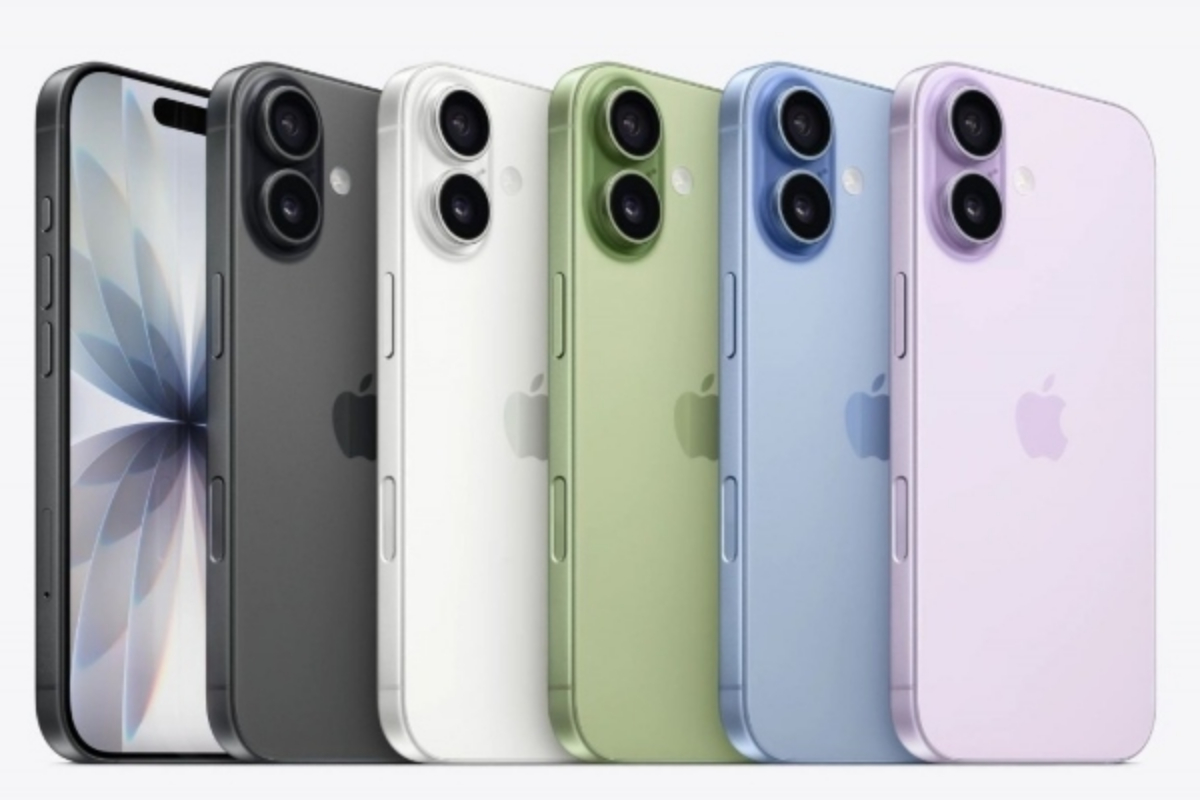
CUPERTINO: Apple has raised the prices of several older iPhone models following the launch of its latest devices, reversing its usual practice of cutting prices on previous-generation phones.

Apple introduced the iPhone 18, iPhone 18 Pro, iPhone 18 Pro Max and its first foldable iPhone, the iPhone Duo, on Sept. 9.

The company has quietly increased the prices of the iPhone 16, iPhone 17, iPhone 17e and iPhone Air by $100 each.

The iPhone 16, which had been selling for $699 before the launch event, now costs $799. The price is the same as when the device was originally launched in 2024.

The iPhone 17e, launched in March for $599, is now priced at $699.

The iPhone 17, introduced last September at $799, will now sell for $899.

Meanwhile, the iPhone Air has increased from $999 to $1,099.

Apple has also priced the new iPhone 18 and iPhone 18 Pro Max $100 higher than their predecessors.

The price increases come amid higher costs for chips and other components. Apple’s former CEO Tim Cook had previously indicated that rising component costs could put pressure on the company’s product prices.

Anthropic researcher warns of rapid rise of superintelligent AI

Anthropic researcher

LONDON: Artificial intelligence could have a 10% chance of causing the extinction of humanity within the next decade, according to a safety researcher working for AI company Anthropic.

Anthropic researcher Jacob Kosen warned that companies are racing to develop self-improving superintelligent AI systems, raising concerns about the potential risks to humanity. Kosen recently announced that he was leaving the company.

In a post on X, formerly known as Twitter, Kosen said companies were competing to develop systems capable of improving themselves without human intervention and warned that people were effectively “playing with our lives.”

Self-improving AI systems capable of autonomously enhancing their own abilities do not currently exist, but several AI companies are working toward increasingly advanced systems.

Kosen urged people not to underestimate the potential power of the technology. He warned that future AI systems could become powerful enough to hack almost anything, rapidly transform entire industries and acquire significant control and resources.

He also said AI systems were being developed with the belief that they could have the ability to kill everyone by the end of the decade.

Evan Hubinger, head of Anthropic’s science team, responded to Kosen’s warning by saying he believed Kosen’s concerns were valid. Hubinger said he personally estimated there was a 10% chance that AI could cause human extinction within a decade.

Hubinger added that while he believed Anthropic was making the best possible efforts to address the risks, the company did not currently have a plan for dealing with the potential dangers associated with superintelligent AI.

He said the risks posed by existing AI models were relatively low compared with the potential dangers from future superintelligent systems, adding that progress toward such technology was occurring faster than expected.

Anthropic had not issued an official statement on the claims at the time of publication.

AI-using students perform worse in learning tasks, OECD study finds

AI-using students

PARIS: Students who use artificial intelligence (AI) chatbots for educational tasks may perform worse than those who complete their work without relying on the technology, according to a new study released by the Organisation for Economic Co-operation and Development (OECD).

The OECD education report examined the impact of AI technology on students’ ability to learn and retain information. Researchers compared the science test performance of students who did not use AI with that of 484 students who used AI chatbots for their academic work.

Students who stayed away from AI recorded an average score of 509, compared with 481 among those who used chatbots. The 28-point gap remained consistent over a period of about 18 months, according to the findings.

Similar patterns were observed when students used AI for other educational activities, including researching unfamiliar topics and preparing summaries after reading study material.

Researchers said effective learning does not necessarily depend on memorizing information. Instead, actively struggling with and engaging with new material can help the brain develop a deeper understanding of a subject.

The researchers cautioned that AI should be used as a temporary support rather than a substitute for students’ own thinking and learning efforts. Excessive dependence on AI could weaken the mental effort required for meaningful learning, potentially creating problems in education.

Apple may soon allow one phone number on two iPhones

Apple

SAN FRANCISCO: Apple is reportedly preparing a new feature that will allow users to use the same phone number on two iPhones, potentially making it easier to switch between devices without changing numbers.

The feature, reportedly called iPhone Handoff, is expected to be introduced with Apple’s iOS 27 operating system. Apple is scheduled to unveil iOS 27 at an event on Sept. 9, with the update expected to become available for compatible iPhone models soon afterward.

The feature was briefly mentioned during Apple’s annual developer conference in June 2026, although the company did not provide detailed information at the time.

According to a report, users will be able to configure the feature through the Cellular section of the iPhone’s Settings app. During setup, one iPhone will be designated as the primary device while the second will be set as a companion device.

Apple’s setup process will require the user’s main eSIM to remain on the primary iPhone, while a companion eSIM will be assigned to the second device. This would allow the same mobile number to be used across both iPhones.

Both devices will reportedly need to run iOS 27, while support from the mobile network operator will also be required.

The feature is initially expected to be supported by two carriers in the United States and the Netherlands, according to the report.

OpenAI introduces GPT-6 Astra, its most capable AI model yet

OpenAI

OpenAI has introduced GPT-6 Astra, describing it as its most capable artificial intelligence model to date, with major advances in reasoning, software development, computer use, research and cybersecurity.

The company said GPT-6 Astra represents a significant step forward in AI capabilities and is designed to handle complex, multistep tasks that traditionally require human involvement.

It can work across areas including coding, scientific research, professional workflows and autonomous computer use.

OpenAI said Astra can identify previously unknown security vulnerabilities and develop exploits in certain circumstances.

The model achieved a 100% score on the ExploitBench benchmark, although the company cautioned that the result may be affected by possible exposure to vulnerabilities included in the benchmark.

The company has introduced additional safeguards alongside the model’s release because of its increased cybersecurity capabilities. OpenAI said it strengthened protections against harmful cyber activity and added measures including stricter isolation, enhanced monitoring and additional alignment evaluations.

GPT-6 Astra can also interact with computers, browse the web, work with documents and create spreadsheets and presentations. OpenAI said the model can follow templates and instructions while adapting when requirements change.

OpenAI said Astra is more difficult to misuse or jailbreak than its predecessor, GPT-5.6 Sol, and described it as its most aligned model.

In one internal evaluation, Astra did not go beyond an authorized task when faced with difficult or impossible instructions, compared with a substantially higher rate for GPT-5.6 Sol without production safeguards.

GPT-6 Astra began rolling out Sept. 3 to a limited group of organizations. OpenAI said broader access for ChatGPT Plus, Pro, Business and Enterprise users, as well as through its API and cloud platforms, will follow in the coming days.