Pakistan hockey team defeated China 3-0 on Thursday to secure their third victory at the Asian Games hockey tournament.
Captain Abu Bakr Sufyan Khan and Hannan Shahid scored for Pakistan, with all three goals coming in the second quarter.
The victory lifted Pakistan to second place in the group with nine points. Malaysia also has nine points but leads the standings on goal difference.
Pakistan had earlier defeated Thailand 9-0 and Uzbekistan 5-1 in the tournament.
Pakistan were without forward Rana Waheed Ashraf, who was suspended for the China match by the tournament organizers and the Asian Hockey Federation.
Ashraf was suspended for one match after his hockey stick struck an Uzbekistan player in the head during Pakistan’s previous match, according to reports. He is considered a key player in Pakistan’s forward line.
BEIJING: China has successfully tested a firefighting robot designed to enter fires reaching temperatures of up to 500 degrees Celsius and rescue people trapped inside.
Named Tianlang, the four-legged robot successfully completed a practical training exercise in extreme heat while wearing a specially designed heat-resistant protective suit.
According to scientists, the robot can operate inside a fire for up to two minutes at a time.
The robot is capable of detecting the center of a fire as well as areas containing toxic gases. It can also locate and rescue people trapped inside dangerous environments.
The company that developed Tianlang hopes the robot can eventually be deployed to assess conditions at fire scenes before firefighters enter, helping reduce risks to human rescuers.
The technology could potentially allow emergency teams to gather information about extreme heat, fire conditions and toxic gases before sending firefighters into hazardous areas.
BEIJING: China has introduced a 20% individual income tax on certain gains and income linked to assets placed by Chinese residents into offshore trusts, tightening scrutiny of wealth held overseas.
The Ministry of Finance and the State Taxation Administration issued detailed rules covering the taxation of offshore trusts, including requirements for taxpayers to declare and settle outstanding liabilities.
Under the new rules, gains arising when assets are transferred into offshore trusts are subject to a 20% tax, while income generated during the lifetime of the trusts can also be taxed at the same rate, depending on the nature of the income.
Chinese taxpayers have been given a 90-day period to declare and settle certain unpaid taxes. The rules cover assets transferred to offshore trusts from Jan. 1, 2023, as well as specified income from trusts established before 2026.
The measures are part of Beijing’s broader efforts to strengthen tax compliance and close gaps that have allowed wealthy Chinese individuals to hold assets through offshore structures.
Hong Kong and Singapore are among the major destinations for offshore wealth and trust structures used by China-linked wealthy families.
The new rules are expected to increase scrutiny of such arrangements and encourage greater transparency in overseas wealth management.
China’s tax authorities have also clarified that individuals who hold foreign citizenship or permanent residence abroad may still be considered Chinese tax residents in certain circumstances if their main economic interests remain closely connected to China.
The new rules mark a significant tightening of China’s approach to offshore trusts and overseas wealth, placing greater responsibility on taxpayers to report assets and income and comply with individual income tax requirements.
A new study has projected that deaths from lung cancer in China could reach 760,000 annually by 2030, driven largely by population growth and the country’s rapidly aging population.
Lung cancer remains one of the leading causes of cancer-related deaths in China. Researchers said the overall number of deaths is likely to continue rising despite a decline in age-standardized mortality rates.
Chinese researchers analyzed nationwide mortality data covering cancer and other causes between 2013 and 2021. The study included data from 605 surveillance centers, representing about 2.37 billion person-years of observation.
Researchers used several statistical methods to examine changes in lung cancer mortality and identify factors contributing to the disease burden. A person-year is a unit used to measure the amount of time people are observed in a study.
Smoking continues to be a major risk factor for lung cancer in China. Data from 2018 showed that about 26.6% of adults smoked cigarettes, while many nonsmokers were also exposed to secondhand smoke.
Air pollution and the effects of industrial development may also contribute to the overall burden of lung cancer, researchers said.
The study highlighted an important trend: although lung cancer mortality rates adjusted for age are declining, the total number of deaths could still increase as China’s population grows and the proportion of older people rises.
Researchers said public health planning should therefore address both preventable risk factors, particularly smoking and exposure to air pollution, and the growing impact of an aging population.
They emphasized that reducing tobacco use and other risk factors, alongside preparing health systems for an increasingly elderly population, will be essential to tackling China’s future lung cancer burden.
KATHMANDU: The death toll from devastating floods in Nepal has risen to 362, while more than 500 tourists remain missing, authorities said Thursday as rescue teams continued searching affected areas.
The flooding occurred in Nepal’s Rasuwa district, where a sudden torrent swept through the area, causing widespread destruction and leaving hundreds of people unaccounted for.
According to Nepalese tourism authorities, more than 400 foreign nationals are among those reported missing. They include 142 Indians, 54 Americans, 34 Australians, 33 Britons, 24 Canadians, 17 Malaysians and 53 Ukrainians.
Several nationals from South Korea, South Africa, Portugal and the Netherlands are also reported missing, with search and rescue operations underway.
China’s Tibet also hit by landslides
Meanwhile, Chinese state media reported that 558 people were missing in Gyirong, in Tibet, following landslides triggered by severe flooding. The missing include 260 foreign nationals, while three people have been reported dead.
Flooding and landslides have caused extensive damage to homes, roads and power infrastructure in the border region, according to Chinese media reports.
Rescue teams are continuing operations in both affected areas as authorities work to locate missing people and assess the full extent of the damage.
How the disaster unfolded
The disaster began Wednesday morning when part of a glacier in the Himalayas broke away and crashed into a valley, according to international news agencies.
Initial reports suggested that an earthquake may have triggered the incident. However, the U.S. Geological Survey said the tremors that were detected were not caused by an earthquake but were generated by the energy released when ice and rocks fell from the glacier.
The mass of ice and rock plunged into the Lende Khola river, which flows along the mountainous border between Nepal and Tibet.
The resulting mud and debris surge struck the Gyirong port area in Tibet, triggering a powerful flash flood. Roads and power infrastructure were severely damaged, while several villages were inundated.
Rescue teams on both sides of the border are continuing operations to locate missing people, recover bodies and assess the extent of the destruction.
China has developed hypersonic glide vehicles capable of launching air-to-air attacks against aircraft thousands of kilometers away, potentially posing a major threat to U.S. command-and-control aircraft, aerial refueling tankers and other high-value assets, Bloomberg reported.
According to the report, people familiar with the matter said China has incorporated air-to-air attack capabilities into some hypersonic cruise missiles, while other variants have been designed to strike naval targets. Such weapons could allow China to disrupt communications and weaken the air-defense networks supporting fighter aircraft during a potential conflict.
A hypersonic glide vehicle launched by China’s DF-17 missile can travel about 2,414 kilometers, a range approaching the distance from China to the U.S. territory of Guam, which hosts a major American military base. China’s DF-27 missile is reported to have a maximum range of about 8,000 kilometers, potentially placing Hawaii within its reach.
Hypersonic glide vehicles can maneuver and change direction while traveling through the atmosphere, making them more difficult to track and intercept than conventional ballistic weapons. Bloomberg reported that China is currently the only country known to have combined hypersonic glide vehicle technology with air-to-air missile capabilities.
The development comes as China has significantly expanded its missile production. U.S. Defense Department estimates cited by Bloomberg indicate that China had at least 3,150 ballistic missiles and about 300 ground-launched cruise missiles as of 2024.
The report also comes as the United States works to develop longer-range air-to-air weapons. The U.S. Navy has been testing the AIM-424 MALD, a new long-range air-to-air missile reportedly capable of traveling more than 463 kilometers. The Pentagon has also been pursuing multistage air-to-air missile technologies with the longer-term goal of achieving ranges of up to 1,000 miles.
Bilibili vs YouTube in 2026 is not a simple choice between two identical video platforms. YouTube offers a globally documented creator ecosystem, while Bilibili remains a China-centred video community whose multilingual app is becoming easier to access internationally.
For Western and international creators, the practical question is not “Which platform pays more?” It is whether your audience, language, rights, payment eligibility and content style fit each platform. This guide separates verified facts from expansion hype.
Bilibili vs YouTube: quick verdict
YouTube should remain the primary platform for most creators seeking a broad international audience. Its monetization rules, analytics, advertising products and creator support are documented across many countries and regions.
Bilibili can be a useful secondary experiment for creators with Chinese-language capability, anime, gaming, technology, education or culture content. However, installing an English-language app does not automatically mean every international creator can access the same distribution, payment and monetization features as a domestic Bilibili creator.
Area
YouTube
Bilibili
Core position
Global general-purpose video platform
China-centred video community with multilingual app access
Audience interaction
Comments, live chat, Community posts, memberships and Supers
Danmu or bullet comments, comments, live interaction and community culture
Creator monetization
Publicly documented YPP eligibility and revenue modules
Feature and payment access can depend on account, region and product eligibility
Discovery
Search, recommendations, Shorts, subscriptions and external discovery
Recommendations, community categories, search and interest-led viewing
Best use for international creators
Primary publishing and business platform
Carefully tested secondary distribution channel
What Bilibili officially says about its audience
Bilibili’s investor information describes the company as a leading video community for young generations in China. Its stated mission is to enrich the everyday lives of young generations in China, while its broader vision includes bringing original Chinese content to audiences worldwide.
The company’s investor homepage reported 376 million monthly active users, 117 million daily active users, 35 million monthly paying users and 112 minutes of average daily time spent for the third quarter of 2025. These are major scale indicators, but they should not be presented as evidence that the platform already offers YouTube-equivalent reach in the United States or United Kingdom.
As of August 2026, Bilibili’s official US App Store listing is available in English and 12 additional languages. The listing promotes videos, community features, anime, gaming, technology content, danmu comments and AI dubbing. This confirms broader app accessibility; it does not by itself confirm a universal Western creator monetization programme.
How YouTube monetization works
YouTube publishes detailed eligibility requirements through its Help Center. In eligible countries and regions, earlier access to fan-funding features can begin at 500 subscribers, three valid public uploads in 90 days and either 3,000 valid public watch hours in 12 months or 3 million valid public Shorts views in 90 days.
Full advertising and YouTube Premium revenue currently requires 1,000 subscribers plus either 4,000 valid public watch hours in 12 months or 10 million valid public Shorts views in 90 days. YouTube has announced that new applicants for ad and Premium revenue will face higher view thresholds from February 1, 2027: 8,000 qualified public watch hours or 20 million qualified Shorts views.
Creators already in YPP will not lose their status simply because of the new thresholds, although updated terms must be accepted by the stated deadline. Thresholds are only one part of approval; policy compliance and channel review still apply.
Bilibili’s corporate revenue model includes value-added services, advertising, mobile games and intellectual-property derivatives and other products. At the creator level, the platform is associated with live-streaming income, fan support, commercial partnerships, advertising-related opportunities and creator programmes. However, availability and onboarding rules can differ across products and regions.
That makes a universal “Bilibili CPM” or guaranteed income table misleading. Before investing in localisation or republishing, an international creator should verify inside the actual account:
Whether creator registration is available in the creator’s country
Identity-verification and tax-document requirements
Supported payout methods and currencies
Which monetization tools are enabled for that account
Music, footage, anime and other licensing restrictions
Language, moderation and community-rule requirements
Danmu versus YouTube comments
Bilibili is strongly associated with danmu, also called bullet comments. Viewer messages can appear across the video while it plays, creating the feeling of watching with a crowd. This interaction style can be powerful for fandom, gaming, animation, entertainment and communal viewing.
YouTube uses a more familiar combination of comments, live chat, Community posts and memberships. It also provides broad search visibility and a mature ecosystem for long-form video, Shorts, podcasts and live streams. Neither approach is automatically superior; the better platform depends on how the audience wants to participate.
Should Western creators publish on Bilibili?
Yes—but as a measured pilot, not a blind migration. A sensible test is to localise three to five videos with accurate titles, captions and culturally appropriate context. Track completion rate, follower growth, comments, repeat viewing and any verified monetization access.
Do not simply mirror an entire YouTube library. Music, stock footage, sponsor agreements and territorial licences may allow YouTube distribution but not reuse on every other platform. Creators also need a plan for responding to another language community and correcting translated captions.
A low-risk two-platform strategy
Keep YouTube as the primary archive: build searchable, evergreen videos and a consistent channel identity.
Select Bilibili-friendly topics: prioritise content with clear relevance to gaming, anime, technology, education or cross-cultural audiences.
Localise rather than copy: rewrite titles and descriptions, add accurate subtitles and explain unfamiliar references.
Verify rights and account eligibility: confirm that every reused asset and commercial integration is permitted.
Measure the pilot: continue only if the platform produces meaningful audience growth or business value.
Final comparison
In the Bilibili vs YouTube decision, YouTube currently provides the clearer route for international audience growth and documented creator monetization. Bilibili offers a distinctive community experience and substantial scale in China, while its multilingual app creates new possibilities for experimentation.
The smart move is not to chase an “untapped platform” headline. Build where your audience already exists, test expansion with evidence and never assume app availability equals guaranteed creator income.
BEIJING: A Chinese robotics company has developed a humanoid robot that it says can run faster than Jamaican sprint legend Usain Bolt.
The robot, named Superman, was developed by Chinese robotics company Unitree Robotics and is equipped with artificial intelligence technology. A video of the robot was shared on X, showcasing its running capabilities.
According to the company, the robot was developed about three months ago and can jump up to 2 meters and run at a speed of 12.66 meters per second.
The claimed speed is faster than Bolt’s average speed during his world-record 100-meter sprint in 2009. Bolt completed the race in 9.58 seconds, equivalent to an average speed of about 10.44 meters per second.
The robot stands 5 feet 7 inches tall. Unitree said the machine demonstrates the potential to push beyond the physical limits associated with human performance.
However, the robot’s speed records have not yet been independently verified. Unitree said its performance could improve further in the coming months.
The robot is scheduled to be publicly unveiled on Aug. 19, when the company plans to offer its shares for sale. It will also be demonstrated during the World Robot Conference from Aug. 19 to 23.
Unitree’s robots won four gold medals at competitions last year, and the company is now expected to showcase further advances in humanoid robotics with Superman.
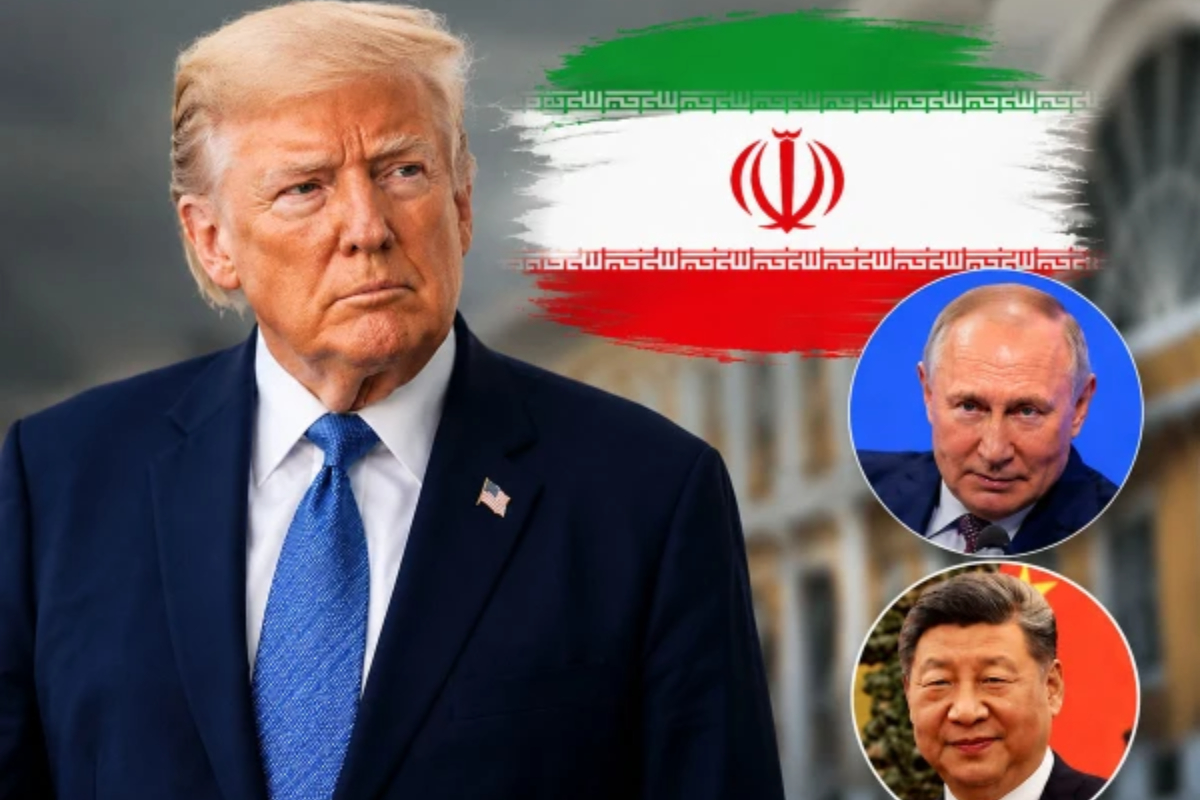
WASHINGTON: US President Donald Trump said on Friday that the leaders of China and Russia had separately assured him their countries would not sell weapons to Iran amid heightened tensions in the Middle East.
In a post on his social media platform, Truth Social, Trump said he had discussed the issue with Chinese President Xi Jinping and Russian President Vladimir Putin during recent meetings. According to Trump, both leaders pledged that their governments would not provide arms to Iran.
Trump said he believes neither China nor Russia has an interest in becoming involved in the conflict, adding that such a move would be detrimental to both countries. He said he trusted Xi’s assurance, citing the relationship between Washington and Beijing.
Referring to Russia, Trump said Putin had offered a similar commitment despite Moscow’s ongoing involvement in the war in Ukraine. He also reiterated that the United States does not directly supply weapons to Ukraine, but sells arms to NATO member states, which then determine how the equipment is distributed.
There was no immediate official response from China, Russia, or Iran to Trump’s remarks. The comments come as tensions between the United States and Iran remain elevated, with the closure of the Strait of Hormuz disrupting global energy markets and international mediation efforts continuing to seek a ceasefire.
ISLAMABAD: Prime Minister Shehbaz Sharif announced Wednesday that the government will send another 1,000 Pakistani students to China this year for advanced training in agriculture and livestock development as part of efforts to modernize the country’s agricultural sector.
Addressing a national seminar on livestock capacity building in Islamabad, Sharif said Pakistan’s farmers work tirelessly across all four provinces, Gilgit-Baltistan and Azad Jammu and Kashmir, but continue to lag behind regional competitors because of limited access to modern technology and equipment.
The prime minister said Pakistan has significant untapped potential in agriculture and livestock, noting that the country is the world’s fourth-largest milk producer and has considerable capacity to expand meat production.
Sharif criticized the performance of some public institutions established to support agriculture and livestock, saying many had suffered from mismanagement and nepotism.
He called for closer cooperation between the federal and provincial governments to modernize the sector and translate policy into practical action.
He also announced that the federal government would fully fund the development or procurement of vaccines needed to combat livestock diseases, adding that related projects would be outsourced to improve efficiency and avoid the shortcomings of past institutions.
Highlighting the importance of international cooperation, Sharif said the government would continue its partnership with China by sponsoring another 1,000 students for specialized training this year, following a similar initiative launched last year. He urged authorities to make effective use of the expertise gained by returning students to help improve Pakistan’s agriculture and livestock sectors.