BREAKING NEWS
Advertise with us >

PIMEC showcases blue economy potential as second day begins

PIMEC

KARACHI: The two-day Maritime Conference formally commenced as part of the ongoing Pakistan International Maritime Expo and Conference (PIMEC) at the Karachi Expo Centre. Global experts in maritime affairs are presenting research papers and sharing insights on the growth potential of the maritime sector.

According to organizers, a total of 176 exhibitors, including 28 international and 150 local companies, are showcasing their products and innovations at the event.

A two-day Maritime Conference has also begun as part of PIMEC, where global experts in maritime affairs will present research papers and discuss key developments in the sector.

Among the international participants, Iran’s pavilion has become a major attraction for visitors, while Türkiye has also set up its own display at the exhibition.

The primary objective of hosting PIMEC is to promote the Blue Economy and encourage growth in maritime trade and industry in Pakistan.

Federal Minister for Finance Muhammad Aurangzeb, addressing the conference via Zoom from Islamabad, congratulated the Pakistan Navy and the Ministry of Maritime Affairs for successfully organizing the international event.

Aurangzeb said it was encouraging to see the international maritime conference being held in Pakistan, adding that the Blue Economy could prove to be a game changer for the country’s economic future.

He acknowledged that Pakistan’s economy had temporarily weakened due to recent floods, but noted that “leading global financial institutions are now recognizing Pakistan’s improving economic trajectory.”

The finance minister emphasized that one of the key goals of the maritime conference was to attract foreign investment and highlight the potential of the Blue Economy in strengthening Pakistan’s economy.

“Through the Blue Economy, Pakistan can achieve its future economic targets,” he said, stressing the need to increase exports and ensure affordable energy for sustainable growth.

Aurangzeb assured participants that the government is committed to resolving policy-related challenges associated with the Blue Economy.

Highlighting Pakistan’s recent economic progress, he said that over the past two and a half years, the government has taken concrete steps toward stability, resulting in a sharp decline in inflation and a reduction in policy rates.

He added that three global credit rating agencies have commended Pakistan’s recent economic measures and that strong coordination among ministries is contributing to continued improvement.

Aurangzeb reaffirmed that the Finance Ministry would extend full cooperation to ensure economic stability, noting that Pakistan also enjoys support from friendly countries in promoting trade and investment.

The finance minister expressed confidence that the Blue Economy could revolutionize Pakistan’s economic landscape, pointing to the vast potential in fisheries and aquaculture. He also said that steps are being taken to modernize Karachi, Gwadar, and Port Qasim, further enhancing Pakistan’s maritime capabilities.

Vice Chief of Naval Staff, Vice Admiral Raja Rab Nawaz, visited various stalls at the exhibition and reviewed a range of modern naval and defense equipment on display.

During the visit, he was given a detailed briefing on Pakistan-made defense technologies and warfare systems, highlighting the country’s progress in indigenous defense production.
Trump vows to make America Champion in crypto industry

Trump

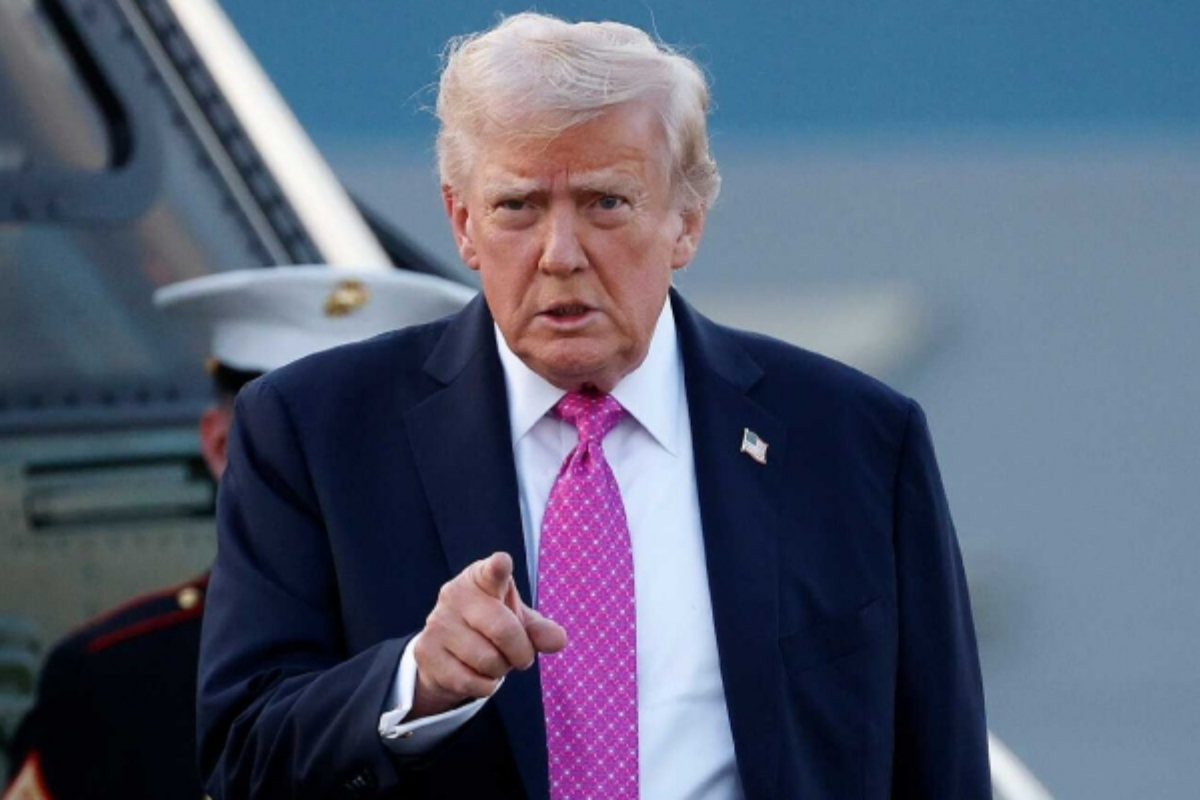
WASHINGTON: US President Donald Trump has announced plans to position the United States as a global leader in cryptocurrency innovation and dominance.

In an interview, Trump said that crypto has become the world’s largest industry, and the United States currently leads all countries, including China, in this field. “I want America to be the champion in cryptocurrency,” he declared.

The president noted that China is now rapidly entering the crypto sector but emphasized that he does not want Beijing to overtake the United States.

Criticizing former president Joe Biden, Trump said Biden initially opposed cryptocurrencies but changed his stance after realizing that crypto supporters were largely backing Trump. “Biden shifted his position just to win votes,” Trump remarked.

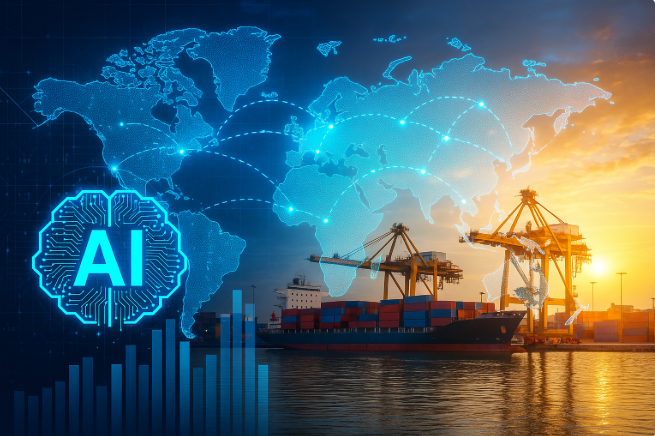
AI Set to Transform Global Trade — What It Means for Pakistan and the World

Global Trade 2025, AI in Trade, WTO Report, Pakistan Economy, Future Soch World News


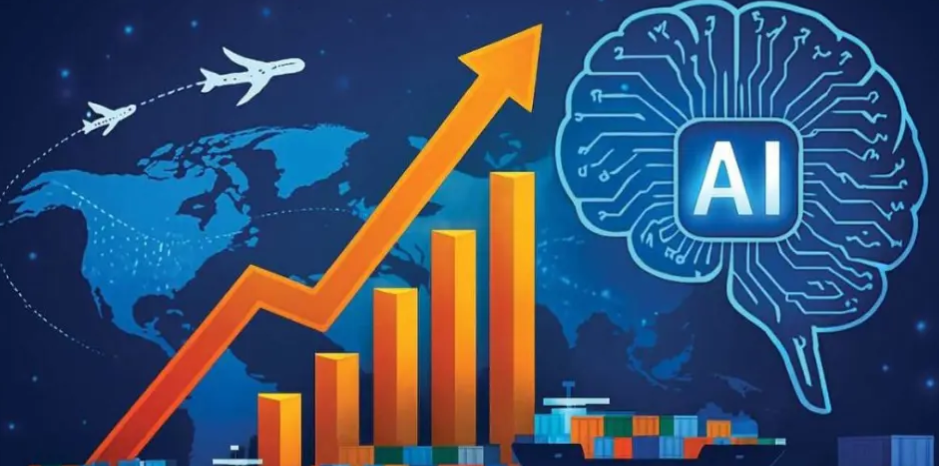
A landmark World Trade Organization report warns that artificial intelligence could boost global trade by up to 37% by 2040, but only if countries invest in skills, infrastructure and inclusive policies. Reuters


A New Era in Global Commerce

Artificial Intelligence isn’t just reshaping software and services — it’s poised to change how goods and services move across borders. According to the WTO’s latest report, AI-driven logistics, translation tools, regulatory compliance and virtual trade interfaces could increase global trade by 34-37% by 2040. Reuters

That means an economy that currently just ships raw materials or low-value goods will need to rethink everything: supply chains, workforce skills, policy frameworks and trade relationships. For countries like Pakistan, which sit between emerging and established trade routes, this shift is both an opportunity and a threat.


What the Report Finds

  • AI-powered translation and communication tools will lower trade costs: small producers in low-income countries could see export growth of up to 11%. Reuters
  • But the benefits won’t be automatic. The report warns that without proper investment in digital infrastructure, training and regulatory reforms, AI could widen inequalities across economies. Reuters
  • The new trade competitive edge will come from combining tech adoption with skilled labour, strong institutions and open connectivity — not just cheap labour or raw resource exports.

Why Pakistan Should Care

For Pakistan’s economy, the implications are significant.

  • Pakistan’s exporters (textiles, agriculture, small manufacturing) must prepare for a world where digital proficiency matters more than just cost.
  • Investing in data-networks, coders, translators and tech-savvy logistics could help Pakistan’s SMEs tap into global value chains.
  • But if Pakistan misses the tech train, the country may be stuck exporting low-value goods in a world moving to high-value digital trade.

If Pakistan’s government, industry and educational institutions align — focusing on digital inclusion, AI training and infrastructure — then the country stands to gain. Otherwise, the global trade expansion driven by AI might largely bypass places that aren’t ready.


Global Impacts: Winners and Losers

The AI-trade boom isn’t just about more goods — it’s about smarter goods, services and connections. Technology will enable:

  • More flexible supply chains, quicker adaptation to market changes
  • Small exporters in remote regions to reach global buyers directly
  • Countries to leapfrog traditional manufacturing models

But there are risks:

  • Countries lagging in infrastructure or education may find themselves left behind
  • Geopolitical pressures and protectionism may interfere with open trade
  • The shift in trade value patterns may up-end current economic models in many developing countries

What This Means for the Reader

  • Business readers should watch for how AI tools reshape exports, logistics and value chains.
  • Policy readers should consider how their educational systems and trade regulations can adapt.
  • Everyday readers should ask: how will global trade changes affect jobs, prices and economic growth in their region?

Pakistan’s Digital Boom: TikTok, YouTube & 66 Million-Plus Users in 2025

Pakistan Digital 2025, TikTok Pakistan, YouTube Pakistan, Creator Economy, Future Soch


With 116 million internet users and 66 million active TikTok accounts, Pakistan has become one of the fastest-growing digital markets in the world — reshaping content, communication, and creativity.


Pakistan’s Digital Revolution Is Real

In early 2025, Pakistan officially crossed a milestone: over 116 million internet users, representing nearly 45 percent of the population, according to DataReportal’s Digital 2025 Pakistan report.

Once considered a low-connectivity country, Pakistan now ranks among Asia’s fastest-expanding digital economies. The explosion of affordable smartphones, cheap data packages, and a thriving creator ecosystem has transformed how people consume news, entertainment, and education.

From remote villages in Sindh to urban tech hubs in Karachi and Lahore, digital access is now mainstream — a reality no business, journalist, or policymaker can afford to ignore.


TikTok, YouTube & Instagram Rule the Screens

The numbers tell the story. TikTok alone had 66.9 million users aged 18 and above at the start of 2025. YouTube remains close behind, with over 70 percent of Pakistani internet users watching videos daily.

Short-form content has become the heartbeat of Pakistan’s online life — not just for fun, but for learning, commerce, and activism.

Creators like Kanwal Aftab, Rabeeca Khan, and Laraib Khan reach millions weekly, while hundreds of micro-influencers now earn livelihoods through digital platforms. Meanwhile, YouTube channels focusing on news, reviews, and social issues are seeing unprecedented engagement.

The message is clear: Pakistan’s digital audience is massive, young, and hungry for local stories told in modern formats.


The Creator Economy Is Booming

With brands shifting ad budgets from TV to social media, Pakistan’s creator economy is entering a golden age. Influencers, digital agencies, and small content studios are earning through ads, brand partnerships, and cross-platform monetization.

A Meta-commissioned report found that digital advertising in Pakistan is expected to surpass USD 500 million by 2026 — driven mainly by social video and e-commerce integrations.

The growing trend of TikTok Shops and Instagram Reels commerce has blurred the line between entertainment and entrepreneurship. Even small-town sellers now reach global customers directly through short videos.

Pakistan Digital 2025, TikTok Pakistan, YouTube Pakistan, Creator Economy, Future Soch

How Global Platforms View Pakistan

International tech giants are taking notice. TikTok has expanded its creator-training programs in Pakistan, while YouTube’s Partner Program has welcomed a surge of new monetized channels from the country.

LinkedIn reports a rise in digital marketing and content-creation skills among Pakistani professionals, while Google continues to expand initiatives under Google for Startups Pakistan.

Pakistan’s youth — over 60 percent of the population under 30 — is the driving force behind this transformation. The combination of creativity, connectivity, and entrepreneurship is positioning the country as a South-Asian digital powerhouse.


What It Means for Businesses & Media

For brands and publishers, the message is clear: if you’re not digital, you’re invisible.
Search behavior has shifted from keywords to conversations — users now search for videos, reviews, and stories rather than static text.

Companies that understand how to use SEO, social signals, and video storytelling together will lead Pakistan’s digital decade.
Even traditional media outlets are transforming, launching podcasts, YouTube shows, and influencer collaborations to remain relevant.

As the Future Soch Digital Report 2025 will soon explore — this new wave of internet adoption is not just about connectivity, but about cultural reinvention.

ADB formulates comprehensive ‘Glaciers to Farms’ strategy for Pakistan

ADB formulates

ISLAMABAD: The Asian Development Bank (ADB) has unveiled a detailed strategy focused on strengthening Pakistan’s water, agriculture, and energy sectors against the growing threats posed by climate change.

According to the ADB, under the “Glaciers to Farms Program,” a detailed report will be prepared to assess the economic and environmental impacts of glacier melt in the region.

The program will also include strategic planning to mitigate climate-related damages, ensuring the sustainability of Pakistan’s water resources, agricultural productivity, and energy systems.

The ADB stated that global experts have been consulted for recommendations on glacier management and climate resilience.

These proposals will be reviewed at the upcoming International Convention of the East Asian Economic Association, scheduled to be held in the Philippines from November 8 to 9.

According to sources, the initiative is expected to serve as a key policy framework for promoting efficient water use, modern irrigation systems, and enhanced climate adaptation strategies in Pakistan.

Earlier, Pakistan’s economy is projected to grow by just 3% in the current fiscal year, making it the second slowest-growing economy in South Asia after Afghanistan, according to a new comparative report by the Asian Development Bank (ADB).

The ADB report forecasts overall economic growth in South Asia to reach 6% this fiscal year. India is expected to lead the region with 6.5% growth, followed by Bhutan at 6%, Bangladesh at 5%, the Maldives at 4.9%, and Sri Lanka at 3.3%. Nepal is also projected to grow by 3%, while Afghanistan will post the lowest growth rate at 1.7%.

Green Energy Startups Lead Pakistan’s Sustainability Revolution

Green Energy, Startups, Renewable Pakistan, Climate Innovation, Solar Power


As Pakistan faces energy and climate challenges, a new wave of startups is driving the shift toward solar, wind, and sustainable innovation — blending technology with impact.


Pakistan’s green energy sector is witnessing an inspiring transformation in 2025. Young entrepreneurs are building startups focused on renewable energy, sustainable agriculture, and carbon reduction technologies. From solar rooftops in Karachi to wind farms in Sindh, clean energy innovation is now seen as both a moral responsibility and a profitable business model.

According to a report by the Pakistan Council of Renewable Energy Technologies (PCRET), more than 150 green startups have launched in the past three years, many backed by international climate funds and local venture capital. These ventures are helping businesses and households transition to affordable solar power systems, efficient lighting, and sustainable waste management solutions.

Companies such as ZSolar, RenewPak, and EcoCharge are leading the way, providing smart-grid solutions and hybrid energy systems for industries struggling with power shortages. Meanwhile, universities like NUST and Habib University are encouraging student-led innovation with energy incubation programs.

Experts say that Pakistan’s renewable sector could create over 100,000 new jobs by 2030, if supported by clear policies and incentives. For a country vulnerable to climate change, the rise of green startups signals hope — a movement that merges entrepreneurship with environmental consciousness.

Fintech Revolution: How Digital Banks Are Changing Pakistan’s Economy

Fintech Pakistan, Digital Banks, SBP, Financial Inclusion, Economy 2025


Pakistan’s new wave of digital banks is transforming financial access, driving inclusion, and redefining how millions save, spend, and invest.


Pakistan’s fintech landscape is evolving rapidly in 2025 as fully digital banks begin to reshape the country’s financial ecosystem. Licensed by the State Bank of Pakistan, these digital-first institutions are introducing seamless mobile banking, faster credit approvals, and low-fee financial services for individuals and small businesses.

Startups such as Sadapay, NayaPay, and Easypaisa are leading this revolution by integrating modern digital tools, biometric verification, and AI-based customer support. As a result, over 20 million Pakistanis now use digital wallets — a milestone that signals a major shift from cash dependency to digital transactions.

Economists believe this transformation could add billions to the national GDP over the next few years. “Fintech is more than convenience — it’s a foundation for inclusive growth,” said an analyst from Business Recorder. Rural areas, previously underserved by traditional banks, are gaining new access to digital credit and remittance options.

However, experts warn that cybersecurity, digital fraud, and low financial literacy remain challenges. The State Bank’s new Fintech Regulatory Sandbox aims to balance innovation with safety, ensuring growth without compromising trust.

Startup Funding 2025: Pakistani Entrepreneurs Attract Global Investors

Pakistan Startups, Venture Capital 2025, Business, Fintech, Economy


After a quiet 2023–24, Pakistan’s startup scene is showing signs of recovery as investors from the Middle East and Southeast Asia return with renewed confidence.


Pakistan’s startup ecosystem is regaining momentum in 2025, with global investors eyeing opportunities in fintech, logistics, and e-commerce. Following a slowdown driven by global inflation and currency pressure, venture funding is slowly returning — led by investors from the UAE, Saudi Arabia, and Singapore.

Pakistan Startups, Venture Capital 2025, Business, Fintech, Economy

Analysts say the turnaround is being driven by improved policy clarity, better digital payment infrastructure, and new government incentives for technology exports. “The fundamentals of Pakistan’s digital economy remain strong — a young population, high smartphone penetration, and growing digital adoption,” noted a Karachi-based VC partner.

Notably, startups such as Bazaar Technologies, Sadapay, and Truck It In have secured follow-on funding rounds this year, while new players in green tech and agriculture are attracting attention. Experts predict total startup investment could cross $150 million in 2025 if macroeconomic stability continues.

While challenges such as currency volatility and taxation remain, entrepreneurs are optimistic. Many believe the next growth phase will come from partnerships between Pakistani founders and regional investors rather than dependence on Western VC funds.

AI Jobs 2025: How Automation is Reshaping Pakistan’s Workforce

AI in Pakistan, Automation, Jobs 2025, Workforce, Technology


As artificial intelligence transforms industries worldwide, Pakistan’s job market is entering a new era where skills in data, design, and digital innovation are replacing traditional roles.


The rise of artificial intelligence (AI) and automation is reshaping how people work across the globe — and Pakistan is no exception. In 2025, local companies are rapidly adopting AI tools to boost productivity, streamline operations, and reduce costs. From banking to logistics, industries are turning to smart software for decision-making, data processing, and customer engagement.

Experts warn that while automation may replace repetitive jobs, it is also creating new opportunities in data science, software development, AI engineering, and content creation. According to the Pakistan Software Houses Association (P@SHA), demand for AI specialists and prompt engineers has doubled in the last year, especially in Karachi, Lahore, and Islamabad.

Educational institutions are also responding. Universities like NUST and IBA have introduced AI-focused programs, preparing graduates for the digital future. However, experts say Pakistan must invest in skill development and digital literacy to prevent a widening employment gap between tech-savvy youth and traditional workers.

Globally, the World Economic Forum estimates that AI could create 97 million new roles by 2030. For Pakistan, this shift represents both a challenge and an opportunity — a moment to redefine its workforce and position itself in the global digital economy.

Gold prices surge by Rs3,500 per tola across Pakistan

Gold prices

KARACHI: The price of gold in Pakistan increased by Rs3,500 per tola on Wednesday, according to the All Pakistan Gems and Jewellers Association (APGJA).

With the latest rise, the price of 24-karat gold now stands at Rs419,862 per tola, while the price of 10 grams of gold has gone up by Rs3,000, reaching Rs359,963.

In the international market, the price of gold also saw an uptick of $35, climbing to $3,975 per ounce.

Market experts attribute the surge to global economic uncertainty and rising investor demand for safe-haven assets.