

BREAKING NEWS
Advertise with us >

Report says Israel considered targeting Iranian officials during Pakistan visit

Report says

WASHINGTON: Israel considered targeting senior Iranian officials during their visit to Pakistan for diplomatic talks earlier this year, but the plan was never carried out, according to a report published by The New York Times.

The newspaper reported that Israel had contemplated targeting Iranian Foreign Minister Abbas Araghchi and Iranian Parliament Speaker Mohammad Bagher Ghalibaf during their April visit to Islamabad.

According to the report, U.S. officials, concerned about the possibility of military action, alerted Iran through intermediaries in several regional countries about a potential Israeli operation.

The report said Iranian officials sought assurances through Pakistani and Qatari mediators that their delegation would not be targeted while traveling to and from Pakistan for the talks.

It also said Pakistan Air Force aircraft escorted the Iranian delegation’s plane during its flights between Iran and Pakistan.

According to the report, Iranian officials later received intelligence indicating that Israeli aircraft had entered Iranian airspace from Iraq as the delegation was returning home. The information was relayed to the aircraft, prompting it to divert and land at Mashhad International Airport.

The report said the incident was later confirmed by Mohammad Marandi, a senior adviser to Ghalibaf.

The claims have not been independently verified by The Associated Press, and there has been no immediate public comment from Israeli, Iranian or Pakistani authorities regarding the report.
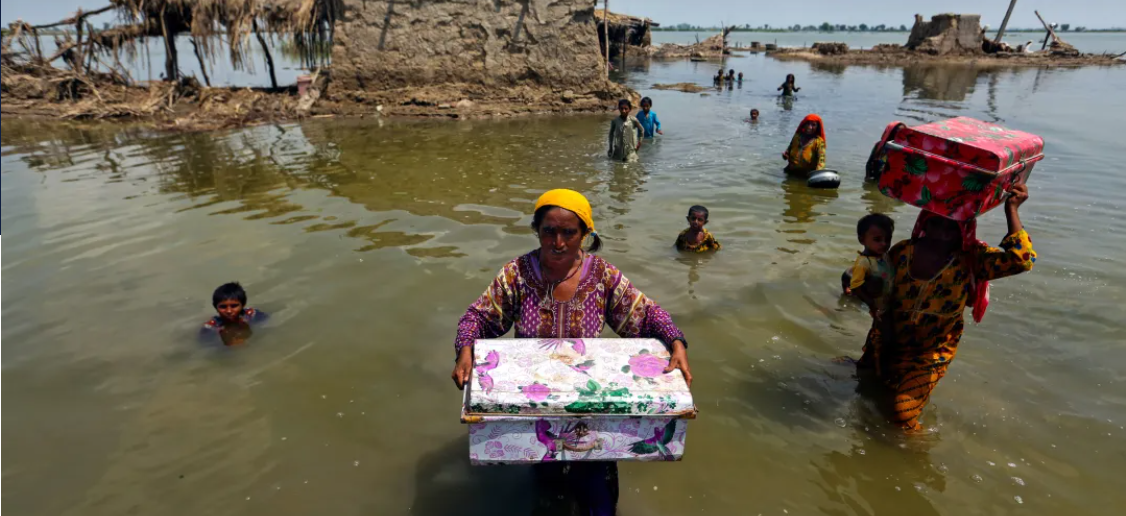
Climate Finance Gap: Pakistan’s Vulnerability and Global Inaction

Climate ,finance , Pakistan, Germanwatch, Climate ,Risk, Index, UNDP ,report, World Bank ,CCDR, Pakistan ,vulnerability


Pakistan remains one of the world’s most climate-vulnerable nations yet receives less than 0.5% of global climate finance, according to the UNDP Climate Finance Report (2024).

The Germanwatch Climate Risk Index 2023 ranked Pakistan as the eighth most affected country by climate disasters, largely due to the 2022 floods and recurring heatwaves.

“Despite contributing less than 1% of global emissions, Pakistan pays a disproportionate price for global inaction,” said Inger Andersen, Executive Director of the UN Environment Programme (UNEP).

The World Bank Country Climate and Development Report (CCDR) estimates that Pakistan requires $348 billion by 2030 to meet adaptation and mitigation needs, yet available funding is less than 10% of that target.

The Ministry of Climate Change has proposed the Pakistan Climate Investment Fund (PCIF) to attract both public and private capital into renewable energy, water conservation, and green transport projects.

“We need predictable and accessible climate finance, not promises that never materialize,” stated Ali Tauqeer Sheikh, climate policy expert.

Analysts warn that Pakistan’s limited fiscal space and rising debt burden constrain domestic investment in climate adaptation. International donors are calling for better transparency and project readiness to attract concessional funding.