BREAKING NEWS
Advertise with us >

US issues license allowing Iranian crude oil and petrochemical shipments

US issues

WASHINGTON: The United States has issued a general license authorizing Iran to produce, transport and sell crude oil and petrochemical products, temporarily easing longstanding sanctions following recent talks in Switzerland.

U.S. Treasury Secretary said in a social media post that Washington was providing temporary sanctions relief on Iranian oil and petrochemical exports after negotiations held in Switzerland.

According to the Treasury Department, the license allows Iran to continue producing, shipping and selling crude oil and petrochemical products through Aug. 21, 2026.

The department said the authorization also permits the import of Iranian crude oil, petroleum and petrochemical products into the United States under the terms of the license.

The United States had previously imposed restrictions on Iran’s oil exports as part of broader economic sanctions.

Earlier, Reuters, citing a senior Iranian official, reported that a proposed agreement between Washington and Tehran could include temporary easing of oil sanctions, allowing Iran to resume oil sales and access related revenues. The report also said the United States would refrain from imposing new economic sanctions on Iran while negotiations toward a final agreement continue.

Sindh presents tax-free budget for 2026-27

Sindh presents

KARACHI: Sindh Chief Minister Murad Ali Shah on Wednesday presented the province’s budget for the 2026-27 fiscal year, announcing a 7% increase in salaries and pensions for government employees, raising the minimum monthly wage to Rs43,000 and introducing a range of development and social welfare initiatives.

Presenting the budget in the Sindh Assembly, Shah said the government would merge the ad hoc relief allowances granted in 2022 and 2025 into employees’ pay scales. He also announced that the minimum wage would be increased from Rs40,000 to Rs43,000 per month.

The chief minister said no new taxes had been imposed in the budget, which aims to provide relief to citizens and the business community. The government also decided not to introduce any new development schemes in the upcoming fiscal year, while proposing Rs2.56 trillion for non-development expenditures.

Education remained a key priority, with Rs601 billion allocated to the sector. The government also reduced sales tax on educational support services to 5%.

Shah announced plans to establish the Sindh International Financial Center in Karachi, describing it as a platform for infrastructure financing, Islamic finance and climate finance.

He said Sindh had agreed to arrangements worth Rs260 billion under Article 160 of the Constitution in support of national stability while safeguarding the province’s constitutional rights and development priorities under the NFC Award.

The budget also introduced a subsidized solar financing program for middle-income households. Shah said Rs18 billion would be spent to distribute 275,000 free solar home systems, adding that free solar units had already been provided to low-income families.

Among other initiatives, the chief minister announced the launch of the Sindh Green Data Infrastructure Initiative and a waste-to-value program aimed at converting waste into fuel and commercial products.

The government also plans special legislation to support small farmers by improving access to machinery, financing, insurance and modern technology.

In the health sector, Shah said services at major institutions, including National Institute of Cardiovascular Diseases, Sindh Institute of Cardiovascular Diseases, Sindh Institute of Urology and Transplantation and Jinnah Postgraduate Medical Centre would be expanded. He added that the 1123 telemedicine service and 1122 ambulance network would be further strengthened.

Shah highlighted the completion of the Rs60.7 billion Shahrah-e-Bhutto project, describing it as a major public convenience initiative.

He also reiterated plans to transform Keti Bandar into a global maritime, logistics, industrial and energy hub linked to the Dhabeji Special Economic Zone and Thar coal resources, with the goal of making it Pakistan’s next major economic gateway.

Balochistan unveils tax-free Rs1.089 trillion budget, announces 7% pay raise

Balochistan unveils

QUETTA: The Balochistan government presented a Rs1.089 trillion tax-free budget for the 2026-27 fiscal year, announcing a 7% increase in salaries and pensions for provincial employees while prioritizing education, health and law and order.

Finance Minister Mir Shoaib Nosherwani presented the budget in the provincial assembly, saying no new taxes had been imposed. The budget includes a 7% raise in salaries and pensions and outlines significant allocations for public services, development projects and employment generation.

The minister said Rs270 billion has been earmarked for general public services, Rs157 billion for education, Rs74 billion for health and Rs108 billion for maintaining law and order. The government has also allocated Rs10 billion for the establishment of the Bank of Balochistan.

According to the budget documents, non-development expenditures are estimated at Rs798 billion, while the province expects to receive Rs30.61 billion in federal grants. An allocation of Rs5 billion has been made for Phase II of Safe City projects.

Nosherwani announced the creation of 5,000 new jobs for young people, including 3,000 positions in the school education sector, 500 in the health department, 1,000 for newly created districts and 500 in various government departments.

The budget also allocates Rs1 billion for the Kissan Card program aimed at supporting farmers. In addition, sales tax on public transport has been abolished, while new electric vehicles have been granted a 100% tax exemption.

The finance minister said the government had sought to reduce official privileges amid challenging economic conditions, adding that education, healthcare and security remain the administration’s top priorities.

“We are moving in the right direction for the development of the province, and government initiatives are not just on paper but are producing tangible results,” Nosherwani told the assembly.

Global oil prices hit three-month low after Iran-US agreement

Global oil prices

Global crude oil prices fell to their lowest level in three months, extending losses in international markets following the Iran-U.S. agreement.

Brent crude, the international benchmark, dropped by $3.20 per barrel to $79 per barrel.

U.S. West Texas Intermediate (WTI) crude also declined, falling $2.86 to $77 per barrel. Meanwhile, UAE Murban crude was trading at $72 per barrel.

The decline continues a downward trend seen in recent trading sessions, with oil prices also posting losses a day earlier amid expectations of improved supply flows and reduced geopolitical tensions.

Gold prices jump sharply in Pakistan

Gold prices

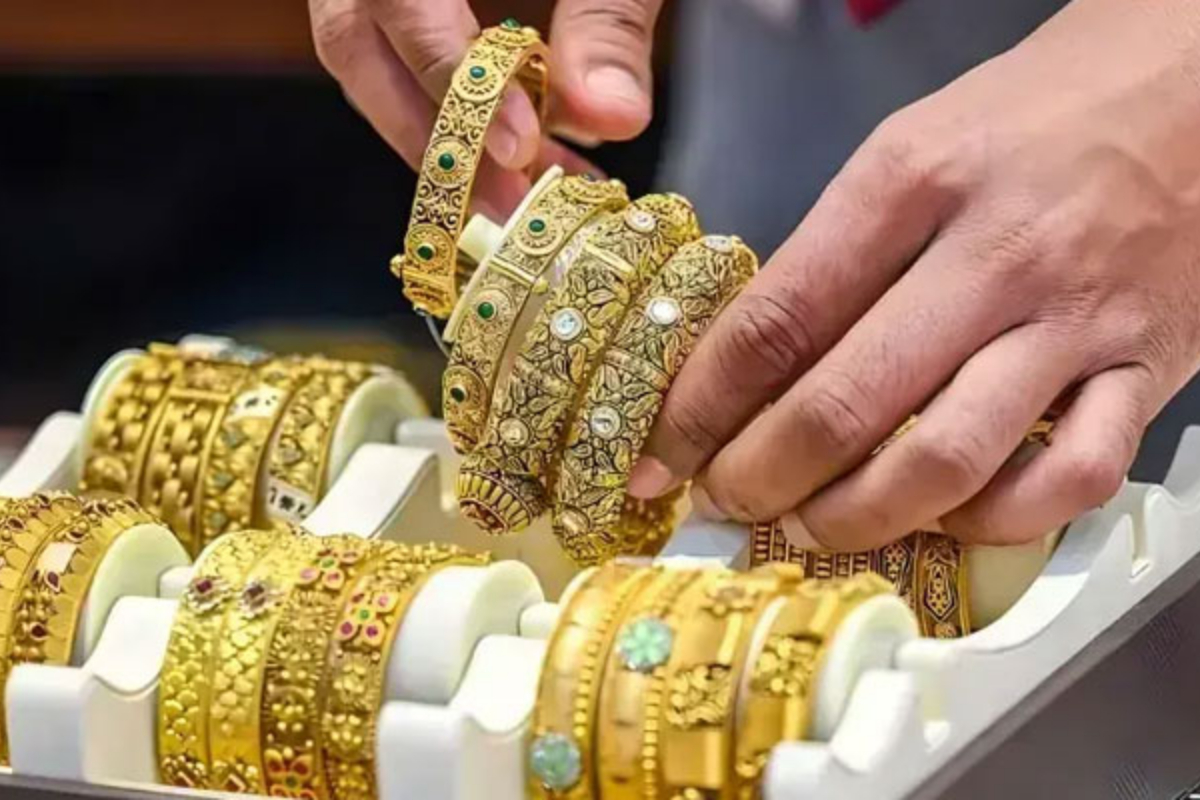
Karachi: Gold prices across Pakistan surged by more than Rs10,000 per tola on Monday, tracking a strong rally in the international bullion market, according to the All Pakistan Gems and Jewellers Association.

The price of gold per tola increased by Rs10,800 to reach Rs455,136, while the rate of 10 grams rose by Rs9,720 to settle at Rs389,600.

In the global market, gold climbed by $108 per ounce to $4,327, reflecting continued bullish momentum in precious metals trading worldwide.

Silver prices witnessed a notable increase in both international and domestic markets, reflecting a broader bullish trend in precious metals.

In the global market, the price of silver per ounce rose by $2.30 to reach $70.30.

Following the international rally, local bullion markets also recorded gains. In Pakistan, the price of silver per tola increased by Rs. 230 to settle at Rs. 7,509, while the price of 10 grams rose by Rs.197 to reach Rs6,396.

Sindh proposes Rs522 billion development budget for FY2026-27

Sindh proposes

KARACHI: The provincial government of Sindh has prepared its Annual Development Programme (ADP) for the fiscal year 2026-27, proposing a total allocation of Rs522 billion.

Officials said the overall development programme size stood at Rs1,018 billion in the current fiscal year, while the ADP allocation was Rs520 billion.

For the upcoming fiscal year, Rs296 billion has been proposed for foreign-funded development projects, compared to Rs367 billion allocated under the Foreign Project Assistance programme in the current year.

The Public Sector Development Programme (PSDP) allocation is proposed at Rs50–60 billion, down from Rs76 billion in the current fiscal year.

Similarly, Rs50 billion has been proposed for the District Annual Development Programme (DADP), compared to Rs55 billion allocated this year.

Authorities said the proposed budget aims to balance ongoing development needs with available fiscal space, while prioritizing key infrastructure and social sector projects across the province.

SBP keeps policy rate unchanged at 11.5% amid inflation pressures

SBP keeps

KARACHI: The State Bank of Pakistan has decided to keep its key policy rate unchanged at 11.5%, the central bank announced on Monday following a meeting of its Monetary Policy Committee chaired by Governor Jameel Ahmad.

The central bank said inflation had re-entered double digits in April and May, adding that it expects price pressures to remain in the double-digit range in the coming months before gradually easing.

It noted that geopolitical tensions in the Middle East have pushed up energy, transport and production costs, increasing inflationary pressure on the economy.

The SBP said its provisional estimate for real GDP growth in fiscal year 2025-26 stands at 3.7%, reflecting an improvement over the previous year.

It added that large-scale manufacturing grew by 6.5% from July to March, with industry and services contributing significantly to overall growth.

The current account recorded a $300 million deficit in April, but the central bank expects the full-year deficit to remain at the lower end of earlier projections due to strong remittances.

Foreign exchange reserves stood at $17.2 billion as of June 5 and are projected to reach $18 billion by the end of the month.

The SBP said the government has set a primary budget surplus target of 2.5% of GDP for FY2025-26 and 2% for the following year, while stressing the need for fiscal discipline, tax base expansion and reforms in state-owned enterprises for sustainable growth.

The Monetary Policy Committee said it will continue to closely monitor inflation trends, global developments, and changes in fuel, electricity and food prices.

Meanwhile, the Federation of Pakistan Chambers of Commerce and Industry (FPCCI) rejected the decision, saying high interest rates are harming industry, exports and investment, and urged the SBP to bring rates down to single digits in the next policy meeting.

KSE-100 Index rises 1.1% amid easing geopolitical tensions

KSE-100 Index

KARACHI: Pakistan’s stock market posted a strong weekly performance, with the benchmark KSE-100 Index gaining 1.1% amid improving investor sentiment driven by easing geopolitical tensions and lower global oil prices.

The KSE-100 Index rose by 1,921 points during the week, closing at 172,399 points compared with 170,478 points at the end of the previous week.

During the trading week, the index touched an intraday high of 173,093 points, while its lowest level was recorded at 168,432 points.

Market capitalization increased by Rs191 billion over the week to reach Rs19.12 trillion, reflecting broad-based gains across listed companies.

Average daily trading volume stood at 776 million shares, while average daily traded value was recorded at Rs29 billion.

Market analysts attributed the positive momentum to renewed investor confidence following a reduction in tensions between the United States and Iran, as well as a decline in international oil prices, which improved the outlook for Pakistan’s economy and equity market.

Finance Minister Aurangzeb says economy moving in right direction

Finance Minister

ISLAMABAD:  Finance Minister Muhammad Aurangzeb said Saturday that Pakistan’s economy is moving in the right direction and the country is now shifting from stabilization toward growth.

Addressing a post-budget press conference in Islamabad, Aurangzeb said the government aimed to provide relief to lower-income salaried individuals, noting reductions in income tax rates for different salary brackets.

He said the tax rate for certain salaried categories had been reduced from 5% to 1%, while another bracket was lowered from 15% to 13%, adding that feedback on measures targeting higher-income earners and surcharges had been positive.

The finance minister said taxes in the construction sector had been reduced to encourage activity, while agricultural credit had increased by 15%, exceeding 2 trillion rupees in volume.

He added that efforts were underway to strengthen a fertilizer-related scheme and that small farmers would no longer be required to mortgage their homes to access loans. He also said a youth loan program worth 262 billion rupees includes 125 billion rupees allocated for agriculture.

Aurangzeb said customs duties, additional customs duties and regulatory duties had been eliminated on imported agricultural machinery to support the sector.

He said inflation is expected to ease further if geopolitical tensions in the Middle East subside, adding that economic stability indicators have shown improvement over the past year.

The minister said the government had introduced measures in the budget to improve taxation and export systems, including 70 billion rupees in additional subsidies aimed at boosting exports.

He acknowledged pressure on the energy infrastructure but said it would continue to remain a challenge in the coming fiscal year.

Aurangzeb also expressed gratitude to provincial governments for their financial cooperation with the federal government, saying the arrangement would continue for the next three fiscal years.

Pakistan imposes excise duty on imported luxury vehicles

Pakistan imposes

ISLAMABAD: Pakistan has decided to impose Federal Excise Duty (FED) on imported vehicles, including SUVs and luxury electric cars, Finance Minister Muhammad Aurangzeb said during his budget speech on Friday.

The minister said SUVs with engine capacities between 2,000cc and 3,000cc will now be subject to FED, while higher rates will be applied on imported vehicles above 3,000cc.

He added that luxury electric vehicles priced above Rs20 million will also come under the new tax regime as part of efforts to increase government revenue from high-end imports.

Aurangzeb said the new auto policy is currently under review by a committee formed by the prime minister.

However, he announced that incentives for electric motorcycles, rickshaws and buses will remain unchanged to support green transportation.

He further said a 1% sales tax facility is being proposed for imported electric trucks to encourage cleaner logistics solutions.

In a separate announcement, the finance minister said the Federal Excise Duty on business class air travel abroad has been abolished, providing relief to international travelers.

Officials said the measures reflect a mix of revenue-raising steps and targeted incentives aimed at supporting sustainable transport while broadening the tax base.