BREAKING NEWS
Advertise with us >

Google Chrome 148 to introduce faster browsing

Google Chrome

Google is set to roll out a significant update to its Chrome web browser. According to reports, Chrome version 148 is expected to be released in mid-April, promising faster and more efficient browsing for users.

One of the key features being tested in this update is lazy loading for videos and audio. Lazy loading is a technology that delays the loading of non-essential or off-screen resources until they are needed. This improves page load performance and reduces bandwidth usage.

Currently, Chrome supports lazy loading for images, which means that images on a webpage load only when they come into view, rather than loading all at once.

The upcoming extension to videos and audio will ensure that these media files load only when required, helping pages load more quickly.

The update will be available across Chrome’s desktop version as well as Android and iOS devices, providing a smoother and more responsive browsing experience across platforms.

Amazon eyes smartphone comeback with transformer over decade after fire phone failure

Amazon eyes smartphone

Seattle: Amazon is planning a return to the smartphone market more than ten years after the disastrous launch of its Fire Phone.

The original Fire Phone, introduced in 2014 under the direct supervision of founder Jeff Bezos, was meant to challenge Apple and Samsung but was discontinued after just over a year, becoming one of Amazon’s most high-profile flops.

The new device, internally codenamed “Transformer,” is being developed within Amazon’s devices and services unit, according to sources familiar with the project.

The phone is envisioned as a highly personalized mobile device that integrates seamlessly with Alexa and serves as a daily conduit for Amazon’s customers.

The Transformer aims to make shopping on Amazon, streaming Prime Video, listening to Prime Music, and ordering food from partner services easier than ever.

Artificial intelligence features may eliminate the need for traditional app stores, streamlining access to content and services.

This initiative reflects Bezos’ long-term vision of a ubiquitous, voice-driven computing assistant, similar to the AI in science fiction series like Star Trek. While Alexa is expected to play a central role, it may not serve as the phone’s primary operating system.

Amazon faces the challenge of competing against entrenched leaders Apple and Samsung, which together captured about 40% of global smartphone sales last year, according to Counterpoint Research. Compounding the challenge, global smartphone shipments are forecast to decline 13% in 2026 due to rising memory chip prices, according to the International Data Corporation.

The company hopes to avoid past pitfalls of the Fire Phone, which suffered from a proprietary operating system lacking popular apps, battery-draining 3D display technology, and weak consumer adoption despite a free Amazon Prime trial. Amazon had ultimately canceled the Fire Phone after 14 months, taking a $170 million charge for unsold inventory.

With the Transformer, Amazon aims to combine AI, personalized shopping, and entertainment into a single device to make a stronger mark in the smartphone market.

Despite Ban, Many Australian teens under 16 continue using social media

Despite Ban

A significant number of Australian teenagers under the age of 16 continued using social media platforms even two months after the country introduced a ban restricting access for minors, according to new industry data, raising concerns about the effectiveness of age-verification systems.

A report by parental control software company Qustodio revealed that more than one-fifth of teenagers aged 13 to 15 were still active on popular platforms such as TikTok and Snapchat between December and February, despite the restrictions.

The findings provide some of the earliest insights into how young users’ online behaviour has changed since Australia implemented the social media ban in December. The policy has drawn global attention, with several governments considering similar measures to protect minors online.

According to the report, the number of teenagers aged 13–15 using Snapchat dropped by 13.8 percentage points from November to February, bringing the total to about 20.3%. Usage of TikTok among the same age group also declined by 5.7 percentage points, falling to 21.2%.

Meanwhile, usage of YouTube among teenagers dipped slightly by one percentage point to 36.9%, although the data did not confirm whether these users were logged into accounts. The Australian law still allows people of all ages to access YouTube without logging in.

Under the new regulations, major platforms including Meta’s Instagram, Facebook, and Threads, along with TikTok, Snapchat, and YouTube, must block users under the age of 16 or face fines of up to A$49.5 million (about $35 million).

A spokesperson for Australia’s internet regulator, the eSafety Commissioner, said authorities were aware that some minors were still able to access social media and were actively working with platforms and age-verification providers to monitor compliance and address potential violations of the law.

The office said it was reviewing multiple data sources and insights to assess whether companies are properly enforcing the restrictions.

A spokesperson for Communications Minister Anika Wells acknowledged that raising the minimum age for social media access represents a cultural shift that will take time to fully implement.

The data also suggested that social media use among teenagers typically declines during December and January due to Australia’s long summer school holidays. However, the sharper drop compared to the previous year indicates the ban may have had some effect.

Despite earlier concerns, the report found little evidence that teenagers were shifting to unregulated platforms. However, usage of WhatsApp among 13- to 15-year-olds showed a slight increase during the same period

Reddit fined £14m over failure to protect children’s privacy

Reddit fined £14m

The UK’s data regulator has imposed a £14 million fine on the social media platform Reddit for failing to protect the privacy of children using its platform.

According to the Information Commissioner’s Office (ICO), Reddit did not adequately safeguard the personal information of underage users, potentially exposing children to inappropriate or harmful content.

The ICO’s investigation found that Reddit failed to implement effective age-verification mechanisms, putting minors at risk.

The regulator noted that the platform had no robust system to confirm users’ ages and therefore had no legal justification for processing personal data of users under 13.

The fine underscores growing scrutiny of social media platforms’ responsibility to protect young users and ensure compliance with data protection laws.

Global moves to limit social media for children and teens

Global moves

In recent months, several countries have announced plans to limit or block social media access for children and teenagers in an effort to protect their mental health and well-being.

Australia

Australia became the first country to implement such a ban at the end of 2025, restricting children under 16 years from using platforms including Facebook, Instagram, Snapchat, Threads, TikTok, X (Twitter), YouTube, and Reddit.

WhatsApp and YouTube Kids are exempt.

Companies failing to enforce the ban could face fines of up to AUD 34.4 million.

The government requires social media apps to use robust age verification methods, rather than relying on self-reported ages.

Denmark

Denmark plans to restrict social media for children under 15 years.

In November 2025, government and opposition parties agreed on the proposal.

The law is expected to be introduced mid-2026, along with a dedicated age-verification app.

France

In January 2026, the French Parliament approved a bill to block social media access for children under 15 years.

The French President supports the law, stating it will help keep children away from excessive screen time.

The bill will next move to the upper house before returning to the lower house for final approval.

Germany

Germany’s Chancellor’s party began consultations in early 2026 on restricting social media for children under 16, though approval remains uncertain due to reluctance within the ruling coalition.

Greece

Media reports in February 2026 indicate Greece will soon announce a ban for children under 15 years.

Malaysia

The Malaysian government announced in November 2025 that it plans to restrict social media access for children under 16 years, with implementation expected later in 2026.

Slovenia

Slovenia has drafted legislation to regulate social media for minors and control shared content, announced by the Deputy Prime Minister in February 2026.

Spain

Spain is planning a social media ban for children under 16, with parliamentary approval required.

The government is also considering laws to hold platform officials accountable for spreading harmful content.

United Kingdom

The UK is exploring ways to restrict social media access for children under 16 years, with ongoing consultations with stakeholders.

These initiatives reflect a growing global concern about the impact of social media on children’s mental health, with countries seeking to balance digital access and safety.

UK plans social media ban for under-16s, moves to regulate AI Bots

UK plans

The UK government is preparing to introduce an Australian-style ban on social media use for children under 16 as early as this year, while also moving to close regulatory gaps surrounding artificial intelligence (AI) chatbots.

Prime Minister Keir Starmer last month launched a formal consultation on restricting social media access for under-16s, signaling a tougher stance on online safety. The move comes amid growing concerns about the impact of digital platforms and AI-driven tools on young users.

AI Bots: A Regulatory Gap

Technology Secretary Liz Kendall highlighted what she described as a loophole in Britain’s Online Safety Act 2023, noting that the law does not currently cover children’s interactions with AI chatbots in the same way it regulates social media platforms.

Kendall said both she and the prime minister are concerned about the increasing influence of AI systems on children and teenagers.

“I am concerned about these AI chatbots — as is the prime minister — about the impact that’s having on children and young people,” she stated, warning that some minors are forming one-to-one relationships with AI systems that could pose safety risks.

The government is expected to outline its formal proposals before June.

Wider European Push

The UK is not alone in seeking tighter controls. Several European nations — including France, Spain, Greece, Slovenia and Czech Republic — are also pushing for stricter regulations to shield children from online harm.

Additional Measures Under Consideration

Beyond the proposed age-based social media ban, the government is considering several new safeguards based on public consultation feedback:

Granting investigators automatic powers to restrict and preserve a deceased child’s social media and online data to secure key evidence.

Limiting “stranger pairing” features on gaming consoles that allow children to connect with unknown individuals.

Blocking the sending and receiving of nude images on children’s devices.

The proposed changes are expected to be introduced as amendments to existing crime and child-protection legislation.

If enacted, the measures would represent one of the most significant overhauls of online safety laws in the UK, reflecting mounting global pressure to better protect children in the digital age.

Sindh bans photography in girls’ colleges to protect students’ privacy

Sindh bans

KARACHI: The Sindh government has imposed a ban on photography in government girls’ colleges across the province to prevent the misuse of students’ images on social media.

According to official details, the Sindh College Education Department has issued a formal notification directing principals of government girls’ colleges to strictly enforce the ban on taking photographs of students within college premises.

The measure aims to curb the unauthorised sharing and circulation of students’ images on social media platforms. The decision follows an advisory issued by the Special Secretary for Colleges, after which the Regional Director of College Education Karachi formally informed all government colleges through official correspondence.

Officials said the step was taken in response to multiple complaints regarding the misuse of photographs taken on college campuses. The ban has been introduced to safeguard the privacy, dignity and security of female students.

The Special Secretary noted that in several cases, unauthorised photographs of female teachers and students were secretly taken and shared on platforms such as Facebook, WhatsApp and other digital media.

Following the directive, college principals and staff have been instructed to ensure strict compliance. Regional Director College Education Karachi, Professor Qazi Irshad, warned that disciplinary action would be taken against principals and staff found violating the ban.

It is worth mentioning that earlier the Punjab government had also imposed restrictions on the use of mobile phones by teachers and students in schools, directing district education officers to ensure strict implementation of the policy.

Pakistan to invest $1bn in Artificial Intelligence sector by 2030

Pakistan to invest

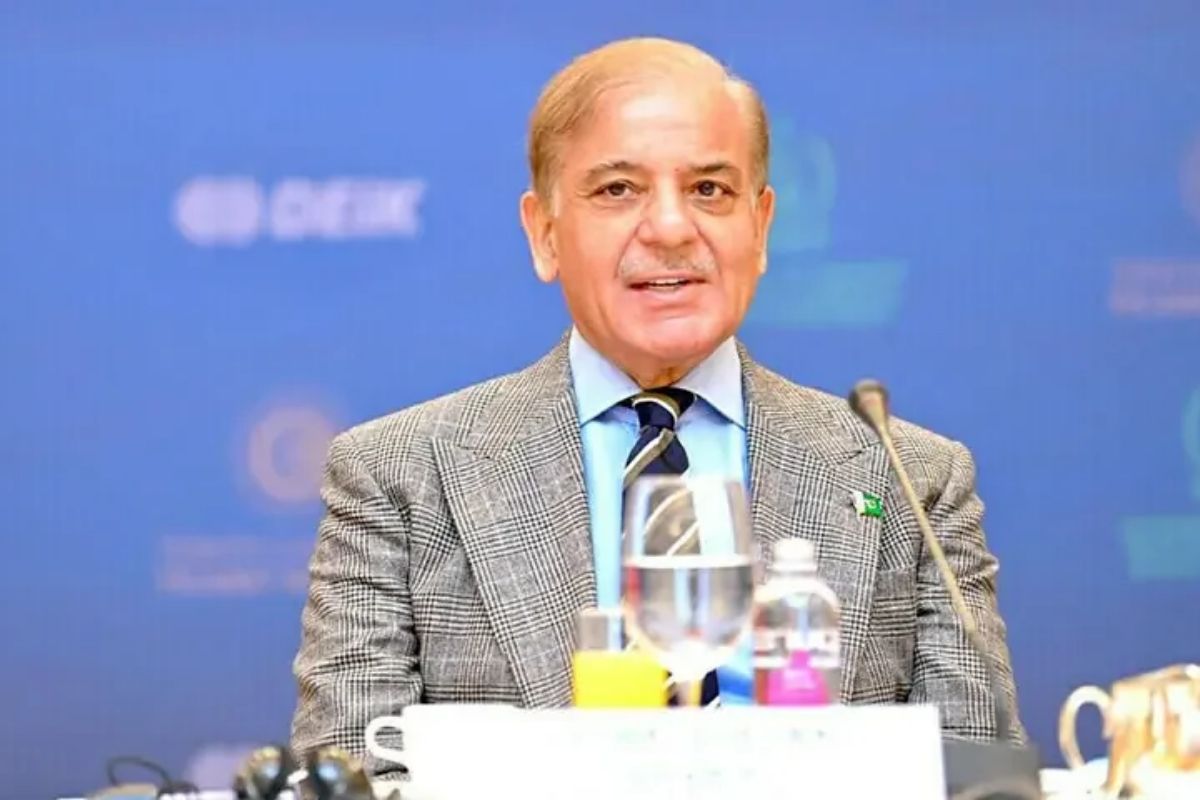
Prime Minister Shehbaz Sharif announced that the federal government will invest $1 billion in Pakistan’s artificial intelligence (AI) sector by 2030, aiming to build a future-ready digital economy and empower the country’s youth.

Addressing the inaugural session of Indus AI Week, the prime minister said the investment would be used to develop a strong and inclusive AI ecosystem across the country.

He revealed that AI will be introduced into the curriculum of all federally run schools, while 1,000 fully funded PhD scholarships in artificial intelligence will be offered nationwide by 2030.

In a major skills initiative, the prime minister also announced the launch of a nationwide programme to train one million non-IT professionals in AI-related skills, with the goal of improving productivity and enhancing livelihoods across various sectors.

“We are recovering lost revenues through technology and equipping our young men and women with quality skills in agriculture, commerce and trade,” Shehbaz Sharif said.

Highlighting ongoing digital reforms, the prime minister referred to initiatives such as the laptop distribution programme for high-achieving students in Punjab, establishment of e-libraries in remote areas, introduction of e-stamp papers, and digitisation of land records in collaboration with the World Bank, which he said had helped reduce corruption.

He also noted that Pakistan’s first Safe City project and first IT university were established in Lahore. “We have learned from the past, and today Pakistan is ready to join the global community in AI-driven transformation,” he added.

Minister for Information Technology Shaza Fatima Khawaja said Indus AI Week aims to strengthen collaboration between universities, government institutions and international technology companies, underscoring Pakistan’s commitment to a digital revolution.

 She added that the Pakistan Digital Authority is preparing a nationwide digital master plan to guide future transformation.

Meanwhile, Minister for Planning Ahsan Iqbal said the world has entered an era where intelligence itself has become a key factor of production, with nations now competing on ideas, talent, data and technology rather than traditional commodities.

He described artificial intelligence as a greater disruptor than electricity or the internet, noting that Pakistan’s engagement with technology began more than two decades ago through early IT policies, the establishment of NADRA, and sustained investment in advanced human capital.

Instagram, YouTube face California court test in user addiction case

Instagram

A California state court case over whether Instagram and YouTube harmed a woman’s mental health through addictive app design kicks off on Monday, February 9, 2026, with opening statements, in a test of whether Big Tech platforms can be held liable for harming kids.

According to court filings the women She says the attention-grabbing design of the platforms got her addicted to them at a young age, She alleges the apps fueled her depression and suicidal thoughts, and she is seeking to hold the companies liable.

The case was unveiled after a 20-year-old woman identified as K.G.M. filed the lawsuit against Facebook and Instagram parent company Meta Platforms and Alphabet’s Google, which owns YouTube.

A verdict against the tech companies could smooth the way for similar cases in state court, and shake the industry’s longstanding U.S. legal defense against claims of user harm.

Previously, Google, Meta, TikTok and Snapchat faced thousands of lawsuits in California.

Meta Platforms CEO Mark Zuckerberg is expected to be called as a witness at the trial, which is likely to stretch into March 2026.

Moreover, TikTok and Snapchat settled with K.G.M. before the trial.

Furthermore, the woman’s lawyers aim to show that the companies were negligent in their design of the apps, that they failed to warn the public about the risks, and that the platforms were a substantial factor in her injuries.

If they succeed, the jury will consider whether to award her damages for pain and suffering and could also impose punitive damages.

Meta and Google plan to defend themselves from the claims by pointing to other factors in K.G.M.’s life, laying out their work on youth safety, and trying to distance themselves from users who upload harmful content.

Under U.S. law, internet companies are largely shielded from liability for material their users post.

If the jury in this case rejects that defense, it could pave the way for other lawsuits claiming the platforms are harmful by design.

In addition to cases like K.G.M.’s in state court, the companies face more than 2,300 similar lawsuits filed by parents, school districts, and state attorneys general in federal court.

The judge overseeing those is weighing the companies’ liability protections ahead of the first trial over the claims in federal court, which could happen as early as June.

Also on Monday, a landmark trial against Meta is kicking off with opening statements in Santa Fe, New Mexico, where the state attorney general has accused the company of exposing children and teens to sexual exploitation on its platforms and profiting from it.

Additionally, the wave of litigation in the U.S. is part of a global backlash against social media platforms over children’s mental health. Australia and Spain have prohibited access to social media platforms for users under age 16, and other countries are considering similar curbs.

Spain to ban social media use for children under 16

Spain to ban

Madrid: Spain has decided to impose a ban on social media use for children under the age of 16 as part of stricter measures to protect minors online.

According to international media reports, the Spanish government is introducing tough new regulations that will require social media platforms to implement mandatory age-verification systems.

The Spanish Prime Minister said the new measures aim to safeguard children from the risks associated with social media, including harmful content and negative impacts on mental health.

He also urged other European countries to adopt similar policies to ensure the protection of minors across the region.

The Prime Minister revealed that Spain has joined the “Coalition for Digital Wellbeing” alongside five other countries to better coordinate cross-border digital regulations.

Australia became the first country to impose a nationwide ban on social media use for children under 16 in December.

Following this move, several other countries have begun taking steps to introduce age-based restrictions on social media platforms.

Spain is also preparing to table a bill that will hold social media executives accountable for illegal content, criminalize algorithmic manipulation, and mandate robust age-verification mechanisms across digital platforms.

Meanwhile, Greece is expected to announce a ban on social media use for children under 15 in the near future. Senior government sources told Reuters on Tuesday that Greece is “very close” to making the announcement.

Globally, growing concerns over children’s mental health and rising negative online trends have prompted governments to introduce restrictions, reforms, and stricter legal frameworks for social media regulation.

France

In France, the lower house of parliament has overwhelmingly approved a bill banning social media use for children under 15. However, the legislation still requires approval from the Senate before it can be enforced.

According to Reuters, the move is aimed at protecting children from online harassment, psychological stress, and increasing mental health risks. The bill was passed with 116 votes in favor and 23 against. It will now be debated in the Senate before returning to the lower house for final approval.

The bill states that excessive social media use among minors has led to an alarming rise in mental health issues, making regulatory intervention unavoidable. It also proposes extending the existing ban on smartphone use in middle schools to high schools.

United Arab Emirates

In the United Arab Emirates, a new Child Digital Safety Law has been implemented to ensure safer online environments for children.

According to Gulf News, the law prohibits the use of personal data of children under 13 without explicit, written, and verifiable parental consent.

The legislation also requires social media platforms to provide parents with an easy and immediate option to withdraw consent at any time, without the need to provide justification.