BREAKING NEWS
Advertise with us >

Moody’s upgrades Pakistan’s sovereign credit rating to B3

Moody’s upgrades

ISLAMABAD: Global ratings agency Moody’s has upgraded Pakistan’s sovereign credit rating, raising it from Caa1 to B3, citing improvements in governance, stronger foreign exchange reserves and lower domestic borrowing costs.

Moody’s said continued macroeconomic stabilization was also among the factors behind the upgrade.

The agency said improvements in these areas were expected to strengthen Pakistan’s external position and improve fiscal indicators.

The latest decision marks a two-notch improvement in Pakistan’s Moody’s rating over roughly 12 months.

Prime Minister Shehbaz Sharif welcomed the upgrade, saying it reflected growing international confidence in the government’s economic policies and reform agenda.

Sharif praised the efforts of Deputy Prime Minister and Field Marshal Asim Munir in supporting the economy. He said the government had taken effective measures to stabilize the economy and improve the country’s external sector.

The prime minister said continued government efforts and reforms had increased the confidence of international institutions in Pakistan, adding that improved ratings from global agencies were clear evidence of that confidence.

Makkah Defense Pact gives Pakistan strategic reach and regional leverage

Makkah Defense

ISLAMABAD: The Makkah Joint Defense Agreement provides Pakistan with greater strategic reach, diplomatic influence and a stronger role in maintaining the regional balance, according to a U.S. publication.

An analysis published by Foreign Policy in Focus said the agreement reflects the growing role of regional powers in a rapidly changing Middle East.

The publication said U.S. President Donald Trump’s support for the pact was also a sign of Pakistan’s continuing diplomatic weight in Washington. Pakistan, Saudi Arabia and Türkiye have expressed their commitment to contributing constructively to regional security and lasting peace.

The analysis said it would be inaccurate to describe the Mecca agreement as an anti-Iran alliance. It added that growing strategic cooperation between India and Israel further highlights the agreement’s importance for Pakistan.

The pact also leaves the door open for other regional countries to join, according to the analysis. Its main strength, it said, lies not in creating a rigid alliance or bloc but in its inclusive and flexible structure.

Pakistan beat Japan 4-3 for first Hockey World Cup win in 16 years

Pakistan

Pakistan secured its first Hockey World Cup victory in 16 years on Saturday, defeating Japan 4-3 in a classification match in the Netherlands.

The win came in the ninth-to-16th place classification round after Pakistan was eliminated from contention for the World Cup title following three matches without a victory in the opening stage.

Pakistan had fallen two goals behind at one point but produced a strong comeback to seal the win. Moin Shakeel captained the side in place of Abubakar, who missed the match because of an injury.

Rana Waheed scored twice for Pakistan, while Hammaduddin and Hannan Shahid scored one goal each.

The victory marked Pakistan’s first win at the ongoing World Cup and ended a 6,017-day wait for a World Cup victory. Pakistan’s previous World Cup win came in 2010, when it defeated Spain 2-1.

Pakistan, a four-time world champion, failed to qualify for the 2014 World Cup. It went winless at the 2018 tournament and failed to qualify for the 2023 edition before returning to the World Cup in 2026 after an eight-year absence.

England beat Pakistan by innings and 103 runs in first Test

England beat

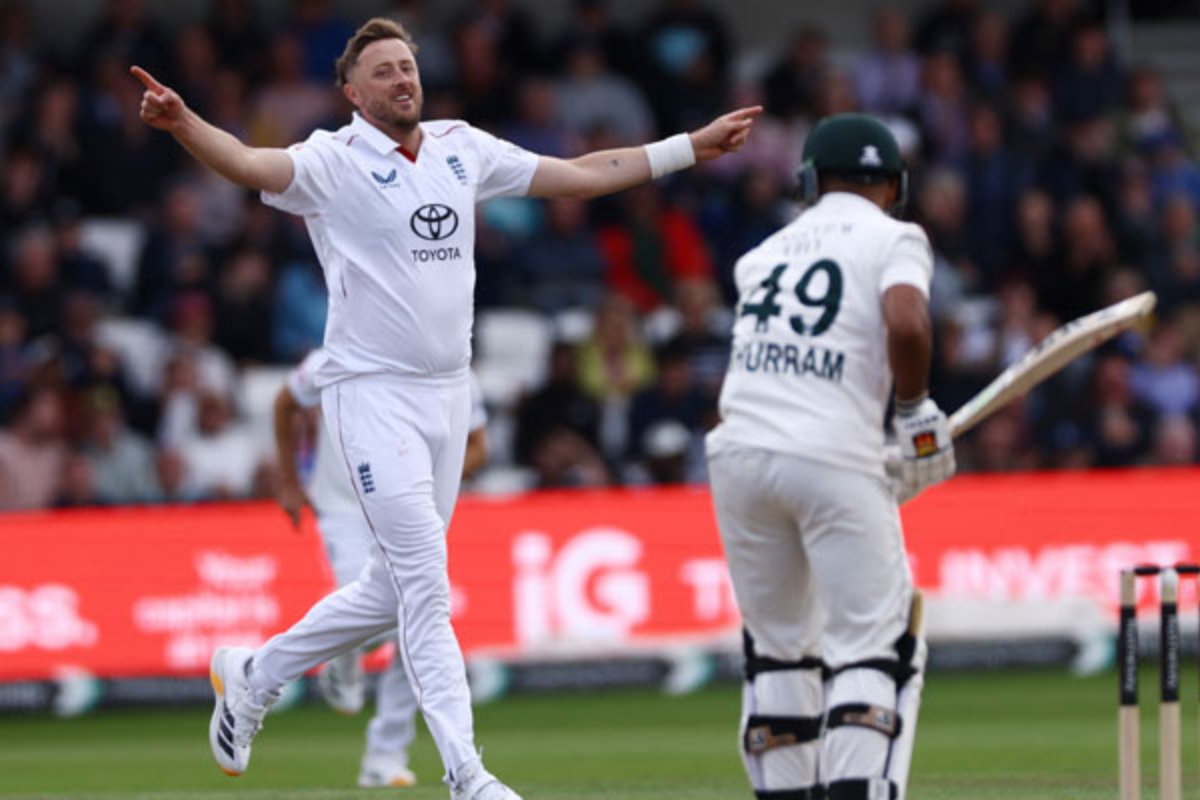
LEEDS, England: England thrashed Pakistan by an innings and 103 runs in the first Test at Headingley on Friday to take a 1-0 lead in the three-match series.

England were bowled out for 409 in their first innings on the third day, securing a 238-run lead after Pakistan were dismissed for 171. Harry Brook top-scored for England with 91, while Jordan Cox made 73.

Pakistan, beginning their second innings 238 runs behind, again struggled with the bat and were bowled out for just 135 in 38 overs.

Imam-ul-Haq was dismissed for a duck, while Aizaan Awais scored nine, Abdullah Shafique 15, Saud Shakeel 14 and captain Salman Ali Agha four. Shan Masood made 29 and Mohammad Rizwan top-scored with 41.

England bowlers Ollie Robinson, Jofra Archer and Josh Tongue took three wickets each to dismantle Pakistan’s batting lineup.

Earlier, Pakistan’s Ali Usman claimed five wickets and Khurram Shahzad took three as England were restricted to 409.

The victory gives England a 1-0 lead in the three-match series. The second Test is scheduled to begin at Lord’s on Aug. 27.

Speaking at a post-match press conference, Pakistan’s stand-in captain Salman Ali Agha acknowledged that England outclassed his side in every department during the first Test, saying Pakistan failed to perform consistently and could not execute its plans.

Salman said consistency was essential to winning in England and stressed that any team could make a comeback in cricket.

“Our team has the ability, but we could not execute our plans,” Salman said.

He said playing in England had always been challenging for Pakistan and the team had arrived only a week before the Test, leaving limited time to adjust to the conditions.

Salman said Pakistan were currently going through a rebuilding phase and acknowledged that their bowling attack lacked experience. He added that the team was focused on preparing for the future.

The stand-in captain also admitted that he, Mohammad Rizwan and Saud Shakeel had struggled for form.

“I accept that I, Rizwan and Saud have not been performing,” Salman said, adding that their lack of form was a concern.

He expressed hope that Babar Azam would recover in time for the next Test and said Pakistan would need to improve significantly in away series.

“We have not been able to play well in away series,” Salman said.

England defeated Pakistan by an innings and 103 runs in the first Test at Headingley to take a 1-0 lead in the three-match series. The second Test will be played at Lord’s from Aug. 27.

Pakistan considers income tax on farmers to meet IMF targets

Pakistan considers

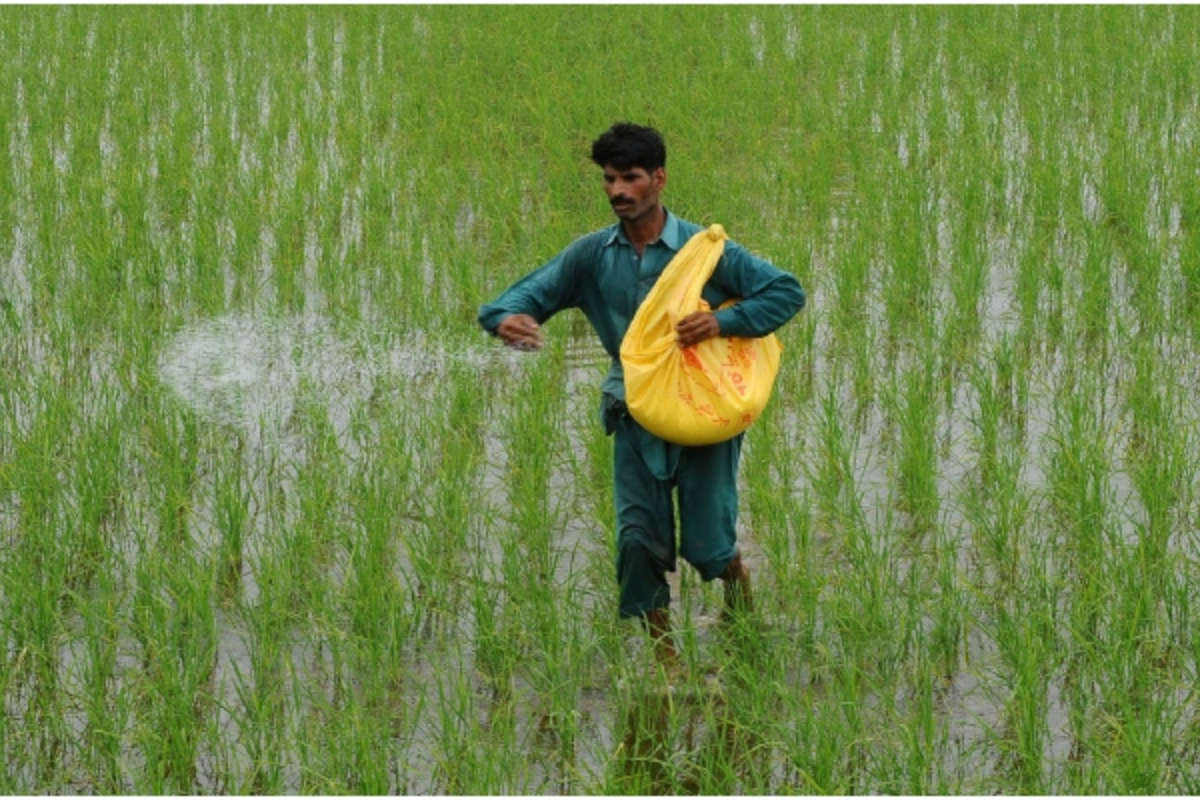
ISLAMABAD: The Pakistani government is considering imposing income tax on farmers as part of efforts to meet International Monetary Fund requirements and achieve targets for agricultural income tax collection, according to government sources.

Sources said the federal government has begun preparing an alternative strategy in consultation with the provinces to ensure that agreed agricultural tax collection targets are met.

The move comes as Pakistan seeks to fulfill commitments under its IMF program and improve revenue collection from the agricultural sector.

According to sources, the government is expected to give provincial authorities until Sept. 30, 2026, to meet targets related to agricultural income tax collection and the filing of tax returns.

The federal and provincial governments are expected to coordinate on the implementation of the agricultural income tax framework as Islamabad works to satisfy the IMF’s revenue-related requirements.

Officials have not yet disclosed details of the proposed tax structure or how the potential measures would affect farmers across different income and agricultural categories.

First Test: Pakistan collapse to 171 against England

First Test

LEEDS, England: Pakistan’s batting lineup collapsed in the first innings of the opening Test against England, with the entire team bowled out for 171 in 48.1 overs on Wednesday.

England captain Joe Root won the toss and elected to bowl first in the three-match Test series at Leeds.

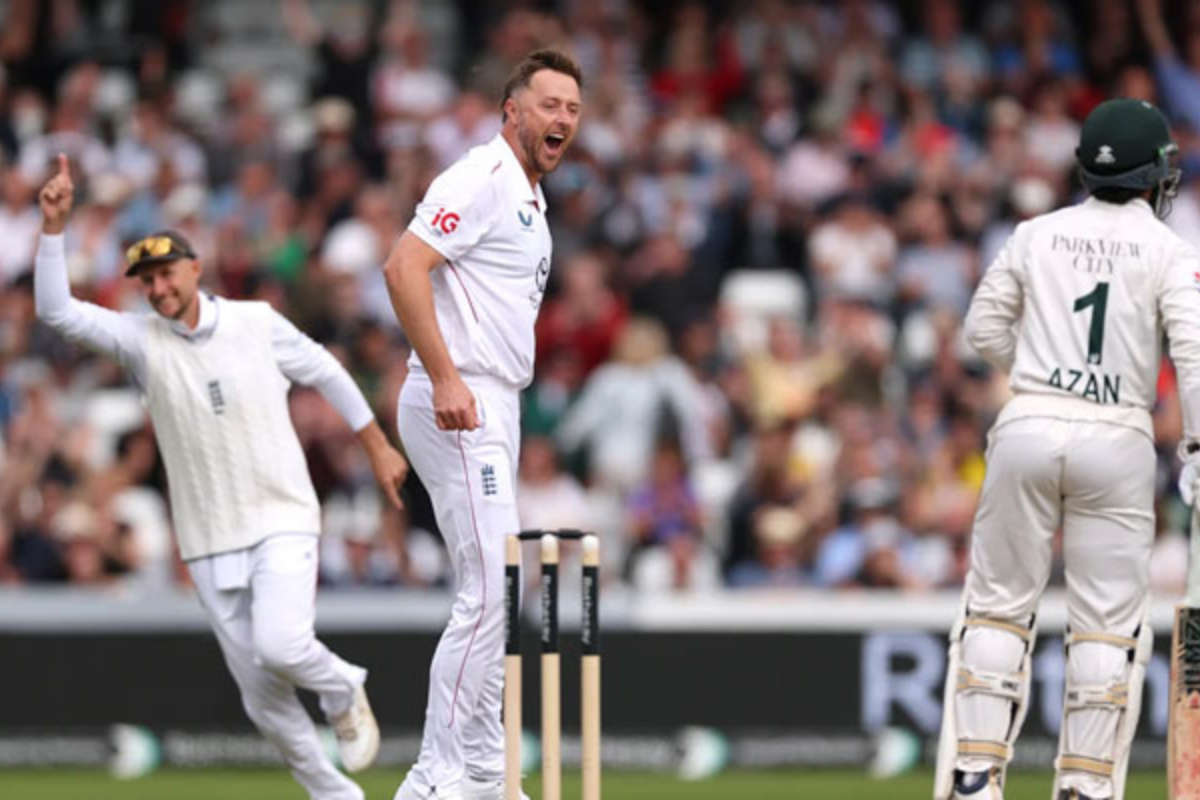
Pakistan got off to a disastrous start as opener Azzan Owais was dismissed lbw by Ollie Robinson off the first ball of the innings. Shan Masood was then trapped lbw by Robinson with Pakistan on six.

Imam-ul-Haq and Abdullah Shafique attempted to steady the innings, but both were eventually dismissed after scoring 42 and 61 runs, respectively.

No other Pakistani batter was able to withstand the England bowling attack. Salman Ali Agha scored 21, Khurram Shahzad made 14 and Mohammad Rizwan contributed 12.

For England, Robinson and Josh Tongue took five wickets each to bowl Pakistan out for 171.

Pakistan’s playing XI included Imam-ul-Haq, Azzan Owais, Abdullah Shafique, Shan Masood, Saud Shakeel, Mohammad Rizwan, Ali Usman, Khurram Shahzad and Mohammad Abbas.

With regular Test captain Babar Azam sidelined by injury, Salman Ali Agha is leading Pakistan in the match.

England’s lineup features captain Joe Root, Emily Guy, Ben Duckett, Jordan Cox, Harry Brook, Dan Larson, Jamie Smith, Gus Atkinson, Jofra Archer, Ollie Robinson and Josh Tongue.

Pakistan summons US chargé d’affaires over ambassador’s Kashmir remarks

Pakistan summons

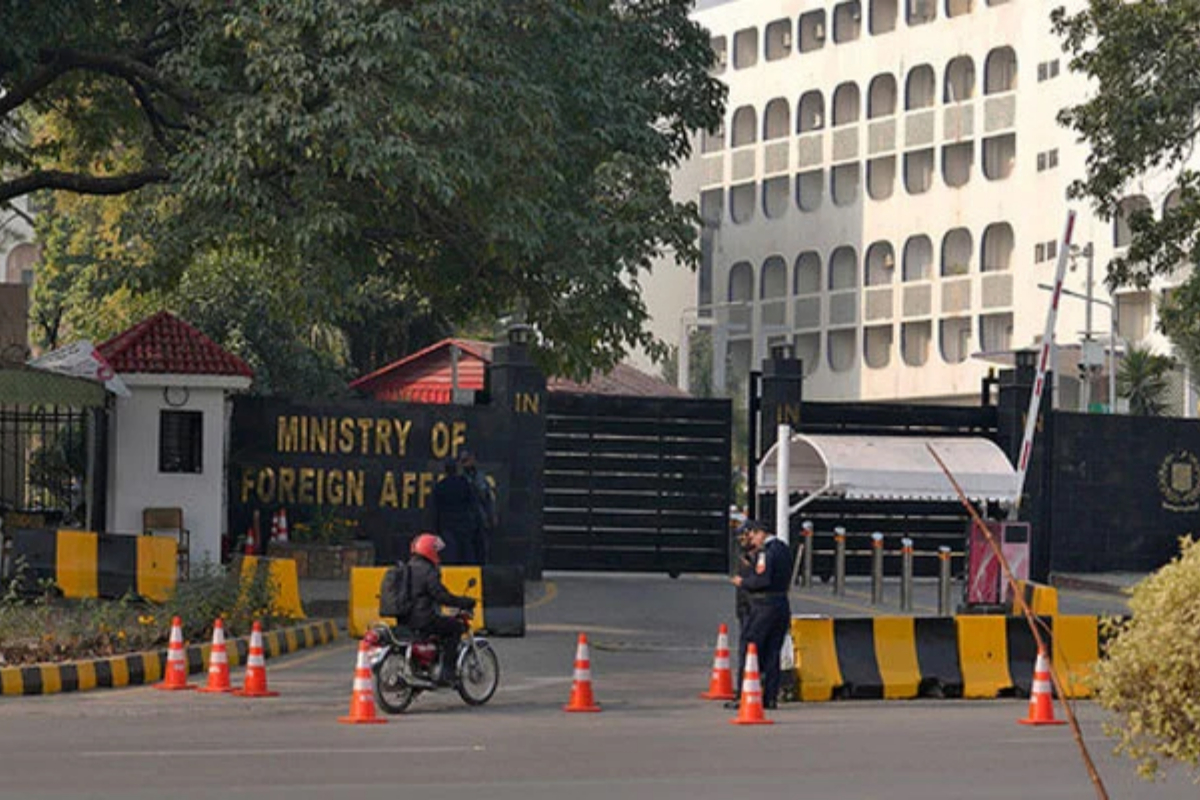
ISLAMABAD: Pakistan summoned the U.S. chargé d’affaires to the Foreign Office and lodged a demarche over what it described as controversial and factually incorrect remarks by the U.S. ambassador to India regarding occupied Kashmir.

According to the Foreign Office, Pakistan strongly protested the U.S. ambassador’s “irresponsible and factually incorrect” comments.

Pakistan categorically rejected the ambassador’s statement describing occupied Kashmir as part of India, saying the final status of Kashmir remains to be determined in accordance with relevant U.N. resolutions and the wishes of the Kashmiri people.

The Foreign Office said the ambassador’s remarks were inconsistent with the United States’ longstanding position on Kashmir as well as international law.

Pakistan also reiterated that it had welcomed U.S. President Donald Trump’s offer to mediate on the Kashmir dispute.

Telegraph names Pakistan among world’s unique travel destinations

Telegraph

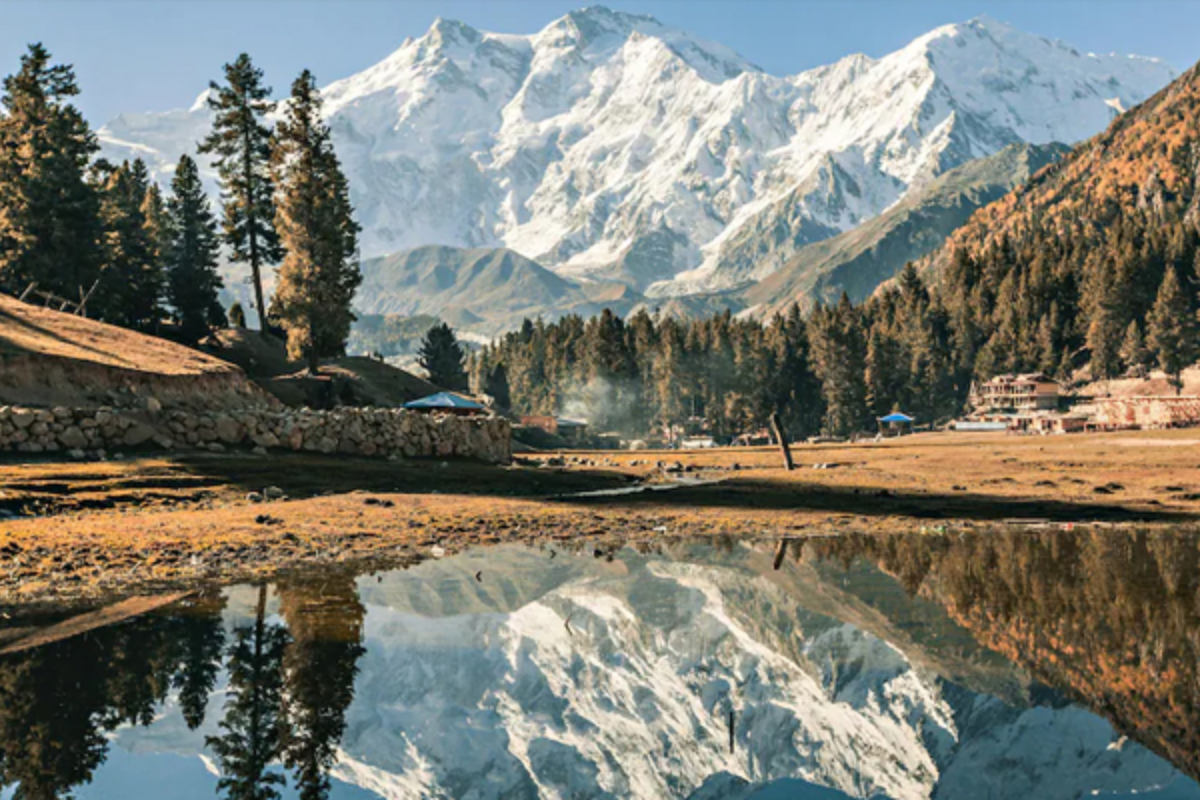
ISLAMABAD: British newspaper The Telegraph has included Pakistan among a select group of unique travel destinations for 2026, highlighting its snow-capped mountains, tranquil valleys, ancient civilizations and opportunities for adventure.

The travel feature, written by travel writers Benedict Allen and Sarah Marshall, encourages readers to explore Pakistan’s diverse landscapes and cultural heritage.

The feature places particular emphasis on northern Pakistan, noting that several peaks in the Karakoram mountain range rise more than 25,000 feet above sea level.

The Telegraph described Pakistan as a “land of high mountains” and highlighted the scenic Hunza Valley, towering glaciers, flower-filled meadows and the Karakoram Highway.

The newspaper called the Karakoram Highway an extraordinary feat of engineering. The highway connects Pakistan with China and passes through the spectacular Karakoram, Himalayan and Hindu Kush mountain ranges.

The article also praised the simplicity, warmth and hospitality of communities living in remote mountainous areas. Allen and Marshall wrote that visitors could experience not only the region’s dramatic natural scenery but also the lives, traditions and cultures of local communities.

Beyond its mountains, the feature highlighted Pakistan’s rich historical and cultural heritage, including the ancient Silk Road, Lahore’s 17th-century Badshahi Mosque and the thousands-year-old Indus Valley civilization.

Pakistan’s inclusion in the travel list by the prominent British newspaper reflects growing international recognition of the country’s diverse tourism potential.

The Telegraph’s 2026 list also includes Turkmenistan, Gabon, Angola, Timor-Leste, Nicaragua, Guyana, Armenia, the Republic of Congo, West Papua and Papua in Indonesia.

The Telegraph also featured Pakistan in a travel article in 2024.

Makkah Defence Pact Explained: What Pakistan, Saudi Arabia and Turkiye Agreed

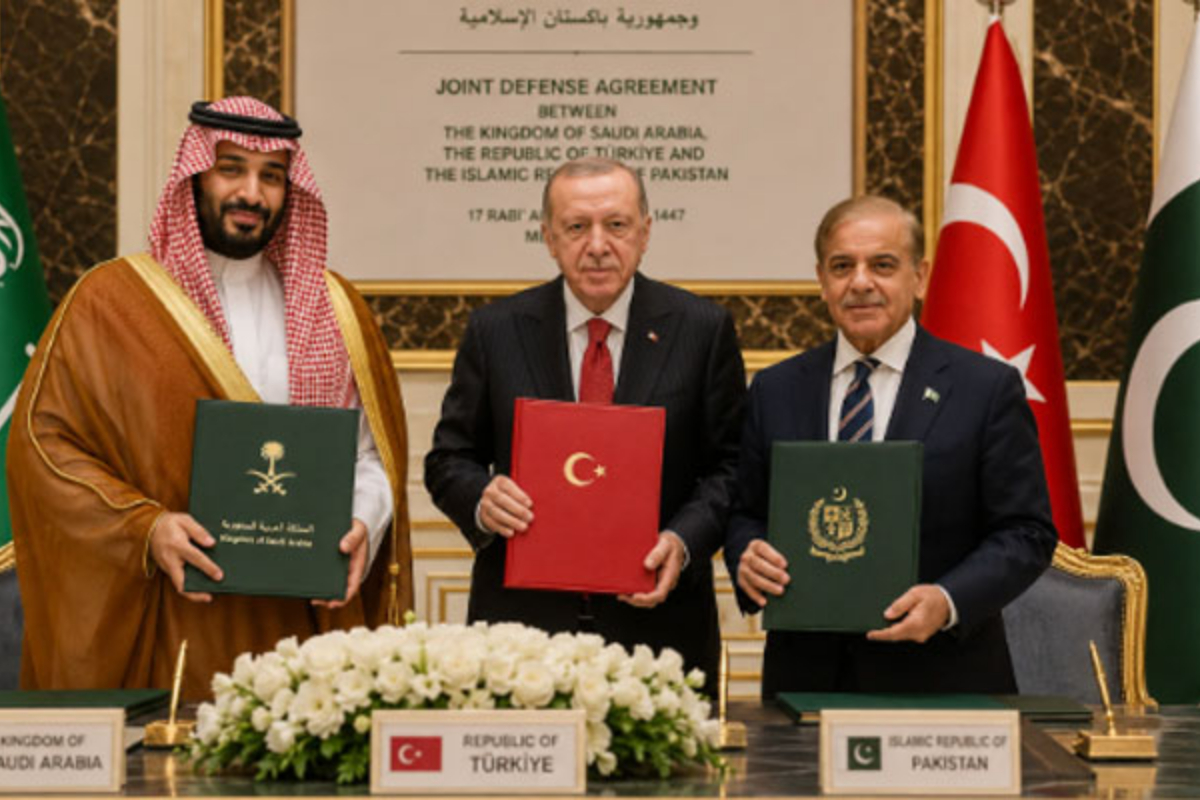
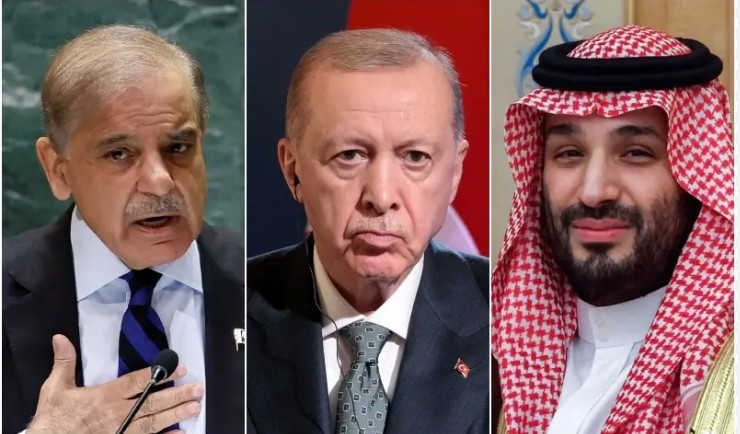
Pakistan PM Shehbaz Sharif, Turkish President Erdogan and Saudi Crown Prince Mohammed bin Salman - Makkah Defence Pact signatories

The Makkah Defence Pact is the trilateral security agreement that Pakistan, Saudi Arabia and Turkiye signed in Makkah on Friday, 7 August 2026. Its central promise is short and unusually explicit for this region: an armed attack on any one of the three will be treated as an attack on all three.

That single clause has generated more commentary than almost any other diplomatic development of the year, much of it speculative. This explainer sets out what has actually been confirmed, what remains unpublished, and what the agreement realistically changes for Pakistan.

Who signed the Makkah Defence Pact, and when

The agreement was signed in Makkah on 7 August 2026 by three heads of government: Pakistan’s Prime Minister Shehbaz Sharif, Saudi Crown Prince Mohammed bin Salman, and Turkish President Recep Tayyip Erdogan.

Pakistan’s Ministry of Foreign Affairs described the pact as reflecting “the three states’ shared commitment to further strengthening their collective security and to promoting peace, security, and stability in the region.” A Turkish official told Reuters the agreement “is defensive in nature and not directed at any specific actor” and said it remains open to other regional countries.

What the agreement reportedly covers

The full text has not been published. Based on official statements and analyst briefings, the framework is understood to cover four areas:

  • Collective deterrence — the mutual-defence clause treating an attack on one as an attack on all.
  • Military and defence-industrial coordination — joint production, procurement and logistics.
  • Intelligence sharing and capacity building in Saudi defence capabilities.
  • Energy and manufacturing cooperation, sitting alongside the security provisions.

The important caveat: because the text is unpublished, the exact triggers, escalation procedures and any carve-outs are not publicly verifiable. Readers should be cautious about confident claims — in either direction — about what the pact obliges its members to do in a specific scenario.

How this builds on the 2025 Pakistan–Saudi agreement

The Makkah pact did not appear from nowhere. It extends the Strategic Mutual Defence Agreement (SMDA) that Saudi Arabia and Pakistan signed in Riyadh on 17 September 2025, which stated that “any aggression against either country shall be considered an aggression against both.”

That bilateral agreement was significant in its own right: it was the first military alliance between an Arab Gulf state and a nuclear-armed power. Reuters, citing anonymous Pakistani sources, reported provisions allowing the deployment of up to 80,000 Pakistani troops to Saudi Arabia. The Belfer Center assessed it more cautiously as “primarily a political signal of solidarity” rather than an unconditional war guarantee.

Turkiye had sought to join that bilateral framework in January 2026, but officials confirmed by 31 January that the SMDA would remain a Saudi–Pakistan arrangement. The Makkah pact is therefore a new trilateral instrument rather than an expansion of the older one.

Why now: the regional context

Negotiations on closer Gulf–Pakistan–Turkiye security cooperation began after October 2023 and accelerated sharply during 2026. The immediate backdrop includes the US–Israel war against Iran that began in late February 2026, Iranian strikes on Gulf states, and the effective closure of the Strait of Hormuz to commercial shipping.

The SMDA has already been tested in that environment. During the 2026 Iran war, Saudi Arabia invoked the agreement and Pakistan deployed at least 8,000 troops, 16 aircraft and two drone squadrons — moving the arrangement from paper commitment to operational reality.

We have covered the economic side of that same crisis in detail in our reporting on oil prices and ceasefire prospects.

The reactions that matter

Iran: No formal government statement followed the Makkah signing. Iranian MP Ebrahim Rezaei dismissed it publicly, posting that “a paper agreement…will not bring them security.” Notably, when the earlier bilateral SMDA was signed in 2025, President Masoud Pezeshkian had welcomed it as the beginning of a “comprehensive regional security system” — a markedly warmer response than the 2026 reaction.

India: New Delhi said it was “carefully monitoring” developments following the 2025 agreement. Analysts have argued the arrangement alters India’s regional security calculus, though official Indian commentary has remained measured.

Others: The pact’s stated openness to new members has already drawn interest. Egypt is reported to be considering joining, and President Erdogan has said the pact is open to peace-seeking countries in the region.

The nuclear question

This is where speculation has run furthest ahead of evidence. After the 2025 SMDA, Pakistan’s Defence Minister Khawaja Asif appeared to hint at a nuclear dimension before walking the comment back. A Saudi official said the pact “encompasses all military means” without explicitly confirming nuclear coverage.

No signatory has confirmed any nuclear-sharing provision in either agreement. Pakistan’s declared position on command and control of its strategic assets has not changed. Claims that the Makkah pact extends a nuclear umbrella to Saudi Arabia or Turkiye are, at present, inference rather than established fact.

What it means for Pakistan

Three practical implications stand out.

Diplomatic weight. Pakistan is now a named security guarantor alongside the region’s largest economy and NATO’s second-largest army. That is a meaningful upgrade in standing.

Economic linkage. The energy and manufacturing provisions matter for a country whose external accounts depend heavily on Gulf remittances and investment. Saudi Arabia and the UAE remain the two largest destinations for Pakistani workers — a relationship we examine in our coverage of Gulf employment and migration.

Commitment risk. A mutual-defence clause runs in both directions. The 2026 deployment under the SMDA showed that invocation is not hypothetical, and any future call carries fiscal and military cost for Pakistan.

Frequently asked questions

Is the Makkah Defence Pact the same as NATO’s Article 5?

It is similar in language but not in machinery. NATO’s Article 5 sits inside a decades-old alliance with an integrated command structure, standing forces and detailed planning. The Makkah Defence Pact has the mutual-defence principle without that institutional apparatus — and its text is not public.

Can other countries join?

Yes. Turkish officials have described it as open to other regional states, and Erdogan has repeated that publicly. Egypt has been reported as considering membership.

Has the pact been used yet?

The trilateral Makkah Defence Pact has not been invoked. The earlier bilateral Saudi–Pakistan SMDA was invoked by Saudi Arabia during the 2026 Iran war, leading to a Pakistani deployment.

Does it include a nuclear guarantee?

No signatory has confirmed one. Statements have been deliberately ambiguous, and no published provision establishes nuclear sharing.


Reporting compiled from official statements by Pakistan’s Ministry of Foreign Affairs, Reuters, Al Jazeera, the Atlantic Council, Brookings and the Belfer Center. Where the agreement’s text is unpublished, this article says so rather than filling the gap. Last updated 15 August 2026.

Related coverage: Saudi Arabia, Pakistan and Turkiye sign Makkah Defence Pact · Ishaq Dar briefs Iran leadership on the agreement · Zardari and Shehbaz discuss the pact · Bilawal calls the pact a guarantee for three nations

Related reading: Strait of Hormuz and Pakistani fuel prices · Gulf jobs for Pakistanis 2026 · Gold rate in Pakistan today

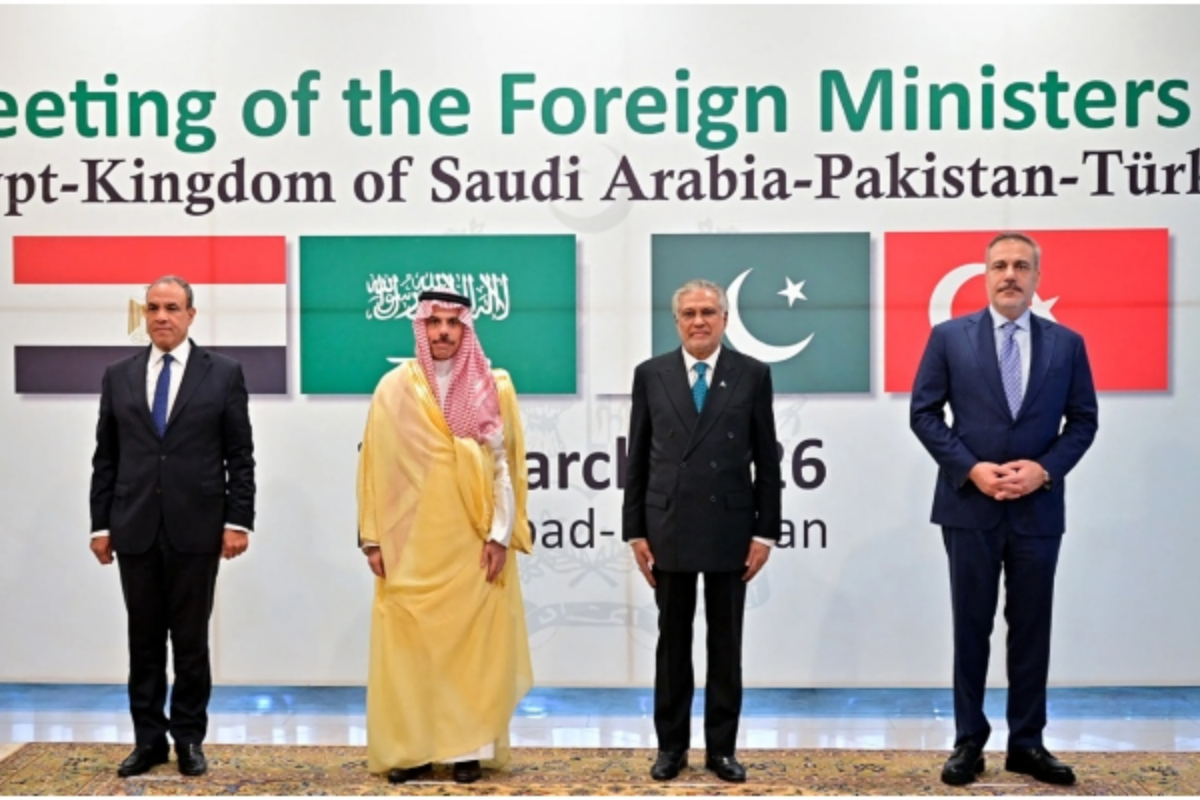
Egypt considers joining Pakistan-Saudi Arabia-Turkiye Defence Pact

Egypt considers

CAIRO: Egypt is seriously considering joining the Makkah mutual defence agreement signed by Pakistan, Saudi Arabia and Turkiye, Egyptian Foreign Minister Badr Abdelatty said.

Abdelatty said Egypt had been aware of the agreement from the outset and that the matter was undergoing a comprehensive review by the country’s relevant state institutions.

Asked about Egypt’s possible participation in the pact, the foreign minister said Cairo maintains deep and special relations with Pakistan, Saudi Arabia and Turkiye that extend beyond the political sphere.

He said Egypt would need to carefully assess the defence commitments associated with the agreement in accordance with the country’s Constitution and legal requirements before making a final decision.

Saudi Arabia, Pakistan and Turkiye signed the mutual defence agreement in Makkah several days ago. Under the pact, an attack against one of the three countries is to be regarded as an attack against all three.